 Sudden Valley Window
 The Fog Between the Glass Isn't Regular Condensation
Most homeowners' first reaction to a foggy window is to wipe it down. When the haze is on the outside of the glass, that works. When it's trapped between the panes and won't clear no matter how hard you scrub, you're looking at something different: a failed seal in an insulated glass unit (IGU). That fog, or the streaky mineral haze that sometimes follows it, is moisture that got inside a sealed air space and has nowhere to go.
Modern double- and triple-pane windows aren't just two sheets of glass stacked together. They're built as a sealed unit with a spacer bar (often filled with a desiccant, a material that absorbs trace moisture) and, in many units, an inert gas fill like argon between the panes to improve insulation. The whole assembly is sealed at the edges with a combination of primary and secondary sealants. That seal is doing two jobs at once: keeping insulating gas in, and keeping outside moisture and air out. When it fails, both jobs stop working at the same time — the gas slowly leaks out and humid air leaks in.
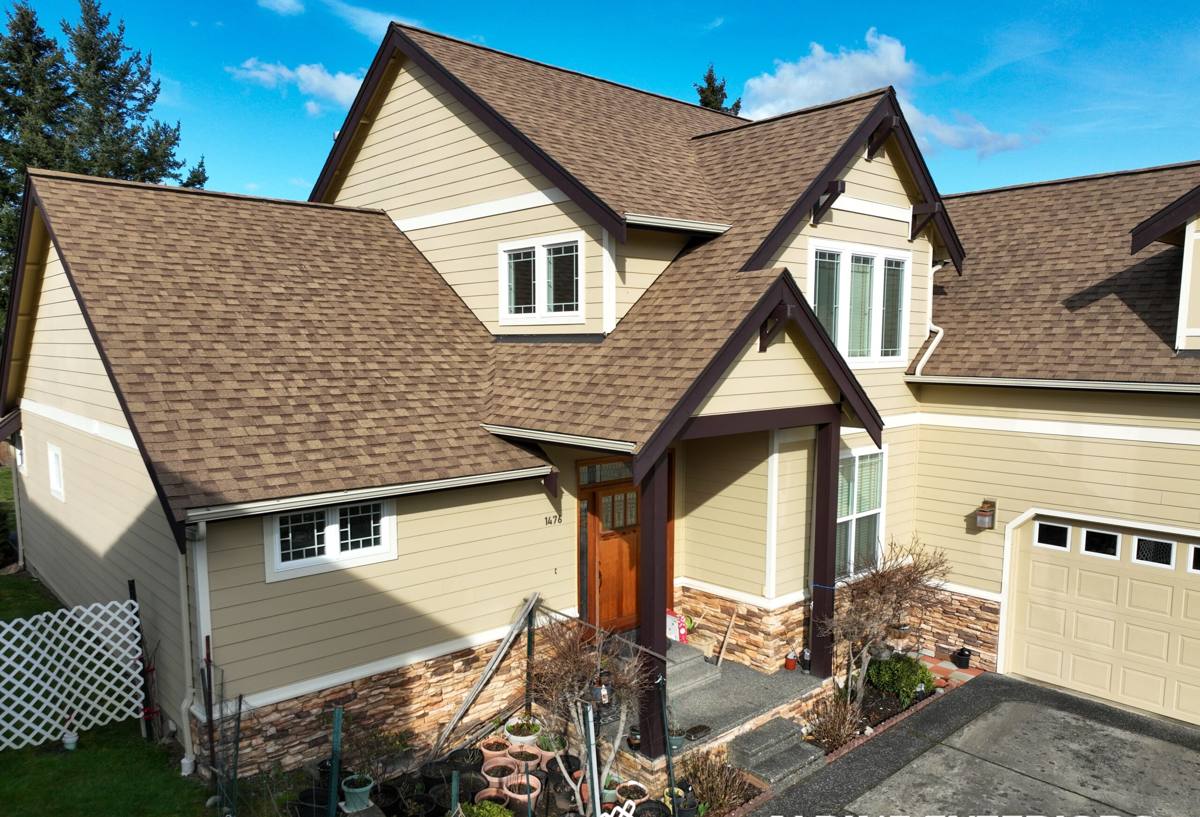
Why This Shows Up Sooner in Sudden Valley
Seal failure isn't unique to this area, but the local climate speeds it along. Homes around Sudden Valley get a steady dose of driving rain off the lake, humid air, and — for houses closer to Bellingham Bay and the Whatcom County coastline — salt-laden air that's harder on any exposed metal, rubber, or sealant. Add in the long moss season here, where shaded, north-facing walls and rooflines stay damp for months at a stretch, and you've got conditions that keep window frames and seals wet far longer each year than they'd stay wet in a drier climate.
Sealants age through a combination of UV exposure, thermal cycling (expansion and contraction as temperatures swing), and moisture exposure. In Whatcom County, windows get all three: real sun in summer, real cold snaps in winter, and long stretches of damp in between. That cycling is what eventually cracks or separates the sealant at the edge of the glass unit, even on windows that were built and installed correctly.
Condensation Between the Panes vs. Condensation on the Glass Surface
It's worth being precise about which problem you actually have, because they call for completely different responses.
| Where it appears | What it means | What to do |
|---|---|---|
| Inside surface of the glass (room side) | Indoor humidity is higher than the glass surface temperature allows — a ventilation or humidity issue, not a window defect | Run bath/kitchen fans longer, use a dehumidifier, crack windows periodically |
| Outside surface of the glass (weather side) | Normal early-morning dew, common on clear cool mornings — glass is a good radiator | Nothing to do; it clears with the sun |
| Between the two panes, won't wipe away | The IGU seal has failed and moisture is trapped inside the sealed unit | The glass unit itself needs to be addressed — this page's topic |
Only the third scenario is an actual seal failure. If you're not sure which one you're dealing with, try wiping both the inside and outside glass surfaces. If the haze persists on both after cleaning, or if you can see it shift or pool along the bottom edge of the glass, it's between the panes.
Early Warning Signs Before Full Fogging
- A faint haze or slightly cloudy look that comes and goes with temperature changes, especially on cold mornings
- Mineral deposits or a streaky film that looks like hard water spots, but on the inside of the sealed unit
- A window that suddenly feels less insulating — a cold draft-like feeling near the glass even with the sash closed
- Visible gaps or cracking in the exterior glazing bead or sealant line around the edge of the glass
- One pane in a set (say, a picture window flanked by two operable sashes) fogging while the others stay clear
How Long Should a Seal Actually Last?
There's no fixed expiration date on an IGU seal — it depends on the unit's build quality, how it was installed, and what it's been exposed to. As a general guide:
| Factor | Effect on seal life |
|---|---|
| Unit age | Most sealed units are built to perform well for a couple of decades; failures become more common as units pass that range, especially older dual-seal designs |
| Sun/orientation exposure | South- and west-facing units see more UV and thermal cycling, and tend to show seal wear earlier than shaded, north-facing glass |
| Installation quality | A unit installed out of square, or without proper shimming and flashing, puts uneven stress on the seal from day one |
| Local moisture exposure | Coastal salt air and prolonged damp conditions, like a long moss season, accelerate wear on sealants and spacer materials |
| Manufacturer/build | Spacer design (foam vs. metal), sealant chemistry, and gas-fill retention rates vary by manufacturer and product line |
Because there are so many variables, we don't guess at a lifespan for a window we haven't looked at. What we can tell you honestly on site is whether what you're seeing is early-stage or advanced, and whether it's isolated to one or two units or showing up across the house.
Can a Fogged Window Be Fixed, or Does It Need Full Replacement?
Glass-Only Replacement
In many cases, the window frame, sash, and hardware are all still in good shape — it's just the sealed glass unit inside that's failed. When that's the case, replacing just the insulated glass unit and leaving the existing frame in place is often the more sensible option. It costs less than a full window replacement and avoids disturbing the surrounding trim, siding, and flashing, which matters on an already-finished wall.
Full Window Replacement
Glass-only replacement isn't always the right call. If the frame or sash shows rot, warping, or hardware failure, or if the window is old enough that a matching replacement glass unit isn't practical to source, a full window replacement is the more durable choice. It also makes sense if you're already planning to upgrade performance (better glass coatings, a different frame material) rather than putting new glass into an aging frame.
What We Don't Recommend
Some over-the-counter "defogging" kits claim to drill a small hole, extract the moisture, and reseal the unit. We don't offer this as a fix. It doesn't restore the argon fill or the desiccant's capacity, and it doesn't address the root sealant failure — most units treated this way fog again, often within a year or two. We'd rather tell a homeowner honestly that it's a temporary patch than sell it as a repair.
What Affects the Cost
Costs for addressing a failed seal vary by a wide range of factors, and we're not going to pretend there's a single number that applies to every house. Broadly, glass-only replacement runs less than a full window swap, and both scale up with unit size, glass type, and access difficulty.
| Cost factor | Why it matters |
|---|---|
| Number of units affected | One failed pane vs. a house where several windows are reaching the same age at once |
| Glass specification | Low-E coatings, gas fills, tempered or laminated safety glass (required in certain locations by code) all affect unit price |
| Frame condition | Sound frames support glass-only replacement; frame damage pushes the job toward full replacement |
| Access and size | Large picture windows, upper-story units, or oddly shaped glass cost more to source and install safely |
| Custom vs. stock sizing | Older or non-standard openings may require custom-built replacement units rather than off-the-shelf sizes |
Preventing Premature Seal Failure
You can't stop sealants from aging, but you can avoid speeding it up. A few habits make a real difference over the life of a window in this climate:
- Keep gutters and downspouts clear so water isn't sheeting down over window heads during heavy rain
- Trim back vegetation and clear roof and wall moss regularly — moss holds moisture against trim and glazing longer than bare siding would
- Re-caulk exterior glazing and trim joints when you see cracking, rather than waiting for a full seal failure
- Rinse salt residue off exterior glass and frames periodically if your home is exposed to coastal air
- Avoid pressure-washing directly at glazing lines, which can force water past sealant that's already showing wear
Routine care won't make a seal last forever, but in a place with as much sustained moisture exposure as Whatcom County sees, it does buy real years before failure shows up.
What to Do If You Suspect a Failed Seal
If you've spotted haze between the panes on even one window, it's worth having it looked at rather than waiting for it to spread to the rest of the house. A fogged unit isn't a safety issue, but it does mean that window has lost some of its insulating value, and it will only get more visible over time, not less.
We look at each affected window individually — frame condition, glass type, how it was installed, and how many units in the house are showing the same wear — before recommending glass-only replacement or a full window swap. If you're seeing fog, haze, or mineral streaking between the panes on any window in your Sudden Valley home, we're happy to come take a look and give you a straight, no-pressure estimate using the form below.