 Sudden Valley Window
 Windows Built for the Bellingham Climate
Homes around Bellingham and Sudden Valley face a different combination of stresses than windows in most parts of the country are designed for. You've got the marine influence off the Salish Sea bringing salt-laden air, long stretches of driving rain that comes in sideways off Lake Whatcom during winter storms, and a moss and mildew season that can stretch from October through May in shaded, north-facing exposures. None of these problems are dramatic on their own. What they do is work slowly, on wood sills, weep holes, and weatherstripping, until a window that looked fine two years ago is fogging between panes, sticking in its track, or letting a draft through every time the wind picks up off the lake.
We've replaced windows on homes tucked into the timber around Sudden Valley and on properties closer to town with more direct exposure to weather off the water. The failure patterns are consistent enough that we can usually tell, from a short walk around a house, which windows are due and which ones have a few more years left.
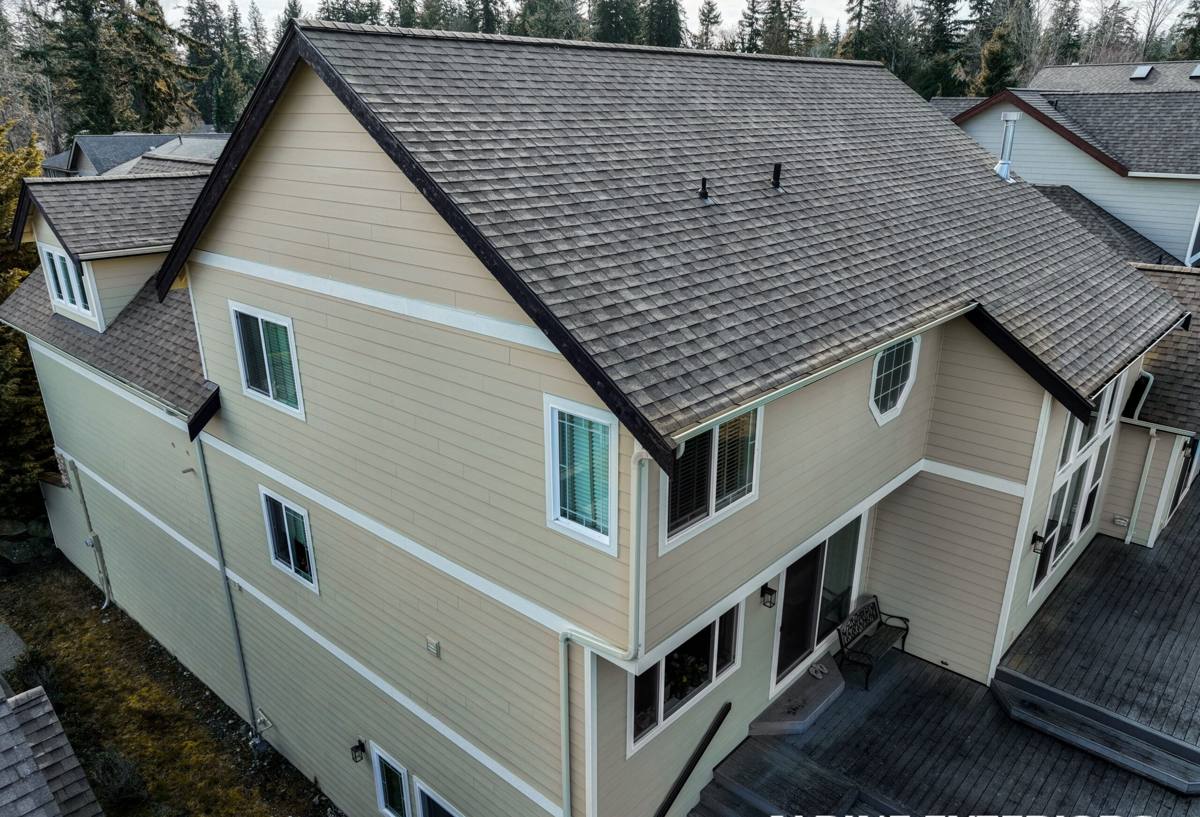
Signs a Window Is Actually Ready for Replacement
Not every drafty window needs full replacement — sometimes it's a hardware or weatherstripping fix. But there are a handful of signs that point to the glass unit or frame itself failing rather than something you can service:
- Fogging or a milky haze between the panes of a double-pane window — the seal has failed and the gas fill is gone
- Wood sills or lower frame corners that feel soft, spongy, or show dark staining
- Windows that are difficult to open, close, or lock, especially after damp weather
- Visible daylight or a draft you can feel at the frame edge on a windy day
- Condensation forming on the inside of the glass regularly, even with normal ventilation
- Paint or finish that's cracking and peeling faster on one side of the house than another (usually the side taking the most weather)
If you're seeing more than one or two of these on a window, replacement is usually the more honest answer than another round of caulk and weatherstripping.
Frame Material: What Actually Holds Up Here
Frame material matters more in this climate than in a drier one, because the frame is what's absorbing the moisture cycle year after year. Here's how the common options compare for a Bellingham or Sudden Valley home:
| Frame Material | Moisture Behavior | Maintenance | Typical Fit |
|---|---|---|---|
| Vinyl | Doesn't absorb moisture, won't rot | Low — occasional cleaning | Most homes, especially value-focused replacements |
| Fiberglass | Very stable, minimal expansion/contraction | Low | Homes with more temperature swing or larger openings |
| Wood (unclad) | Attractive but absorbs moisture over time | High — needs regular refinishing | Historic homes where original look matters |
| Wood-clad | Exterior clad protects wood core from direct weather | Moderate | Homes wanting a wood interior look with better exterior durability |
| Aluminum | Conducts cold, prone to condensation without thermal break | Low, but performs poorly here without upgrades | Rarely our first recommendation for this climate |
Our default recommendation for most Bellingham and Sudden Valley homes is vinyl or fiberglass, simply because neither one gives moisture anything to work on. That's not a knock on wood-framed windows — some homeowners want that look and are willing to keep up with the maintenance schedule it requires. We'll install what fits the house and the owner's expectations, but we'll always tell you honestly what the upkeep looks like for whatever you choose.
Why We're Careful About Unclad Wood in This Area
Unclad wood frames can be beautiful, and they're the right call for certain historic or architecturally specific homes. But in a climate with this much sustained damp weather, exposed wood exterior surfaces need a maintenance rhythm — inspection and refinishing on a regular cycle — that not every homeowner wants to commit to. We're upfront about that trade-off before you buy, rather than after the finish starts failing.
Glass Packages: More Than Just Double vs. Triple Pane
The glass unit itself does most of the work of keeping weather and temperature out, and there's more variation here than most homeowners expect:
- Low-E coatings reflect radiant heat, helping keep homes warmer in winter and cooler on the rare hot summer week
- Gas fills (typically argon) between panes slow heat transfer compared to plain air
- Warm-edge spacers reduce the cold spot right at the edge of the glass, which is where condensation tends to start first
- Laminated or tempered glass can be specified for safety-code locations like doors, low sills, or bathrooms
For most homes in this area, a double-pane unit with a Low-E coating, argon fill, and a warm-edge spacer is the practical, well-balanced choice. Triple-pane glass adds cost and weight for a modest efficiency gain — it can make sense on a north-facing wall that catches wind directly, but we don't recommend it as a blanket upgrade for every window on a house.
How We Approach an Installation
Window replacement is one of those jobs where the install matters as much as the product. A quality window with a sloppy install will leak, and a modest window installed correctly will outperform it. Our process on every job:
- On-site measurement and assessment of the existing opening, including checking for rot or damage behind the trim
- Removal of the old window and inspection of the framing and sheathing underneath before anything new goes in
- Repair of any water damage or soft framing found during removal — this is common enough around here that we build time for it into the estimate
- Proper flashing and sealing sequence around the new unit, matched to how water actually moves down this style of wall in a driving rain
- Interior and exterior trim finish work to match the surrounding siding or casing
- Final operation check — every window opens, closes, and locks smoothly before we call the job done
That framing inspection step is one we won't skip, even when it slows the job down. On homes with any age to them, especially ones that have taken years of weather off the lake without attention to the window seals, finding soft sheathing behind an old frame is common. Installing a beautiful new window over damaged framing just hides the problem instead of fixing it.
What Drives the Cost
Window replacement pricing varies by home, and we won't quote a number without seeing the job, but the main factors are consistent enough to lay out honestly:
| Factor | Why It Matters |
|---|---|
| Number and size of openings | Larger units and more windows scale cost directly |
| Frame material chosen | Vinyl is typically the most economical, fiberglass and clad-wood cost more |
| Glass package | Triple-pane and specialty coatings add cost per unit |
| Condition behind the existing window | Rot or water damage found during removal adds repair scope |
| Access and second-story work | Upper-floor windows or difficult access add labor time |
| Trim and finish work | Matching existing interior trim or exterior siding detail takes more time than a standard finish |
Full-house replacements typically run into the higher end per opening once frame, glass, and finish work are all accounted for, while single or partial replacements cost less overall but sometimes more per window due to fixed setup and mobilization time. We'll walk you through the real numbers for your specific home during the estimate rather than quoting off a general range.
Living With Moss, Salt Air, and Rain: Maintenance That Actually Helps
Whatever windows you choose, a little seasonal attention goes a long way in this climate:
- Clear debris and moss buildup from window wells, sills, and nearby gutters before the fall rains set in
- Rinse salt residue off exterior glass and frames periodically if your home has direct exposure toward the water
- Check caulking around frame edges once a year — UV and moisture cycling break it down faster here than in drier climates
- Keep weep holes on vinyl and fiberglass frames clear so water can drain out instead of pooling
- Operate every window at least occasionally through the winter — hardware that sits unused in damp conditions is more prone to sticking
None of this is difficult, but skipping it is exactly how a well-installed window ends up with a moisture problem five years earlier than it should.
Permits, Codes, and Local Practicalities
Window replacement in Whatcom County, whether inside Bellingham city limits or out toward Sudden Valley, can involve permitting depending on the scope of the work and whether structural framing is altered. Egress requirements also matter for bedroom windows — if a window is being resized or a room's use is changing, the opening needs to meet current egress sizing. We handle the permit conversation as part of scoping the job so there are no surprises partway through, and we size and specify replacement units to meet code where it applies.
Why a Local Crew Matters for This Job
A window install crew that works across the wider Puget Sound region sees a mix of conditions and doesn't always calibrate to what a Bellingham or Sudden Valley home specifically deals with. Working in and around Whatcom County regularly means we're used to sequencing flashing details for driving rain that comes off the lake at an angle, recognizing early moss and moisture patterns on shaded north walls, and knowing which frame and glass combinations hold up without excessive maintenance in salt-influenced air. It also means we're not driving hours to get back out for a warranty check or a follow-up adjustment — we're already in the area.
A Few Questions Worth Asking Before You Commit
- Does the estimate include inspection and repair of framing found behind the old window, or is that a separate change order?
- What's the warranty on the glass unit versus the labor and installation itself?
- Is the frame material recommended based on your home's actual exposure, or is it just the standard default option?
- Will the crew doing the install be the same people who gave the estimate, or a subcontracted team?
- What's the realistic timeline from order to installation for the specific window size and style you need?
Since we handle siding, roofing, decks, and windows, we're also in a good position to flag if a window issue is connected to something bigger — like trim rot tied to a gutter or roofline problem — rather than treating each part of the house in isolation.
Ready When You Are
If your windows are fogging, sticking, or just letting in more draft and moisture than they used to, we're glad to come take a look. There's no pressure and no obligation — just an honest read on what your windows actually need and a straightforward estimate for the work. Use the form below to request your free estimate.