 Sudden Valley Window
 Why Silver Beach Homes Take a Different Kind of Beating
Silver Beach sits right up against Lake Whatcom, tucked into the trees on the north end near Bellingham, and that lakeside setting shapes everything about how a house ages here. You get the humidity that comes off open water, long stretches of shade from mature conifers that never let siding or window frames fully dry out, and the marine, salt-tinged air that moves inland off Puget Sound and settles over Whatcom County for days at a time. None of that is dramatic on its own. It's the accumulation that gets homeowners — moisture that never quite leaves, seasons that stay damp longer than they do in drier parts of the state, and a growing season for moss and algae that can run nine or ten months out of the year on north- and east-facing walls.
Windows are usually the first place this shows up, because a window is a seam in the building envelope — wood, vinyl, glass, sealant, and flashing all meeting in one spot. When that seam is exposed to constant dampness instead of a normal wet-dry cycle, the materials and installation details that would be fine in a drier climate start to fall short years earlier than they should.
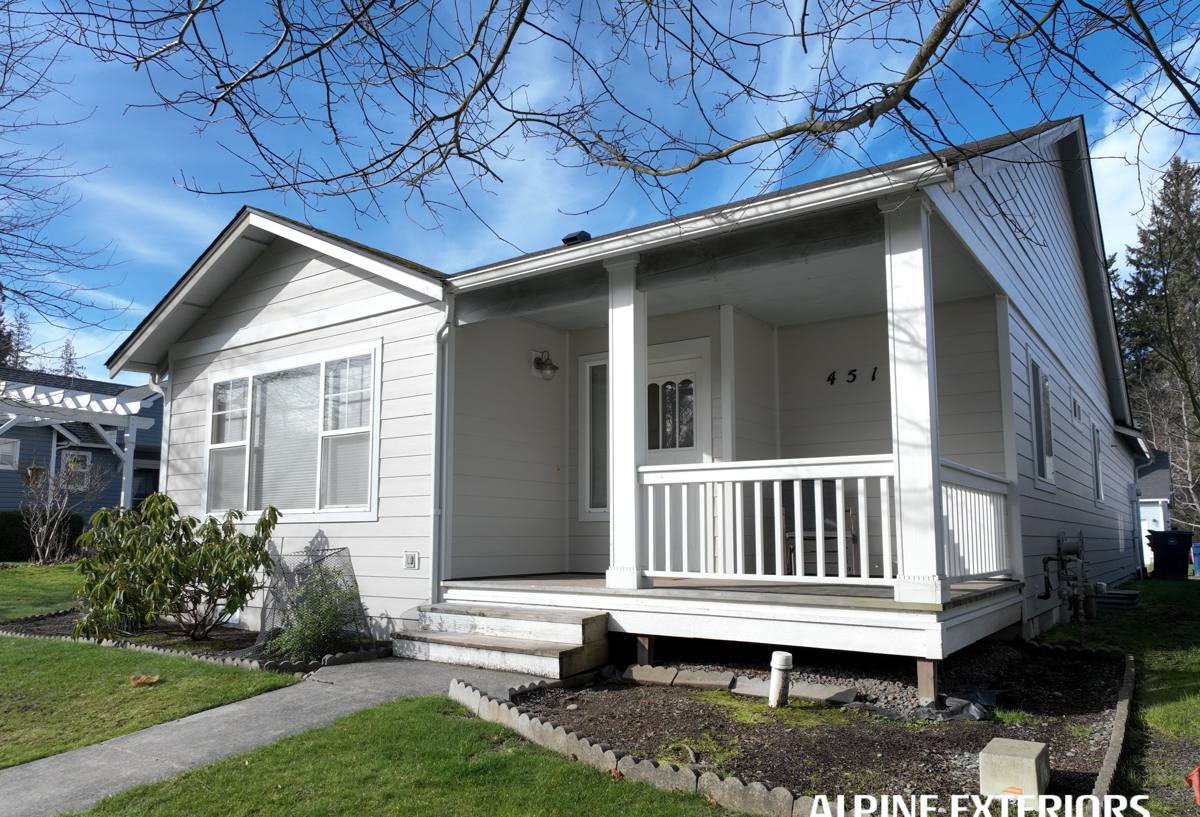
What We Actually See on Silver Beach Windows
After enough seasons in this micro-climate, certain failure patterns show up over and over:
- Condensation between panes — a fogged or hazy look inside the glass means the seal on a double- or triple-pane unit has failed and the insulating gas has escaped. This is a manufacturing and installation issue, not something that can be cleaned off.
- Frame swelling and sticking — wood and some composite frames absorb moisture over time in a consistently damp environment, which can make sashes hard to open or close properly.
- Moss and algae staining — shaded trim and sills accumulate green or black growth faster here than in sunnier parts of the county, especially on the north side of a house or anywhere tree cover blocks direct sun.
- Corroding hardware — latches, hinges, and cranks on lower-quality windows can start to pit or seize when they're exposed to persistent humidity and salt-bearing air.
- Wood rot at the sill and corners — this is where water sits longest and where a lot of older or poorly flashed windows eventually fail structurally, not just cosmetically.
None of these are signs a homeowner did anything wrong. They're what happens to a building component that sits in a wetter, shadier microclimate than most of the region, especially once original construction-grade windows pass the 15-20 year mark.
Choosing Window Materials for a Lake-Adjacent Climate
There's no single "best" window material — the right call depends on how much sun a given wall gets, what the home's style calls for, and budget. But some materials handle sustained moisture and humidity better than others, and that matters more in Silver Beach than it would in a drier inland town.
| Material | Moisture Behavior | Maintenance | Typical Lifespan |
|---|---|---|---|
| Vinyl | Won't rot or corrode; handles humidity well | Low — occasional cleaning | 20-30 years |
| Fiberglass | Very stable in wet/dry cycling, minimal expansion | Low | 30-40 years |
| Wood (unclad) | Attractive but absorbs moisture; needs a dry, sunny exposure to last | High — repainting, sealing | Varies widely by exposure and upkeep |
| Wood-clad (aluminum or vinyl exterior) | Good — exterior shell protects the wood core | Moderate | 25-35 years |
| Aluminum | Doesn't rot, but can corrode in salt-influenced air and conducts cold | Low to moderate | 20-30 years |
For shaded, north-facing walls or homes closer to the lakeshore, we generally steer people toward vinyl or fiberglass, or a well-clad wood window if the look matters and the budget allows. Unclad wood can still work beautifully on a sunnier, more sheltered elevation — it's really about matching the material to that specific wall's exposure, not picking one product for the whole house by default.
Glass Packages Worth Discussing
Beyond the frame material, the glass package affects both comfort and moisture performance. Double-pane with a low-E coating is the standard baseline; triple-pane adds meaningful energy performance and interior comfort for west- and north-facing rooms that stay cooler and damper. Argon or krypton gas fill between panes improves insulation but only matters if the seal holds — which is exactly why installation quality is at least as important as the glass spec itself.
Installation Details That Matter More Here Than Elsewhere
In a climate that doesn't give a window much time to dry out between rain events, the install itself is often the difference between a window that lasts three decades and one that fails at the sill in ten years. A few things we pay particular attention to on Silver Beach and Sudden Valley homes:
- Flashing sequencing — water needs a continuous path down and out, shingled correctly with the house wrap so nothing traps moisture behind the trim.
- Sill pans — a proper sloped sill pan under the window gives any water that does get past the frame somewhere to go besides the wood framing underneath.
- Sealant selection and placement — the right sealant in the right spots, with weep holes left open rather than sealed shut, so the window can drain instead of holding water.
- Backer rod and joint depth — sealant applied too thick or too thin without proper backing fails faster, especially with the freeze-thaw swings Whatcom County gets in winter.
These aren't glamorous details, but they're the ones that actually determine whether a window install holds up to a lake-effect winter.
It's Not Just Windows — The Same Conditions Hit the Whole Exterior
The moisture and shade that stress windows in Silver Beach affect the rest of the building envelope too, which is why we look at the whole exterior rather than one component in isolation. Siding in shaded, damp spots is prone to the same moss and algae growth, and lap siding with failing caulk joints lets water behind the wall in the same way a poorly sealed window does. Roofs here deal with moss buildup on north-facing slopes and need attention to valleys and flashing where water concentrates. Decks, especially ones shaded by trees near the lake, stay damp longer after rain and need the right fastener and board choices to avoid rot and slip hazards. When we're out for a window estimate, we'll flag anything we notice on siding, roofline, or decking too — not to upsell, but because these systems interact, and a leak at one point often shows up as damage somewhere else.
Maintenance That Actually Extends Window Life Here
A little seasonal attention goes a long way in this climate. This is the routine we'd suggest for most Silver Beach and Sudden Valley homes:
- Rinse pollen, moss spores, and grime off glass and frames two to three times a year, more often on shaded walls.
- Check and clear weep holes along the bottom of the frame so water can drain instead of pooling.
- Inspect exterior caulking annually, especially after the first hard freeze of the season, and re-seal any cracked or shrunken joints.
- Look for early moss or algae growth on sills and trim and remove it before it holds moisture against the material long-term.
- Operate every window at least once each season — a sash that's stuck or hard to move is often the first sign of frame swelling or a hardware issue.
- Watch for soft spots or discoloration at the bottom corners of wood or wood-clad frames, which is usually where rot starts.
What Window Replacement Typically Costs — And What Changes the Number
Every project is different, but the main variables that move the price are fairly consistent across homes in this area:
| Factor | Why It Matters |
|---|---|
| Frame material | Vinyl is generally the most budget-friendly; fiberglass and wood-clad cost more upfront but often last longer |
| Number and size of openings | Larger or custom-sized windows cost more than standard sizes |
| Full-frame vs. insert replacement | Insert replacement is less invasive when the existing frame is sound; full-frame is needed if there's rot or the opening needs correction |
| Existing rot or water damage | Repairing damaged framing or sheathing adds labor beyond the window itself |
| Glass package | Triple-pane and upgraded coatings add cost but improve comfort in shaded, damp rooms |
| Access and site conditions | Second-story or hard-to-reach windows, common on sloped lake-adjacent lots, can add labor time |
We'll always walk a homeowner through where their specific project falls on that spectrum before any work starts, and we're upfront if we think a repair or partial replacement makes more sense than replacing everything at once.
Why It Helps to Hire a Crew That Knows This Specific Area
A contractor who mostly works drier, sunnier parts of Whatcom County can still do fine work, but they may not have a feel for how much longer things stay wet around Lake Whatcom, or which elevations on a typical Silver Beach lot are going to fight moss no matter what you do. We work this area regularly, which means we've seen how these homes age under these specific conditions — what fails first, what holds up, and where it's worth spending more up front versus where a mid-range product does the job just fine. That local pattern recognition is worth as much as any product spec sheet when you're deciding what to put on your house.
If you're noticing drafts, fogged glass, sticking sashes, or just want an honest read on how your windows are holding up, we're happy to take a look. Reach out for a free, no-pressure estimate using the form below — we'll walk the exterior with you and tell you plainly what we see.