 Sudden Valley Window
 Windows Built for Columbia's Corner of Whatcom County
Columbia sits in a stretch of Whatcom County where weather doesn't do anything halfway. Homes here take on salt-laden air moving in off the water, long stretches of driving rain that comes in sideways more often than straight down, and a moss season that seems to start earlier and run longer every year. None of that is unusual for this part of Washington — but it does mean windows in Columbia work harder than windows in a lot of other places, and they show wear differently too.
Sudden Valley Window Co has spent years working exteriors throughout this stretch of Whatcom County, and Columbia's housing stock is familiar territory. We know what a window looks like after fifteen winters of wind-driven rain versus what it looks like after fifteen winters somewhere drier and calmer. That difference shapes how we recommend products, how we install them, and how we talk to homeowners about what's actually worth fixing versus replacing.
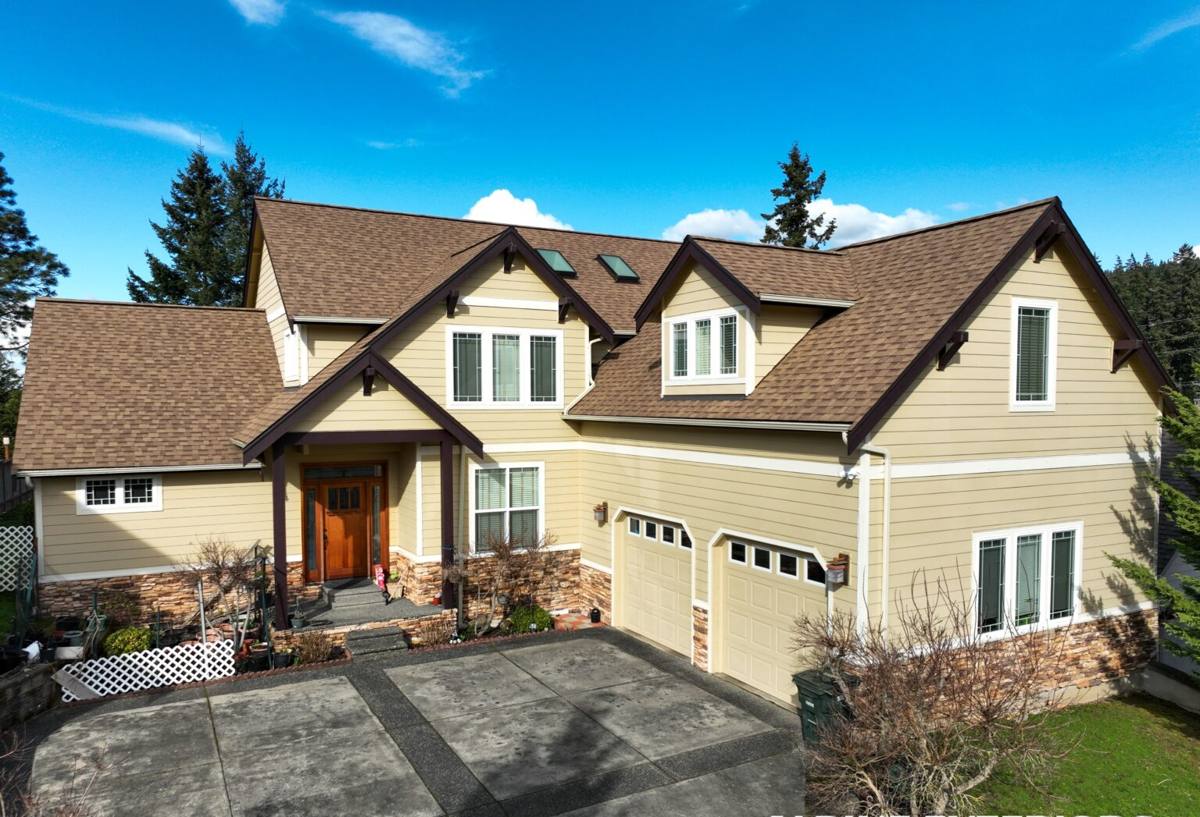
What the Local Climate Actually Does to Windows
Salt Air and Metal Components
Proximity to salt-influenced air accelerates corrosion on anything metal — window hardware, screen frames, and especially older aluminum sashes. Locks stiffen, cranks seize, and weep holes corrode shut so water has nowhere to drain. Once weep holes are compromised, water sits in the frame instead of exiting it, which is where rot and interior staining usually start.
Driving Rain and Wind-Driven Water
Rain that comes in at an angle finds every gap a window has. Vertical rain mostly just runs down glass; driving rain gets pushed sideways into seams, under poorly flashed sills, and past weatherstripping that's lost its shape. This is why so many window failures in this area aren't about the glass at all — they're about flashing, sealant, and installation details that were fine for calm weather but never built for wind-loaded rain.
Moss and Sustained Moisture
A long moss season means extended periods where surfaces near windows — trim, sills, nearby siding — stay damp instead of drying out between storms. Moss holds moisture against wood and paint far longer than open exposure would. Around windows specifically, that translates to soft sills, peeling exterior paint at the corners, and, eventually, wood frames that have started to punky and compress.
Common Window Problems We See in Columbia Homes
- Fogged or failed double-pane glass from broken seals letting moisture between the panes
- Soft or rotting wood sills and lower frame corners, usually starting where moss or debris collects
- Corroded aluminum hardware — locks, cranks, and balance mechanisms that stick or won't fully engage
- Clogged or corroded weep holes causing water to pool inside the frame track
- Failed exterior caulking and flashing letting wind-driven rain track behind trim
- Condensation on interior glass in winter, often a sign of poor seal performance rather than a household humidity issue
- Warped vinyl frames on south- or west-facing exposures from years of temperature swings combined with moisture cycling
Repair or Replace: How We Help You Decide
Not every window in a Columbia home needs to come out. A lot of what we see is fixable — reglazing, re-caulking, hardware swaps, weep hole clearing, sill repair. We'll tell you straight when a repair will hold up and when it's just delaying a bigger job. The honest dividing line usually comes down to whether the frame itself is structurally sound.
| Condition | Repair Usually Works | Replacement Usually Makes Sense |
|---|---|---|
| Foggy glass, sound frame | Yes — glass unit swap | Only if frame is also failing |
| Sticking locks/cranks | Yes — hardware service | Not needed on its own |
| Soft sill, frame otherwise solid | Yes — sill repair/rebuild | If rot extends into the jamb |
| Drafts around a sound frame | Yes — re-seal/weatherstrip | Rarely, unless frame is warped |
| Rot in jamb or corner posts | Not durable long-term | Yes — full unit replacement |
| Single-pane, older aluminum frame | Possible short-term | Yes — for efficiency and moisture control |
Pricing depends heavily on window size, frame material, and access, so we're not going to throw a number out that doesn't mean anything. What we can say generally: hardware service and re-sealing jobs are the least expensive fix available, glass unit replacement sits in the middle, and full window replacement is the larger investment — but it's also the point where you get real gains in efficiency, ease of operation, and resistance to the kind of weather Columbia sees every winter.
Materials That Hold Up Here
We lean toward vinyl and fiberglass-frame windows for most Columbia homes, for practical reasons rather than brand preference. Both resist corrosion entirely — no rusting hardware, no galvanic issues near salt-influenced air — and neither needs repainting the way wood does. Fiberglass in particular handles temperature swings with less expansion and contraction than vinyl, which matters on exposures that go from cold, wet mornings to direct afternoon sun.
Wood-clad windows can still work well here, but they come with a higher maintenance burden in this climate specifically — exposed wood components need consistent upkeep to avoid the same sill and corner rot we see on older wood-frame windows throughout the area. If a homeowner wants the wood look, we'll talk through clad options and what the maintenance schedule realistically needs to look like, rather than just installing and moving on.
On glass, we default to dual-pane, low-E units as the practical minimum for this climate — the low-E coating cuts down on both winter heat loss and summer solar gain, and the extra pane matters more here than in drier regions simply because of how much of the year windows are dealing with rain and temperature differential at once.
A Quick Look at Frame Options
- Vinyl — lowest maintenance, good value, wide color/style range, our most common recommendation
- Fiberglass — best dimensional stability, higher upfront cost, excellent long-term performance
- Aluminum — we generally steer homeowners away from it here specifically because of corrosion exposure in this air
- Wood/clad-wood — best traditional appearance, requires ongoing maintenance commitment
How We Approach Installation
A quality window installed poorly will fail before a mid-grade window installed correctly. Given how much of Columbia's window trouble traces back to flashing and sealant rather than the glass itself, we treat installation as the part of the job that actually determines whether you get ten years or thirty out of a window.
- We inspect the existing opening for rot, soft framing, or prior water intrusion before anything gets ordered
- We flash and seal for wind-driven rain, not just vertical runoff — this is the step most often shortcut elsewhere
- We confirm weep holes and drainage paths are clear and functional before closing up trim
- We match trim and exterior detailing so the finished look is consistent with the rest of the home
- We walk the finished opening with the homeowner before calling the job done
Windows Don't Work Alone on the Exterior
Window performance is tied to what's around it. Siding that's holding moisture against the wall, a roofline shedding water onto a header instead of past it, or a deck built too close to a window opening can all undercut even a perfect window install. Because we handle siding, roofing, windows, and decks, we can look at the whole exterior picture in Columbia rather than treating a leaky window as an isolated problem when the real source is a roof edge two feet above it. That kind of full-picture look is harder to get from a window-only outfit, and it's often the difference between fixing a symptom and fixing the cause.
Why a Local Crew Matters Here
Columbia's exposure — the combination of salt air, wind-driven rain, and extended moss season — isn't identical to conditions twenty minutes inland or on the other side of the county. A crew that works this specific area regularly knows which exposures fail first, which products hold up and which don't, and what a normal amount of weathering looks like versus a real problem. That local knowledge shows up in smaller ways too: knowing which permitting office to work with, understanding typical lot layouts and access constraints in the area, and being reachable if a question comes up after the job is finished rather than being three counties away.
Sudden Valley Window Co is based in Whatcom County and works this region as our primary territory, not as an occasional service call. That means our estimates reflect real local conditions, and our crews aren't guessing at what Columbia weather does to a window over time — we've seen it firsthand, repeatedly.
Maintenance That Extends the Life of Your Windows
- Clear moss and debris from sills and tracks at least twice a year, more often under tree cover
- Flush weep holes with water periodically to confirm they're draining, especially after storms
- Lubricate locks and cranks annually — corrosion is easier to prevent than reverse
- Check exterior caulking each fall before the wet season sets in, and re-caulk any cracked or gapped sections
- Watch for soft spots at sill corners and address them early, before rot spreads into the jamb
- Wipe down interior condensation promptly in winter to protect sills and nearby trim
If your windows in Columbia are drafty, foaming with condensation, sticking shut, or just past their prime, we're happy to take a look and give you a straight read on repair versus replacement — no pressure, no upsell. Reach out for a free estimate using the form below.