 Sudden Valley Window
 Why Siding Installation Looks Different in Bellingham and Sudden Valley
Homes around Bellingham and out at Sudden Valley face a specific combination of weather that most siding products were never engineered for. You've got proximity to Bellingham Bay and the Salish Sea, which means salt-laden air moving inland on a regular basis. You've got long stretches of driving, wind-blown rain off the Pacific that hits siding at an angle instead of straight down, working its way into any gap or seam that isn't detailed correctly. And you've got the shade, humidity, and mild temperatures that make Whatcom County one of the better places in the state for moss, algae, and mildew to take hold on a north-facing wall and just stay there for months.
None of that is exotic. It's just consistent, and consistency is what wears siding out. A product or installation that "mostly" holds up will show it here faster than it would somewhere drier and warmer. That's the lens we use on every siding installation job in this area: not "will this look good on day one," but "what does this wall look like in year twelve, in this climate, on this lot."
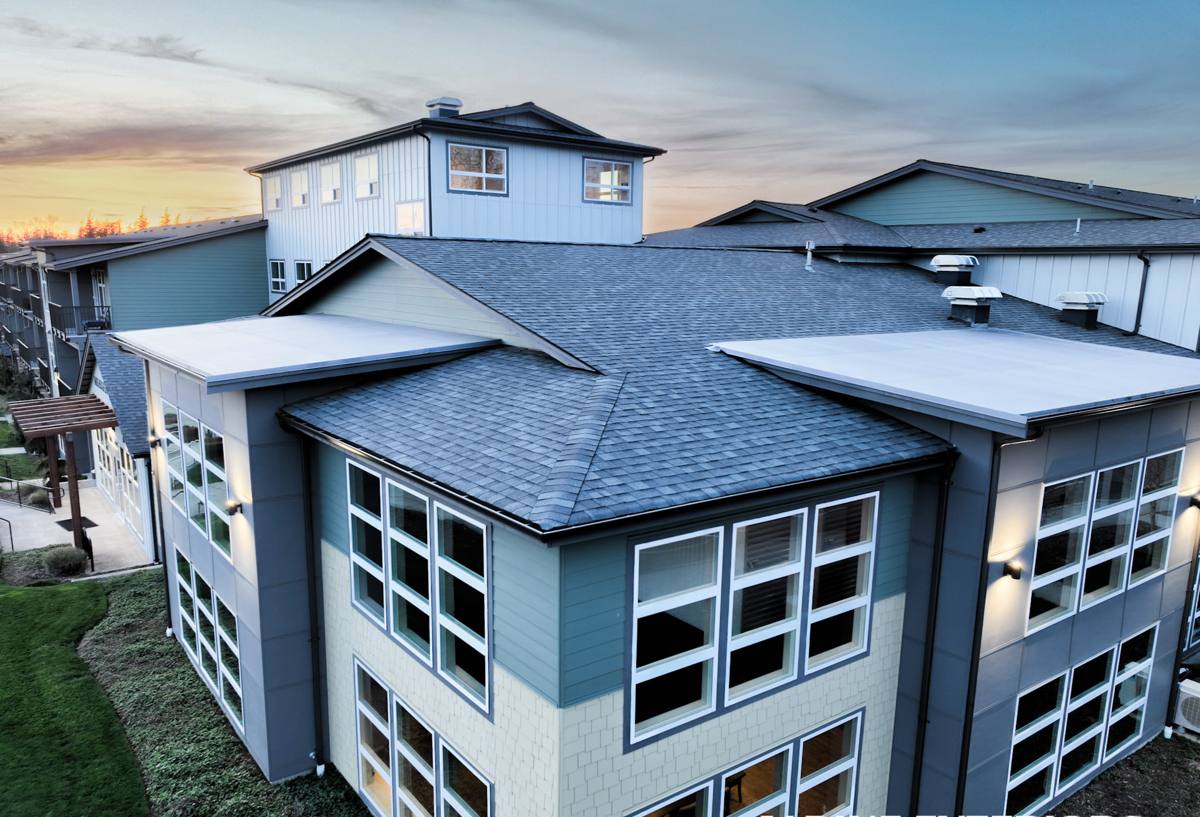
What Local Homes Actually Need From Their Siding
Moisture Management, Not Just Moisture Resistance
Every siding system needs a plan for where water goes once it's on the wall — not just whether the surface material itself absorbs water. In Bellingham and Sudden Valley, that means a correctly installed weather-resistive barrier, properly flashed windows and doors, and siding that's fastened and gapped in a way that lets any moisture that does get behind the cladding find its way back out instead of getting trapped against the sheathing.
Rot Resistance at Ground Level and Roof Lines
The lowest courses of siding near grade, and the sections that sit under roof valleys or below poorly draining gutters, take the most sustained wetting. Wood-based and wood-adjacent products are most vulnerable exactly here, which is why this detail gets extra attention regardless of what siding is going up.
A Finish That Doesn't Feed Moss and Algae
Shaded, moisture-prone walls in this area will grow something on them eventually — the question is how much and how fast. A dense, factory-cured finish sheds spores and grime differently than a porous or field-painted surface, and that difference shows up as a real gap in how often a homeowner has to wash or repaint.
Our Position: James Hardie Fiber Cement, and Nothing Else
We install James Hardie fiber cement siding exclusively. We don't install vinyl, LP SmartSide, Cemplank, Allura, primed spruce, or cedar — not because those products don't have a place in the industry, but because after years of installing and repairing siding in this exact climate, fiber cement from James Hardie is the one system we're willing to put our name behind here.
Fiber cement is non-combustible, dimensionally stable in the wet-dry cycling this region puts siding through, and available in Hardie's climate-engineered HZ product lines built specifically for wet Pacific climates. The ColorPlus factory finish is baked on under controlled conditions rather than applied on-site, which matters a lot in an area where you can't always count on a dry week to paint. Vinyl can warp and fade and doesn't offer the same fire performance; wood and wood-composite products carry ongoing maintenance and moisture obligations that most homeowners underestimate until year five or six. We'd rather install one product correctly and stand behind it than offer five options and hedge on all of them.
What a Correct Siding Installation Involves
- Full removal of old siding and inspection of the sheathing underneath for existing rot, soft spots, or moisture damage
- Repair or replacement of any compromised sheathing before anything new goes on the wall
- Installation of a code-compliant weather-resistive barrier, lapped correctly from the bottom up
- Proper flashing at every window, door, and roof intersection — the single most common failure point on poorly installed siding jobs
- Correct fastener type, spacing, and penetration depth per James Hardie's installation specifications
- Appropriate gapping and clearance at trim, corners, and grade to allow for material movement and drainage
- Final inspection of caulking, trim, and touch-up work before the job is called complete
Skipping or rushing any one of these steps is how a siding job that looks fine at handoff turns into a moisture problem three or four winters later. This is also where the difference between a crew that treats siding as a specialty and a crew that treats it as a side offering shows up most clearly.
How Our Process Works
1. On-Site Assessment
We walk the exterior with you, look at the current siding condition, check for existing moisture or rot issues, and talk through what's actually driving the need for new siding — failing material, an addition, storm damage, or just planning ahead.
2. Product and Color Selection
We'll go through the relevant James Hardie lines and ColorPlus finish options for your home, factoring in sun exposure, shade patterns, and how the color will hold up against the moss and algae conditions common on this side of the county.
3. Written Scope and Estimate
You get a clear, itemized scope — what's being removed, what's being repaired, what's being installed, and what it costs — before any work begins. No verbal-only agreements.
4. Installation to Manufacturer Spec
Our crews install to James Hardie's published specifications, not shortcuts that speed up the job at the expense of long-term performance.
5. Final Walkthrough
We walk the finished job with you before we consider it done, and go over warranty registration and any basic care recommendations for your specific site conditions.
Why a Crew That Already Works Bellingham and Sudden Valley Matters
Siding installation isn't just a product spec — it's a set of judgment calls made on your specific wall, in your specific microclimate. A crew that regularly works Bellingham and the Sudden Valley area already knows which elevations take the worst wind-driven rain, which lots hold shade and moisture longest, and where moss tends to establish first on a north or west wall. That's the kind of knowledge that shows up in small decisions — extra attention to a particular flashing detail, a slightly different fastening approach on an exposed gable — that a crew unfamiliar with the area might not think to make.
There's also a practical side to this: local crews aren't guessing at permitting requirements, aren't unfamiliar with the county's inspection process, and are around after the job is done if a question comes up.
Cost Factors to Understand Before You Get Quotes
| Factor | Why It Affects Price |
|---|---|
| Home size and wall complexity | More corners, dormers, and roof lines mean more cutting, flashing, and labor time |
| Current siding removal and disposal | Tear-off adds labor and disposal cost beyond the new material install |
| Sheathing repair needs | Rot or moisture damage found underneath old siding has to be fixed before new siding goes on |
| James Hardie product line | Lap siding, panel systems, and shingle-style products carry different material and labor costs |
| ColorPlus vs. field-painted finish | Factory-applied finish costs more upfront but removes a repainting cycle down the road |
| Trim and accessory work | Fascia, soffit, and trim replacement done alongside siding affects total scope |
Exact numbers depend on your home's size, condition, and the scope you choose — we'll walk through all of this in a written estimate rather than a ballpark guess.
Signs Your Bellingham or Sudden Valley Home May Need New Siding
- Visible warping, cracking, or bubbling on the current siding
- Persistent moss, algae, or dark staining that returns shortly after cleaning
- Soft spots or give when you press on the siding near the base of the wall
- Peeling or repeatedly failing paint, especially on wood or wood-composite siding
- Rising energy bills that suggest the wall assembly is no longer performing
- Visible gaps, missing caulk, or separated trim joints
- Interior signs like musty smells or discoloration on walls that back up to exterior siding
Any one of these on its own isn't necessarily an emergency, but they're worth having looked at before the next wet season makes the underlying problem worse.
If you're weighing a siding project for a home in Bellingham or Sudden Valley, we're happy to take a look and give you a straight assessment — no pressure, no upsell to a product we don't stand behind. Use the form below to request a free estimate.