 Sudden Valley Window
 Windows in Ferndale Face a Different Set of Problems
Ferndale sits close enough to the water and open farmland that homes here take on weather most inland Whatcom County properties don't see as often. The combination of salt-laden air drifting in off the bay, wind-driven rain that hits window walls sideways instead of straight down, and a moss season that can run from October through April all put extra stress on window frames, seals, and hardware. None of that means Ferndale homes need anything exotic — it means the basics have to be done right, with materials and installation details matched to the actual conditions instead of a generic spec sheet.
We work throughout this part of the county, and Ferndale jobs tend to follow a pattern: homes that are otherwise in decent shape but have windows showing their age faster than the rest of the house because nobody accounted for the exposure when they were installed.
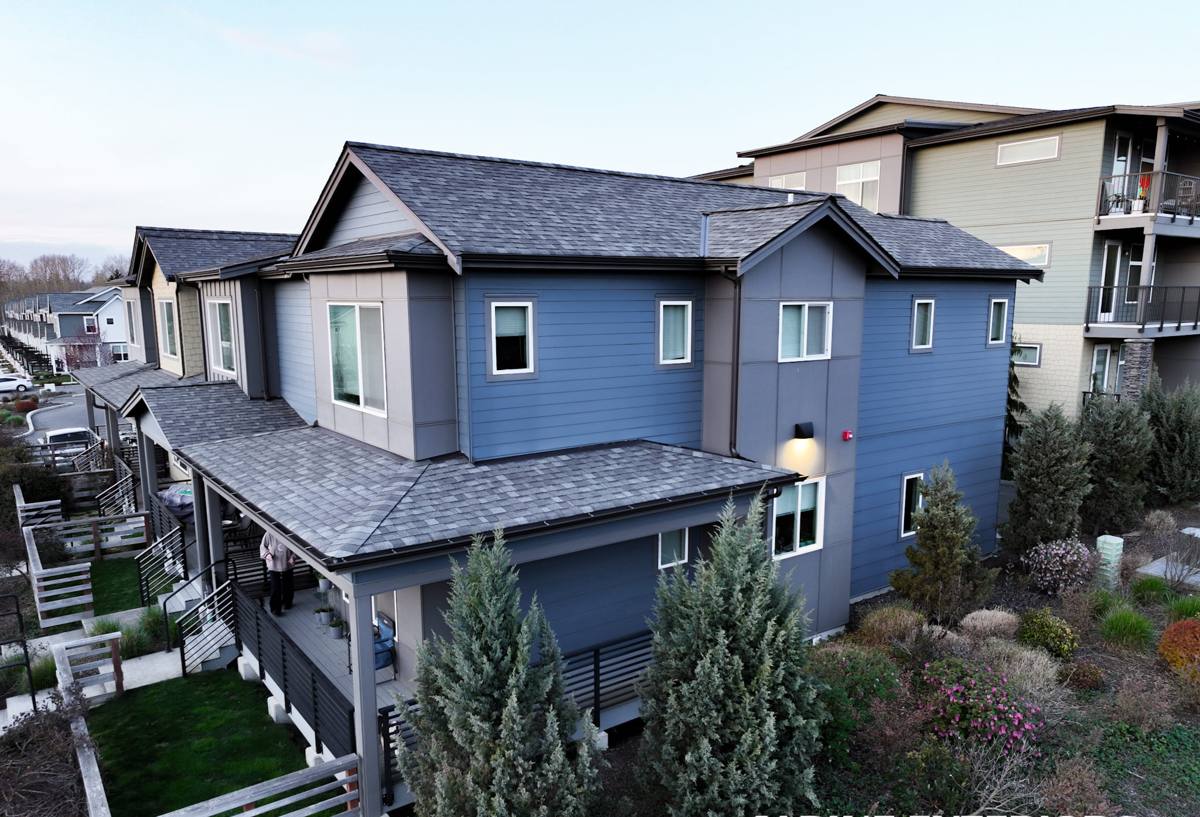
How Salt Air and Driving Rain Actually Damage Windows
Salt Air
Salt in the air isn't just a coastal curiosity — it's corrosive to a lot of the hardware inside a window assembly. Aluminum cladding, steel reinforcement in vinyl frames, and lower-grade fasteners all corrode faster when they're regularly exposed to salt-carrying wind, even a few miles inland. The visible sign is usually pitting or white corrosion on hardware, hinges that start binding, or cladding that discolors unevenly. The damage that matters more is often hidden: corroded fasteners lose holding strength, and that's what eventually lets a window start to sag or leak at the corners.
Driving Rain
Ferndale gets weather systems that push rain nearly horizontal during winter storms. A window that would stay dry under a light vertical rain in a more sheltered location can take water directly onto the glass, sash, and — critically — the flashing and sill area. Poorly flashed windows or windows installed without a proper sloped sill can let water sit against the frame instead of shedding it, which leads to wood rot in the surrounding trim and, eventually, water tracking into the wall cavity. This is one of the most common failure points we find on older Ferndale homes: not the window itself, but the flashing detail around it.
Moss and Prolonged Dampness
Moss doesn't grow on window glass, but it grows readily on north-facing trim, sills, and the wood or composite surfaces around window openings that stay shaded and damp for months at a time. Moss holds moisture against the surface it's growing on, which accelerates rot in wood trim and can trap water against caulking, breaking the seal faster than it would fail on a drier elevation. A window that looks fine from six feet away can have moss-driven trim rot developing right at the frame edge.
Signs Your Windows Are Losing the Fight
- Fogging or a permanent haze between the panes of a double- or triple-pane window — the seal has failed and the gas fill is gone
- Visible corrosion, chalky white residue, or stiff/binding hardware on aluminum or steel components
- Soft or discolored wood trim around the frame, especially on north- or west-facing windows
- Drafts you can feel with a hand near the frame on a windy day, even with the window fully latched
- Difficulty opening, closing, or locking a window that used to operate smoothly
- Visible gaps or cracking in exterior caulking around the window perimeter
- Moss or dark staining on the sill, trim, or brick mold directly around the window
- Condensation forming on the inside of the glass regularly, even in normal indoor humidity
Repair vs. Replacement — How We Make the Call
Not every window with a problem needs to come out. We look at the frame material, the extent of any rot, whether the seal failure is isolated to one unit or widespread across the house, and how old the window is relative to its expected service life in this climate.
| Situation | Usually Repair | Usually Replace |
|---|---|---|
| Single fogged unit, sound frame | Yes — reglaze or replace the sash/glass pack | No |
| Hardware corrosion, frame otherwise solid | Yes — hardware swap | No |
| Soft wood at the sill or corners | Sometimes, if caught early | Often — rot rarely stops on its own |
| Multiple units failing across one elevation | Rarely cost-effective | Usually — points to a systemic issue |
| Original builder-grade windows, 20+ years old | Case by case | Usually — efficiency and hardware are both dated |
| Water intrusion into the wall cavity | No | Yes, along with flashing correction |
When we walk a Ferndale property, we're not just looking at the window itself — we're checking how it was flashed, whether the sill slopes correctly, and whether the surrounding siding or trim is doing its job of keeping water moving away from the opening. A brand-new window installed over bad flashing will fail again, just more slowly.
What We Look For and Fit for This Exposure
Frame Materials
Vinyl and fiberglass frames generally hold up well against salt exposure since they don't corrode the way bare metal does, but the hardware and reinforcement inside still matter — we spec corrosion-resistant fasteners and hardware where the unit will see direct salt air or wind-driven rain. Wood-clad windows can look great and perform well, but they carry a higher maintenance burden in this climate: the cladding needs to be fully intact and well-maintained, because any breach lets moisture into the wood core, and that's a harder problem to catch early than it is on an all-vinyl or fiberglass unit.
Glass Packages
Double-pane, low-E, argon-filled units are the practical standard for this climate — they cut down on heat loss and condensation without adding cost that doesn't pay back. Triple-pane makes sense on north- or west-facing walls that take the brunt of the weather, or for anyone prioritizing sound and thermal performance, but it's not a blanket recommendation for every opening on the house.
Installation Details That Matter Here
- Proper flashing integration with the existing siding or house wrap — this is where most leaks originate, not the window unit itself
- A sloped sill pan so water sheds outward instead of pooling against the frame
- Corrosion-resistant fasteners and hardware on any window facing prevailing wind and salt exposure
- Full perimeter sealing with a product rated for the temperature swings and moisture cycling this area sees
- Trim and casing detailing that doesn't create a shaded, damp pocket where moss can establish
Because We Also Do Siding, Roofing, and Decks
Windows don't fail in isolation — the roof line above a window, the siding around it, and the flashing tying it all together are one connected system for shedding water. Since we handle siding, roofing, windows, and decks, we can look at a window problem in the context of the whole exterior instead of treating it as an isolated glass-and-frame issue. If moss on the roof is shedding onto a window below, or siding damage near an opening is what let water in to begin with, we can address it as one job instead of sending you to three different contractors who each only see their own piece of it.
Working with a Local Crew
A lot of window problems in this part of Whatcom County trace back to installations that were designed for a milder or more sheltered site than the home actually sits on. A crew that works this area regularly knows to check flashing details, expects salt exposure on the west- and water-facing sides of a property, and doesn't treat moss growth as cosmetic. That local knowledge shows up in small decisions — hardware grade, sealant choice, sill slope — that don't cost much more up front but make a real difference in how long the work lasts against Ferndale's weather.
We also know this climate doesn't forgive shortcuts. A window installed without proper flashing might look fine for a year or two before the first real leak shows up, and by then the fix is bigger and more expensive than it needed to be. Getting it right the first time matters more here than in a lot of places.
What to Expect from a Window Project
Assessment
We start by looking at the windows in question along with the surrounding trim, siding, and flashing — the goal is to understand why a window is failing, not just that it's failing, since the surrounding assembly is often part of the problem.
Scope and Options
You'll get a clear picture of what's repair-worthy, what needs replacement, and what frame and glass options make sense for the specific exposure of that opening — a window on a sheltered south wall doesn't need the same spec as one facing prevailing wind and rain.
Installation
Proper flashing and sealing get as much attention as the window unit itself. This is the step most likely to be rushed elsewhere and most likely to determine whether the work holds up.
Cleanup and Walkthrough
We walk the finished work with you, including how the new windows operate and what routine maintenance — if any — will help them hold up against the salt air and moss exposure typical of this area.
Maintenance That Extends Window Life Here
- Rinse salt residue off exterior frames and hardware periodically, especially after storms with onshore wind
- Keep gutters and downspouts clear so roof runoff isn't dumping extra water onto window heads and sills
- Check caulking annually and re-seal any cracked or separated joints before winter rains set in
- Clear moss from nearby trim, siding, and roof edges before it spreads onto window surfaces
- Operate hardware periodically, even on windows you rarely open, to keep it from seizing
- Watch for soft spots in sill or trim wood during your regular exterior walk-around
Get a Straightforward Look at Your Windows
If you're dealing with drafts, fogged glass, sticking hardware, or you just want an honest read on how much life is left in your current windows, we're glad to take a look. There's no pressure and no sales script — just a straight assessment based on what your home is actually facing. Use the form below to request a free estimate, and we'll get back to you to schedule a time to come take a look.