 Sudden Valley Window
 Windows Built for Where You Actually Live
Deming sits up the Nooksack River valley, tucked against forested foothills on the way to Mount Baker. That location is beautiful, but it's also demanding on a house. Homes here deal with more shade, more standing moisture, and more organic growth than houses out in the open valley floor or closer to town. Add in the broader Whatcom County pattern of long, wet winters and a marine-influenced climate that keeps humidity high most of the year, and windows in this area age differently than they would in a drier part of the state.
We work throughout Whatcom County, and Deming is one of the areas where we see the clearest evidence of what driving rain, tree cover, and a long moss season do to a home's exterior over ten or twenty years. This page covers what that means for your windows specifically, what we look for, and how we approach the work.
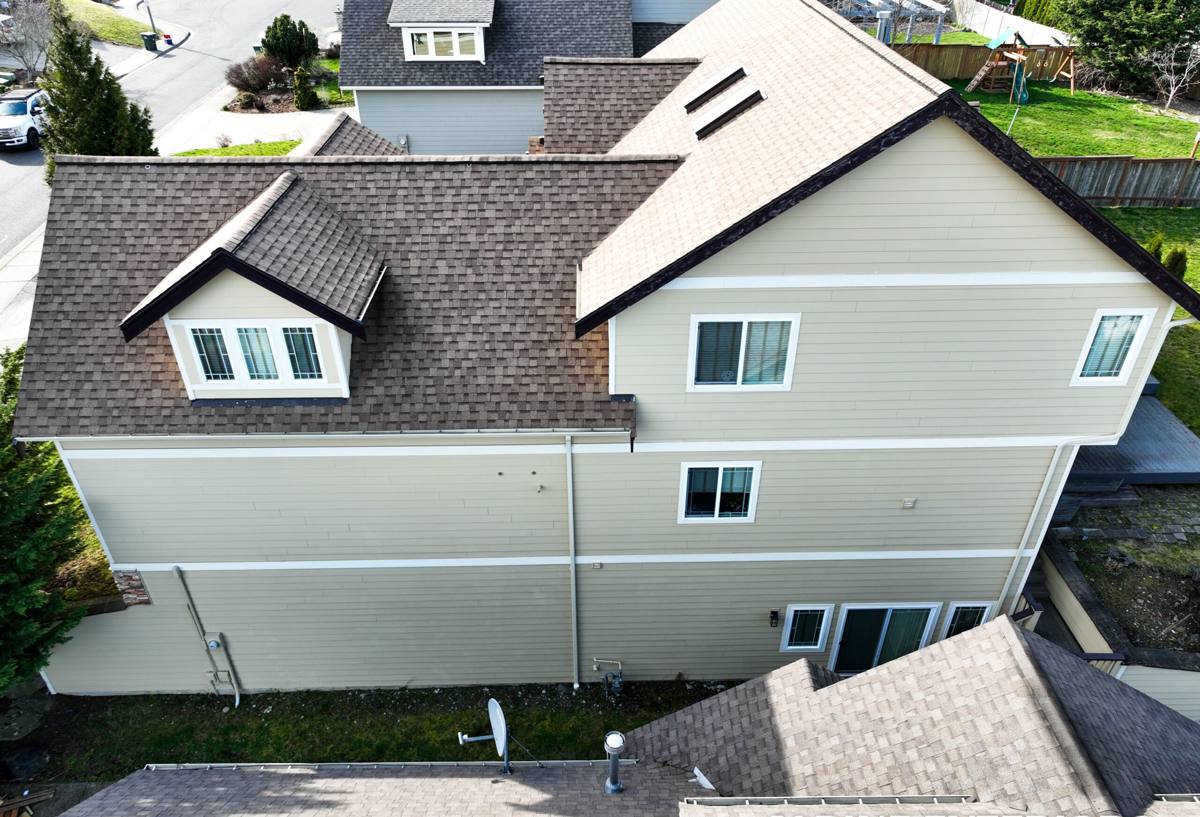
What This Climate Does to Windows Over Time
Moss and Organic Growth
Properties with heavy tree canopy — common around Deming — stay damp longer after a storm than a house in full sun. Moss and algae don't just grow on roofs; they take hold in window sills, tracks, and the gaps around trim where wind-blown debris and moisture collect. Left alone, that organic buildup holds water directly against wood trim and caulking, which accelerates rot and breaks down seals faster than the manufacturer's warranty ever assumed.
Driving Rain and Wind-Driven Moisture
Rain here rarely falls straight down. Storms moving up the valley push moisture sideways into west- and south-facing walls, which is exactly where flashing and sealant quality matters most. A window that's been installed correctly sheds that water. A window with a shortcut in the flashing detail — even a small one — lets water track behind the trim, where you won't see a problem until there's already a soft spot in the wall.
Humidity and Condensation
Whatcom County's marine-influenced air keeps relative humidity high for much of the year. Combined with our cool nights, that shows up as condensation on window glass and, in older or failing units, moisture fogging between panes — a sign the seal has broken down. Chronic condensation on interior sills is also one of the earliest, cheapest-to-catch signs of a window that's no longer performing.
Signs Your Deming Home's Windows Need Attention
Most window problems don't show up as a dramatic failure — they show up as small annoyances that get worse. Walk your home's exterior and interior sills and look for:
- Fogging or a hazy film between the panes of double-pane glass (a broken seal, not something you can clean off)
- Wood trim that feels soft, spongy, or discolored when pressed
- Visible moss or dark streaking building up in the sill or corners
- Drafts you can feel with a hand near the frame on a windy day
- Windows that are hard to open, close, or lock — frames can shift as wood swells and dries seasonally
- Paint or finish that's peeling specifically around the window, not the wider wall
- A noticeable rise in heating costs without another clear explanation
Any one of these on its own isn't an emergency. Several together, especially on the same wall, usually means water has been getting past the seal for a while.
Repair or Replace?
Not every window problem means a full replacement, and we'll tell you honestly when a repair is the right call. A failed seal on an otherwise sound frame, a broken sash balance, or worn weatherstripping are often fixable. Full replacement makes more sense when the frame itself has taken on rot, when a whole elevation of windows is the same age and starting to fail at the same time, or when the existing units are single-pane and costing you real money in energy loss every winter.
| Situation | Usually Repair | Usually Replace |
|---|---|---|
| Foggy glass, sound frame | Sash/glass unit swap | — |
| Soft or rotted frame wood | — | Full window replacement |
| Hard to open/lock, frame intact | Hardware or balance repair | — |
| Single-pane, original to an older home | — | Replacement for efficiency |
| One window damaged, rest are recent | Spot repair or single swap | — |
| Persistent drafts across multiple windows | — | Replacement, likely with re-flashing |
What We Install and Why
We install a range of vinyl and fiberglass window lines depending on your budget, the home's age, and how it's built. For this climate, we lean toward products with strong warranty-backed seal performance and frame materials that don't depend on regular painting or refinishing to hold up — less annual maintenance matters when a house sits in shade and moisture for months at a stretch. We steer away from window systems that require careful, frequent upkeep to perform well here, not because any one product is bad, but because our standard is picking what holds up with the least homeowner effort in a wet, shaded climate.
| Frame Type | Maintenance | Typical Fit |
|---|---|---|
| Vinyl | Low — no painting, occasional cleaning | Most replacement projects; good value |
| Fiberglass | Low — very stable in temperature swings | Larger openings, higher-end remodels |
| Wood-clad | Moderate — exterior clad, interior wood finish | Homes prioritizing an interior wood look |
| Aluminum | Low upkeep, but prone to condensation without thermal breaks | Specific commercial or modern applications |
We'll walk you through the real trade-offs for your home instead of pushing whatever's easiest for us to sell.
Installation Done Right, Not Just Fast
Correct window installation is mostly invisible work — it's what happens under the trim before the new window ever gets caulked in. On every job we:
- Check the rough opening for existing water damage or rot before setting anything new into it
- Install house wrap and flashing in the correct shingle-lap order so water is directed out, not trapped in
- Set the window level, plumb, and properly shimmed so it operates smoothly for years, not just on day one
- Seal and insulate the gap around the frame — a poorly insulated gap is a common source of drafts even with a good window
- Finish trim and caulking with materials suited to a wet climate, not just whatever's cheapest
Skipping any one of those steps is how a brand-new window ends up with a moisture problem inside five years. It's also why we'd rather take the extra hour on flashing than have you calling us back about a soft spot in the wall.
Why a Local Crew Matters in an Area Like This
A contractor who works Whatcom County year-round knows that a west-facing wall in a shaded Deming lot behaves differently than the same wall on an open lot closer to Bellingham or out toward the water. That's not something you learn from a manual — it's something you learn by seeing which homes in this specific area develop moss buildup, which wall orientations take the worst of the wind-driven rain, and which older installations are starting to show their age. We bring that local knowledge to every estimate, and we're a phone call away if something needs a second look after the job is done — not a crew that drove in from out of the area for one project.
Windows Are Part of a Bigger System
Windows don't fail in isolation. A roof that's shedding water poorly, siding with gaps at the trim, or a deck ledger board holding moisture against the house all affect how well your windows hold up, and vice versa. Because we handle siding, roofing, windows, and decks, we can look at your home as one connected exterior system instead of treating a window replacement as a job disconnected from what's happening on the roof above it or the siding around it. If we spot a related issue while we're out for a window job — a flashing gap, a soft fascia board — we'll tell you, whether or not it's something we're there to fix that day.
What a Project Typically Looks Like
Every home is different, but most window projects in this area follow the same basic shape: a walkthrough to assess current condition and discuss goals, a written estimate with real product options (not just one), a scheduled install window that accounts for weather, and a final walkthrough where we show you how the new windows operate and what maintenance, if any, they need going forward. For a handful of windows, most jobs are done in a day or two. Full-home replacements take longer and we'll give you a realistic timeline up front, not an optimistic one.
If your Deming home's windows are fogging, drafty, or just old enough that you're wondering whether it's time, we're happy to take a look. Estimates are free and there's no pressure to move forward — use the form below to get started.