 Sudden Valley Window
 Acme's Climate and What It Means for a Home's Exterior
Acme sits in the foothill country of Whatcom County, tucked into the South Fork Nooksack River valley where the flat farmland of the lowlands starts giving way to the timbered slopes leading up toward the Cascades. That location matters more than most homeowners realize. Valleys like this one catch and hold moisture differently than open, low-lying areas closer to Bellingham or the coast — rain moves up the valley, slows down against the rising terrain, and drops more of it locally than you'd see just a few miles away on flatter ground. Add in heavy tree cover on most lots, and you get a climate that's tough on wood, tough on seals, and relentless on anything that can't shed water quickly and dry out between storms.
Driving Rain and Foothill Rainfall
Wind-driven rain in a foothill valley doesn't behave like a straight-down shower. Terrain funnels it, and gusts push it sideways into window frames, siding laps, and roof-to-wall transitions with more force than homeowners expect. Over years, that repeated pressure finds every weak seal, every gap in flashing, and every spot where caulking has started to give up.
A Moss Season That Runs Most of the Year
Shade from surrounding trees, consistent dampness, and mild temperatures are exactly what moss and mildew need to thrive, and Acme's wooded lots supply all three for most of the year. Roofs are usually the first place it shows, but window sills, siding laps, and deck boards that stay damp under tree cover pick it up too. Homes with heavier canopy or north-facing walls tend to need more frequent attention simply because those surfaces rarely get a full day of direct sun to dry out.
Moist Air Reaches Well Inland
Whatcom County's marine-influenced climate doesn't stop at the water's edge. The same moist, salt-tinged air that comes off the Sound moves up river valleys and settles into foothill communities like Acme, adding to the humidity that's already high from rainfall and tree cover. It's a slower, quieter form of exposure than what a beachfront home deals with, but it still means metal hardware, fasteners, and window components need to be rated for a genuinely damp environment, not a dry one.
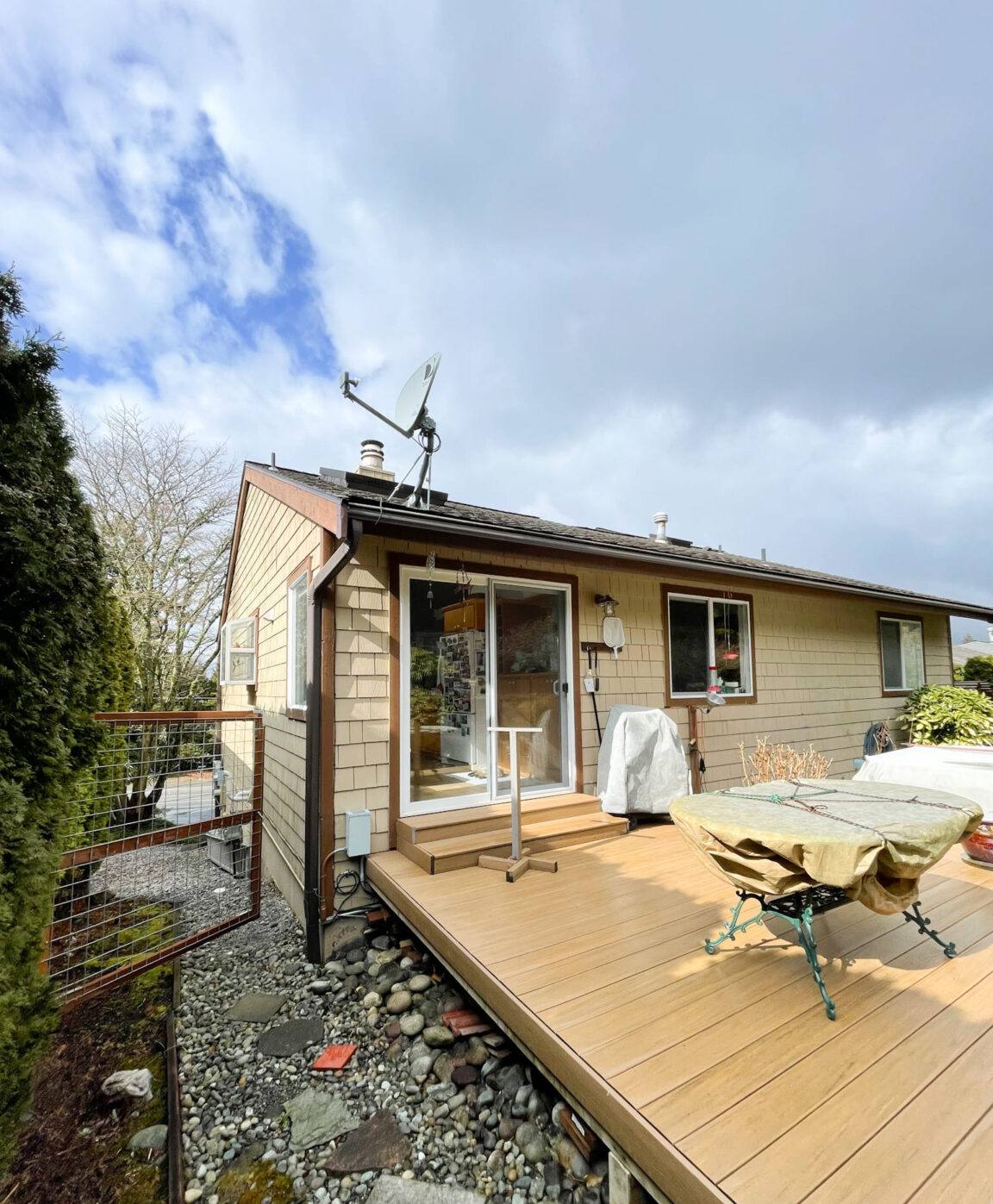
Windows Built for Wet, Wooded Conditions
Windows take on a specific kind of stress in a climate like Acme's. It's not just the glass — it's everything around it. The frame material, the seal between frame and rough opening, the flashing above the window, and the drainage path below all have to work together, because if any one of them fails, water finds its way in and the damage shows up as rot in the framing long before it shows up as a stain on the wall.
Sealing Against Driving Rain
We flash every window head with a proper drip cap and integrate that flashing with the house wrap or weather-resistive barrier behind the siding, not just caulk over the top and call it done. Sill pans direct any water that does get past the outer seal back outside instead of into the wall cavity. On a valley lot exposed to sideways rain, these details are the difference between a window that lasts decades and one that starts letting moisture into the wall assembly within a few years.
Condensation and Older Frames
A lot of the window calls we get in foothill and wooded areas aren't about leaks at all — they're about condensation. Older aluminum-frame or single-pane windows conduct cold straight through, and in a home that stays humid most of the year, that shows up as fogged glass, water pooling on sills, and eventually soft wood or mold at the corners. Modern insulated frames with a proper thermal break solve most of this on their own, simply by keeping the interior glass surface warmer than the dew point.
Comparing Frame Materials for This Climate
| Frame Material | Moisture Performance | Maintenance | Typical Fit for Acme |
|---|---|---|---|
| Vinyl | Won't rot; seams need quality welding to stay watertight | Low — occasional cleaning | Strong all-around choice for most homes |
| Fiberglass | Very stable, resists swelling and warping | Low | Good for larger openings or higher-end remodels |
| Wood, unclad | Handsome but vulnerable to prolonged dampness | High — regular painting/sealing required | Only where an owner commits to upkeep |
| Aluminum-clad wood | Exterior protected, wood interior still needs care | Moderate | Works if budget allows and style calls for it |
We don't push one material on every homeowner. The right choice depends on the home's exposure, the style of the house, and how much upkeep an owner actually wants to take on — but we'll always tell you plainly which options hold up here and which ones ask more of you over time.
Siding, Roofing, and Decks — The Rest of the Exterior
Windows rarely fail in isolation from the rest of the exterior envelope, which is why we handle siding, roofing, and decks alongside window work rather than treating them as separate trades. A window replaced correctly but surrounded by failing siding or a roof that's dumping water down the wall is still a home with a moisture problem — it just moved a few feet over.
On siding, we install fiber cement almost exclusively because of how it performs in exactly this kind of damp, shaded environment — it doesn't swell, cup, or absorb water the way some engineered wood or primed products can after repeated wetting cycles that never fully resolve under tree cover. On roofing, correct underlayment, properly lapped flashing at every penetration, and ventilation that lets the roof deck dry out between storms are the baseline, especially with the moss pressure Acme's tree cover creates. On decks, we build with fasteners and hardware rated for sustained moisture exposure and detail the ledger and framing connections so water sheds away from the house rather than pooling against it.
Why a Local Crew Matters in Acme
A lot of exterior problems in this part of Whatcom County come down to installers applying generic details that work fine in a drier climate but don't hold up here. A crew that works this valley regularly knows which walls on a typical Acme lot take the worst of the wind-driven rain, how much shade a property is likely to hold onto through the seasons, and how differently a foothill home can behave compared to one just a few miles away on open ground. That local knowledge shows up in small decisions — extra flashing at a vulnerable transition, a different fastener spec, a recommendation to hold off on a lower-maintenance material — that don't show up on a spec sheet but matter over the life of the job.
It also means being reachable after the work is done. If a seal needs a second look after the first hard rain of the season, or a question comes up two years later, you're calling a crew that's still working in the area, not chasing down someone who moved on to a different region.
Our Process, From Estimate to Cleanup
- Free on-site walkthrough to look at existing windows, siding, roofing, and decking condition together, not in isolation
- Honest assessment of what actually needs replacing now versus what can reasonably wait
- Written estimate with clear scope — materials, flashing and drainage details, and timeline
- Work scheduled around weather windows where possible, since installation quality suffers if it's rushed in a downpour
- Daily cleanup and a final walkthrough before we consider the job finished
What Drives the Cost of a Window Project
| Factor | Why It Matters |
|---|---|
| Frame material | Vinyl, fiberglass, and clad-wood carry different material and labor costs |
| Number and size of openings | Larger or custom-sized windows require more material and labor time |
| Condition of existing framing | Rot or water damage found during removal adds repair scope before new windows go in |
| Access and site conditions | Steep lots, tree cover, or difficult access can add time to installation |
| Full-frame vs. insert replacement | Full-frame replacement costs more but is often the right call when flashing or sill damage is present |
We walk through these factors with every homeowner before any work starts, so there are no surprises between the estimate and the final invoice.
Maintenance That Keeps Windows and the Rest of the Exterior Performing
- Clear debris from window sills, tracks, and weep holes each fall before the heavy rains set in
- Check exterior caulk lines annually and re-seal any spots that have cracked or pulled away
- Keep tree branches trimmed back from the house to reduce shade, debris, and moss buildup on siding and roofing
- Watch for condensation between panes, which usually signals a failed seal rather than a fixable fog
- Have roofing and siding checked periodically, since a small leak elsewhere can show up as water intrusion around a window that's otherwise fine
Signs It's Time to Call
Not every issue means a full replacement. But a few signs are worth a call sooner rather than later: drafts around a closed window, soft or discolored wood at the sill or trim, difficulty opening and closing a window that used to move freely, or visible daylight around the frame. In a climate like Acme's, small gaps don't stay small — they're an entry point for moisture that will keep working on the framing behind the wall until it's addressed.
If you're weighing whether your windows — or your siding, roof, or deck — are due for attention, we're happy to take a look and give you a straight answer, including telling you when something can wait. Reach out for a free, no-pressure estimate using the form below.