 Sudden Valley Window
 Roof Repair in Deming: What Local Homes Actually Need
Deming sits in a part of Whatcom County where roofs work harder than they do almost anywhere else in the state. Between the Nooksack valley's damp air, the driving rain that blows in off the Sound, and long stretches of shade under fir and cedar cover, roofs here take on moisture almost year-round. A repair that would hold up fine in a drier climate can fail within a season if it doesn't account for how much water this area actually sees, and for how long moss and organic debris sit on a roof surface before anyone notices.
When we repair a roof for a homeowner near Sudden Valley or out toward Deming, we're not just patching the spot that's leaking. We're looking at why that spot failed in the first place, because in this climate the cause is almost always related to moisture management — flashing that's lost its seal, underlayment that's been saturated too many times, or moss and debris that have been holding water against the shingles longer than they should.
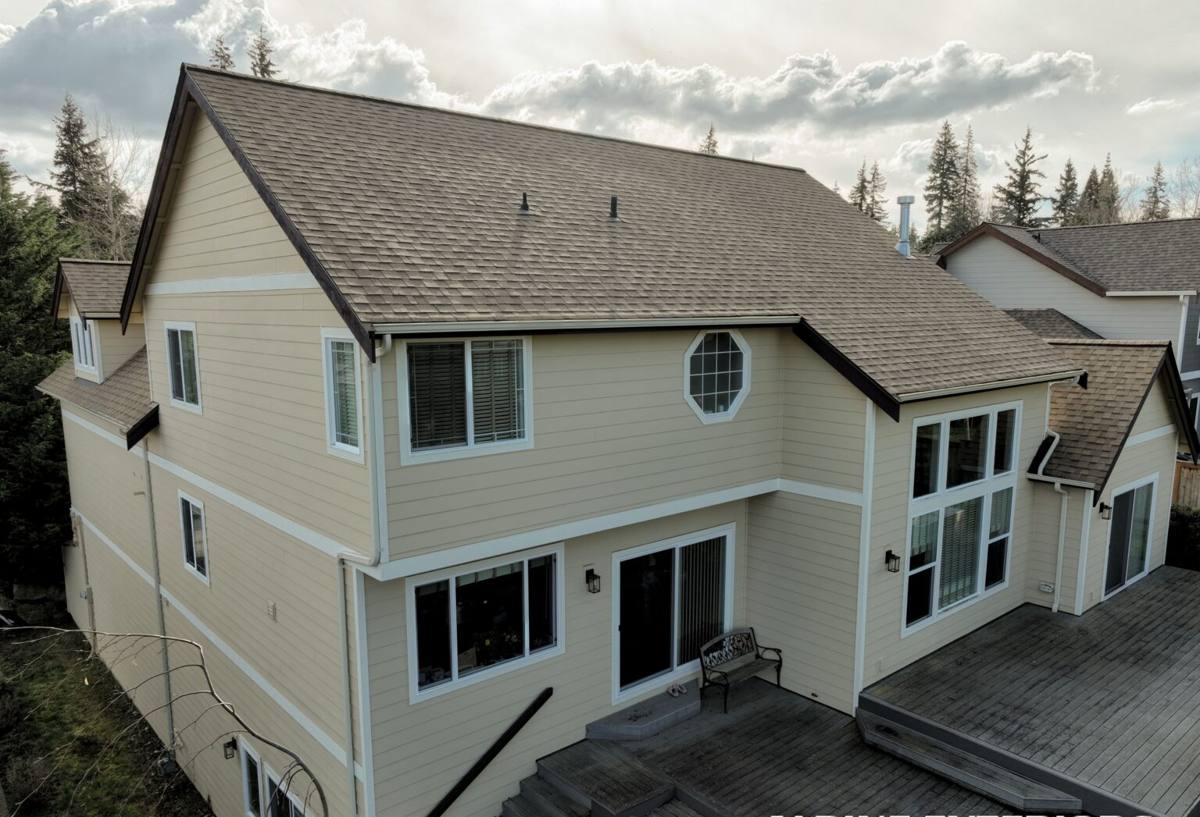
Why Whatcom County Weather Is So Hard on Roofs
Three things drive most of the roof repair calls we get in this area, and they compound each other:
Salt Air
Homes closer to the water deal with airborne salt that speeds up corrosion on exposed metal — flashing, fasteners, vent boots, and gutter hardware. Once corrosion starts on a flashing seam, that seam stops shedding water the way it's supposed to, and that's often where a "small drip" starts.
Driving Rain
This isn't gentle, straight-down rain. Storms here often come in sideways, which means water gets pushed under shingle edges, around vent penetrations, and into any gap that a calmer climate would never test. Roofs built or repaired without that in mind tend to leak at exactly those pressure points.
A Long Moss Season
Shaded lots, tree cover, and near-constant moisture give moss a long growing window here — often most of the year. Moss doesn't just look bad. It holds water against the roofing material, lifts shingle edges as it grows, and traps debris that keeps the surface wet even between rain events. Left alone, it turns a roof that should last decades into one that's rotting from the surface down.
Signs a Deming Home Needs a Roof Repair
Most roof problems in this area give some warning before they turn into an interior leak. Worth checking for, especially after a windy storm or heading into fall:
- Moss buildup along the shaded slopes or north-facing sections of the roof
- Granules collecting in gutters or downspouts — a sign shingles are wearing thin
- Shingles that look curled, lifted, or cracked, especially near the ridge or valleys
- Rust streaks or visible corrosion around flashing, vent pipes, or chimney bases
- Dark staining or a soft spot on interior ceilings, especially near exterior walls
- Daylight visible through the attic roof deck
- Sagging sections along the roofline or around valleys
- Gutters that overflow during moderate rain, which can point to blocked flow or improper flashing at the eave
Any one of these on its own might be minor. Two or three together usually mean water has already found a way in, even if it hasn't shown up inside the house yet.
What a Correct Roof Repair Involves
A roof repair that actually holds in this climate is more than swapping out a few shingles. It starts with figuring out the real source of the problem, because the visible damage and the actual leak point are often several feet apart — water travels along the underlayment or decking before it shows up as a stain.
Inspection Before Repair
We look at the full roof plane around the problem area, not just the spot that's leaking. That includes checking the decking underneath for soft or rotted wood, since a shingle repair over compromised decking won't last regardless of how well it's installed.
Flashing and Penetrations
Most leaks we find in Whatcom County start at a transition point — where a roof meets a chimney, a wall, a vent pipe, or a valley. Flashing in these areas needs to be properly lapped and sealed to shed water in driving rain, not just resting rain. This is the detail that gets skipped in a rushed repair and the reason the same spot leaks again a year later.
Underlayment and Decking
If water has been getting under the shingles for a while, the underlayment and decking beneath may be saturated or starting to rot. A durable repair replaces that layer where it's compromised rather than covering it back up.
Material Matching
Where a section of roofing needs to be replaced, we match the existing material as closely as possible — profile, color, and weight — so the repair blends in and performs consistently with the surrounding roof rather than creating a mismatched patch that ages differently.
Moss and Debris Removal
Any repair on a roof with active moss growth includes clearing that moss and the debris underneath it first. Repairing shingles while leaving moss in place just means the same section fails again once the moss regrows and starts holding moisture against the new work.
Common Roof Repairs We Handle Around Deming
| Repair Type | Typical Local Cause | What the Fix Involves |
|---|---|---|
| Flashing repair or replacement | Corrosion from salt air, seams that have separated | Remove and re-lap flashing with proper overlap and sealant, matched to the surrounding roof profile |
| Moss-damaged shingle sections | Long moss season, shaded roof areas | Clear moss and debris, assess and replace lifted or degraded shingles, treat to slow regrowth |
| Valley leak repair | Driving rain forced under shingles at the valley | Rebuild the valley with correct underlayment and flashing, re-lay shingles with proper overlap |
| Vent pipe or chimney boot leaks | Rubber boots and old sealant breaking down from UV and moisture cycling | Replace the boot or flashing collar and reseal the penetration |
| Soft or rotted decking | Prolonged undetected leak | Cut out and replace affected decking before re-roofing that section |
| Gutter and eave line repair | Debris buildup, ice or moss damming water at the edge | Clear and repair the eave flashing and gutter attachment so water sheds properly |
Our Process for a Roof Repair Call
1. On-Site Assessment
We walk the roof and the attic where accessible, trace the leak back to its actual source, and check the condition of the decking and underlayment in that area — not just the surface.
2. Straightforward Explanation
We explain what's actually wrong, why it happened, and what it will take to fix it correctly. If moss or debris is contributing to the problem, we say so, because a shingle repair alone won't hold if the underlying moisture issue isn't addressed.
3. Written Estimate
You get a clear scope and price before any work starts — no guessing at what's included.
4. The Repair
We clear moss and debris where present, address the flashing or underlayment issue at the source, replace decking or shingles as needed, and match materials to the existing roof.
5. Cleanup and Walkthrough
We clear the work area of debris and old material and walk you through what was done and what to watch for going forward.
Repair vs. Replacement: What Drives the Decision
Not every roof problem in Deming needs a full replacement, but it's worth understanding what tips the decision one way or the other:
| Factor | Favors Repair | Favors Replacement |
|---|---|---|
| Roof age | Roof is well within its expected service life | Roof is near or past the end of its material's typical lifespan |
| Extent of damage | Damage is limited to one section or penetration | Multiple sections show wear, curling, or moss damage |
| Decking condition | Decking underneath is sound | Widespread soft spots or rot found in the decking |
| Leak history | First occurrence, source is identifiable | Recurring leaks in different spots over time |
| Material availability | Matching material is still available | Original material is discontinued and mismatched patches would be visible |
We'll always tell you honestly which side of that table your roof falls on. A repair that's likely to fail again within a year or two isn't a good use of your money, and we'd rather say that upfront than sell a patch we don't believe in.
Why a Crew That Already Works Deming Matters
Roofing details that work in a dry climate can be the wrong call here. A contractor who mostly works elsewhere may not think twice about how much lapping a flashing needs to handle rain blowing sideways off the water, or how aggressively moss needs to be addressed on a shaded, tree-covered lot that barely dries out between storms. Working regularly in this part of Whatcom County means we've seen how roofs actually fail here — not in a textbook, but on real homes dealing with real Sudden Valley and Nooksack valley weather. That shapes how we flash a valley, how seriously we treat moss, and what we check before calling a repair finished.
Keeping a Repaired Roof in Good Shape
A well-done repair still needs some basic upkeep to get its full lifespan out of it, especially in a climate that grows moss most of the year:
- Keep gutters and downspouts clear so water actually leaves the roof instead of backing up at the edge
- Have moss addressed before it spreads across a full slope, not after
- Trim back overhanging branches where practical to cut down on shade and debris
- After major windstorms, take a look (or have us look) for lifted shingles or displaced flashing
- Address small leaks early — a stain the size of a coin now is a much cheaper fix than a rotted section of decking later
Get a Straight Answer on Your Roof
If you're dealing with a leak, moss buildup, or a roof section that just doesn't look right, it's worth having someone take a look before it turns into a bigger repair. We offer free, no-pressure estimates for homes in Deming and throughout the Sudden Valley area — use the form below and we'll get back to you with an honest read on what your roof actually needs.