 Sudden Valley Window
 New Roof Installation Built for Happy Valley's Climate
Homes in Happy Valley sit in one of the more demanding roofing environments in Whatcom County. The combination of moisture off the water, wind-driven rain, and long stretches of shade from mature trees means a roof here works harder than one going up in a drier inland town. When we install a new roof in this neighborhood, we're not just following a generic checklist — we're accounting for how salt air corrodes exposed metal, how driving rain finds its way under poorly lapped materials, and how moss takes hold on any surface that stays damp and shaded for weeks at a time.
A new roof installation is a big investment, and it's also one of the few home improvements that protects everything underneath it — framing, insulation, drywall, and whatever's inside your house. Getting it right the first time matters more here than in milder climates, because a mistake doesn't just cost you a repair bill, it costs you months of slow water intrusion before anyone notices.
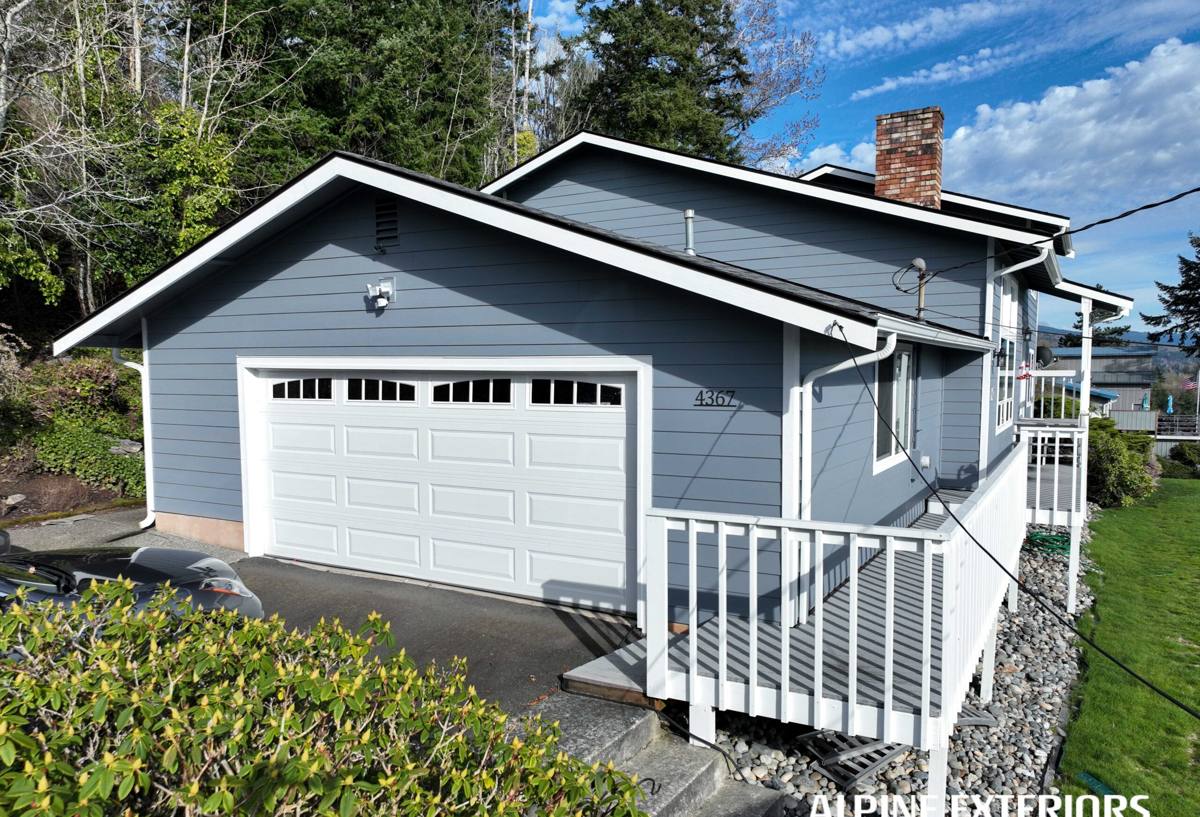
What Happy Valley's Climate Does to a Roof
Salt Air and Corrosion
Proximity to Puget Sound-influenced air means metal components — flashing, fasteners, vent caps, gutters — are exposed to airborne salt that accelerates corrosion. Standard galvanized fasteners can start rusting years before they would inland. We spec corrosion-resistant flashing and fastener packages specifically because we've seen what happens when a roof is built with hardware that isn't rated for this environment: streaking, weakened flashing seams, and eventual leaks at the exact points that are supposed to keep water out.
Driving Rain
Whatcom County storms don't always come straight down. Wind-driven rain gets pushed sideways under shingle tabs, around chimney flashing, and into any gap that a fair-weather installation might get away with. A roof built for this area needs tighter lap spacing, properly sealed penetrations, and underlayment that's rated to handle water that isn't just falling — it's being pushed.
Moss and Prolonged Moisture
Shaded roof sections that stay damp for extended periods are prime territory for moss and algae growth. Moss isn't just cosmetic — its root structure lifts shingle edges, holds water against the roof deck, and shortens the life of the material underneath it. A new roof installation is the right time to address moss-prone areas with zinc or copper strip protection and, where the roof layout allows, ventilation improvements that help sections dry out faster between rain events.
Signs Your Happy Valley Home Needs a New Roof
- Shingles that are cupping, curling, or losing granules faster than the rest of the roof
- Moss buildup that comes back within a season or two of cleaning
- Dark streaking or staining that spreads across shaded slopes
- Soft spots in the roof deck when walked, or sagging visible from the ground
- Daylight visible through the attic roof boards
- Water stains on interior ceilings, especially near chimneys, skylights, or valleys
- A roof that's 20+ years old and has never been fully replaced, only patched
Any one of these on its own might be a repair. Several together usually mean the roof system as a whole is past the point where patching makes financial sense.
What a Correct New Roof Installation Involves
Tear-Off and Deck Inspection
We don't install new roofing over old material. A full tear-off lets us inspect the deck for rot, soft spots, or delamination — problems that are common on older Happy Valley homes where moisture has been getting into the deck slowly for years without showing up inside. Any damaged decking gets replaced before anything new goes down; roofing over a compromised deck just hides the problem and shortens the life of the new roof.
Underlayment and Ice/Water Protection
Given how much wind-driven rain this area sees, we don't treat underlayment as a formality. Synthetic underlayment goes down as the primary water barrier, and self-adhering ice-and-water membrane goes in at eaves, valleys, and around every penetration — the spots where driving rain is most likely to find a way in.
Flashing
Flashing is where most roof leaks actually start, not in the field of the shingles. Chimneys, skylights, sidewalls, and vent penetrations all get new, corrosion-resistant flashing, properly integrated with the underlayment so water sheds outward at every layer instead of relying on caulk to do the job.
Ventilation
A roof that can't breathe traps moisture in the attic, which speeds up deck rot and gives moss and mildew more to work with. We evaluate intake and exhaust ventilation as part of every new roof installation — sometimes the fix is as simple as adding ridge or soffit venting that the original roof never had.
Final Detailing
Drip edge, valley metal, pipe boots, and ridge caps all get installed to manufacturer spec, with fastener patterns and nail placement that hold up to sustained wind — not just the minimum needed to pass a quick inspection.
Roofing Material Options for This Climate
| Material | How It Handles Local Conditions | Maintenance Considerations |
|---|---|---|
| Architectural asphalt shingles | Good wind and rain performance when installed with proper lap and fastening; wide range of algae-resistant options | Benefits from periodic moss treatment on shaded slopes |
| Standing seam metal | Sheds driving rain well and resists moss due to smooth, non-porous surface | Requires marine-grade or coated fasteners to manage salt-air exposure |
| Synthetic/composite shakes | Mimics traditional look with better moisture resistance than wood shakes | Lower maintenance than natural wood in damp, shaded areas |
| Cedar shakes | Traditional appearance but more sensitive to prolonged moisture and moss in shaded Happy Valley lots | Higher upkeep — regular treatment needed to manage moss and rot risk |
We'll walk through these trade-offs honestly during your estimate — the right choice depends on your roof's sun exposure, your budget, and how much ongoing maintenance you want to take on. There's no single "best" material for every lot in Happy Valley; a heavily shaded, tree-covered property has different needs than a more open, wind-exposed one.
Our Process for a Happy Valley Roof Replacement
- On-site assessment — we inspect the existing roof, attic ventilation, and any problem areas you've noticed, and take measurements for an accurate estimate.
- Material and scope walkthrough — we go over material options, flashing and ventilation upgrades, and give you a clear, itemized estimate before any work starts.
- Scheduling around weather — we plan installation windows with realistic buffer for Whatcom County rain, so the deck isn't left exposed longer than necessary.
- Tear-off and deck repair — old roofing comes off, the deck is inspected, and any damaged sections are replaced.
- Installation — underlayment, flashing, ventilation components, and final roofing material go in to manufacturer and code specification.
- Cleanup and final walkthrough — job site debris and nails are cleared, and we walk the finished roof with you before calling the job done.
Cost Factors for a New Roof in Happy Valley
| Factor | Why It Affects Cost |
|---|---|
| Roof size and pitch | Steeper or larger roofs require more material, labor time, and safety equipment |
| Number of penetrations | Chimneys, skylights, and vents each need individual flashing work |
| Deck condition | Rot or soft decking found during tear-off adds repair costs not visible during the initial estimate |
| Material choice | Asphalt, metal, and shake options carry different material and labor costs |
| Ventilation upgrades | Adding or improving intake/exhaust venting is an upfront cost that reduces long-term moisture problems |
| Access and site conditions | Tree cover, steep lots, or limited driveway access can affect labor and equipment logistics |
We give you a real number after we've actually seen your roof — not a phone estimate based on square footage alone. Every Happy Valley property has its own combination of shade, pitch, and exposure that affects the final scope.
Why Local Experience Matters for This Job
A roofing crew that regularly works in Happy Valley and the broader Sudden Valley area already knows which details can't be skipped here — the fastener grade that holds up to salt air, the underlayment approach that handles sideways rain, and the ventilation setup that keeps moss from coming back within a year. That knowledge comes from working this specific climate repeatedly, not from a generic installation checklist written for a drier region. When you're comparing quotes, ask any contractor directly how they handle corrosion-resistant hardware and moss prevention — the answer tells you a lot about whether they've actually worked roofs like yours before.
If you'd like an honest look at what your roof needs, we offer free, no-pressure estimates — just fill out the form below and we'll set up a time to come take a look.