 Sudden Valley Window
 Storm Damage Roof Repair, Built for South Hill's Weather
South Hill sits above Lake Whatcom, which means homes here take weather from two directions at once: wind and rain rolling off the water, and the moisture that settles into the tree cover and never fully dries out between storms. That combination is exactly why storm damage on a South Hill roof rarely looks like the textbook version — a few missing shingles and a leak. More often it's a slower problem: wind-lifted shingle tabs that let water track sideways under the field, gutters overwhelmed by needle and leaf debris during a downpour, or a soft spot that's been taking on moisture for months before anyone notices a stain on the ceiling.
This page is specifically about storm damage repair for South Hill roofs — what causes it here, what a correct repair actually involves, and how we handle the job from first inspection to final cleanup. If you've had a windstorm come through, heard something hit the roof during a squall, or just want a roof checked out after a rough season, this is what to expect.
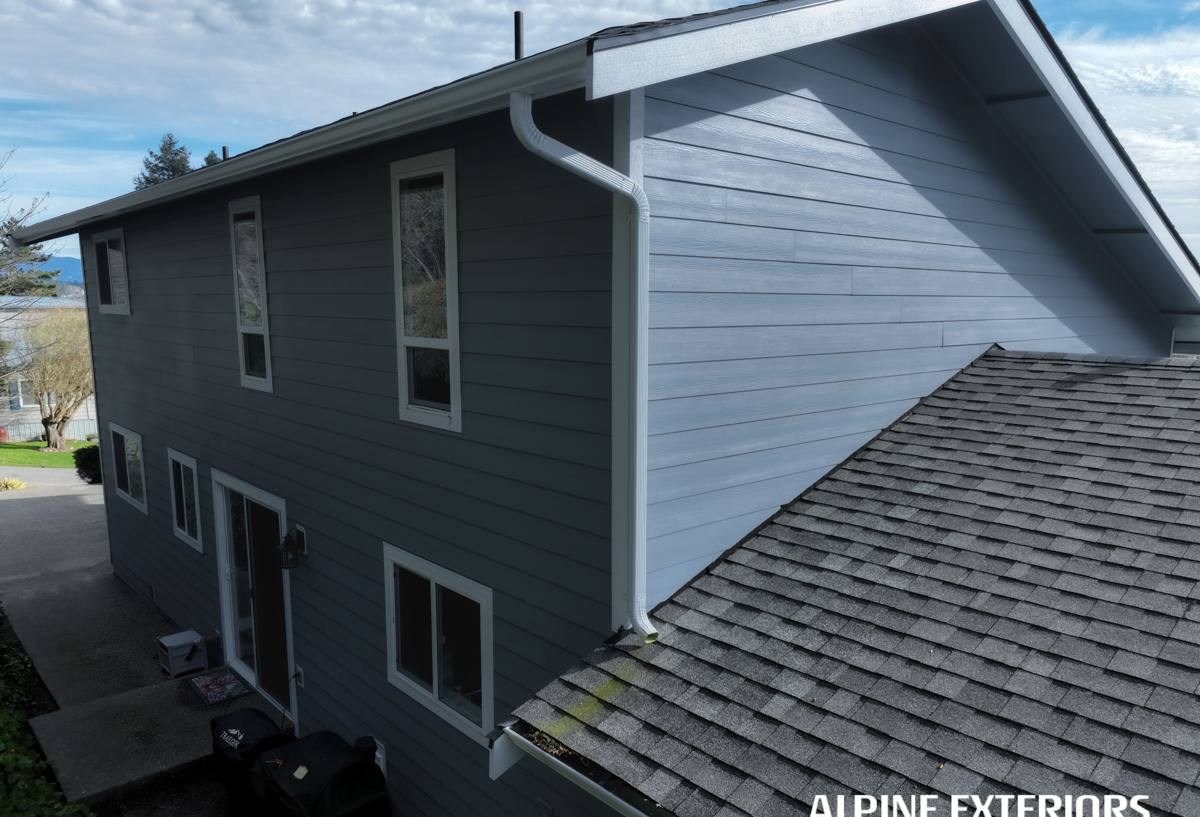
Why Storm Damage Shows Up Differently on This Side of Whatcom County
Every roofing contractor in Whatcom County deals with rain. What makes South Hill and the broader Sudden Valley area more demanding is the layering of three separate stressors on the same roof, often in the same season:
Salt Air and Moisture-Driven Wear
Homes closer to the water pick up a fine, persistent moisture load in the air that accelerates corrosion on exposed metal — flashing, fasteners, gutter hardware, and vent stacks. A fastener that would last two decades inland can start showing rust streaks noticeably sooner here. During a storm, that weakened metal is often the first thing to fail, not the shingles themselves.
Driving Rain
Wind-driven rain doesn't just fall on a roof — it pushes sideways and works its way under anything that isn't sealed or lapped correctly. Valleys, chimney flashing, skylight curbs, and the transition points where a roof meets a wall are the usual failure points. A roof that's watertight in a calm rain can still leak in a driving storm if those details weren't installed with enough overlap and sealant depth.
A Long Moss Season
Whatcom County's damp, shaded conditions mean moss has a long growing window on north-facing and tree-covered slopes. Moss holds water against the shingle surface, which speeds up granule loss and, over time, lifts shingle edges just enough for wind and rain to get underneath. A storm that would be a non-event on a clean roof can turn into real damage on a roof with heavy moss cover, because the moss has already compromised the seal.
None of these on their own is unusual for Western Washington. Together, on a South Hill roof, they mean storm damage tends to be cumulative rather than a single dramatic event — which is exactly why an inspection after a storm matters even when nothing looks obviously wrong from the ground.
What Counts as Storm Damage (and What Doesn't)
Not every roof issue after bad weather is storm-caused, and that distinction matters for both the repair plan and any insurance claim. A quick way to think about it:
- Storm-caused: shingles torn or lifted by wind, impact damage from falling branches, flashing pulled loose or bent, gutters torn away, sudden new leaks tied to a specific weather event.
- Pre-existing and storm-revealed: moss damage that's been building for seasons, worn-out flashing sealant, an aging roof simply reaching the end of its service life and finally failing under stress.
- Not storm damage: normal granule loss, minor moss growth with no lifting, cosmetic weathering.
We'll tell you honestly which category your damage falls into. That honesty matters most when insurance is involved, and it's part of why documentation is a core part of our process, not an afterthought.
What a Correct Storm Damage Repair Actually Involves
A rushed storm repair — a few shingles nailed down, a bead of sealant over a gap — can look fine for a season and then fail again in the next storm. A correct repair addresses the whole path water could take, not just the visible symptom. That means:
Finding the Real Entry Point
Water travels. A stain on a bedroom ceiling might trace back to a flashing gap several feet away. We trace the actual path before cutting into anything, so the repair targets the cause instead of the symptom.
Matching Materials and Method to What's Already There
Patching a repair with mismatched shingle profile, exposure, or fastening pattern creates a weak seam that's often the next failure point. We match existing materials where possible, and when a section is too degraded to patch cleanly, we say so rather than layering a repair over compromised decking.
Checking the Decking, Not Just the Surface
If water has been getting under the shingles for a while, the plywood or OSB decking underneath can be soft or delaminating. Re-shingling over damaged decking doesn't fix anything — it just hides it until the next leak. Any storm repair we do includes a check of decking condition in the affected area.
Reworking Flashing and Sealant Properly
Flashing that's been bent, lifted, or corroded by storm impact needs to be replaced or re-set, not just resealed on top. Sealant is a supplement to good flashing geometry — it's not a substitute for it.
Our Process, Start to Finish
| Step | What Happens |
|---|---|
| 1. Contact & triage | We ask what happened and what you're seeing — active leak, visible damage, or just a post-storm check. Active leaks get priority scheduling. |
| 2. On-site inspection | We walk the roof (or use appropriate access for steep sections) and check the full system: shingles, flashing, vents, gutters, and decking near any damage. |
| 3. Documentation | Photos and a written summary of findings — useful for you regardless of whether you're filing an insurance claim. |
| 4. Temporary protection, if needed | For active leaks or exposed decking, we can install temporary weatherproofing to stop further water intrusion before the full repair is scheduled. |
| 5. Written estimate | A clear scope of work and cost, broken out so you know what you're paying for and why. |
| 6. Repair | The actual work — matched materials, proper flashing and sealant technique, decking replacement if needed. |
| 7. Cleanup & final check | Site cleaned of debris and old material, gutters cleared if they were part of the problem, and a final walk-through. |
Insurance and Documentation
If a specific storm event caused the damage, your homeowner's policy may cover repair costs. We're not your insurance adjuster and won't promise a claim outcome, but we can:
- Provide clear photo documentation of the damage and its likely cause
- Write up findings in plain language an adjuster can use
- Point out, honestly, where damage looks storm-related versus long-term wear — because adjusters check for that distinction too, and inflated claims cause more problems than they solve
Good documentation done right after a storm is worth far more than documentation gathered weeks later once weather has masked the original damage pattern. That's another reason a prompt post-storm inspection pays off.
Cost Factors for Storm Damage Repair
Every roof and every storm is different, so exact pricing only makes sense after inspection. In general, cost is driven by a handful of factors:
| Factor | Why It Matters |
|---|---|
| Extent of shingle damage | A localized patch costs far less than a section needing full re-shingling. |
| Decking condition | Sound decking keeps costs down; soft or delaminated decking adds material and labor. |
| Flashing complexity | Chimneys, skylights, and multiple roof planes take more time to flash correctly than a simple field repair. |
| Roof pitch and access | Steeper roofs and limited access (tree cover, tight lot lines) affect labor time and safety setup. |
| Moss and debris removal | Heavy moss cover often needs treatment and removal before a proper repair can be assessed and completed. |
We provide a written estimate before any work starts, so there are no surprises once the job is underway.
After the Repair: Keeping South Hill's Weather From Doing It Again
A repair is only as good as the maintenance that follows it, especially given how long the moss season runs here. A few habits make a real difference:
- Clear gutters and downspouts before the fall rains ramp up — clogged gutters push water back under the roof edge
- Keep overhanging branches trimmed back to reduce both moss growth and impact risk in wind
- Have moss treated before it spreads, not after it's already lifting shingle edges
- Walk the roofline (from the ground, with binoculars if needed) after any significant windstorm to catch obvious lifted or missing shingles early
- Schedule a professional inspection every couple of years even without an obvious problem — small flashing gaps are easy to fix early and expensive to ignore
Why It Matters That We Already Know South Hill Roofs
A crew that works Sudden Valley and the South Hill area regularly isn't guessing about what your roof is up against. We've seen how driving rain off the lake finds the same weak points repeatedly, how moss builds differently on the shaded side of a hill lot than it does on an open one, and how salt-influenced air ages flashing hardware faster than manufacturer specs assume. That local pattern recognition means faster, more accurate diagnosis — we're not starting from zero on your roof type or your neighborhood's typical exposure.
It also means accountability. We're not a storm-chasing crew passing through after a bad weather week and gone by the next season. If a repair needs a follow-up visit, we're still local to make that happen.
Get a Free, No-Pressure Estimate
If your South Hill home has visible storm damage, a new leak, or you just want a professional set of eyes on the roof after a rough stretch of weather, we're happy to take a look. Use the form below to request a free estimate — no obligation, just an honest read on what your roof needs.