 Sudden Valley Window
 Why Yew Street Roofs Wear Out Faster Than the Brochure Says
Homes in the Yew Street area of Sudden Valley sit in a tough spot for a roof: close enough to open water and prevailing weather to pick up salt-laden air, exposed to long stretches of driving rain off the Pacific systems that roll through Whatcom County, and shaded enough by mature evergreens that moss gets a long, comfortable growing season. None of those things individually destroys a roof. Together, over 15-20 years, they compound. Salt air accelerates the corrosion of exposed metal fasteners and flashing. Driving rain finds every marginal seam, nail pop, and worn flashing detail and pushes water sideways instead of letting gravity do the work. Moss holds moisture against the roofing material long after a dry roof elsewhere in town would have shed it, and it works its way under shingle tabs and along ridge lines.
We replace roofs across Sudden Valley, but the homes near Yew Street specifically tend to show a particular wear pattern: moss buildup concentrated on the north- and shade-facing slopes, granule loss and fastener corrosion accelerating faster than the shingle's rated lifespan would predict, and soft or stained decking discovered at tear-off in spots that looked fine from the ground. Knowing that pattern in advance changes how we bid and build a replacement here — it's not a generic re-roof, it's one built for this specific exposure.
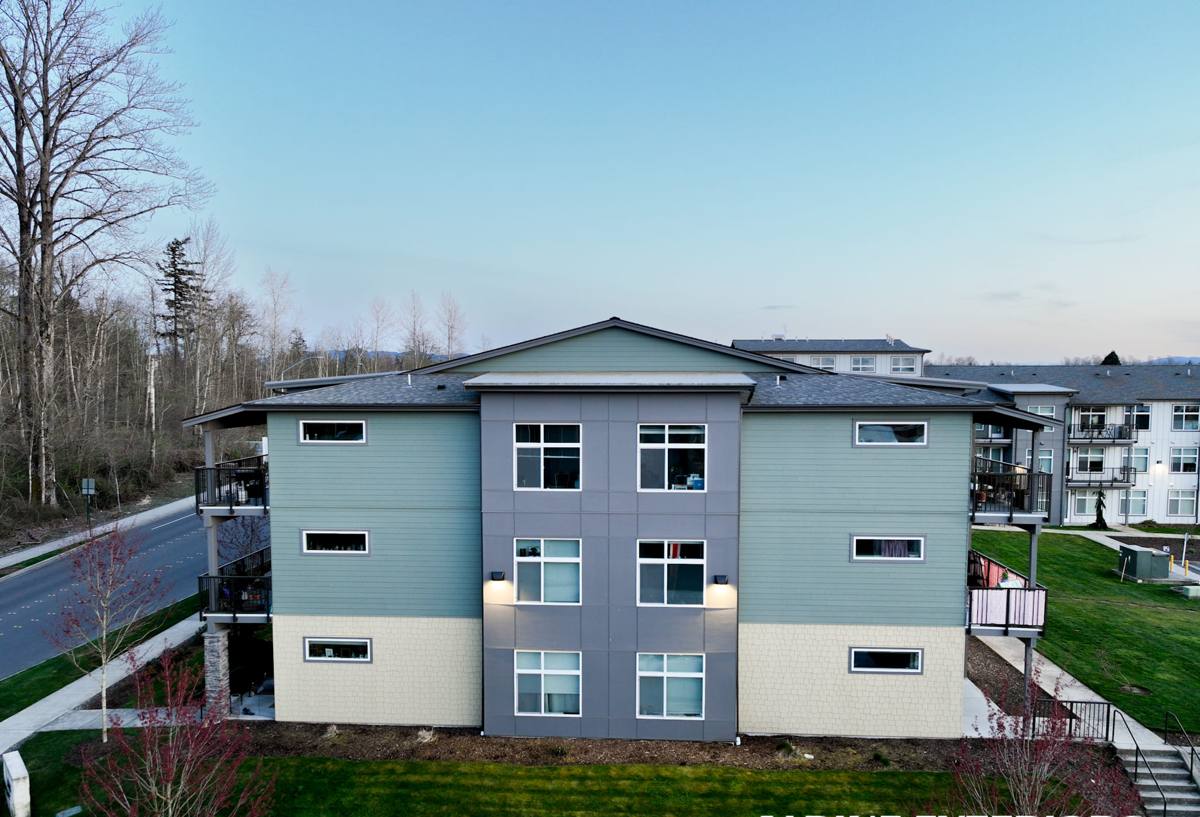
Signs a Yew Street Roof Needs Replacement, Not Another Repair
Every roof eventually crosses the line from "repairable" to "replace it." The tricky part is telling the difference, because a roof can look fine from the driveway and still be failing underneath. These are the signs we take seriously on homes in this area:
- Granules collecting in gutters and downspouts, especially after a hard rain — a sign the shingle surface is breaking down
- Moss or dark streaking that keeps returning within a season or two of cleaning, even after treatment
- Soft spots, sagging, or spongy decking felt when walking the roof
- Daylight visible through the attic roof deck, or water stains on attic sheathing/insulation
- Curling, cupping, or missing shingle tabs, particularly on shaded or north-facing slopes
- Rusted or corroded flashing around chimneys, vents, and valleys
- Interior ceiling stains that appear or worsen during heavy or wind-driven rain, not just steady rain
- A roof approaching or past 20-25 years old with no major work done since installation
One or two of these on their own might mean a targeted repair is enough. Several together, or any sign of decking damage, usually means the roof system as a whole has reached the point where patching costs more over time than a proper replacement.
What a Correct Replacement Actually Involves Here
A roof replacement done right in this climate is more than stripping old shingles and nailing down new ones. The parts of the job that don't show once it's finished are the parts that determine whether the new roof handles the next 20 years of salt air and driving rain — or repeats the same failure pattern in half that time.
Full Tear-Off and Deck Inspection
We don't install over existing layers. A full tear-off lets us actually see the decking — which is where the real condition of an older roof shows up. Any soft, delaminated, or water-stained plywood or sheathing gets replaced before anything new goes down. Skipping this step is the single most common shortcut that leads to a roof failing early.
Underlayment and Water Barrier
Given how much wind-driven rain this area sees, we don't treat underlayment as an afterthought. Self-adhered ice-and-water barrier goes in at eaves, valleys, and around every penetration — the spots where wind-driven rain is most likely to get pushed sideways under the shingle line. A quality synthetic underlayment covers the rest of the deck as a second line of defense.
Ventilation
Proper intake and exhaust ventilation keeps the attic dry and temperature-balanced, which matters for two reasons here: it slows moss growth by reducing the moisture the roof deck holds onto, and it protects the new decking and shingles from the inside out. A lot of older homes in this area were built with minimal or blocked ventilation — we check and correct this as part of the replacement, not as a separate upsell.
Flashing and Valleys
Flashing is where roofs actually leak. We replace flashing at chimneys, sidewalls, valleys, and vent penetrations with new material rather than reusing old, pitted pieces, and we choose corrosion-resistant metals given the salt exposure in this area.
Choosing a Roofing Material for This Exposure
There's no single "best" roofing material — the right choice depends on budget, the home's structure, and how much long-term maintenance the homeowner wants to take on. Here's how the common options actually perform under salt air, driving rain, and heavy moss exposure:
| Material | Moss Resistance | Salt/Wind Durability | Typical Lifespan | Maintenance Load |
|---|---|---|---|---|
| Architectural asphalt shingle | Moderate — improves with zinc/copper strips | Good with corrosion-resistant fasteners | 25-30 years | Periodic moss treatment recommended |
| Standing seam metal | High — sheds moisture, little for moss to grip | Very good with coated/corrosion-resistant panels | 40-50+ years | Low; occasional fastener/seam check |
| Cedar shake | Low without diligent upkeep | Moderate; sensitive to prolonged moisture | 20-25 years | High — regular treatment and inspection |
| Synthetic composite shingle | Moderate to high, varies by product | Good | 30-50 years (product-dependent) | Low to moderate |
For homes in this area, we generally steer clients away from unprotected cedar shake unless they're committed to a real maintenance schedule — the combination of shade and moisture here works against it faster than in drier parts of the county. Asphalt with zinc or copper anti-moss strips remains the most cost-effective option for most homeowners, while standing seam metal is worth the higher upfront cost for anyone who wants to minimize moss and maintenance calls for decades. We'll walk through the honest trade-offs for your specific roof rather than push one product across the board.
Our Replacement Process
The process is the same discipline whether it's a straightforward gable roof or something with multiple valleys and dormers — the steps don't change, only the details within them:
- On-site inspection. We walk the roof and attic, not just look from the ground, and document deck condition, ventilation, and flashing points.
- Written estimate. Material options, scope, and a firm price — no vague allowances that turn into surprise change orders.
- Scheduling around weather. We plan tear-off days around dry windows where possible, since an open roof deck and driving rain don't mix.
- Tear-off and deck repair. Old material comes off, decking gets inspected and repaired as needed, and we show you what we found.
- Underlayment, flashing, and material installation. Built in the order and with the details described above.
- Site cleanup. Magnetic sweep for nails, full debris removal, and a final walkthrough with the homeowner.
Why Local Experience on Yew Street Matters
A crew that only sees a handful of Sudden Valley homes a year doesn't build the same instincts as one that works this specific area regularly. We know the general lot layouts, tree cover, and access challenges common to this part of Whatcom County — narrow driveways, tree-shaded roof sections that hold moisture longer, and the wind exposure that varies noticeably from one side of the community to the other. That familiarity shows up in small but meaningful ways: knowing to check certain valleys more closely at inspection, sequencing work around the wetter months, and setting expectations accurately about how a specific roof design will hold up here versus a more sheltered neighborhood a few miles inland.
It also matters for accountability. A local crew has a reputation in the community to protect and is easy to reach if a question comes up after the job is done — not a name you found once and won't see again.
After Replacement: Keeping a New Roof Performing
A new roof still needs basic upkeep in this climate, especially in shaded areas prone to moss:
- Keep gutters and downspouts clear so water doesn't back up under the roof edge
- Trim back overhanging branches to reduce shade and debris buildup on the roof surface
- Have moss growth treated early — before it works under shingle tabs — rather than waiting for visible buildup
- Schedule a roof check after major windstorms to catch any lifted flashing or shingles early
- Keep an eye on attic ventilation paths; don't let insulation or storage block soffit vents
None of this is heavy maintenance — it's the difference between a roof that reaches the top of its expected lifespan and one that starts having problems a decade in.
If your roof on or near Yew Street is showing any of the signs above, or you'd just like an honest read on how much life is left in it, we're glad to take a look. Fill out the form below for a free, no-pressure estimate.