 Sudden Valley Window
 Building a Custom Deck for Barkley's Climate
Barkley sits within the same tough weather pattern that shapes exterior work across the Sudden Valley area of Whatcom County: salt air moving in off the water, rain that arrives sideways as often as it falls straight down, and a moss season that runs far longer here than in drier parts of the state. A deck has no roof over it and no wall to shield it, so it absorbs more of that weather, more directly, than almost any other part of a house. Homeowners who move here from drier climates are often surprised at how fast an unsuited deck starts to show its age.
A custom deck built for Barkley isn't just a layout and a material choice — it's a set of decisions about fastening, drainage, and framing that either hold up to this specific combination of salt, moisture, and moss, or don't. This page covers what a Barkley deck actually needs, what a correct build involves from the ground up, and how our process works for a custom deck project in this part of Whatcom County.
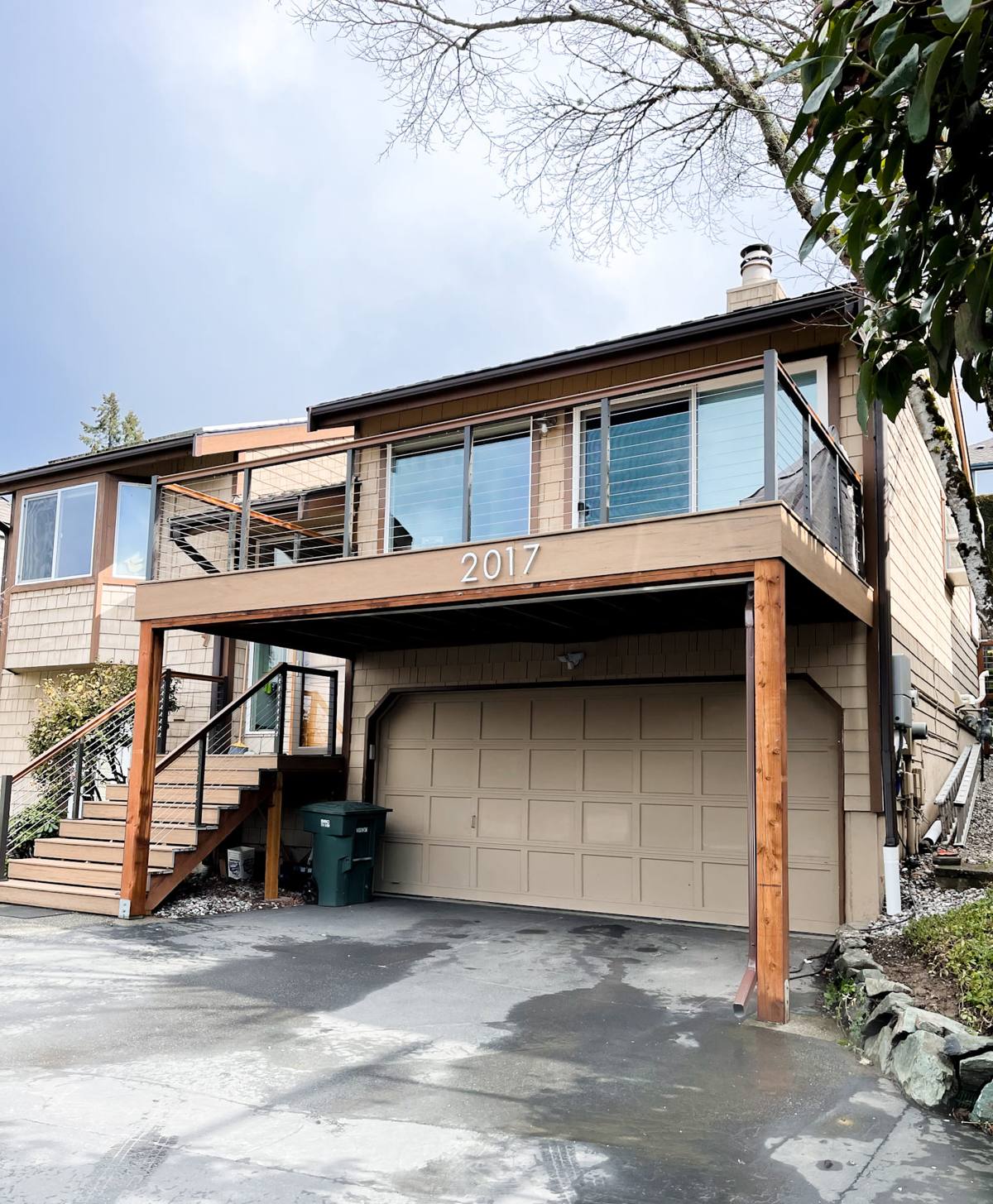
What This Climate Does to a Deck
Salt Air
Salt-laden air accelerates corrosion in exposed metal — screws, structural hangers, post bases, railing hardware — and a fastener that's quietly corroding loses holding strength well before it looks obviously bad from the surface. On a structure people walk, stand, and set furniture on, that's a safety issue, not a cosmetic one. It's also one of the easiest things to get wrong, because the hardware that fails first is usually the hardware that's hardest to see once the deck is built.
Driving Rain
Rain that comes in on wind doesn't behave like rain falling straight down. It gets pushed up under railings, forced into the ledger connection where the deck meets the house, and driven between boards that aren't gapped correctly for the amount of water they'll actually see. A deck design that would shed water fine in a calm, dry climate can trap moisture the moment wind gets involved — and around here, wind-driven rain is closer to the rule than the exception.
A Long Moss Season
Mild temperatures combined with near-constant moisture give moss and mildew most of the year to establish themselves, and a horizontal deck surface is one of the first places it shows up. Decking holds water longer than a vertical wall simply because gravity keeps it there, and shaded or north-facing sections are usually first to go green. Any decking material with even a little surface porosity gives moss something to grip into.
Choosing the Right Decking Material
Material choice matters more here than it would in a drier, more sheltered town, because the performance gap between a well-suited product and a poorly-suited one shows up faster in this climate. Most homeowners are choosing between pressure-treated or cedar wood, capped composite, and cellular PVC.
Wood
Pressure-treated lumber and cedar look great when new and cost less up front, but both need regular sealing or staining to hold up against sustained moisture, and both are more vulnerable to fastener corrosion issues over time in a salt-air environment. Left unmaintained for even a season or two, wood is usually the first material on a deck to show moss, graying, and soft spots — especially in shaded areas.
Capped Composite
Capped composite boards have a polymer shell wrapped around a wood-fiber composite core, which resists moisture absorption, staining, and UV fade far better than uncapped composite or raw wood. In a climate like this, that cap layer is doing real structural work, not just adding a marketing claim — it's the difference between a board that needs occasional washing and one that needs ongoing sealing to stay sound.
Cellular PVC
PVC decking contains no wood fiber at all, so it doesn't absorb moisture at cut edges or fastener holes the way even capped composite can. It typically costs more than composite and can flex more under heavy point loads if joist spacing isn't tightened up to compensate, but for a deck that sees heavy shade, standing moisture, or direct salt exposure, the added moisture resistance is often worth the extra cost.
| Material | Salt Air & Moisture | Moss Resistance | Upkeep |
|---|---|---|---|
| Cellular PVC | Excellent — no wood fiber to absorb moisture | Strong, smooth non-porous surface | Occasional washing |
| Capped composite | Strong — cap layer resists moisture and staining | Good on most product lines | Occasional washing |
| Cedar | Fair — needs sealing to resist moisture intrusion | Fair without regular treatment | Annual sealing or staining |
| Pressure-treated pine | Fair — treatment protects core, surface still absorbs | Weak without regular treatment | Regular sealing or staining |
Framing, Fasteners, and Hardware
The decking surface is the part everyone sees, but the framing underneath it is what determines whether the deck is still solid in ten or twenty years. In this climate, that framing needs a few things that matter less in a drier region:
- Stainless steel or heavy-duty coated fasteners rated for ground contact and coastal exposure, not standard interior-grade hardware
- Corrosion-resistant joist hangers and structural connectors at every load point, not just at the ledger
- Joist tape or a flashing membrane over the top of each joist, so screw penetrations don't become entry points for standing water
- Properly flashed ledger board connections where the deck attaches to the house, since this is the single most common spot for hidden rot on an older deck
- Adequate post footings sized for local soil and frost conditions, not just whatever spacing looks fine on paper
Skipping any one of these doesn't usually cause a visible problem in year one. It shows up in year five or eight, as soft spots, rust streaks bleeding through decking, or a railing post that's gone loose — by which point the fix is more involved than it would have been to do correctly the first time.
Drainage and Moisture Management
Water management is the part of a deck build that homeowners think about least and that causes the most long-term damage when it's done poorly. Boards need to be gapped consistently so water can drain through rather than pool on the surface, but the gap also has to be tight enough that debris doesn't pack in and hold moisture against the board edges — getting that balance right takes experience with how the specific decking product performs, not just a standard spacer.
Below the deck surface, the framing needs a clear path for water to run off rather than sit against joists and posts. On decks built close to grade or over living space, an under-deck drainage system can keep the area below dry and usable, but it has to be designed in from the start rather than retrofitted around framing that wasn't planned for it. At the house connection, ledger flashing has to shed water away from the wall assembly behind it — this is one of the most common failure points we see on decks that weren't built with this climate in mind, because a ledger leak stays hidden behind decking and siding until the damage is already significant.
Design Considerations for a Barkley Deck
Beyond materials and structure, a few design choices are worth thinking through up front rather than deciding on-site during the build:
Railings
Metal cable and glass panel railings give a clean, open look and are increasingly popular, but both come with their own maintenance and hardware considerations in a salt-air environment — cable tensioners and glass clips both use metal fasteners that need to be rated for the exposure. A composite or aluminum-clad railing system is often a lower-maintenance choice for a deck that sees regular weather.
Orientation and Shade
A deck's orientation affects how much sun it gets to dry out between rain events, which directly affects how fast moss and mildew take hold. This doesn't mean avoiding shaded locations — many homeowners want a shaded deck specifically — but it does mean shaded and north-facing decks benefit from a smoother, less porous decking surface and a maintenance routine on a shorter cycle.
Permits and Setbacks
Most attached decks and any deck built above a certain height require a building permit and inspection, and setback requirements from property lines vary by jurisdiction within Whatcom County. These aren't optional steps to skip for speed — an unpermitted deck can become a real problem at resale, and inspections exist to catch structural issues before they become safety issues.
Our Process for a Barkley Deck Project
- Site visit and assessment — we look at the house connection point, grade, sun exposure, and existing structure (if this is a replacement) before discussing materials or design.
- Design and material selection — we walk through decking, railing, and structural options with honest trade-offs for this climate, not a one-size-fits-all recommendation.
- Written estimate and scope — a clear breakdown of materials, labor, and timeline before any work starts, so there are no surprises mid-project.
- Permitting — we handle the permit application and inspection scheduling as part of the project, rather than leaving that step to the homeowner.
- Demolition and framing — old decking and any compromised framing come out first; new framing goes in with corrosion-resistant hardware and proper flashing throughout.
- Decking, railing, and finish work — installed to the manufacturer's specifications for gapping, fastening pattern, and expansion allowance.
- Final walkthrough — we go over the finished deck together and cover any maintenance steps specific to the materials chosen.
Cost Factors on a Custom Deck
Deck pricing varies widely based on size, material, height off grade, and structural complexity, so any number given without seeing the site is only a starting point for discussion. The table below covers the main factors that move the price up or down.
| Factor | Effect on Cost |
|---|---|
| Decking material (wood vs. composite vs. PVC) | Largest single line item; PVC and premium composite cost more than wood up front |
| Height above grade | Taller decks need more substantial framing, railings, and often stairs |
| Ledger vs. freestanding design | Freestanding decks avoid ledger flashing work but need additional footings |
| Railing system | Cable, glass, and metal-clad systems cost more than standard composite balusters |
| Roof or cover structure | Adding a pergola or roof over the deck adds a separate scope of work |
| Site access and grading | Difficult access or uneven grade adds labor for material handling and footings |
As a very broad range, a straightforward wood deck typically starts lower per square foot than a comparably sized composite or PVC deck with upgraded railings — but the honest answer for any specific home is that it depends on the details above, which is exactly what a site visit and written estimate are for.
Maintenance Checklist for Local Deck Owners
Regardless of the material chosen, a few habits go a long way toward keeping a deck sound in this climate:
- Sweep debris out of board gaps regularly, especially in fall when leaves and needles accumulate
- Check and clean any under-deck drainage system before the wettest months of the year
- Inspect ledger flashing and railing post connections annually for signs of water staining
- Reseal wood decking on the manufacturer's or installer's recommended schedule — don't wait for visible graying
- Wash composite or PVC decking periodically to prevent moss and mildew from establishing, particularly on shaded sections
- Watch for loose railing posts or squeaking near the house connection, both early signs of a hardware or flashing issue
Why Hire a Crew That Already Works This Area
A deck built to a generic set of specs can look identical to a well-built one on installation day. The difference shows up two, five, and ten years later, in whether the fasteners are still holding, the ledger connection is still dry, and the surface hasn't gone soft in the shaded corners. A crew that already works throughout Barkley and the wider Sudden Valley area has already seen which details matter here — which fastener grades actually hold up, which ledger flashing details keep water out, and which decking products perform the way they're supposed to once they've been through a few real Whatcom County winters. That's not something a crew based somewhere with a milder or drier climate profile picks up on the first job.
If you're planning a new deck or replacing one that's showing its age, we're happy to take a look and talk through what makes sense for your home, your budget, and this climate — with a free, no-pressure estimate using the form below.