 Sudden Valley Window
 Window Installation Built for Deming's Climate
Deming sits in the Nooksack River valley at the foot of the Mount Baker foothills, which gives it a slightly different weather pattern than the rest of Whatcom County. The valley holds moisture longer than open, breezy areas closer to the water — morning fog off the river, heavier tree cover, and long stretches of gray, damp weather that don't burn off as fast as they might a few miles away. That combination is hard on windows. Wood swells and shrinks with the humidity swings, seals age faster in constant dampness, and anything shaded by fir and cedar canopy stays wet longer after every rain. A window installation in Deming has to account for all of that, not just fit a box into a rough opening.
We're not talking about anything exotic. It's the basics done correctly — flashing, air sealing, drainage, and choosing materials that hold up to a wet valley climate year after year — but "the basics done correctly" is exactly where a lot of window jobs fall short, and it's exactly where the trouble starts five or ten years later.
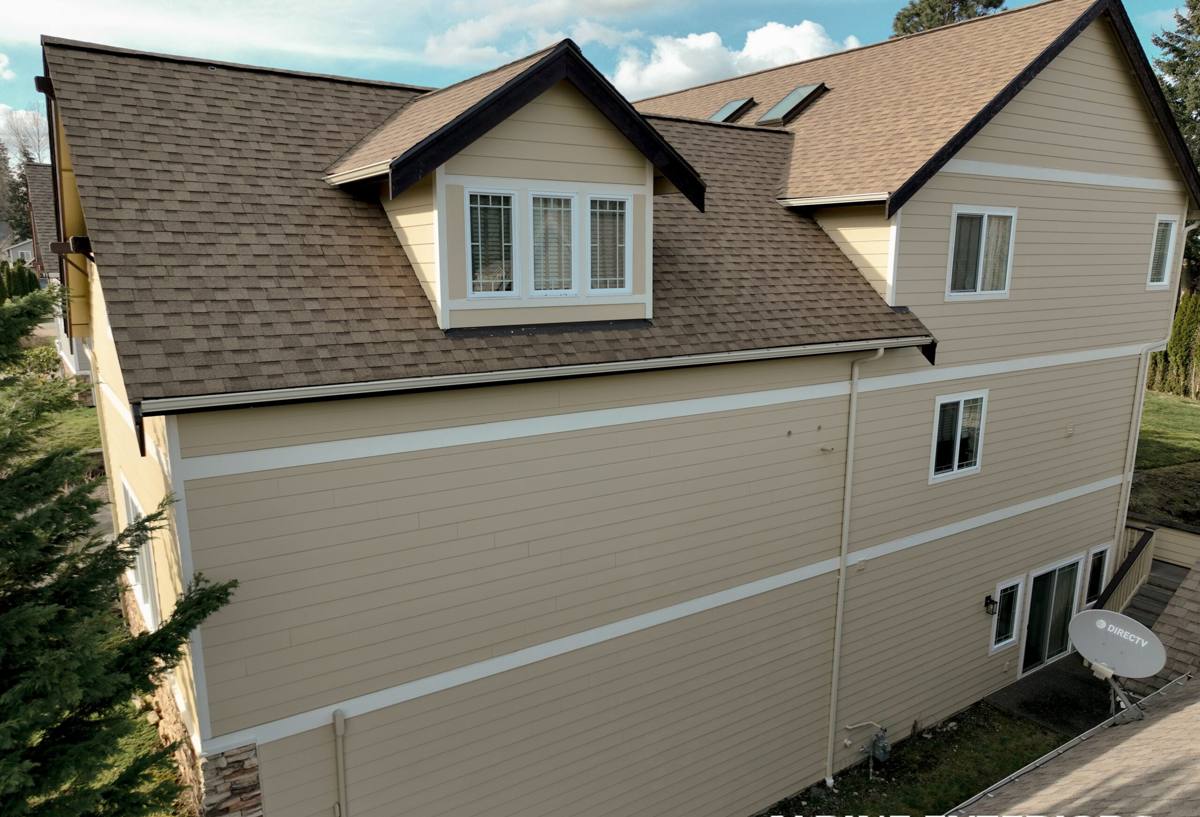
What Whatcom County's Wet Climate Does to Windows Over Time
Long moss season isn't just a roofing problem. Moss and algae need shade and standing moisture, and older or poorly flashed windows give them both — window sills, the top of trim boards, and anywhere caulk has started to pull away all become collection points. Once organic growth gets a foothold on wood trim or a failed sealant joint, it holds water against the frame instead of letting it shed, and that's when rot starts underneath where you can't see it.
Driving rain in this part of Washington doesn't fall straight down — wind-driven storms push water sideways and upward under trim and into any gap in the weather barrier. A window that was installed with the right flashing sequence sheds that water back outside. A window that was just caulked around the edges and called done will eventually let water track behind the frame, into the wall cavity, and rot the sheathing before anyone notices a problem inside the house. By the time you see a stain on the drywall or soft trim on the interior, the damage has usually been building for a while.
Add in the humidity that sits in a river valley like Deming's, and you also get more condensation on interior glass in winter — a sign of an aging seal or a window that was never well air-sealed at the frame in the first place.
Common Failure Points We See on Deming Homes
- Rotted or soft wood trim around window openings, especially on north- and west-facing walls that stay shaded and damp longest
- Foggy or hazy glass between the panes — a sign the seal on an older insulated glass unit has failed
- Visible moss or dark staining building up on sills and lower trim
- Drafts or cold spots near the frame in winter, even with the window closed and locked
- Windows that are difficult to open, close, or lock — often from frame movement or swelling
- Rising heating bills without another clear explanation
Signs Your Deming Home May Need New Windows
Not every issue means full replacement — sometimes a window just needs new weatherstripping or a re-caulk. But a few signs usually point to something that repair alone won't fix:
- Condensation forming between the panes of double-pane glass (the seal has failed and can't be repaired)
- Wood frames that are soft, cracked, or visibly rotting when you press on them
- Windows that have been painted shut or won't stay open on their own
- A noticeable draft you can feel with your hand near the frame on a windy day
- Single-pane or original-to-the-house windows on a home more than 25–30 years old
- Warping or bowing visible when you sight down the frame
If you're only seeing one or two of these on an otherwise sound window, a repair or re-seal might be the more honest recommendation — we'll tell you that during an inspection rather than push a full replacement you don't need yet.
What a Correct Window Installation Actually Involves
A window installation is judged almost entirely on what happens before the new window ever gets set — the opening prep and the flashing. This is where the wet valley climate around Deming punishes shortcuts more than it would in a dry climate.
The sequence that matters
- Remove the old window and inspect the rough opening. This is when hidden rot, mold, or old damage gets found — before it's sealed back up behind a new window for another decade.
- Repair or rebuild any damaged framing. Rotted sill plates or studs get replaced, not painted over and covered.
- Install a sloped sill pan. This is one of the most skipped steps on cheap installs, and one of the most important in a rainy climate — it gives any water that does get past the window a way to drain back outside instead of pooling in the wall.
- Flash the opening in the correct order — sill, then sides, then head flashing lapped over the sides, integrated with the house's weather-resistive barrier so water always sheds downward and outward, never into the wall.
- Set the window level, plumb, and square, then fasten it per the manufacturer's instructions — not just foamed in place and trimmed out.
- Air-seal the gap around the frame with the right low-expansion foam or backer rod and sealant — enough to stop drafts without bowing the frame out of square.
- Finish the exterior trim and sealant joints so water is directed away from every seam, and finish the interior so there's no gap for indoor moisture to reach the wall cavity.
Skip the sill pan, get the flashing lap order backwards, or rely on caulk to do a flashing detail's job, and the window can look perfectly fine for years while water quietly works on the framing behind it. That's the difference between an installation that lasts and one that becomes a repair call.
Choosing the Right Window Material for This Area
Material choice matters more in a valley climate with long damp seasons than it does somewhere drier. Here's how the common options hold up:
| Frame Material | How It Handles Moisture & Moss Season | Maintenance | Typical Fit For Deming |
|---|---|---|---|
| Vinyl | Won't rot; handles constant damp well; can expand/contract with big temperature swings | Low — occasional cleaning | Solid default for most homes |
| Fiberglass | Very stable in moisture and temperature swings; holds paint well if a custom color is wanted | Low | Good upgrade where budget allows |
| Wood | Needs a sound finish maintained regularly or moisture gets in; classic look | High — refinishing on a schedule | Best for owners committed to upkeep, or interior-only wood with clad exterior |
| Aluminum-clad wood | Exterior clad protects the wood from rain and moss exposure; interior stays wood | Moderate | Good middle ground where wood interior is wanted |
We install to a professional standard on flashing and installation regardless of frame material, but we do steer homeowners away from bare exterior wood in exposed, shaded parts of a Deming lot — not because wood windows are a bad product, but because a wood exterior surface in a spot that stays wet and shaded most of the year is a maintenance commitment most people underestimate. Clad or vinyl options remove that upkeep burden without giving up performance.
Glass Package Matters Too
In a valley that holds cold, damp air, a better glass package pays off in comfort as much as in the energy bill. Look for a low U-factor (heat loss) rating and a warm-edge spacer between the panes, which resists condensation better at the edge of the glass — often the first place fogging or frost shows up in winter.
Our Installation Process
The process is the same whether it's one window or a whole house, just scaled up:
- On-site assessment. We look at the existing windows, the framing condition, sun and rain exposure on each wall, and talk through what you actually need versus what would just be nice to have.
- Written proposal. Materials, scope, and a clear price before anything is scheduled — no surprises added mid-job.
- Scheduling around the weather. Openings are only exposed to the elements for as short a window as possible, and we don't leave a house open to a storm overnight.
- Removal and opening inspection. Any rot or damage found gets flagged and priced before we close the wall back up, not discovered after the fact.
- Installation following manufacturer specs for flashing, fastening, and air sealing, matched to what this climate demands.
- Cleanup and walkthrough. Every new window gets tested — opens, closes, locks, and seals properly — before we call the job done.
What Affects the Cost of a Window Installation
We won't quote a number without seeing the job, but these are the factors that actually move the price up or down:
| Factor | Why It Matters |
|---|---|
| Number of windows | Per-window cost typically drops on larger jobs due to shared setup and scheduling efficiency |
| Frame material | Vinyl is generally the most budget-friendly; fiberglass and clad-wood cost more upfront |
| Extent of hidden damage | Rotted framing found during removal adds repair scope that can't be priced until the opening is exposed |
| Window size and type | Large picture windows, bays, and custom shapes cost more than standard operable sizes |
| Access and height | Second-story or hard-to-reach openings take more time and equipment |
| Glass package | Upgraded glass for better insulation or condensation resistance adds cost but pays back in comfort |
As a rough guide, a single standard vinyl replacement window installed correctly is typically a low-to-mid four-figure job in this region, with whole-house projects scaling from there depending on window count and any framing repair needed. The only way to get a real number is a walkthrough — anything else is a guess.
Why It Matters That We Already Work in Deming
A crew that regularly works this part of Whatcom County already knows what to expect before pulling the first window: which walls on a river-valley lot stay shaded and damp the longest, how much moss buildup to expect on north-facing trim, and how the seasonal wind and rain patterns here differ from a home closer to open water or a more sheltered in-town lot. That's not a marketing point — it changes real decisions on the job, like where extra flashing attention goes and which walls we flag for a closer look at existing damage before we ever open them up.
It also means straightforward scheduling. We're not routing a crew a long way out for a single job or treating Deming as an afterthought stop between other work — it's part of the area we cover regularly.
A Few Questions Worth Asking Any Window Contractor
- Do you install a sloped sill pan and proper flashing sequence, or just caulk and foam around the frame?
- What happens if you find rot or damage once the old window is out?
- What's covered under warranty — the window itself, and separately, your installation labor?
- Can you walk me through your process before I sign anything?
- Do you carry current licensing and insurance for work in Washington?
Any contractor who gets uncomfortable with these questions is telling you something. A straight answer to all five is a reasonable bar for hiring anyone to open up your walls.
After Installation: Keeping New Windows Performing
New windows installed correctly need very little upkeep, but a little seasonal attention goes a long way in this climate:
- Clear debris and check for moss buildup on sills and trim once or twice a year, especially on shaded walls
- Rinse pollen, dust, and grime off exterior glass and frames periodically so it doesn't build up in track and weep-hole areas
- Check that weep holes on vinyl and fiberglass frames stay clear so water can drain out rather than pool
- Re-caulk exterior trim joints if you notice cracking or gaps developing over time
- Operate locks and hardware periodically through the seasons so mechanisms don't seize up
None of this is heavy maintenance — it's the kind of thing that takes fifteen minutes a couple of times a year and keeps a well-installed window performing for decades instead of just one.
If your Deming home has windows showing any of the signs above, or you're just ready to stop losing heat and fighting condensation every winter, we're happy to take a look and give you an honest read on what's needed. The estimate is free, there's no pressure to commit on the spot, and you'll get a straight answer about repair versus replacement before any work is scheduled — just fill out the form below to get started.