 Sudden Valley Window
 Siding Built for Barkley's Corner of Whatcom County
Homes in the Barkley area near Sudden Valley sit in a stretch of Whatcom County where marine air, heavy seasonal rain, and shade from mature evergreens combine to make siding work harder than it does almost anywhere else in the state. We run a crew that installs siding in this specific pocket of the county regularly, which means we already know how the weather behaves here before we ever step onto a job site — we're not learning the local conditions on your dime.
This page covers siding installation specifically for Barkley: what the climate does to a wall assembly here, what a correct installation actually involves, and why we install exclusively with James Hardie fiber cement rather than the vinyl, LP SmartSide, or cedar products you'll see offered elsewhere.
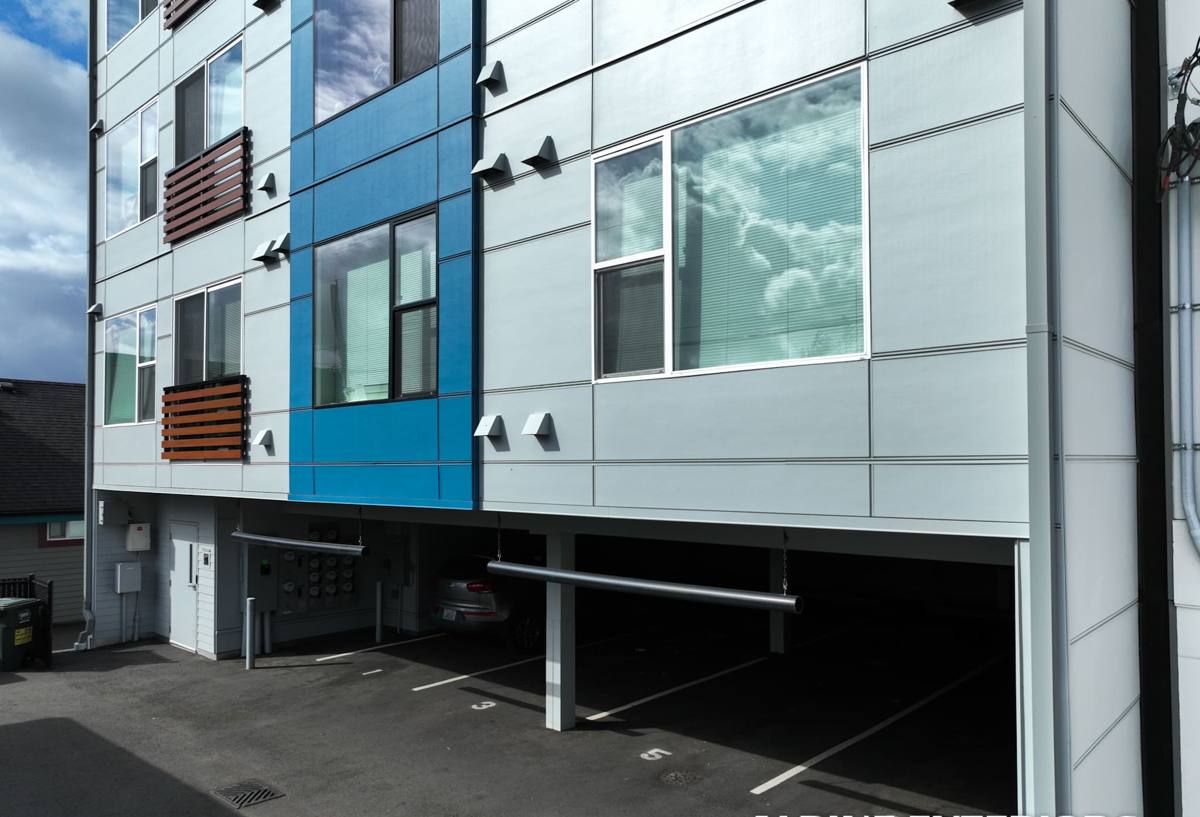
What Local Weather Does to Siding
Whatcom County's marine climate isn't dramatic — it's relentless. That's the part homeowners underestimate. A siding system here doesn't fail from one big storm; it fails from years of small, repeated exposure.
Salt Air and Moisture-Laden Wind
Proximity to Puget Sound and the broader marine air mass means siding, fasteners, and trim in this region see a steady dose of salt-tinged moisture in the air. Over time this accelerates corrosion on unprotected fasteners and metal flashing, and it slowly breaks down finishes that weren't engineered to handle it.
Driving Rain
Rain here rarely falls straight down. Wind-driven rain pushes water sideways into laps, seams, and penetrations — the exact places where a siding installation either sheds water correctly or lets it in. This is why lap coverage, flashing details, and caulking discipline matter more here than in drier climates.
A Long Moss and Mildew Season
Shade from tree cover combined with cool, damp stretches that can run from fall through spring creates ideal conditions for moss, algae, and mildew to take hold on north- and shade-facing walls. Siding that stays damp longer between drying cycles is siding that's more likely to host organic growth — and organic growth trapped against a wall is a moisture problem, not just a cosmetic one.
Why We Only Install James Hardie Fiber Cement
We made the decision years ago to install one siding system — James Hardie fiber cement — rather than offer a menu of products. That's not a marketing position, it's a practical one for a climate like this.
- Non-combustible core: Hardie's fiber cement is engineered from cement, sand, and cellulose fiber, giving it a different risk profile than wood-based or polymer siding products.
- Built for wet climates: Hardie's HZ5 product line is specifically engineered for regions with freeze-thaw cycles and sustained moisture exposure, which describes a Whatcom County winter well.
- Factory-applied ColorPlus finish: the color is baked on in a controlled factory environment rather than field-applied, which matters when a large share of the year here is too damp for paint to cure properly on site.
- Dimensional stability: fiber cement doesn't swell and contract with moisture the way wood-based products can, which reduces the seam and joint movement that lets water find its way in over time.
- Transferable warranty backing: a strong, well-documented warranty structure that follows correct installation practices.
We're upfront that this means we don't install vinyl, LP SmartSide, cedar, or other engineered wood products. Each of those has legitimate uses elsewhere. For the specific combination of salt air, driving rain, and moss exposure that Barkley-area homes deal with, we've concluded fiber cement is the product we're willing to put our name on.
What a Correct Installation Involves
Siding is only as good as the assembly behind it. A beautiful lap job over a poorly prepped wall will still leak. Here's what we treat as non-negotiable on every install:
Weather-Resistive Barrier and Drainage Plane
A continuous, properly lapped weather-resistive barrier goes on before any siding. In a climate with this much wind-driven rain, we also build in a drainage gap so that any moisture that does get behind the siding has somewhere to go rather than sitting against the sheathing.
Flashing at Every Penetration
Windows, doors, hose bibs, light fixtures, vents — every penetration through the siding plane is a potential entry point. Correct flashing, properly integrated with the weather barrier (not just caulked over the top), is what actually keeps water out long term.
Fastening to Spec
James Hardie publishes specific fastener type, spacing, and placement requirements, and those specs shift depending on wind exposure and substrate. Under-fastening or fastening in the wrong location voids warranty protection and can lead to boards working loose over time.
Clearances and Grade Separation
Siding needs a minimum gap from grade, roof lines, decks, and patios so it isn't sitting in standing water or trapped moisture. This is one of the most common corner-cutting mistakes we see on older installs in shaded, damp lots.
Caulking and Sealant Discipline
Sealant is a backup to good flashing and lap technique, not a substitute for it. We use it at the specific joints where it belongs — not as a blanket fix for gaps that shouldn't exist in the first place.
Our Process on a Barkley-Area Job
- On-site assessment: we walk the exterior, check for existing moisture damage, rot, or failed flashing, and evaluate sun and shade exposure on each wall face.
- Scope and product plan: we spec the Hardie plank profile, exposure, and ColorPlus color, and identify any trim, flashing, or sheathing repairs needed before siding goes on.
- Tear-off and substrate prep: old siding comes off, sheathing is inspected and repaired as needed, and any hidden moisture damage gets addressed rather than covered over.
- Weather barrier and flashing installation: the drainage plane and flashing details go in first, since this is the layer that determines whether the wall stays dry.
- Siding installation to manufacturer spec: fastening, lap exposure, and clearances installed per James Hardie's published requirements.
- Final walkthrough: we go over the finished job with you, including basic maintenance expectations for this climate.
Comparing What's Under Consideration
| Factor | James Hardie Fiber Cement | Vinyl | Engineered Wood (e.g. LP SmartSide) | Cedar |
|---|---|---|---|---|
| Moisture behavior in wet climates | Dimensionally stable, engineered wet-climate line available | Doesn't absorb moisture but can warp/buckle with heat or poor install | Wood-based core is moisture-sensitive if any coating breaks down | Natural wood; performs well only with disciplined ongoing maintenance |
| Combustibility | Non-combustible core | Combustible, can soften/deform under heat | Combustible | Combustible |
| Finish | Factory-baked ColorPlus finish | Color molded through material | Factory or field-applied coating | Field-applied stain/paint, needs recoating |
| Typical maintenance | Periodic wash, inspect caulking | Low, but prone to fading/cracking over time | Coating touch-up as needed | Regular staining/sealing on a set schedule |
| Our stance | What we install | Do not install | Do not install | Do not install |
Cost Factors on a Siding Job
We don't publish blanket prices because every home is different, but these are the factors that actually move the number on a Barkley-area job:
| Factor | Why it matters |
|---|---|
| Tear-off vs. install over existing sheathing | Removing old siding and repairing hidden rot adds labor but is often necessary once we're behind the wall |
| Wall complexity | Dormers, multiple stories, and cut-up rooflines add trim, flashing, and labor time |
| Siding profile and exposure | Different Hardie plank profiles and reveal widths carry different material costs |
| Trim and accessory scope | Corner boards, fascia, and soffit work done alongside siding affects total scope |
| Site access | Tree cover, slope, and driveway access on wooded lots can affect staging and labor time |
Signs a Barkley Home May Need Siding Attention
- Persistent moss or dark streaking on north- or shade-facing walls that returns quickly after cleaning
- Soft or spongy spots when you press on siding near the bottom courses or around windows
- Visible gaps, warping, or bowing in existing lap siding
- Paint that's peeling or bubbling rather than wearing evenly
- Rising energy bills that could point to a compromised weather barrier behind the siding
- Fastener heads visibly rusting or "bleeding" rust streaks down the face of the siding
Any one of these on its own isn't necessarily an emergency, but a few together are usually a sign it's worth having someone look at the wall assembly, not just the surface.
Why a Crew That Already Works This Area Matters
Siding crews that mostly work drier inland regions sometimes under-build for what a shaded, damp Whatcom County lot actually does to a wall over a decade. A crew that already installs regularly around Sudden Valley and Barkley isn't guessing at drainage plane details or flashing sequencing for this climate — it's standard practice on every job. That familiarity shows up in the details that don't get noticed until they fail: clearance heights, flashing laps, and fastener choices suited to sustained moisture and salt-tinged air rather than a drier climate elsewhere in the state.
If you're weighing a siding project on a Barkley-area home, we're happy to come take a look and give you a straightforward, no-pressure estimate — no obligation, just an honest read on what your walls need.