 Sudden Valley Window
 Why Bellingham Roofs Age Differently Than Roofs Inland
A roof in Bellingham does not fail the same way a roof fails in Spokane or Yakima. Out here, the enemy isn't hail or blistering sun — it's water that never really stops coming, wind driven off Bellingham Bay, and a moss season that can run eight or nine months out of the year. Whatcom County sits close enough to the water that salt-laden air reaches roofing materials, fasteners, and flashing well before most homeowners notice any visible damage. By the time shingles look obviously bad, the decking underneath has often been absorbing moisture for years.
Roof replacement here isn't just "tear off and put new shingles down." It's a job that has to account for how much rain the roof will see in a normal winter, how long moss has to work into the roofing surface before anyone treats it, and how corrosion-prone metal components hold up this close to salt water. A roof built to a generic national spec, without those factors in mind, tends to underperform on the coast even if it's installed correctly on paper.
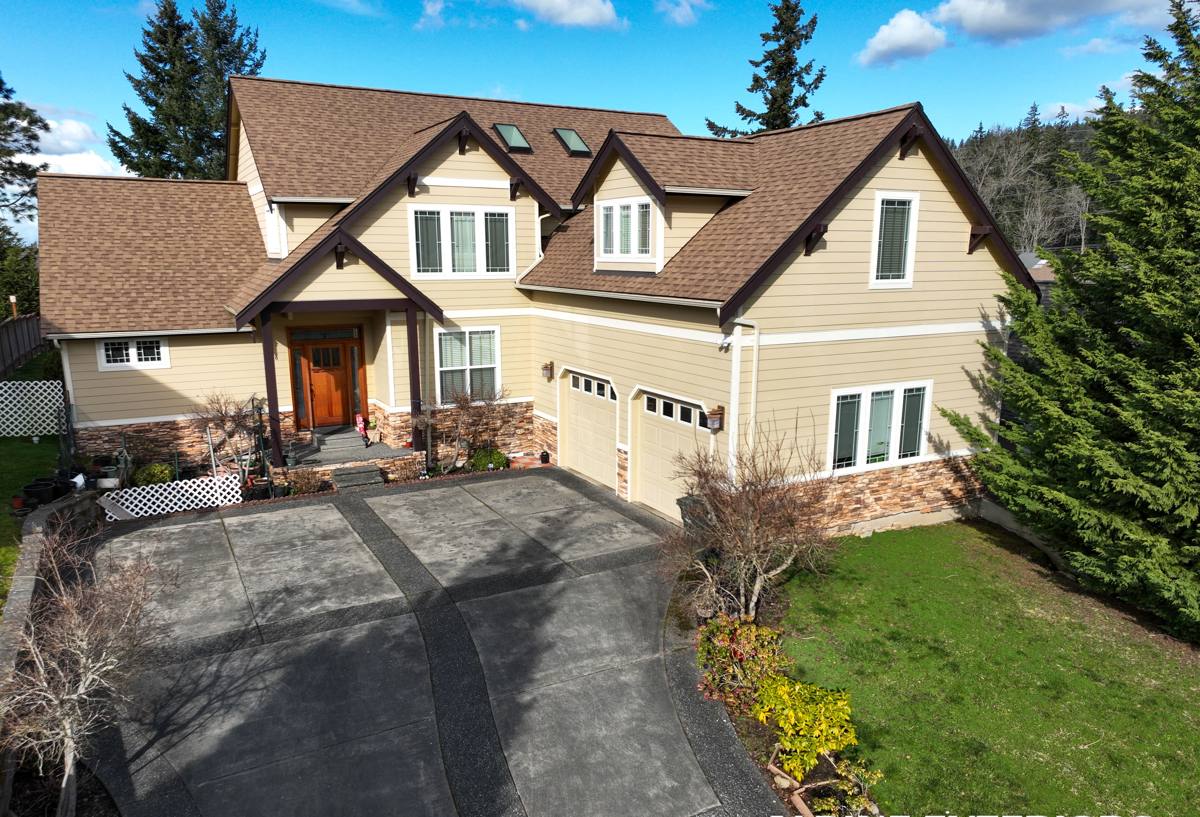
Signs a Bellingham Roof Is Due for Replacement
Most roofs don't fail all at once — they show a pattern of smaller problems first. If you're seeing more than one or two of these, it's worth having the roof looked at rather than waiting:
- Moss or algae streaking that comes back within months of being cleaned or treated
- Granule loss visible in gutters or at the base of downspouts
- Shingles that are curling, cupping, or lifting at the edges
- Soft spots or slight give underfoot when walked, or sagging visible from the ground
- Daylight visible through the roof deck from inside the attic
- Rust staining or corrosion around flashing, vents, or valleys
- Interior water stains on ceilings, especially near exterior walls or chimneys
- A roof that's already had one or more patch repairs in the last few years
Any one of these on its own might just mean a repair. Several at once, especially on a roof that's already past 18–20 years old, usually means replacement is the more honest recommendation than another round of patching.
What a Correct Roof Replacement Actually Involves
Full Tear-Off, Not a Layover
Some crews will offer to install new shingles directly over old ones to save time and money. In a climate this wet, that's a shortcut we don't take. A layover traps moisture between layers, hides deck damage that's already happening, and voids most manufacturer warranties outright. A correct replacement means stripping the roof down to bare decking so the plywood or OSB underneath can actually be inspected.
Deck Inspection and Repair
Once the old roofing is off, the deck gets checked for soft spots, delamination, and rot — problems that are common on older Whatcom County homes where moisture has been getting past the roofing surface for years without anyone knowing. Any damaged sections get cut out and replaced before anything new goes down. Skipping this step is the single most common cause of a "new" roof leaking within a couple of years.
Underlayment Built for a Wet Climate
Underlayment is the water-resistant barrier between the deck and the visible roofing material, and it matters more here than in drier parts of the state. Synthetic underlayment holds up better than old-style felt paper against the volume of rain Bellingham sees, and self-adhering ice-and-water membrane at eaves, valleys, and around penetrations gives an extra layer of protection at the spots where wind-driven rain is most likely to find a way in.
Flashing and Penetration Details
Chimneys, skylights, vent pipes, and valleys are where the vast majority of roof leaks actually start — not in the open field of shingles. Correct flashing work means new metal at every penetration, not reusing old flashing that's already corroding from years of salt air exposure.
Ventilation
A roof that can't breathe traps moisture in the attic, which shortens the life of the decking and the roofing material from underneath. Balanced intake and exhaust ventilation is part of a correct replacement, not an optional add-on.
Choosing a Roofing Material for the Whatcom County Coast
There's no single "best" roofing material — there's the material that fits your home's roof pitch, your budget, and how much moss and moisture exposure the roof will realistically face. Here's how the common options compare for a coastal Whatcom County home:
| Material | Moss/Moisture Resistance | Typical Lifespan Here | Notes |
|---|---|---|---|
| Asphalt composition shingle | Good with algae-resistant granules | 20–30 years | Most common choice; wide range of price points |
| Standing seam metal | Excellent — moss struggles to gain a foothold | 40–50+ years | Higher upfront cost, sheds moisture fastest |
| Cedar shake | Requires regular maintenance to resist moss and rot | 20–30 years with upkeep | Traditional look, highest maintenance burden in this climate |
| Synthetic/composite shingle | Good, engineered for moisture | 30–50 years | Lighter than tile, no natural material to feed moss |
Most of the roofs we replace in this area use asphalt shingle with copper or zinc-impregnated granules, which slow moss regrowth without the maintenance demands of cedar. Metal roofing has real advantages on the coast — it simply sheds water and resists moss better than almost anything else — but it's a bigger upfront investment, and not every roof style or budget calls for it.
Our Roof Replacement Process
- On-site inspection. We get on the roof, not just in the driveway, and check the deck, flashing, ventilation, and any interior signs of past leaks.
- Written estimate. You get a clear scope of work and price before anything is scheduled — no verbal-only quotes.
- Material selection. We walk through the trade-offs above based on your roof and budget, not a one-size-fits-all recommendation.
- Scheduling around the weather. Roofing work needs a dry window to do correctly; we plan around Bellingham's rain patterns rather than rushing a job into a storm.
- Tear-off and deck repair. Old roofing comes off, the deck gets inspected, and any damaged sections are replaced.
- Underlayment, flashing, and installation. New materials go down in the sequence that actually keeps water out, not just the fastest sequence.
- Cleanup and magnetic sweep. Debris and stray fasteners are cleared from the yard and driveway before we call the job done.
- Final walkthrough. We go over the finished roof with you and answer any questions before wrapping up.
Why Hiring a Crew That Already Works This Area Matters
Roofing crews that mostly work drier parts of the state don't always build in the margin this climate demands — the extra underlayment at vulnerable points, the ventilation planning, the material choices that hold up against moss and salt air rather than just looking good on install day. A crew that regularly works Bellingham and the surrounding Whatcom County communities has already seen how roofs here fail, which means the replacement is built to avoid those specific failure points from the start.
There's also a practical side: permitting requirements, typical roof pitches and styles in this area, and realistic weather windows for scheduling are all things a local crew already knows rather than having to learn on your job. If your home is in a community with design guidelines or an HOA, a contractor familiar with the area is more likely to already understand what's expected before work begins.
What Affects the Cost of a Roof Replacement
| Factor | Why It Matters |
|---|---|
| Roof size and pitch | More square footage and steeper pitches mean more material and labor time |
| Number of existing layers | Tearing off multiple old layers takes longer than a single-layer tear-off |
| Deck condition | Rotted or delaminated sections found during tear-off add material and labor |
| Material choice | Asphalt, metal, and cedar carry very different price points |
| Roof complexity | Valleys, dormers, skylights, and multiple penetrations add flashing work |
| Access | Difficult site access can affect staging and disposal costs |
Because of these variables, honest pricing only comes from an actual on-roof inspection. Broad ranges you'll hear thrown around online rarely account for what your specific roof needs, especially once deck condition is factored in.
After Replacement: Keeping a Coastal Roof Healthy
A new roof still needs some upkeep in this climate to hit its full expected lifespan:
- Clear moss buildup before it has a chance to lift shingle edges — don't wait for it to become visible from the street
- Keep gutters clear so water isn't backing up under the roof edge during heavy rain
- Trim back overhanging branches that keep sections of the roof shaded and damp
- Have the roof looked at after any major windstorm, even if nothing looks obviously wrong
- Schedule a periodic inspection every few years rather than waiting for a leak to show up inside
None of this is complicated, but it's the difference between a roof that reaches the top end of its expected lifespan and one that starts showing problems early because moisture and moss were left to work on it unchecked.
If your roof is showing any of the signs above, or it's simply getting close to the end of its expected life, we're happy to take a look and give you a straight, no-pressure estimate — just fill out the form below to get started.