 Sudden Valley Window
 Decks in Columbia take a different kind of beating than decks farther inland. Between the salt-laden air off the water, the long stretches of driving rain that define a typical Whatcom County winter, and a moss season that can run from October clear into May, a deck built without those conditions in mind is often on borrowed time well before its wood "should" be failing. If you're looking at a deck that's gone soft, spongy, or slick with algae, replacement — done correctly for this climate — is usually the more honest answer than another round of patch repairs.
Why Decks in Columbia Wear Out Faster Than the Rest of the House
A deck is the most exposed structure on most Whatcom County properties. Unlike siding or roofing, which are largely vertical or pitched to shed water quickly, deck surfaces are horizontal — every board is designed to hold weight, but that same flat surface also holds moisture, pooled leaf litter, and shade. Add in salt air drifting off the water, which accelerates corrosion on fasteners, joist hangers, and any exposed metal hardware, and you get a structure that's fighting on two fronts at once: wood decay from moisture and hardware failure from corrosion.
The moss season makes this worse. Once spores settle into the grain of a deck board, they hold water against the wood almost permanently, which is exactly the condition rot fungus needs to take hold. A deck that looks "just a little green" in October is often significantly softer underneath by the following spring.
The Parts That Fail First
In our experience working decks around Columbia and the broader Sudden Valley area, failure almost never starts with the decking boards themselves — it starts underneath, where nobody's looking:
- The ledger board connection — where the deck attaches to the house. If it wasn't flashed correctly when built, water gets behind the siding and rots the rim joist from the inside out.
- Joist hangers and fasteners — standard galvanized hardware corrodes faster in salt-influenced air, especially where it's in constant contact with pressure-treated lumber.
- Footings and post bases — posts set directly in concrete, or post bases without proper standoff, wick moisture up into the post end grain year after year.
- Board spacing and airflow underneath — decks built low to the ground or without enough gap between boards trap moisture and moss spores instead of letting them dry.
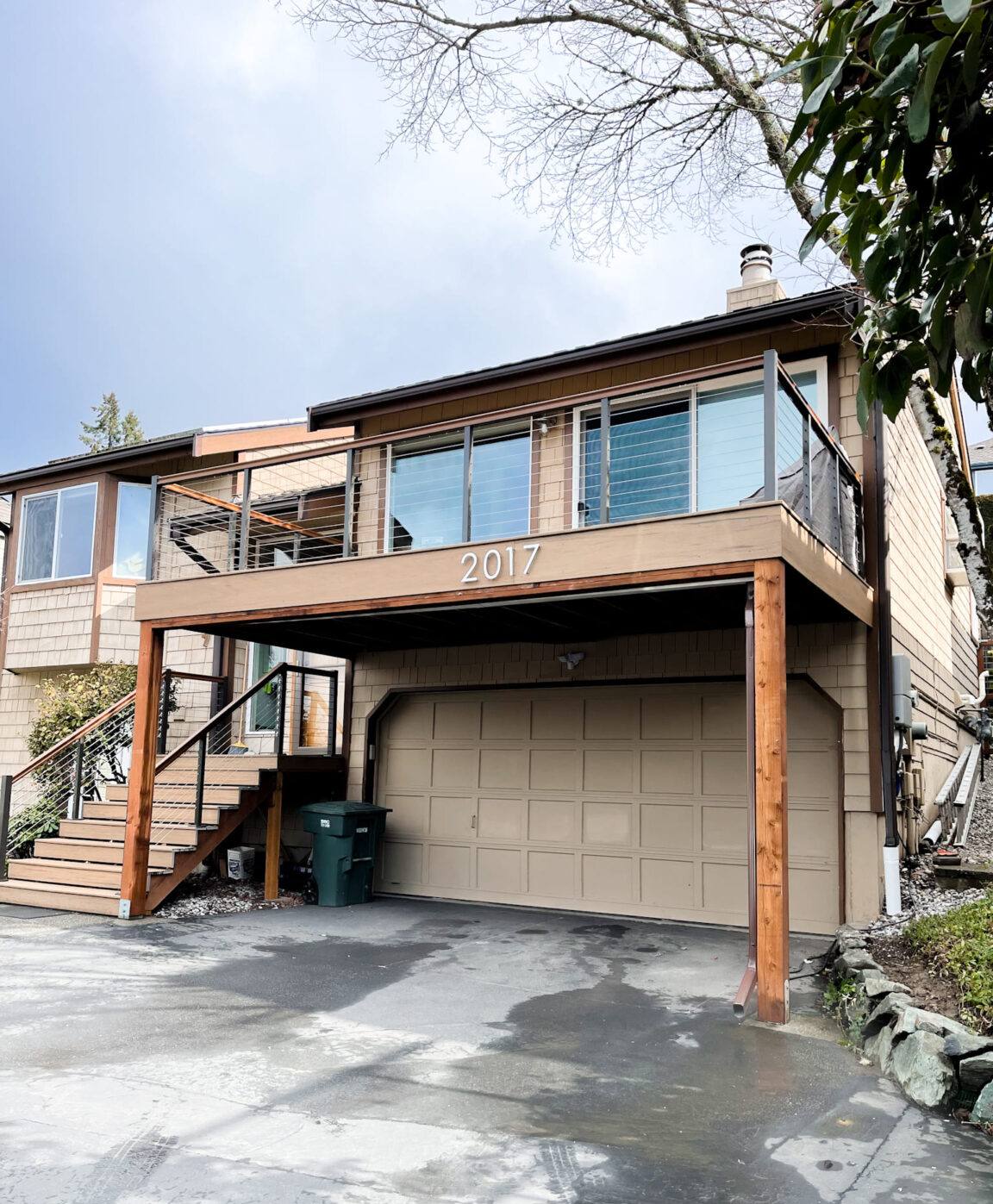
Signs a Columbia Deck Needs Replacement, Not Another Repair
Not every deck needs to be torn out. But there's a point where repair stops being a savings and starts being a way of paying for the same problem twice. A short inspection usually tells us which side of that line a deck is on.
- Boards feel spongy or flex noticeably underfoot, especially near the house or stair landing
- A screwdriver or awl sinks into the wood at the ledger board or post bases with light pressure
- Persistent moss or black algae staining returns within weeks of cleaning
- Visible gaps, rust streaking, or movement at joist hanger connections
- Stairs or railings that have developed noticeable wobble, not just cosmetic wear
- The deck was built before current flashing and hardware standards were common practice locally
- Multiple past repairs in different spots rather than one contained problem area
If it's one soft board near a downspout, that's a repair. If it's soft framing, corroded hardware, and moss that keeps coming back no matter how often it's cleaned, that's a structure telling you it's done.
What a Correct Deck Replacement Involves
A deck replacement is a framing and waterproofing project first, and a decking-material choice second. The parts that determine how long the new deck lasts in this climate are mostly things you'll never see once it's finished.
Ledger Flashing Done Right
Where the deck meets the house, we install proper flashing — typically a metal flashing cap integrated with house wrap or building paper, sometimes paired with a self-adhering membrane at the connection — so driving rain can't work its way behind the siding and into the rim joist. This is the single most common failure point we find on older decks in this area, and it's the one repair-only contractors skip most often because it means opening up the siding, not just replacing boards.
Corrosion-Resistant Hardware
Given the salt air this area deals with, we spec joist hangers, structural screws, and post hardware rated for the lumber and exposure involved — generally hot-dip galvanized or stainless where connections see the most moisture. Mixing incompatible metals (or using indoor-rated fasteners outdoors) is a slow-motion failure that doesn't show up for a few years, which is exactly why it's easy for it to get missed on a lower-bid job.
Footings and Drainage
Post bases are set above grade with proper standoff so the post end grain never sits in standing water, and footings are sized and set to current code depth for this area. We also grade and gap the structure so water moving off the deck has somewhere to go instead of pooling under it — a detail that matters more on shaded, tree-covered lots common around Columbia and Sudden Valley, where the ground underneath a deck rarely gets direct sun to dry it out.
Board Spacing for Moss and Debris
Correct board gap isn't just cosmetic — it lets airflow and drainage work the way they're supposed to, which is one of the better defenses against the moss buildup that's nearly constant here for half the year.
Choosing a Decking Material for This Climate
There's no single "best" decking material — there's the right one for a given budget, sun exposure, and how much upkeep an owner actually wants to do. Here's how the common options compare for a shaded, damp Whatcom County lot:
| Material | Moss/Moisture Behavior | Maintenance | Typical Lifespan Here |
|---|---|---|---|
| Pressure-treated lumber | Absorbs moisture readily; needs sealing to resist moss and checking | Annual cleaning, re-sealing every 2-3 years | 15-20 years with upkeep |
| Cedar | Naturally rot-resistant but still needs finish maintenance in wet shade | Cleaning and re-staining every 1-2 years | 15-20 years with upkeep |
| Capped composite | Sheds moisture well; capped surface resists moss staining much better than wood | Occasional washing, no sealing/staining | 25-30+ years |
| Uncapped composite | Better than wood but the exposed core can still take on moisture over time | Periodic cleaning | 20-25 years |
For lots around Columbia with significant shade from mature trees, we lean toward recommending capped composite or a well-maintained cedar over uncapped or budget PT boards, simply because the moss and moisture load here is higher than a lot of manufacturer maintenance schedules assume. That said, plenty of homeowners are happy with pressure-treated lumber as long as they're realistic about the yearly cleaning and re-sealing it needs to actually last.
Permits and Code in Whatcom County
Most deck replacements — especially anything involving new footings, a rebuilt ledger connection, or a deck attached at a different height or footprint than before — require a permit through Whatcom County. Even when a project qualifies for a simpler path, guardrail height, stair geometry, and footing depth all still have to meet current code, not the code that was in effect when the original deck went in decades ago. We handle the permit process as part of the job rather than leaving it for the homeowner to sort out, and we build to current code even on the pieces an inspector might not look at closely.
Our Deck Replacement Process
- On-site inspection. We check the ledger connection, framing, footings, and hardware condition, not just the surface boards, so the estimate reflects what's actually going on underneath.
- Written estimate. A clear scope and price range covering demo, framing, material options, and permit costs — no vague allowances.
- Permit and material order. We pull the necessary permit and confirm material selection before any demo begins.
- Tear-out and disposal. The old deck comes out, including checking the rim joist and siding behind the ledger for hidden rot.
- Framing and flashing. New footings, framing, corrosion-resistant hardware, and ledger flashing go in first — the part that determines how long everything else lasts.
- Decking, railing, and stairs. Installed to the spacing and fastening pattern the chosen material actually requires.
- Final walkthrough and inspection. We review the finished deck with you and coordinate the final county inspection where applicable.
Why Hiring a Crew That Already Works Columbia Matters
A lot of deck problems we get called out for weren't caused by bad workmanship in general — they were caused by a design or material choice that works fine somewhere drier and gets exposed fast here. A crew that regularly works Columbia and the Sudden Valley area already knows which lots hold shade and moss longest, where salt air is enough of a factor to upgrade hardware, and what Whatcom County's permitting office actually expects to see on a deck rebuild versus a straight repair. That local pattern recognition is the difference between a deck that needs attention again in five years and one that doesn't.
It also means someone who can speak to your specific lot rather than a generic climate zone — whether it faces open water and gets more direct salt spray, sits under heavy tree cover and stays damp longer, or is exposed enough to dry out faster between rains.
Keeping a New Deck Healthy After Replacement
A correctly built deck still needs some seasonal attention in this climate. A short annual routine goes a long way:
- Sweep debris and standing leaves off the deck surface before the fall rains set in
- Rinse or lightly brush off moss growth as soon as it appears rather than letting it establish
- Check that gaps between boards stay clear so water keeps draining through, not pooling on top
- Re-seal or re-stain wood decking on the manufacturer's recommended schedule, not "when it looks bad"
- Have hardware and the ledger connection glanced at every couple of years, since that's the spot most likely to hide a problem
If your deck in Columbia is showing soft spots, chronic moss, or hardware that's clearly seen better days, we're happy to take a look and give you a straight answer on repair versus replacement — no pressure, no inflated scope. Use the form below to request a free estimate.