 Sudden Valley Window
 Why Decks in Cordata Wear Out Faster Than People Expect
Cordata sits in the same Whatcom County weather pattern as the rest of the Bellingham area: long wet winters, a marine air layer coming off the Sound and the bay, and shoulder seasons where things never fully dry out. A deck here isn't fighting occasional storms — it's fighting months of low-grade saturation, punctuated by driving rain that gets pushed sideways under railings and into joints that were never meant to see standing water.
Add in the salt-tinged air common to this part of Whatcom County and you get accelerated corrosion on anything metal — nails, screws, joist hangers, bolts — long before the wood itself gives out. Then there's moss. Cordata's tree cover and shaded yards mean moss and algae get a real foothold on horizontal surfaces, and moss doesn't just look bad. It holds moisture against the decking boards around the clock, which is exactly the condition wood rot needs to get started.
None of this means a deck here is doomed. It means the repair has to account for moisture cycling and metal corrosion specifically, not just cosmetic wear. A repair that would hold up fine in a dry climate can fail in two seasons here if it ignores how water actually moves through a Pacific Northwest deck.
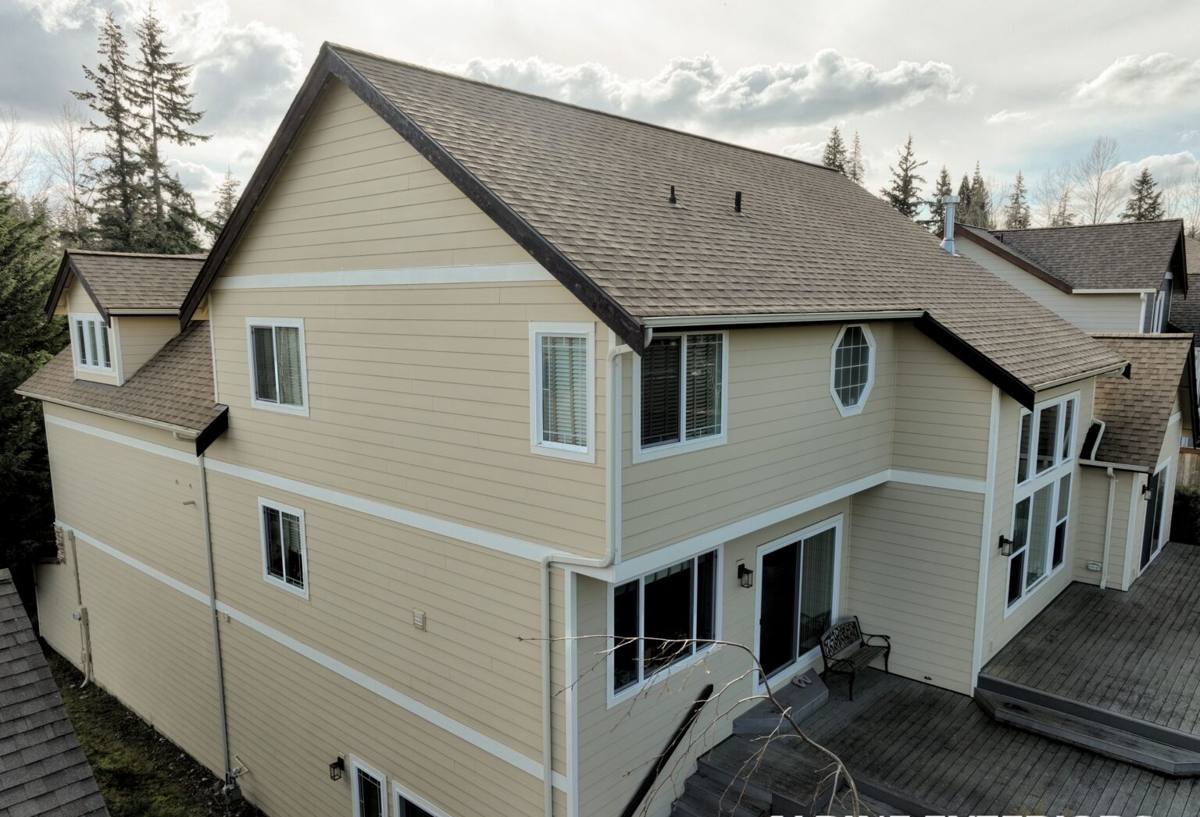
Signs a Deck Needs Repair — And Signs It's Past That
Repair candidates
- Soft or spongy spots on a few boards while the framing underneath still probes solid
- Rust streaking around fasteners or hardware, without visible wood loss yet
- Loose or wobbly railings and posts where the connection has worked itself loose
- Isolated moss or algae staining that hasn't yet caused board softening
- A ledger board with minor gapping or a flashing detail that's failing but the wall framing behind it is still dry
Signs you're past simple repair
- Widespread soft framing — joists or beams, not just decking boards
- A ledger board that's pulled away from the house or shows rot where it meets the wall
- Structural posts with visible rot at the base or where they meet a concrete footing
- Multiple past patch jobs stacked on top of each other
Part of our job on the first visit is telling you honestly which category your deck falls into. A deck with isolated damage doesn't need a full rebuild, and we're not going to sell you one.
What a Correct Deck Repair Actually Involves
A repair that's done right addresses the cause of the damage, not just the symptom. That means every repair on our end starts with getting underneath the deck — not just walking the surface.
Structural check first
Before any board gets replaced, we check the framing: joists, beams, posts, and especially the ledger board connection to the house, since that's the single most common source of hidden rot on decks in this climate. Water tracking behind a poorly flashed ledger can rot framing for years before it ever shows on the surface.
Fasteners and hardware
In a marine-influenced climate, the hardware fails before the wood does more often than people expect. Corroded joist hangers, rusted-through screws, and failing structural bolts get replaced with fasteners rated for exterior and coastal-adjacent exposure — this isn't optional in Whatcom County, it's the difference between a repair that lasts five years and one that lasts fifteen.
Flashing and water management
Any repair that touches the ledger board gets proper flashing correction — a membrane or metal flashing detail that sheds water away from the house framing rather than letting it wick in. This is the step that gets skipped most often on cheap repairs, and it's the one that causes the most expensive damage later.
Decking and structural members
Damaged boards, posts, or joist sections get cut back to solid wood and replaced or sistered as appropriate — not just capped or painted over. If moss and algae staining has taken hold, we address the moisture source (usually shade, drainage, or a low spot holding water) rather than just cleaning the surface and calling it done.
Decking Materials: How They Actually Perform Here
| Material | How it handles Whatcom County wet seasons | Repair considerations |
|---|---|---|
| Pressure-treated lumber | Reasonably resistant if sealed and maintained; moss and standing water still cause rot at fastener points and end grain | Easy to repair board-by-board; needs re-sealing on a regular cycle |
| Cedar | Naturally rot-resistant but softer; salt air and constant damp still degrade it faster than a drier climate would | Matching weathered cedar color takes care; structural repairs straightforward |
| Composite decking | Doesn't rot, but moisture trapped underneath boards or around fasteners can still cause hidden framing rot below | Surface boards rarely need repair, but the structure beneath still needs inspection |
| Older/reclaimed wood decks | Highest risk category — original fasteners and flashing details often weren't built for today's moisture loads | Often needs hardware and flashing upgrades alongside board replacement |
We're not going to tell you composite is the only "correct" answer — plenty of Cordata homes have wood decks that are perfectly serviceable with the right repair and a realistic maintenance routine. What matters is matching the repair approach to the material you actually have, not a one-size-fits-all fix.
Our Deck Repair Process
- Inspection from underneath and on top. We check framing, ledger connection, fasteners, and drainage — not just the visible boards.
- Honest scope conversation. You get a clear picture of what's failing, what's still sound, and what your realistic options are, in plain terms.
- Repair plan. We identify exactly which boards, framing members, hardware, and flashing details need work, and which don't.
- The repair itself. Rot cut back to solid wood, corroded hardware swapped for climate-appropriate fasteners, flashing corrected where needed, boards replaced or sistered.
- Water management check. We confirm the deck sheds water the way it should — no low spots, no dead zones where moisture and moss will just come right back.
- Walkthrough. We show you what was done and what to watch going forward.
Repair vs. Full Rebuild: What Actually Drives the Decision
| Factor | Leans toward repair | Leans toward rebuild |
|---|---|---|
| Framing condition | Solid joists/beams, isolated soft spots | Widespread soft or rotted structural members |
| Ledger board | Sound, properly attached | Rotted, pulling away, or never flashed correctly |
| Age of deck | Under 15-20 years with decent original build quality | Older deck built to outdated hardware or spacing standards |
| Damage pattern | Concentrated in a few boards or a shaded corner | Spread across the whole surface and substructure |
| Past repairs | First real repair needed | Multiple patch jobs already stacked on each other |
Cost for a targeted repair is usually a fraction of a full rebuild, but the honest answer depends entirely on what's underneath the surface — which is why the inspection comes before any number gets discussed, not after.
Extending the Life of Your Repair: A Maintenance Checklist
A good repair buys you years, but this climate doesn't reward a "fix it and forget it" approach. A short annual routine goes a long way:
- Clear moss and debris from decking surfaces and between boards before it holds moisture through the winter
- Check that gaps between boards haven't closed up with swelling or debris — airflow underneath matters
- Look at fastener heads for early rust staining, which shows up before the wood itself is compromised
- Confirm downspouts and gutters aren't dumping extra water onto or near the deck structure
- Re-seal or re-stain wood decking on the manufacturer's recommended cycle, not just when it looks faded
- Check the ledger board area and flashing once a year — this is the spot that causes the most expensive hidden damage
Why a Crew That Already Works Cordata Matters Here
Deck repair isn't complicated in theory, but doing it correctly in this specific climate takes local judgment. Knowing which fastener grades actually hold up against Whatcom County's salt-tinged, damp air, recognizing moss-driven rot patterns before they spread into framing, and building flashing details that account for driving rain rather than occasional showers — that comes from working on decks in this exact area, season after season, not from a generic repair checklist.
We're not interested in selling Cordata homeowners a rebuild when a repair will genuinely hold, and we're not interested in a repair that ignores the moisture problem and fails again in two years. Our standard is fixing the actual cause, using hardware and methods suited to this region, and being straight with you about what your deck actually needs.
Get an Honest Look at Your Deck
If your deck in Cordata is showing soft spots, rust streaking, loose railings, or persistent moss, it's worth getting a real inspection before winter rains make the problem worse. We offer a free, no-pressure estimate — you'll get a straight answer about what's going on and what it would take to fix it right. Use the form below to get started.