 Sudden Valley Window
 Why Decks in Cordata Wear Out Faster Than Homeowners Expect
Cordata sits in a part of Whatcom County where the weather rarely gives a deck a break. Between the marine air moving in off the water, long stretches of driving rain in fall and winter, and a moss season that can run half the year, a deck here is under near-constant moisture stress. Wood fibers swell and shrink with every wet-dry cycle, fasteners corrode faster in salt-tinged air, and any spot where water collects — a low joist, a clogged gap between boards, a shaded corner that never fully dries — becomes the place where rot starts first.
Most decks don't fail all at once. They fail quietly, from the framing up, while the surface boards still look fine. That's the trap: a deck can look presentable and still have soft joists, a rusted ledger connection, or footings that have shifted. By the time it's visibly sagging or the boards are spongy underfoot, the problem has usually been developing for years.
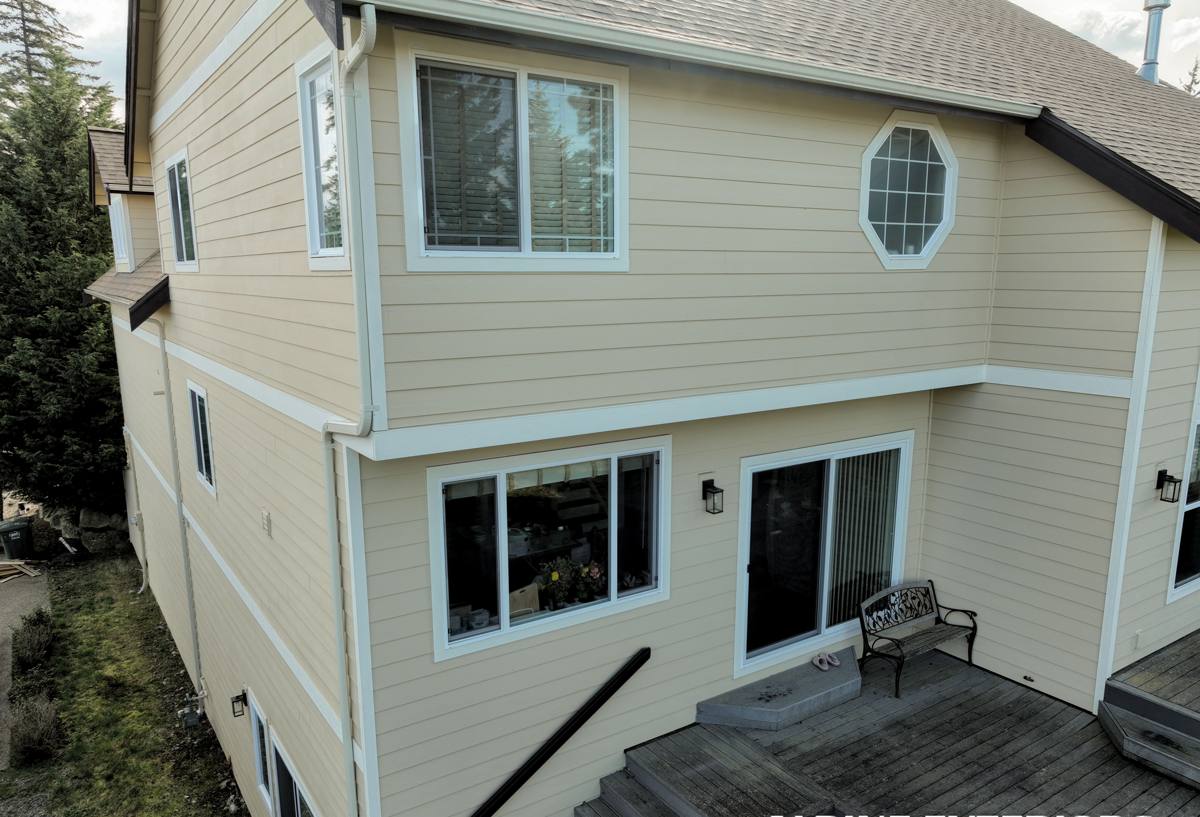
Signs a Cordata Deck Needs Full Replacement, Not a Repair
Repair makes sense when the damage is isolated — a few bad boards, a loose railing, a stair tread that's cracked. Replacement becomes the honest recommendation when the problems are structural or widespread. Here's what we look for during an inspection:
- Soft, spongy, or spring-loaded decking when you walk across it, especially near the house or in shaded areas
- Rust streaking or crumbling wood around joist hangers and structural screws
- Visible gaps, rot, or black staining where the deck attaches to the house (the ledger board)
- Wobble in the railing posts, which usually means the framing they're bolted to has weakened
- Moss or algae growth that keeps coming back within weeks of cleaning, a sign moisture isn't draining or drying properly
- Visible daylight gaps or separation between the deck and the house siding or foundation
- A deck older than 20-25 years, since most structural lumber and hardware from that era is nearing the end of its realistic service life in this climate
If more than one or two of these show up, patch repairs tend to be a short-term fix on a structure that's already failing underneath. That's when we talk through full replacement instead of throwing good money at boards that will just outlive the frame beneath them by a year or two.
What a Correct Deck Replacement Actually Involves
A deck is only as good as what's underneath it, and in this climate the parts you never see matter more than the surface. A proper replacement isn't just pulling up old boards and screwing down new ones — it's a rebuild of the structural system with moisture management built in from the start.
Footings and Posts
We check whether existing footings are sized and set correctly for the load and soil conditions, and whether posts are showing rot at the base — a common failure point where wood sits closest to grade and standing water. Undersized or deteriorated footings get replaced, not reused, even when it would be faster to leave them.
The Ledger Board Connection
This is where the deck bolts to the house, and it's the single most important structural connection on the whole project. It's also the spot most prone to hidden water intrusion, because it sits directly against the home's wall assembly. A correct installation uses proper flashing to direct water away from the house, corrosion-resistant fasteners rated for exterior and ground-contact use, and a code-compliant bolting pattern — not just lag screws driven in wherever there's framing behind the siding.
Joists, Framing, and Ventilation
Joists get sized for the actual span and load, spaced to the decking manufacturer's requirements, and protected with joist tape or a comparable moisture barrier on top, which stops water from wicking into the end grain where boards are cut and fastened. We also make sure there's enough clearance and airflow underneath the deck so it can actually dry out between rain events instead of staying damp for weeks at a time.
Decking, Railing, and Fasteners
Whatever surface material is chosen, it gets installed with fasteners matched to that material and rated for the coastal, moisture-heavy conditions common around Whatcom County. Railings are secured to structural blocking, not just to the outer decking board, so they don't loosen over time.
Decking Material Options for This Climate
There's no universally "best" decking material — there's the right material for how a homeowner wants to use and maintain the deck. Here's how the common options actually perform under Whatcom County's rain and moss conditions:
| Material | Moisture Behavior | Maintenance | Typical Lifespan Here |
|---|---|---|---|
| Pressure-treated wood | Absorbs and releases moisture; prone to splitting and graying without upkeep | Annual cleaning and re-sealing or staining recommended | 10-15 years |
| Cedar | Naturally more rot-resistant than pine/fir, but still absorbs water | Periodic sealing to maintain color and moisture resistance | 15-20 years |
| Composite (uncapped) | Can absorb moisture at cut edges if not sealed properly | Low; occasional washing to control surface mold/moss | 20-25 years |
| Capped composite / PVC | Fully sealed shell resists moisture absorption and moss staining | Lowest; soap-and-water cleaning | 25-30+ years |
In a moss-heavy environment, the deciding factor is often how easily a surface sheds water and how well it resists staining, since moss and algae take hold fastest on porous, slow-drying surfaces. Capped composite and PVC products cost more upfront but ask the least of the homeowner year to year. Wood costs less initially but only holds up if someone stays on top of sealing and cleaning — skip a season or two and the deterioration accelerates quickly in this climate.
How Our Deck Replacement Process Works
- On-site assessment. We inspect the existing deck's framing, footings, and ledger connection, not just the surface boards, and identify exactly what's failing and why.
- Written scope and estimate. You get a clear breakdown of what's being replaced, the materials involved, and the cost — no vague allowances or surprise add-ons discovered mid-project.
- Permitting. Deck replacement in Whatcom County typically requires a permit, and we handle that process so the finished structure is documented and legal, which matters when you eventually sell the home.
- Demolition and disposal. The old deck comes down cleanly, with attention paid to what condition is uncovered underneath — sometimes framing problems only become visible once the old boards are gone.
- Structural rebuild. Footings, posts, ledger flashing, and joists are installed or replaced to current code, sized correctly for the deck's actual use and load.
- Decking, railing, and stairs installed. Fastened and finished according to the manufacturer's specifications for the chosen material.
- Final walkthrough and inspection. We review the finished deck with you and coordinate any required final inspection so everything is signed off properly.
Cost Factors in a Cordata Deck Replacement
Every deck is different, so instead of a single number, here's what actually moves the price up or down on a project in this area:
| Factor | Why It Affects Cost |
|---|---|
| Deck size and shape | More square footage and complex angles mean more material and labor |
| Height off the ground | Taller decks need more substantial framing, stairs, and railing, plus more labor for footings |
| Decking material chosen | Pressure-treated lumber costs less upfront than composite or PVC, but the gap narrows over the deck's lifespan once maintenance is factored in |
| Condition of the substructure | If footings, posts, or ledger framing need full replacement rather than reuse, that adds labor and material |
| Railing style | Cable, glass, and composite railing systems cost more than standard wood or metal baluster railing |
| Permit and inspection requirements | Larger or attached decks generally require more documentation and inspection steps |
We'd rather walk a homeowner through these variables in person and give a real number for their specific deck than throw out a broad range that doesn't mean much until we've actually seen the site.
Permits and Code: Why It's Worth Doing Right
It's tempting to treat a deck replacement as a weekend project that doesn't need a permit, especially when you're just swapping out an existing structure in the same footprint. In Whatcom County, deck work above a certain height or size typically does require a permit and inspection, and skipping that step can create real problems later — from insurance complications if something fails, to delays or price renegotiation when you go to sell the home and a buyer's inspector flags unpermitted structural work. Building a deck to current code also means it's actually engineered for the loads it will see, not just built to match what was there before, which may have been undersized or non-compliant to begin with.
Maintenance After Replacement: Staying Ahead of Moss and Moisture
A well-built deck still needs some seasonal attention in this climate to get its full lifespan. None of this is complicated, but skipping it is how a 25-year deck turns into a 15-year deck.
- Sweep debris and standing leaves off the surface regularly, especially in fall — trapped organic matter holds moisture against the boards and feeds moss growth
- Clean the deck surface at least once a year with an appropriate cleaner for the material to remove early moss, algae, and mildew before it stains or embeds
- Check that gaps between boards stay clear so water can drain through rather than pooling on the surface
- Inspect railings and stair connections annually for looseness, since seasonal wood movement can slowly work fasteners loose
- For wood decks, re-seal or re-stain on the schedule the product calls for — don't wait until it visibly needs it, since damage starts before it's visible
- Keep the area underneath the deck clear of stored materials that block airflow and slow drying
Why It Matters to Hire a Crew That Already Works in Cordata
A deck built to a generic national spec sheet isn't automatically wrong, but it's often not optimized for what this specific climate does to a structure over time. A crew that regularly works decks in Cordata and the surrounding Whatcom County area already knows which fastener grades hold up against the salt-tinged air, which ledger flashing details actually keep water out during a real driving-rain winter, and which decking materials fight moss buildup versus which ones need constant upkeep to keep it off. That local pattern recognition comes from having seen how different builds age here, not just how they perform on paper.
It also means someone who understands local permitting expectations and inspection processes, so the project doesn't stall out on paperwork. And it means a company that's still around and reachable if a question comes up two or five years after the project is finished — not a crew that worked one job in the area and moved on.
If your Cordata deck is showing its age, or you just want an honest read on whether it needs repair or full replacement, we're glad to take a look. Reach out for a free, no-pressure estimate using the form below — we'll walk the deck, explain exactly what we see, and give you a straight answer either way.