 Sudden Valley Window
 Building a Deck That Can Actually Handle Sehome's Weather
A deck in this part of Whatcom County lives a harder life than most homeowners realize. Between the driving rain off the water, the long stretch of gray, damp months, and the shade thrown by mature trees on a lot of Sehome and Sudden Valley properties, wood and hardware here take a beating that a deck in a drier climate never sees. Add in the salt-laden marine air that blows through this part of the Pacific Northwest, and you've got a combination that will find every weak point in a deck within a few years if it wasn't built with that combination in mind.
None of this means a deck can't last decades here — it absolutely can. It means the framing, the fasteners, the decking material, and even the layout have to be chosen for this specific climate, not just pulled from a standard build sheet. That's the difference between a deck that needs major repair by year eight and one that's still solid at year twenty-five.
Moss, Algae, and a Long Damp Season
Whatcom County doesn't really have a dry season the way other parts of the country do. Shaded decks, especially ones tucked under fir or cedar canopy, stay damp for weeks at a stretch, which is exactly what moss and algae need to take hold. Left alone, that growth doesn't just look bad — it holds moisture against the decking surface and turns boards slick and dangerous underfoot.
Salt Air and Metal Fasteners
Even properties that aren't right on the water get exposed to salt-carrying air moving in off the Sound during wind events. Over time that air accelerates corrosion on any fastener, bracket, or connector that isn't rated for it. A screw head that rusts and stains the decking around it is a cosmetic problem at first — but a corroded structural bracket is a safety problem later.
Driving Rain and Water Management
Rain here doesn't just fall straight down — wind-driven rain gets up under railings, behind ledger boards, and into any joint that isn't properly flashed or sloped to shed water. A deck built without deliberate water management will trap moisture in exactly the places you can't see until the damage is already done.
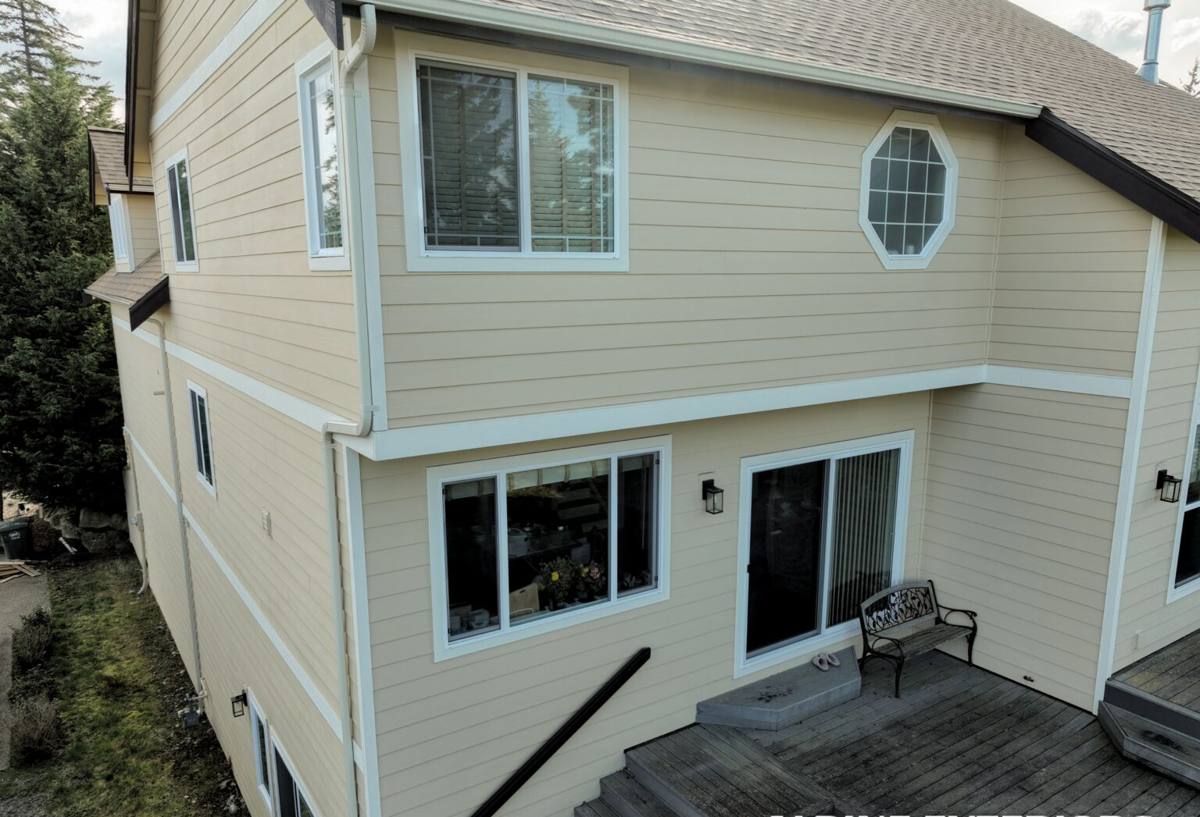
What Goes Into a Deck That's Actually Built Correctly
A good-looking deck and a well-built deck are not always the same thing. The parts that matter most for longevity in this climate are almost all things you won't notice once the project is finished — which is exactly why it's worth understanding what should be happening underneath.
Footings and Framing
Footings need to be sized and set below frost depth and on undisturbed, well-draining soil — not just poured into whatever the existing grade happens to be. Framing lumber should be rated for ground contact where it's within a few inches of soil or in a spot that stays damp, and joists should be spaced to match whatever decking material sits on top of them, since composite and PVC products often call for tighter spacing than solid wood.
Decking Material Options
There's no single "correct" decking material — the right choice depends on budget, how much shade the deck gets, and how much maintenance the homeowner actually wants to do. What matters is picking a material with eyes open about its trade-offs, not just its upfront cost.
Fasteners, Flashing, and the Details Most People Skip
Stainless steel or coated, corrosion-rated fasteners cost more than standard hardware, but in a salt-air, high-rain climate they're not optional if you want the deck to still look clean in ten years. Ledger boards — the piece that attaches the deck to the house — need proper flashing to keep water from getting behind the siding, which is one of the most common sources of hidden rot on older decks in this area.
Comparing Decking Materials for This Climate
Here's a straightforward look at how the common decking options hold up under the moss, rain, and shade conditions typical of Sehome and Sudden Valley properties.
| Material | Moss/Algae Resistance | Maintenance | Typical Lifespan Here |
|---|---|---|---|
| Pressure-treated wood | Low — needs regular cleaning and sealing | Annual cleaning, resealing every 1-2 years | 10-15 years |
| Cedar | Moderate — naturally rot-resistant but still grows moss in shade | Cleaning plus periodic oil/sealer | 15-20 years |
| Composite decking | Good — but can still get slick in deep shade if not cleaned | Occasional washing, no sealing | 25-30 years |
| PVC/capped decking | Best — least likely to hold moisture at the surface | Minimal — occasional washing | 25-30+ years |
Composite and PVC cost more up front, but for a shaded lot with a long wet season, the reduced maintenance and better moisture behavior often make them the more practical long-term choice. Wood is still a legitimate option — it's just an honest trade of lower upfront cost for more upkeep.
How We Handle a Custom Deck Project, Start to Finish
Design and Site Visit
We start by walking the actual site — grade, drainage, sun and shade patterns through the day, and how the deck will tie into the house. On sloped or wooded lots, which describes a fair number of properties in this area, this step often changes the footing layout or the deck height more than homeowners expect.
Permitting
Most deck projects that attach to the house or sit a certain height above grade require a building permit, and requirements can vary depending on your specific address and jurisdiction. We handle the permit application and inspection scheduling as part of the job so you're not the one tracking down paperwork.
Building
Footings first, then framing, then decking and railings. We build in the fastener and flashing details described above as standard practice, not as an upgrade — those aren't places to cut corners in this climate.
Walkthrough and Care Guidance
Before we call the job done, we walk the finished deck with you, point out anything that needs periodic attention, and explain a realistic maintenance schedule for whatever material you chose.
What Shortens a Deck's Life Around Here
We see the same handful of problems repeatedly on older decks in this area, almost always tracing back to something that wasn't accounted for at build time:
- Ledger boards without proper flashing, letting water track into the house rim joist
- Standard (non-coated) fasteners left to rust and stain the decking
- Decking boards installed too close to grade with no airflow underneath, trapping moisture
- Undersized or shallow footings that shift over time on wet, sloped soil
- No plan for shade and moss — decks under heavy tree canopy with no drainage gaps between boards
None of these are dramatic failures on day one. They're slow problems that show up as soft spots, stains, or a spongy feel underfoot a few years down the road — and they're almost always cheaper to prevent during construction than to fix afterward.
Keeping a Sehome Deck in Good Shape Year After Year
Whatever material you choose, a little seasonal attention goes a long way in this climate. A basic yearly routine looks like this:
- Clear leaves and debris from between boards and off any covered sections before the wet season sets in
- Wash the surface at least once a year to knock back moss and algae before it gets established
- Check gutters and downspouts near the deck to make sure water isn't draining onto or under it
- Inspect fasteners and hardware for rust or loosening, especially near the ledger board
- For wood decks, plan on resealing or re-oiling every one to two years depending on sun exposure
- Trim back overhanging branches to cut down on shade, debris, and moss growth
What a Custom Deck Runs, and What Moves the Price
Every deck is priced around its own site conditions and material choices, but these are the main factors that move a project up or down in cost:
| Factor | Why It Matters |
|---|---|
| Size and shape | More square footage and complex angles mean more framing and cut waste |
| Decking material | Wood costs less upfront; composite and PVC cost more but need less upkeep |
| Height above grade | Taller decks need more substantial framing, stairs, and often guardrails |
| Site access and slope | Sloped or hard-to-access lots take more labor for footings and material staging |
| Railing style | Cable, glass, and metal railings cost more than standard wood balusters |
| Permitting complexity | Decks attached to the house or built high off grade generally require more inspection steps |
Because of how much these factors interact, we don't quote a deck without seeing the site — a flat, easy-access lot and a steep, shaded one can call for very different budgets even at the same square footage.
Why It Matters to Hire a Crew That Already Works This Area
A deck built by someone unfamiliar with this specific climate can still look fine on the day it's finished — the problems it develops from wrong material choices or skipped flashing details usually take a year or two of wet Whatcom County winters to show up. A crew that already works in Sehome and Sudden Valley has seen how the shade patterns on these lots affect moss growth, how the local soil drains on slopes, and which details actually matter for a deck to hold up here versus what's just standard practice somewhere drier. That familiarity shows up in fewer callbacks and a deck that's still solid well past the point where a poorly built one would be showing problems.
If you're planning a custom deck in Sehome or Sudden Valley, we're glad to come take a look at your site and put together a straightforward, no-pressure estimate — just fill out the form below.