 Sudden Valley Window
 Why Deming Roofs Wear Out Faster Than the Brochures Say
Deming sits in the shadow of the Cascade foothills, along the Nooksack River drainage, where weather rolls in off the Pacific and stalls against the mountains. That means more rain days per year than most of the country sees, long stretches of overcast damp between storms, and a moss season that can run from October clear through May. Homes closer to Lake Whatcom and the Sudden Valley side of the county also pick up moist marine air that keeps roofing materials from ever fully drying out between rains. The combination — near-constant moisture, shaded tree cover on wooded lots, and freeze-thaw swings in the colder months — is exactly the environment that shortens the life of a roof that wasn't built or installed with this climate in mind.
A roof that would last 25-30 years in a dry inland climate can lose several years of service life here if the underlayment, ventilation, or flashing details weren't matched to the conditions. That's the real argument for a correctly installed new roof rather than a patch-and-hope repair: in this climate, installation quality matters as much as the shingle or panel you pick.
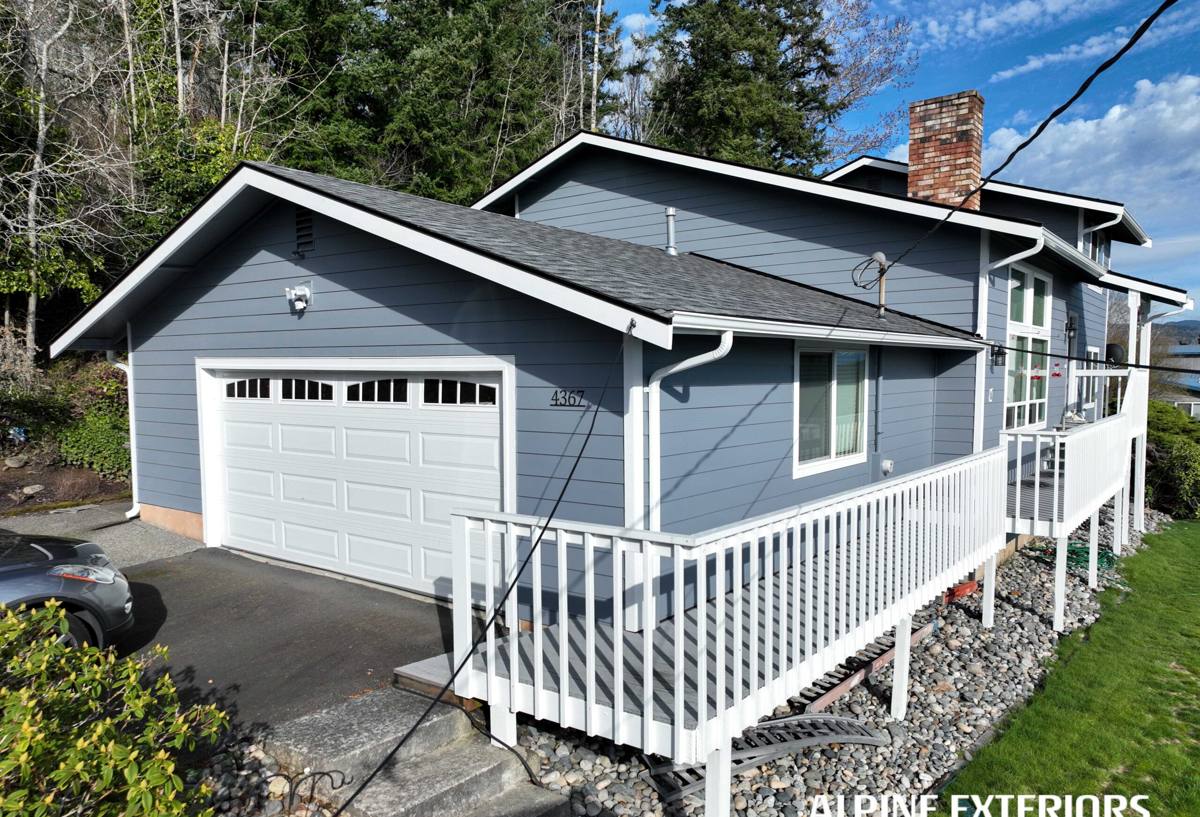
Signs a Deming Home Needs a New Roof, Not Another Repair
Most homeowners call us after noticing one obvious problem — a stain on a ceiling, a shingle in the yard after a windstorm — but the roof underneath often tells a longer story. Before recommending a full replacement, we look for:
- Granule loss heavy enough that you can see bare asphalt on multiple slopes, not just one weathered spot
- Moss or algae that keeps returning within a season of cleaning, which usually means the roof deck underneath is staying damp
- Curling, cracking, or cupped shingles, especially on south- and west-facing slopes that see the most sun-to-rain cycling
- Soft spots or sagging in the decking when walked, a sign moisture has reached the plywood or OSB below
- Flashing around chimneys, skylights, or valleys that's rusted, lifted, or was never properly stepped in the first place
- A roof approaching or past 20 years old with asphalt shingles, or one that's had more than two or three repair visits in recent years
If a roof is showing two or more of these at once, patch repairs are usually a short-term fix that delays — and sometimes adds cost to — a replacement that's coming regardless.
What a Correct New Roof Installation Actually Involves
A new roof is more than shingles nailed over the old ones. In a wet climate like Whatcom County, the layers you don't see are what determine whether the roof performs for its full warranty life or starts failing early.
Tear-Off and Deck Inspection
We remove the existing roofing down to the deck on every full replacement. Roofing over an old layer traps moisture, hides deck damage, and voids most manufacturer warranties. Once the deck is exposed, we check for soft or delaminated sheathing — common on older Deming homes with a history of moss and moisture — and replace any bad sections before anything new goes down.
Underlayment Built for Wet Weather
Everything above the deck depends on a synthetic or self-adhered underlayment that actually sheds water if wind-driven rain gets under the primary roofing, which happens more often here than in drier parts of the state. We also install ice-and-water shield in valleys and along eaves, where ice damming and pooled water are the most common failure points during cold snaps.
Ventilation That Matches the Attic
A roof can be installed perfectly and still fail early if the attic underneath can't breathe. Balanced intake at the soffits and exhaust at the ridge keeps moist air moving out instead of condensing on the underside of the deck — a slow, invisible cause of rot and mold in homes with poor ventilation. We size and check this on every project rather than assuming the existing setup was adequate.
Flashing and Penetrations
Chimneys, skylights, plumbing vents, and roof-to-wall transitions are where the large majority of leaks actually start, not in the open field of shingles. Correct step flashing, counter-flashing, and sealed penetrations are non-negotiable details, and they take more time to do right than to do quickly.
Choosing a Roofing Material for This Climate
There's no single "best" roofing material — the right choice depends on the home's roof pitch, budget, and how much moss and moisture exposure the specific lot gets. Here's how the common options compare for Deming conditions:
| Material | Typical Lifespan Here | Moss/Moisture Behavior | Maintenance |
|---|---|---|---|
| Architectural asphalt shingle | 20-30 years | Good with proper ventilation; algae-resistant granules help on shaded roofs | Periodic moss treatment and gutter clearing |
| Standing seam metal | 40-50+ years | Sheds moss and needles well due to smooth, steep-shedding surface | Low; occasional inspection of seams and fasteners |
| Wood shake/shingle | 15-25 years in this climate | Holds moisture readily; higher moss and rot risk without diligent upkeep | High; regular treatment and inspection required |
| Composite/synthetic shingle | 30-50 years | Resists moisture absorption; performs consistently on shaded slopes | Low to moderate |
For heavily treed Deming lots with a lot of shade and needle drop, we're often steering homeowners toward metal or composite options, or toward asphalt shingles with a stronger algae-resistant rating, simply because they hold up better to the moss cycle without constant upkeep. Wood shake can still be the right call for homeowners who want the look and are committed to the maintenance, but we're upfront that it's the highest-maintenance option in this specific climate — that's a trade-off, not a defect in the product.
Our New Roof Installation Process
1. On-Site Assessment
We walk the roof and attic, check the deck condition, ventilation, and existing flashing, and take real measurements rather than estimating from a photo or satellite image. Deming's mix of steep-pitched cabins and standard suburban rooflines means every quote is based on the actual home.
2. Written Estimate and Material Selection
You get a clear scope of work — tear-off, deck repair allowance, underlayment type, ventilation plan, material and color — so there's no ambiguity about what's included before work starts.
3. Scheduling Around the Weather
Roofing in Whatcom County means working around rain windows, not ignoring them. We schedule tear-off and dry-in in stages when needed and use temporary protection so an open deck is never left exposed overnight to an incoming system.
4. Installation
Tear-off, deck repair, underlayment, flashing, and final roofing go down in sequence, with each layer inspected before the next goes on top of it.
5. Final Walkthrough and Cleanup
We walk the finished roof with you, clear the site of old material and debris (including a magnetic sweep for nails), and go over the warranty paperwork.
Why a Deming-Experienced Crew Matters
A roof installed by a crew unfamiliar with this area is working from general assumptions instead of local knowledge. Crews who already work Deming and the surrounding Sudden Valley area know which slopes tend to hold moss longest, which older homes commonly have marginal attic ventilation, how driving rain off the Nooksack valley behaves against different roof pitches, and what Whatcom County's permitting and inspection process actually requires before work starts. That local familiarity shows up in fewer surprises mid-project and a roof detailed correctly for how weather actually hits it here, rather than a generic installation.
What Affects the Cost of a New Roof in Deming
| Factor | Why It Matters |
|---|---|
| Roof size and pitch | Steeper roofs take longer to work safely and require more fall protection |
| Deck condition | Rotted or soft sheathing found during tear-off adds material and labor |
| Material choice | Asphalt, metal, and composite carry different material and labor costs |
| Number of penetrations | More chimneys, skylights, and vents mean more flashing detail work |
| Access and site conditions | Steep driveways, tree cover, or tight lots common in Deming can affect staging and disposal |
| Ventilation upgrades | Adding proper intake/exhaust venting where it's missing is a worthwhile add, not just a cost |
We don't publish blanket per-square pricing because the honest answer depends on the roof in front of us — a straightforward asphalt re-roof on a simple gable and a steep, multi-valley roof with several penetrations are not the same job. What we do give every homeowner is a written estimate with the scope spelled out, so there's no guessing at what's included.
Before You Hire: A Practical Checklist
- Get a written estimate that specifies tear-off, underlayment type, and flashing details — not just "new roof, $X"
- Confirm the contractor is licensed and insured to work in Washington, and ask to see current proof
- Ask how deck repair is priced if rot is found during tear-off, before work starts
- Ask specifically how attic ventilation will be handled, since it's easy to skip and hard to check later
- Get the manufacturer warranty terms in writing, along with the contractor's workmanship warranty
- Ask how debris and old material will be removed, including a nail sweep of the yard and driveway
Ready to Talk About Your Deming Roof
If your roof is showing its age or you just want an honest read on how much life is left in it, we're happy to take a look. We offer a free, no-pressure estimate — no obligation, just a straight assessment of what your roof needs and what a correct installation would involve. Use the form below to get started.