 Sudden Valley Window
 Fairhaven's Siding Has a Harder Job Than Most
Homes in Fairhaven sit close enough to the water that their siding is doing more work than siding on a typical inland house. Salt-laden air, wind-driven rain off the Sound, and the long gray stretch of fall and winter that lets moss and algae take hold on anything shaded or north-facing — all of it adds up. Siding here isn't just a cosmetic layer. It's the first and most important line of defense against moisture intrusion, and in this climate it gets tested constantly, not occasionally.
That's the lens we use for every siding replacement we quote in Fairhaven: not "what looks good," but "what will still be doing its job in fifteen years without babysitting." This page covers what that actually requires — the climate factors, the material decision, and the process — so you know what a correct job looks like before you're standing in your driveway with three bids that all sound reasonable.
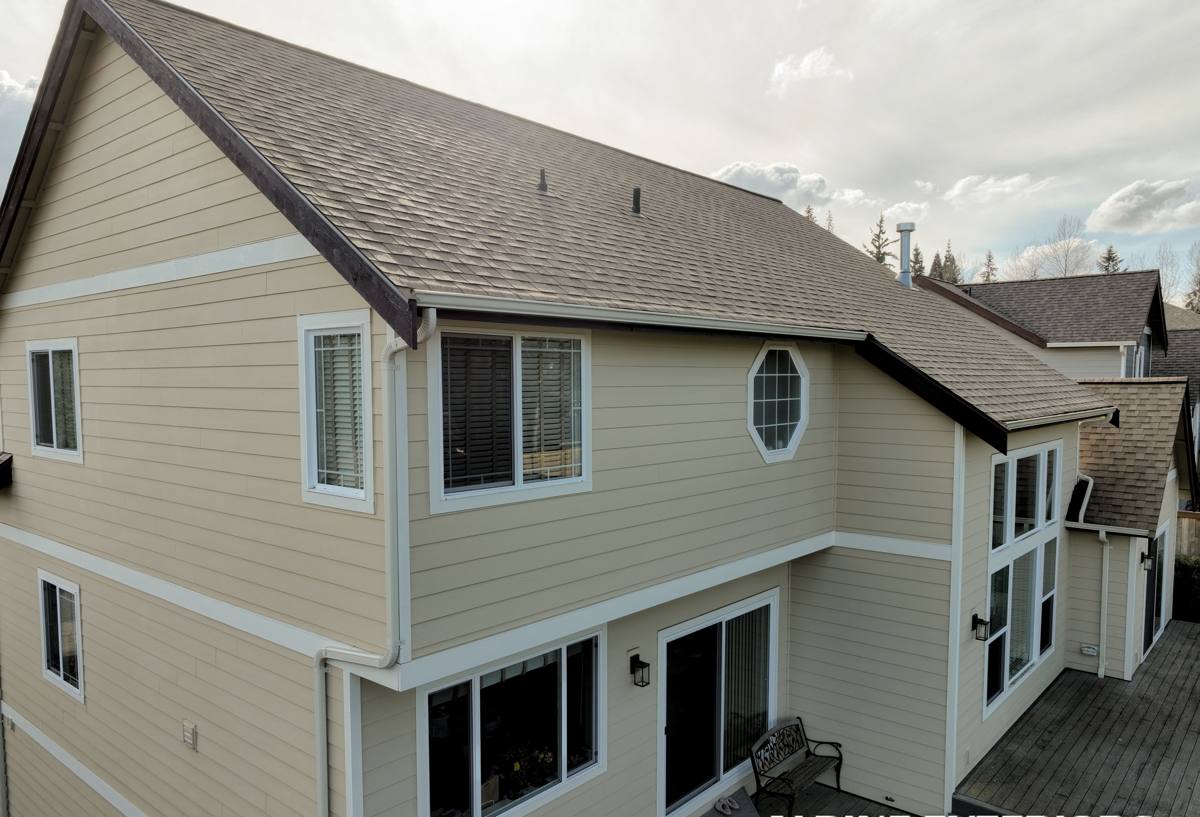
What Salt Air, Driving Rain, and Moss Actually Do to Siding
Salt Air and Fasteners
Airborne salt accelerates corrosion on anything metal — fasteners, flashing, trim screws. Siding systems that rely on exposed or under-protected metal components age faster near the water than they do a few miles inland. This is one reason fastener choice and flashing detail matter more here than they would on a house in, say, Everson or Lynden.
Driving Rain and Wind-Driven Moisture
Whatcom County's storms don't just fall straight down — wind off the water pushes rain sideways into wall assemblies, seams, and butt joints. Any siding product or installation detail that depends on rain running straight off a flat surface is at a disadvantage. Water finds horizontal laps, unsealed end cuts, and gaps around penetrations, and once it's behind the siding, the clock starts on rot, mold, and sheathing damage — problems you won't see until they're expensive.
Moss, Algae, and the Long Wet Season
Shaded elevations, north-facing walls, and anything under tree cover in Fairhaven can stay damp for months at a stretch. That's exactly the environment moss and algae need. Organic material that sits on siding holds moisture against the surface, which is bad news for wood-based products in particular — it's not just an appearance issue, it's a moisture-retention issue that shortens the life of whatever's underneath.
Signs Your Siding Is Already Losing the Fight
Most siding failure in this climate is gradual, which is why it's easy to miss until it's serious. Walk your exterior and look for these:
- Soft or spongy spots when you press on the siding, especially near the bottom courses and around windows
- Persistent dark streaking, moss, or algae that comes back within weeks of cleaning
- Paint that's bubbling, peeling, or won't hold a new coat no matter how well it's prepped
- Visible gaps, warping, or cupping at board seams and butt joints
- Rust staining bleeding from fastener heads or flashing
- A musty smell in rooms along an exterior wall, or unexplained interior moisture
- Siding that's more than 20-25 years old and has never been fully inspected behind the surface
Any one of these on its own might be minor. Several together, especially on the same wall, usually means moisture has been getting behind the siding for a while — and that's a bigger job than a patch.
Why We Install Only James Hardie Fiber Cement Siding
We get asked regularly why we don't offer vinyl, LP SmartSide, cedar, or other fiber cement brands as options. The honest answer is that after years of doing this work in Whatcom County's climate, we standardized on one product because it's the one that consistently holds up to what this weather does, and we'd rather build a business on doing one thing right than offer five options and let homeowners gamble on the wrong one.
James Hardie fiber cement is non-combustible, doesn't feed moss and algae the way wood-based products can, and is engineered in specific formulations for different climate zones. For the Pacific Northwest, that means Hardie's HZ5 product line, built to perform in wetter, colder regions rather than a generic one-size-fits-all formula. The factory-applied ColorPlus finish is baked on and warranted separately from the substrate, which matters in a climate where repainting siding every few years isn't something most homeowners want to sign up for.
None of this means other products are worthless — vinyl is inexpensive and low-maintenance in mild climates, cedar has real aesthetic appeal, and engineered wood siding has improved a lot over the years. But each comes with a trade-off that shows up faster here than it would in a drier region: vinyl can warp and doesn't handle impact well, wood-based products need consistent maintenance to resist moisture and organic growth, and cedar requires ongoing sealing and staining to perform long-term. We'd rather be straightforward about why we don't install them than sell you something we don't think is the right fit for a Fairhaven exterior.
How the Common Options Compare in This Climate
| Material | Moisture Behavior | Moss/Algae Resistance | Maintenance | Typical Lifespan Here |
|---|---|---|---|---|
| Vinyl | Can warp/buckle with temperature swings; seams are weak points | Fair, but traps moisture behind panels if installed loose | Low, but limited repair options when damaged | 15-25 years |
| Cedar | Absorbs moisture; needs sealing to resist swelling | Poor without regular treatment | High — staining/sealing every few years | 15-20 years with upkeep |
| Engineered Wood (LP SmartSide) | Better than raw wood, but edges are moisture-sensitive if not sealed correctly | Moderate | Moderate — paint and edge sealing matter | 20-30 years |
| James Hardie Fiber Cement | Dimensionally stable, doesn't swell or rot | Strong — doesn't feed organic growth like wood fiber | Low — factory finish holds color | 30-50 years |
What a Correct Siding Replacement Actually Involves
The siding itself is only part of the system. In a climate like Fairhaven's, what's behind the siding matters just as much as the boards themselves. A correct replacement includes:
Full Substrate Inspection
Once the old siding is off, we inspect the sheathing for rot, soft spots, and hidden water damage. This is often the point where homeowners learn about problems that were invisible from the outside — and it's the right time to fix them, because it's the only time the wall is fully open.
Weather-Resistive Barrier and Flashing
A properly lapped weather-resistive barrier, correctly integrated flashing around windows, doors, and penetrations, and attention to how water is directed away from seams — this is the detail work that determines whether wind-driven rain stays out or works its way in over time. It's also the part of the job that's invisible once the siding goes back on, which is exactly why it needs to be done right the first time.
Correct Fastening and Clearances
Fiber cement siding has specific fastener spacing, penetration depth, and clearance requirements from grade, roofing, and other transitions. Skipping these specs doesn't show up as a problem on day one — it shows up two or three winters later as cracking, moisture intrusion, or premature paint failure.
Joint and Seam Treatment
Butt joints and seams are where most siding failures start. Correct caulking, proper overlap, and manufacturer-specified treatment at every joint keep water from finding its way behind the cladding, which is the single most important factor in how long a siding job actually lasts in this climate.
Our Process for Fairhaven Siding Replacement Projects
- On-site assessment: We walk the full exterior, check for moisture damage, and evaluate exposure on each elevation — north- and water-facing walls typically need the most attention.
- Written estimate: A clear breakdown of scope, product, and cost factors specific to your home — no vague allowances.
- Tear-off and substrate inspection: Old siding comes off, sheathing is inspected, and any rot or damage is addressed before anything new goes up.
- Weather barrier and flashing installation: The moisture-management layer goes in correctly before a single piece of siding is hung.
- Hardie installation to spec: Fastening, clearances, and joint treatment follow James Hardie's installation requirements, not shortcuts.
- Final walkthrough: We review the finished work with you and confirm everything meets the standard we'd want on our own homes.
Cost Factors for a Fairhaven Siding Project
Every home is different, but the same handful of factors drive most of the cost variation we see on Whatcom County siding jobs:
| Factor | Why It Matters |
|---|---|
| Home size and number of stories | More surface area and taller walls mean more material, labor, and equipment (staging/lifts) |
| Condition of existing sheathing | Hidden rot or water damage found during tear-off requires repair before new siding goes on |
| Existing siding type | Some materials are more labor-intensive to remove and dispose of than others |
| Trim and detail work | Corner boards, window trim, and architectural details add labor time |
| Accessibility of the property | Steep lots, limited access, or dense landscaping can affect staging and timeline |
| Product line and profile chosen | Hardie offers multiple plank widths, textures, and colors at different price points |
We won't quote a number without seeing the house — anyone who does is guessing, and in a climate where hidden moisture damage is common, that guess is often wrong.
Why It Matters to Hire a Crew That Already Works in Fairhaven
Siding installation isn't uniform across regions. A crew that mostly works drier inland climates may not think twice about details that matter a lot near the water — flashing overlap, fastener corrosion resistance, or which elevations need extra attention for moss and wind-driven rain. A crew that's done this work repeatedly in Whatcom County's coastal conditions knows where problems tend to show up on local homes before they're visible, and builds the installation to account for it from the start rather than learning the hard way.
Local familiarity also means fewer surprises with permitting and inspection expectations, and a better sense of realistic timelines around the wetter months, when weather windows for tear-off and installation matter more than they would in a drier climate.
Get a Free, No-Pressure Estimate
If your siding is showing any of the warning signs above, or you're just past due for an honest look at its condition, we're happy to walk your property and give you a straight assessment — no obligation, no pressure. Use the form below to request a free estimate for your Fairhaven home.