 Sudden Valley Window
 Edgemoor's Siding Has a Harder Job Than Most
Edgemoor sits close enough to the water that salt air is part of daily life, and that changes what "good siding" means. Add Whatcom County's long stretch of driving rain each fall and winter, plus a moss season that can run for months on shaded, north-facing walls, and you have three separate stressors working on your home's exterior at the same time. Paint fades and chalks faster near salt air. Wood-based products swell, check, and rot where rain gets trapped behind them. Moss holds moisture against a wall long after the rest of the neighborhood has dried out. None of this is dramatic on its own, but it adds up year after year, and it's why siding that performs fine in a drier inland town can fail early here.
This page is specifically about siding installation for Edgemoor homes — not a generic overview. The install decisions that matter here (drainage detailing, fastener choice, how the bottom edge of the siding is handled, how much clearance is left near grade and roof lines) are shaped by this exact climate, and they're the same reasons we've standardized on one product rather than offering several.
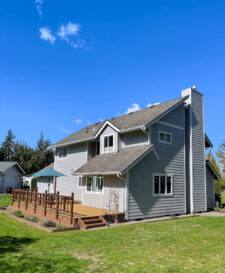
What Correct Siding Installation Actually Involves
Siding failures are rarely about the siding material itself — they're almost always about installation details that got rushed or skipped. In a climate like this one, a few details matter more than usual:
The Weather-Resistive Barrier Comes First
Before a single piece of siding goes up, the wall needs a continuous, properly lapped weather-resistive barrier (housewrap or equivalent) with flashing integrated at every window, door, and penetration. In a location that gets sustained driving rain, water will find any gap in this layer eventually. The siding is the first line of defense; this barrier is what protects the wall structure when the siding's defenses get overwhelmed during a hard storm.
Flashing and Drainage Gaps
Every horizontal joint, every window head, and every point where siding meets a roofline, deck, or chimney needs flashing that sheds water outward, not a caulk joint hoping to hold back water indefinitely. Caulk is a maintenance item; flashing is a permanent detail. We also build in a drainage gap behind the siding so that any moisture that does get past the cladding has somewhere to go besides straight into the sheathing.
Fastening and Clearances
Fastener type, spacing, and depth all affect how the siding holds up to wind-driven rain and to the freeze-thaw cycles that hit exposed, moisture-saturated wood or fiber materials. Clearance from grade, roofing, and decks also matters — siding installed too close to the ground or to a roof surface stays wet longer and starts breaking down years before it should.
Installation Basics Checklist
- Continuous, properly lapped weather-resistive barrier with integrated flashing at every opening
- Drainage gap behind the siding, not a fully sealed, flush-mounted layer
- Correct fastener type and spacing for the specific siding product being installed
- Minimum clearance maintained from grade, roofing, and decking
- Factory-finished or field-finished per manufacturer spec — not improvised
- Manufacturer-approved caulking used only where it's meant to be a permanent seal, not a patch
Why We Install Only James Hardie Fiber Cement Siding
We get asked, fairly often, why we don't offer vinyl, LP SmartSide, cedar, or other fiber cement brands like the homeowner may have seen elsewhere. It's a fair question, and the honest answer is that we standardized on one product after weighing what actually holds up in this climate against what's easiest to install or cheapest to source.
Vinyl Siding
Vinyl is inexpensive and low-maintenance in the sense that it doesn't need painting, but it's a petroleum-based product that becomes brittle with age and UV exposure, expands and contracts more than fiber cement with temperature swings, and can warp or buckle if installed too tight. In a location with strong wind-driven rain, vinyl's lap-and-clip installation also relies heavily on the barrier behind it doing all the water management work, since vinyl itself isn't a fully sealed water barrier by design.
LP SmartSide
LP SmartSide is an engineered wood product, which means it performs well when it stays dry and is finished correctly, but wood-based siding is inherently more vulnerable to moisture intrusion at cut edges and joints than fiber cement. In a climate with a genuine moss season and sustained damp periods, any wood-based product needs more diligent field-sealing of cut edges and more consistent long-term maintenance to avoid swelling or edge deterioration.
Cedar and Primed Spruce
Natural wood siding has real appeal, but it requires the most ongoing maintenance of any option — regular refinishing, careful caulk upkeep, and vigilance against moss and mildew on shaded elevations. That maintenance burden is exactly what a lot of Edgemoor homeowners are trying to get away from when they replace siding in the first place.
Other Fiber Cement Brands (Cemplank, Allura)
These are legitimate fiber cement products and share the same base material advantages as Hardie. Our decision to work exclusively with James Hardie comes down to product line depth (climate-engineered HZ5 formulations, specific profiles for this region), the ColorPlus factory finish system, and a warranty structure we've found to be the strongest and most straightforward to stand behind for the homeowner.
Why James Hardie
James Hardie fiber cement is non-combustible, doesn't swell or rot the way wood-based products can, and holds paint and factory finish far longer than vinyl holds its color. The ColorPlus finish is baked on at the factory under controlled conditions, which gives more even, longer-lasting color than field-applied paint. Hardie's HZ5 product line is engineered for wet, moisture-heavy climates like ours, and the transferable warranty gives homeowners real protection if they sell before the siding's functional life is up. When it's installed to spec — which is the part most failures actually come down to — it's the product we're comfortable standing behind long-term.
Signs Your Edgemoor Home's Siding Needs Attention
- Visible moss or dark streaking that returns within a season of cleaning, especially on shaded or north-facing walls
- Soft spots, bubbling, or a spongy feel when you press on siding near the bottom courses or below windows
- Paint that's chalking, peeling, or fading noticeably faster on the side of the house that faces prevailing wind and rain
- Visible gaps or separation at butt joints, corners, or window trim
- Warping, cupping, or waviness across a wall section
- Interior signs — musty smell, peeling interior paint, or staining on walls that share an exterior with older siding
Comparing Siding Options for This Climate
| Product | Moisture Performance Here | Maintenance Load | Typical Lifespan |
|---|---|---|---|
| James Hardie Fiber Cement | Strong — non-combustible, doesn't swell or rot | Low — factory finish holds up, occasional wash | 30+ years with correct install |
| Vinyl | Moderate — depends heavily on barrier behind it | Low but brittles/fades with age and UV | 15-25 years, shorter in harsh exposure |
| LP SmartSide | Moderate — vulnerable at cut edges if not sealed | Moderate — needs diligent edge maintenance | 20-30 years if well maintained |
| Cedar / Primed Spruce | Weak to moderate — needs finish upkeep to resist moss/rot | High — regular refinishing and caulk upkeep | Varies widely with maintenance |
Cost Factors for Siding Installation in Edgemoor
Every home is different, so we won't quote a number without seeing the house, but the factors that actually move the price are consistent from job to job:
| Factor | Why It Affects Cost |
|---|---|
| Tear-off and disposal of existing siding | Adds labor and disposal fees, especially with layered old siding or hidden rot |
| Sheathing or barrier repair found during removal | Water-damaged sheathing behind old siding has to be replaced before new siding goes on |
| Home shape and elevation count | More corners, dormers, and roof intersections mean more flashing and cut work |
| Siding profile and finish choice | Lap width, texture, and color selections within the Hardie lineup carry different material costs |
| Access and site conditions | Steep grades, tight setbacks, or limited equipment access add time |
Our Installation Process
1. On-Site Assessment
We walk the home, check the current siding and what's likely underneath it, and look specifically for the moisture and moss patterns common to shaded and water-facing exposures in this area.
2. Tear-Off and Inspection
Old siding comes off in sections so we can inspect the sheathing and framing underneath before it's covered back up. Anything soft or compromised gets addressed before new material goes on — covering a known problem is not something we do.
3. Barrier and Flashing Installation
This is the step that determines how the siding performs in ten years, not just in the first two. Weather-resistive barrier, window and door flashing, and drainage detailing all go in before any Hardie board touches the wall.
4. Hardie Installation to Manufacturer Spec
Fastener spacing, joint treatment, and clearances follow James Hardie's published installation guidelines, which is also what keeps the manufacturer's warranty intact.
5. Final Walkthrough
We walk the finished job with the homeowner, cover care basics, and answer questions about the warranty coverage before we consider the job done.
Why a Crew That Already Works Edgemoor Matters
A crew that's installed siding across Whatcom County knows which walls in a given home are going to see the worst of the driving rain and which will fight moss year-round, before the first piece of siding comes off. That's not something you get from a national installer parachuting in for one job. It shows up in small decisions — where to add extra flashing attention, which elevations need a closer look at the sheathing during tear-off, how to sequence the job around our wetter months — that don't show up on an estimate sheet but do show up in how the siding performs five and ten years later.
If your Edgemoor home's siding is showing its age or you're planning ahead of a repaint or repair, we're happy to take a look and give you a straightforward, no-pressure estimate. There's no obligation — just a clear picture of what your home needs and what correct James Hardie installation would involve. Fill out the form below to get started.