 Sudden Valley Window
 Why Board & Batten Holds Up Differently in Fairhaven's Climate
Board and batten is one of the oldest siding profiles in the Pacific Northwest for a reason — the vertical boards shed water fast, and the look suits the historic character of a neighborhood like Fairhaven. But "traditional" doesn't mean "forgiving." Fairhaven sits close enough to Bellingham Bay that homes here deal with salt-laden air on top of everything else Whatcom County throws at a house: long stretches of driving rain, short dry summers, and a moss season that can run from October into May in shaded, north-facing yards.
That combination is hard on siding in specific ways. Salt air accelerates corrosion on fasteners, flashing, and any exposed metal trim. Wind-driven rain doesn't just run down a wall — it gets pushed sideways and upward into laps, seams, and batten joints if the assembly behind the boards isn't built to handle it. And moss doesn't just sit on a roof; it takes hold in the shaded reveals between battens, holds moisture against the substrate, and quietly rots out fastener points from the inside long before a homeowner sees a problem on the surface.
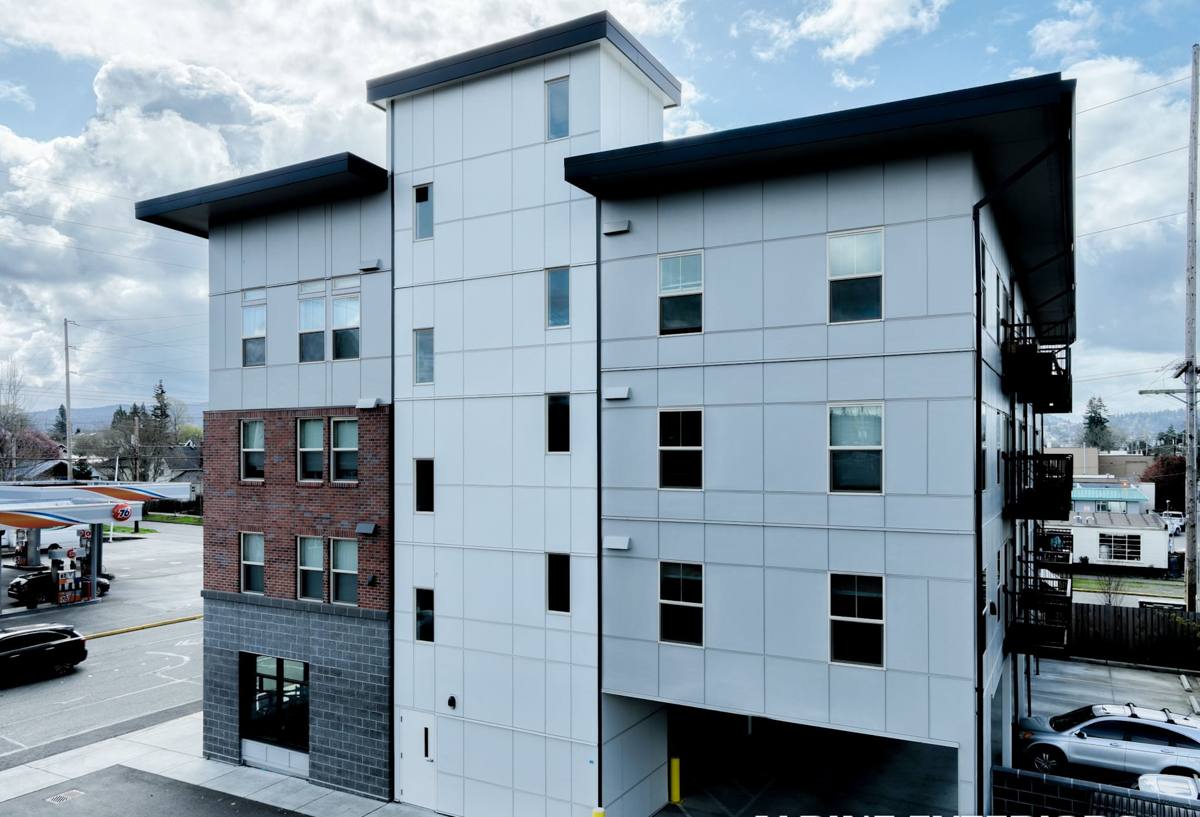
What a Correct Board & Batten Installation Actually Involves
Board and batten looks simple from the street — vertical boards, narrow strips covering the seams — but the assembly behind those boards is what determines whether it lasts 10 years or 40. A correct installation is really three systems working together: the water-resistive barrier, the drainage gap, and the siding itself.
Drainage Plane and Rainscreen Gap
In a climate this wet, siding needs somewhere for incidental moisture to go. We install a code-compliant weather-resistive barrier with a drainage gap behind the boards so any water that gets past the face of the siding — through wind-driven rain, condensation, or a small seam gap — can drain and dry instead of sitting against the sheathing. This is the single biggest difference between a board and batten job that lasts and one that starts showing rot at the bottom courses within a few winters.
Fastening and Batten Spacing
Battens need to land on structural framing or blocking, not just be face-nailed into the field board and hoped for. Fastener spacing and batten width both affect how the boards handle seasonal movement — Whatcom County's humidity swings between our wet winters and dry summer stretches are enough to make fiber cement expand and contract slightly, and a batten pattern that doesn't account for that will eventually telegraph stress cracks at the fastener lines.
Flashing at Windows, Corners, and the Foundation Line
Every horizontal transition — window heads, corner boards, the bottom termination near the foundation — is a place where water wants to get behind the siding. Head flashing over windows, proper corner treatment, and a clean kick-out at the base of the wall matter more on a coastal-adjacent property than they do further inland, simply because there's more moisture volume moving through the wall assembly over a given winter.
Why We Install Board & Batten Only in James Hardie Fiber Cement
We don't offer board and batten in vinyl, engineered wood, or primed spruce, and that's a deliberate standard, not an upsell. Vertical siding profiles put more seams and more horizontal batten-to-field joints on a wall than a standard lap profile, and those joints are exactly where moisture-sensitive materials fail first. Engineered wood and primed spruce depend on paint film and caulk staying intact at every one of those joints to keep water out of the substrate — a hard bar to clear year after year in a climate with this much sustained rain and humidity.
James Hardie fiber cement doesn't have that vulnerability. It's cement-based, so it doesn't swell, rot, or feed mold the way wood-based products can when moisture does get in around a seam. The ColorPlus factory finish is baked on rather than field-applied, which matters directly for moss season — a factory finish resists the surface staining and dulling that shows up fastest on field-painted wood siding sitting in a shaded, damp reveal for six months of the year. Hardie also carries a strong transferable warranty backed by a manufacturer that engineers specific product lines for wet Pacific Northwest exposure, which is a meaningfully different position than a warranty built around a national average climate.
Our Board & Batten Process for Fairhaven Homes
- Inspection and moisture check. Before we talk products, we look at what's actually happening behind the current siding — soft spots, staining patterns, and any signs the existing drainage plane has already failed.
- Substrate assessment and repair. Any rot, compromised sheathing, or missing flashing gets addressed before new siding goes up. Covering a moisture problem with new boards just hides it for a few more years.
- Weather barrier and rainscreen installation. We install the drainage assembly to current code and to what this climate actually demands, not the bare minimum.
- Board and batten installation. Fiber cement boards and battens go up with correct fastener spacing, batten width, and attachment into framing.
- Flashing and detail work. Window heads, corners, and the base of the wall get finished last, since these are the details that determine long-term performance.
- Final walkthrough. We go over the finished job with the homeowner and explain what routine maintenance, if any, the specific finish will need.
What We Commonly Find on Existing Siding in This Area
Working in and around Fairhaven and the wider Sudden Valley service area, a handful of problems show up repeatedly on older board and batten homes:
- Moss and algae staining concentrated in shaded batten reveals on north- and east-facing walls
- Rot at the base of battens where caulk has failed and water tracked down behind the board
- Corroded or rust-streaking fasteners on homes sided more than 15-20 years ago with non-coated hardware
- Missing or undersized head flashing above windows, leading to staining or soft trim below the sill
- No drainage gap at all behind older siding, meaning any moisture intrusion has nowhere to go but into the wall
None of these are unusual for the climate — they're the predictable result of driving rain and a long wet season working on a wall assembly year after year. They're also almost entirely preventable with the right materials and the right assembly behind them.
Cost Factors to Plan For
Board and batten pricing depends less on the siding material itself and more on what's involved in preparing the wall and finishing the details correctly. The table below outlines what typically moves the price on a Fairhaven-area project.
| Factor | Why It Affects Cost |
|---|---|
| Tear-off vs. new construction | Removing and disposing of failing old siding, and repairing any rot found underneath, adds labor before new siding can go on |
| Home size and wall complexity | More corners, dormers, and gable ends mean more cutting, flashing, and batten layout work |
| Accent application vs. full coverage | Board and batten used as a gable or entry accent costs less than siding an entire elevation or home |
| Existing moisture damage | Sheathing repair or replacement found during tear-off is priced separately from the siding install itself |
| Trim and window detail count | Each window, door, and corner needs individual flashing and trim work, which adds time on a vertical profile |
| ColorPlus finish selection | Factory-finished color options vary in price slightly but eliminate the need for field painting |
Maintenance Homeowners Should Actually Do
Correctly installed fiber cement board and batten is low-maintenance, not no-maintenance. A short annual routine keeps it that way:
- Rinse moss and algae buildup off shaded walls once a year, before it has a chance to hold moisture against the surface
- Check caulk at window and door trim annually and re-caulk any cracked or separated joints
- Keep gutters clear so overflow doesn't run down the wall face during heavy rain events
- Trim back vegetation and shrubs that keep a wall section shaded and damp longer than the rest of the house
- Look for any staining streaks below fasteners or flashing, which usually signal a small point of water intrusion worth checking early
Why a Crew That Already Works in Fairhaven Matters
Board and batten performance isn't just about the material — it's about whether the installer understands how a specific wall, on a specific lot, in a specific pocket of Whatcom County, is going to handle water and moss over the next twenty winters. A crew that already works in and around Fairhaven and Sudden Valley has seen how shaded lots, bay-adjacent exposure, and long wet seasons actually play out on real walls, not just in a spec sheet. That local pattern recognition is what catches an undersized rainscreen gap or a missing kick-out flashing before it becomes a callback five years down the road.
If you're planning a board and batten project — whether it's an accent gable or full-home siding — we'd be glad to take a look and walk you through what your home specifically needs. Reach out for a free, no-pressure estimate using the form below.