 Sudden Valley Window
 Why Fairhaven's Climate Is Hard on Siding
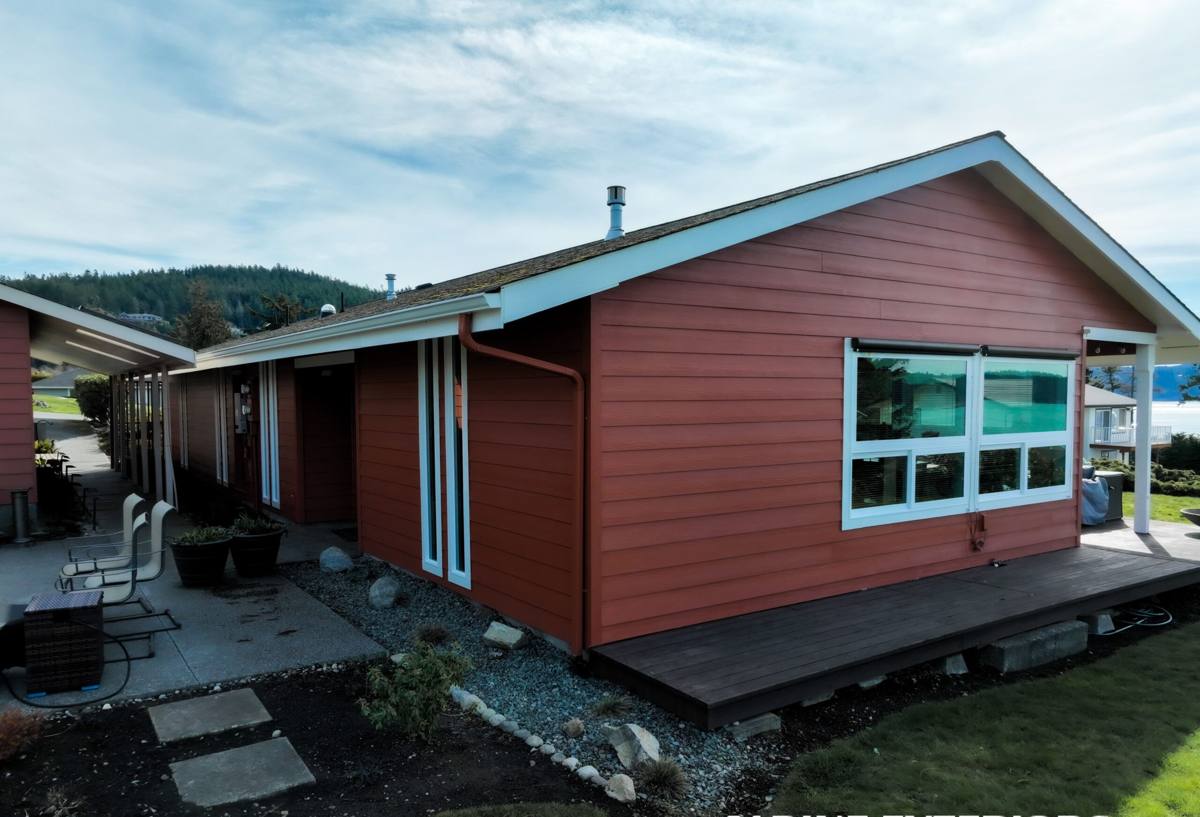
Fairhaven sits close enough to the water that homes here take on a different set of problems than siding a few miles inland. Salt-laden air, wind-driven rain off the water, and long stretches of shade and dampness through the fall and winter all work on exterior walls in ways that show up as loose boards, soft spots, and streaked, moss-stained finishes well before a homeowner expects to be dealing with a repair. Understanding what's actually attacking the siding is the first step to fixing it correctly instead of just patching the symptom.
Salt Air and Slow Corrosion
Airborne salt doesn't just affect boats and railings. It settles on siding, fasteners, and trim, and over years it accelerates corrosion in exposed nail heads, metal flashing, and any hardware that isn't rated for a coastal-influenced environment. Once fasteners start to rust and back out, the boards they're holding start to move, and movement is what lets water in behind the siding.
Driving Rain and Wind-Driven Moisture
Whatcom County storms don't always come straight down. Wind pushes rain sideways and up under laps, trim edges, and butt joints that were never designed to shed water from that angle. Siding that looks fine from the sidewalk can still be taking on moisture at every seam if the flashing and caulking details weren't done right the first time.
A Long Moss Season
Shaded lots, tree cover, and a wet season that runs much longer than a summer rain here or there mean moss and mildew get a real head start on Fairhaven siding. Moss holds moisture against the surface long after the rain has stopped, which softens paint film, breaks down caulk, and — on the wrong substrate — softens the material underneath it.
Signs Your Siding Needs Repair
Most siding repairs we're called out for in this area didn't start as emergencies. They started as small, easy-to-miss signs that had months or years to get worse. A quick walk around the house once or twice a year, especially after a hard winter, catches most of this early.
- Soft or spongy spots when you press on the siding, especially near the bottom courses and around windows
- Visible gaps, cracks, or separation at butt joints and corners
- Paint that's peeling, bubbling, or flaking in a localized area rather than evenly across the wall
- Persistent moss or dark streaking that keeps coming back even after cleaning
- Nail heads popping out, rust streaks below fasteners, or boards that flex when touched
- Water stains or a musty smell on the interior wall directly opposite a section of exterior siding
- Warping, bowing, or boards that no longer sit flat against the wall
Any one of these on its own might be a small fix. Several together, or damage that's spread across more than one wall, usually means the underlying moisture barrier or flashing has been compromised and the repair needs to go deeper than the surface.
What a Correct Siding Repair Actually Involves
A siding repair that just covers the visible damage without addressing what caused it tends to fail again within a season or two. Doing it right means treating the repair as a small construction project, not a patch job.
Finding the Real Cause, Not Just the Symptom
Before anything gets pulled off or replaced, we look at where the water is actually getting in — a failed seal at a window, a gap at a corner trim, missing or damaged flashing above a horizontal joint. If the entry point isn't fixed, the new siding fails the same way the old siding did.
Matching Materials, Fasteners, and Finish
Repairs should disappear into the wall, not stand out as an obvious patch. That means matching board profile, exposure, and color as closely as possible, and using fasteners rated to hold up in a coastal-influenced climate rather than whatever was on hand. Mismatched materials are one of the most common reasons a "repaired" section looks worse than the damage it replaced.
Flashing and Sealant Details
Most of what makes a repair last is invisible once the job is done: proper weather-resistive barrier overlap, correctly lapped flashing at joints and openings, and sealant used only where it belongs — not as a substitute for flashing. This is the detail work that separates a repair that lasts from one that reopens the same problem in a year.
Repair or Replace? How We Make the Call
Not every damaged section needs a full re-side, and not every problem area can be responsibly patched. We look at the extent of the damage, the age and condition of the surrounding siding, and what's happening behind the wall before recommending either path.
| Situation | Usually a Repair | Usually a Replacement |
|---|---|---|
| Damage location | Isolated to one or two sections or boards | Spread across multiple walls or the whole elevation |
| Moisture behind the wall | Localized, caught early | Widespread rot or sheathing damage found on inspection |
| Age of existing siding | Newer or well-maintained material | Original siding nearing or past its expected service life |
| Material on the house now | Same durable material still performing well elsewhere | Material that's been struggling across the whole house (warping, chalking, repeated moss/mildew) |
| Cost over time | Lower upfront cost, targeted fix | Higher upfront cost, but resets the clock on the whole exterior |
Where a homeowner's existing siding is vinyl, LP SmartSide, cedar, or a primed wood product, we're honest about what a repair on that material can and can't achieve. Some of these products are difficult to patch invisibly or don't hold up well once they've already shown moisture damage in one spot, and we'll tell you plainly if a repair is a short-term fix rather than a real solution.
Why We Repair and Rebuild With James Hardie Fiber Cement
When a repair calls for new boards — whether it's a small patch or replacing damaged sections along an entire wall — we use James Hardie fiber cement siding. It's the only siding material we install, and there's a reason for that standard, especially in a climate like Fairhaven's.
Fiber cement doesn't absorb and swell with moisture the way wood-based products can, and it doesn't rely on a field-applied paint job for its long-term color, since Hardie's ColorPlus finish is baked on at the factory and backed by its own warranty. It's non-combustible, holds up to the freeze-thaw and wet-dry cycling that's common on the coast, and its HZ5 product line is engineered specifically for wetter climates. For a repair, that also means new sections age at the same rate as the rest of a Hardie-sided home instead of becoming the one part of the wall that fails again first.
We won't tell a homeowner that vinyl, LP SmartSide, or cedar are bad products across the board — each has situations where it makes sense for someone. But once we're standing in front of siding failure caused by trapped moisture, edge swelling, or a finish that couldn't keep up with this much rain and salt air, it's hard to recommend putting the same limitations back on the wall. Hardie is what holds up to a repeat of the conditions that caused the damage in the first place.
Our Siding Repair Process
- Free on-site inspection, including a check behind visible damage where it's safe and practical to open up a section
- Written explanation of what's causing the problem and whether a repair or partial replacement is the right call
- Honest, itemized estimate before any work starts — no surprise change orders for issues we should have found up front
- Removal of damaged siding and inspection of the sheathing and weather barrier underneath
- Repair or replacement of any compromised sheathing, framing, or house wrap before new siding goes back on
- Installation of new James Hardie siding, matched to existing profile and color where possible, with correct flashing and fastening
- Final walkthrough so you can see exactly what was done and why
Why Local Experience in Fairhaven Matters
A crew that mostly works dry, inland jobs can still do competent carpentry, but they may not think automatically about corrosion-resistant fasteners, coastal wind-driven rain angles, or how much shade and moss pressure a particular lot gets through a Whatcom County winter. Working regularly in Fairhaven and the surrounding Sudden Valley area means we've already seen how these specific conditions play out on real houses — which details fail first, which repairs hold up, and which shortcuts don't survive a second wet season.
Local experience also means faster, more accurate estimates. We're not guessing at how a coastal climate affects a repair timeline or material choice — it's what we deal with on a regular basis in this part of the county.
Protecting Your Repair for the Long Run
A correct repair is only half the equation — a little maintenance keeps it that way. Rinse off moss and debris buildup once or twice a year before it has a chance to hold moisture against the surface, keep gutters clear so water isn't sheeting down the wall, and trim back vegetation that's shading a wall and keeping it damp longer than it needs to be. Walk the exterior after major storms and check the areas that were repaired, along with any spots that tend to catch wind-driven rain.
If you're seeing soft spots, recurring moss, peeling paint, or you're just not sure whether what you're looking at is a simple fix or something bigger, we're happy to take a look. The estimate is free, there's no pressure to move forward, and you'll get a straight answer about what's actually going on with your siding.