 Sudden Valley Window
 New Roofs Built for Ferndale's Coastal Climate
Ferndale sits close enough to the water and to the Nooksack lowlands that homes here take a different kind of beating than roofs further inland. You get salt-laden air rolling in off Bellingham Bay, driving rain that comes in sideways during winter storms, and a moss season that can run eight or nine months out of the year in shaded, north-facing sections of a roof. A new roof installed here needs to be specified and installed with those three things in mind from day one — not treated like a generic reroof job copied from a drier climate.
We're a Sudden Valley-based crew that works Ferndale and the surrounding Whatcom County communities regularly. That matters more than it sounds like it should. A crew that's up on Ferndale roofs every month knows which slopes hold moss the longest, which older subdivisions have ventilation problems baked into the original construction, and which underlayment and fastening details actually hold up through a full Whatcom County winter instead of just looking good on the invoice.
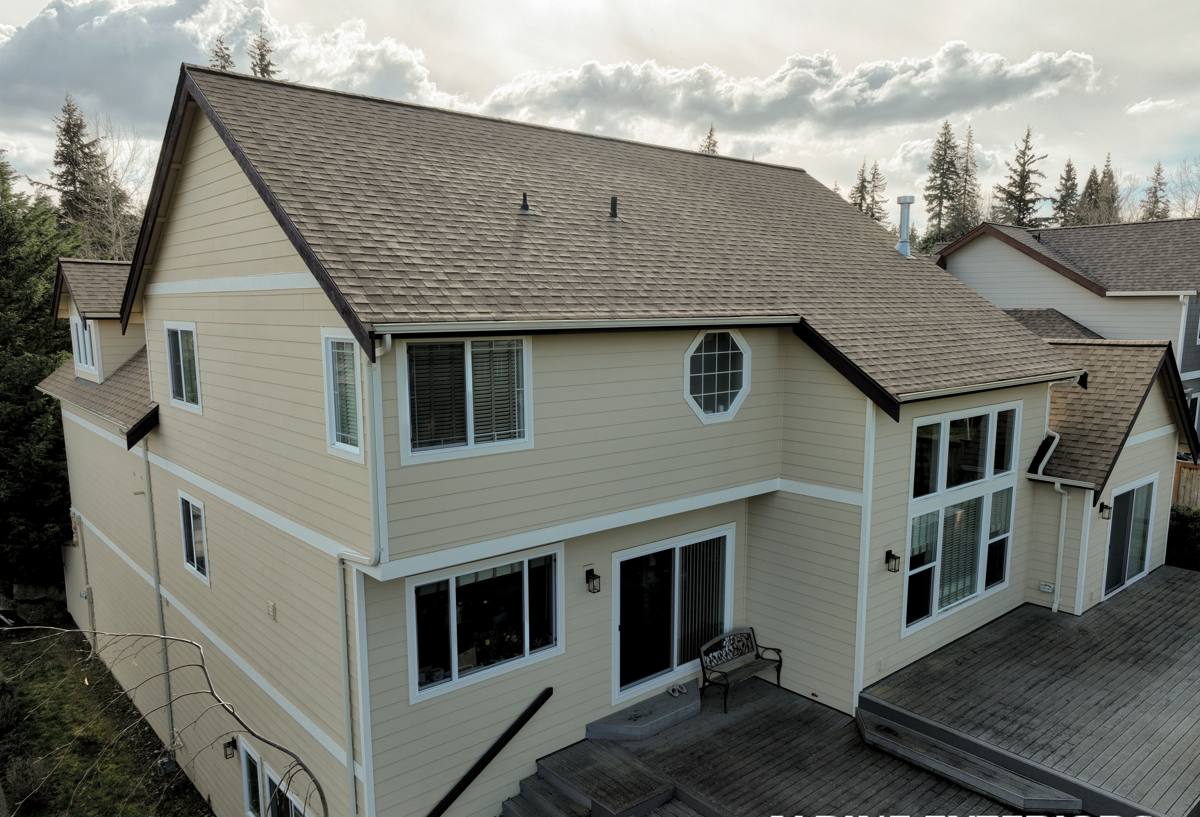
What Ferndale's Climate Actually Does to a Roof
Salt Air and Metal Fasteners
Proximity to the bay means airborne salt finds its way onto every exposed roof surface, including fasteners, flashing, and any exposed metal trim. Standard electro-galvanized nails and cheap flashing corrode faster here than they would twenty or thirty miles inland. Over a decade or two, that corrosion shows up as streaking, loosened fasteners, and premature flashing failure at valleys and penetrations — exactly the spots where a roof is supposed to be most watertight.
Driving Rain and Wind-Driven Water
Whatcom County storms don't always drop rain straight down. Wind off the strait pushes water sideways and up under shingle tabs, lifted flashing, and poorly lapped underlayment. A roof that would perform fine in a calmer climate can leak here simply because the laps and seals weren't built for wind-driven water intrusion.
Moss and Sustained Moisture
Long, mild, wet stretches with limited direct sun are ideal moss-growing conditions, especially on north-facing slopes and anywhere tree cover keeps a roof shaded. Moss holds moisture against the roofing material far longer than open sun exposure allows, which accelerates granule loss on asphalt shingles and can work its way under shingle edges over time, lifting them and creating entry points for water.
What a Correct Ferndale Roof Installation Involves
A new roof done right for this area isn't just "shingles and nails." Each layer of the system needs to be chosen and installed to handle the specific conditions above.
- Ice-and-water shield at vulnerable zones: eaves, valleys, and around every penetration, not just the code minimum, to guard against wind-driven rain backing up under the roofing material.
- Synthetic underlayment rated for extended exposure: Whatcom County installs sometimes see weather delays between dry-in and final roofing, so the underlayment needs to hold up to real-world timelines, not just ideal ones.
- Corrosion-resistant fasteners and flashing: stainless or high-grade coated fasteners and flashing metals that won't degrade prematurely from salt exposure.
- Proper intake and exhaust ventilation: balanced attic airflow reduces the trapped moisture that feeds both moss growth and interior condensation problems.
- Valley and penetration detailing built for sideways rain: wider laps, correctly shingled (not just caulked) transitions, and step flashing done in the correct sequence at every wall intersection.
Choosing the Right Roofing Material for Ferndale Homes
There's no single "best" roofing material for every home — it depends on budget, roof pitch, how much shade and moss exposure the roof gets, and how long you plan to stay in the home. Here's how the common options compare for this specific climate.
| Material | Moss/Moisture Resistance | Salt-Air Durability | Typical Lifespan Here | Notes for Ferndale |
|---|---|---|---|---|
| Architectural asphalt shingle | Good with proper ventilation and periodic cleaning | Good when paired with corrosion-resistant flashing | 25–30 years | Most common choice; performs well when installed with full ice-and-water coverage |
| Standing seam metal | Excellent — sheds moss and debris well on adequate pitch | Requires marine-grade or coated panels near the coast | 40–50+ years | Higher upfront cost, very low long-term maintenance |
| Composite/synthetic shake | Very good, resists moisture absorption | Good, minimal exposed metal | 30–40 years | Good option for homes wanting a cedar look without cedar's moisture upkeep |
| Cedar shake | Fair — needs regular treatment and cleaning in this climate | Fair; metal fasteners and flashing still need upgrading | 20–30 years with upkeep | Attractive but demands the most ongoing maintenance in a wet climate |
Our Standard on Material Selection
We'll install what a homeowner chooses, but our professional recommendation for most Ferndale homes leans toward architectural asphalt or a coated metal system paired with upgraded flashing and fastener packages. Materials that demand frequent manual treatment to stay watertight in a wet, mossy climate create an ongoing maintenance burden that's easy to underestimate when a roof is first installed.
Our Installation Process
- On-site inspection and roof assessment: we evaluate the existing roof deck, ventilation setup, flashing conditions, and any moss or moisture damage before quoting anything.
- Written scope and material selection: a clear breakdown of tear-off, decking repairs (if needed), underlayment system, material choice, flashing, and ventilation work — no vague line items.
- Tear-off and deck inspection: old roofing comes off down to the deck so we can check for rot or soft spots, especially around chimneys, skylights, and valleys where moisture tends to collect over the years.
- Deck repair as needed: any compromised sheathing gets replaced before a single course of new roofing goes down — covering rot doesn't fix it.
- Underlayment and flashing installation: ice-and-water shield at vulnerable areas, synthetic underlayment across the field, and new flashing at every wall, chimney, valley, and penetration.
- Roofing material installation: installed to manufacturer specification for nailing pattern, exposure, and fastener count — details that directly affect wind and rain performance.
- Ventilation check and correction: intake and exhaust balanced so the attic isn't trapping moisture that feeds moss growth or interior condensation.
- Final walkthrough and cleanup: magnetic sweep for debris, gutter and downspout check, and a walkthrough covering warranty documents and basic maintenance expectations.
Signs a Ferndale Roof Needs Replacing, Not Just Patching
- Granule loss heavy enough that you can see bare patches on asphalt shingles, especially on moss-prone slopes
- Shingles that are curling, cupping, or lifting at the edges rather than lying flat
- Soft or spongy spots on the roof deck, often found near valleys or chimney flashing
- Persistent moss growth that returns quickly after cleaning, suggesting moisture retention beneath the surface
- Daylight visible through the attic roof deck or water staining on attic sheathing
- A roof approaching or past 20–25 years old with multiple past repairs already on record
Cost Factors for a Ferndale New Roof
Every roof is priced individually after inspection, but the main variables that move the number are consistent across jobs in this area.
| Factor | Why It Affects Cost |
|---|---|
| Roof size and pitch | Steeper roofs take longer to work safely and require more fall-protection setup |
| Existing deck condition | Rot or soft sheathing found during tear-off adds material and labor to replace it |
| Number of layers being removed | Tear-off of multiple existing roofing layers takes more labor and disposal cost |
| Material selection | Asphalt, metal, and composite systems carry different material and labor costs |
| Flashing and penetration count | Chimneys, skylights, and multiple roof planes each add detailing time |
| Ventilation corrections | Adding or upgrading intake/exhaust vents is easiest to do during a full reroof |
As a broad reference point, a straightforward asphalt shingle reroof on an average-size Ferndale home typically lands in the low-to-mid five figures, with metal or composite systems running higher. Exact pricing depends entirely on what we find once we're on the roof.
Why a Sudden Valley-Based Crew Matters for a Ferndale Job
Hiring locally isn't just about supporting a nearby business — it changes the quality of the work you get. A crew that's based in Sudden Valley and regularly works Ferndale, Whatcom County jobs already knows the local permitting expectations, understands which manufacturers stock coastal-rated materials through regional suppliers, and isn't guessing at how a given roof detail will hold up through a full Pacific Northwest winter. We're not driving in from out of the area to do one job and leaving — we're working in this climate on a routine basis, which means our crews see the long-term results of past installations and adjust practices accordingly.
We also carry proper licensing and insurance, use crews experienced specifically with steep-slope and coastal-climate roofing details, and stand behind our workmanship with a clear warranty on the installation itself, separate from the manufacturer's material warranty.
Maintaining Your New Roof After Installation
- Have gutters and downspouts cleared at least twice a year to prevent water backing up under roof edges
- Schedule moss treatment or gentle cleaning on shaded slopes before growth becomes heavy, rather than after
- Keep overhanging branches trimmed back to reduce shade, debris buildup, and physical damage risk
- Have flashing and penetrations visually checked every few years, especially after major storms
- Address any small leaks or missing shingles promptly — small issues left alone tend to become deck-level repairs
If you're weighing a new roof for a Ferndale property, we're happy to come take a look and give you a straightforward, no-pressure estimate based on what your roof actually needs — just fill out the form below.