 Sudden Valley Window
 Siding Repair in Geneva: Built for What This Corner of Whatcom County Throws at a Home
Homes in and around Geneva, tucked against the Sudden Valley area of Whatcom County, sit in a climate that's harder on siding than most homeowners realize until something starts to fail. Salt-tinged marine air moves inland off the bay, months of driving rain soak the same wall assemblies over and over, and shaded, tree-lined lots hold onto moisture long enough to grow a genuine moss season that can run from late fall into spring. None of that is unusual for this part of Washington. But it means siding repair here isn't the same job as siding repair in a dry, sunny climate — the fix has to account for what's actually causing the damage, not just cover it up.
We work this area regularly, which matters more than it sounds. A repair crew that only shows up once knows what the siding looks like today. A crew that's been in Geneva and Sudden Valley repeatedly knows how a given wall orientation, tree cover, and roofline tend to age over a few wet seasons — and that shapes how we diagnose and fix a problem, not just how we patch it.
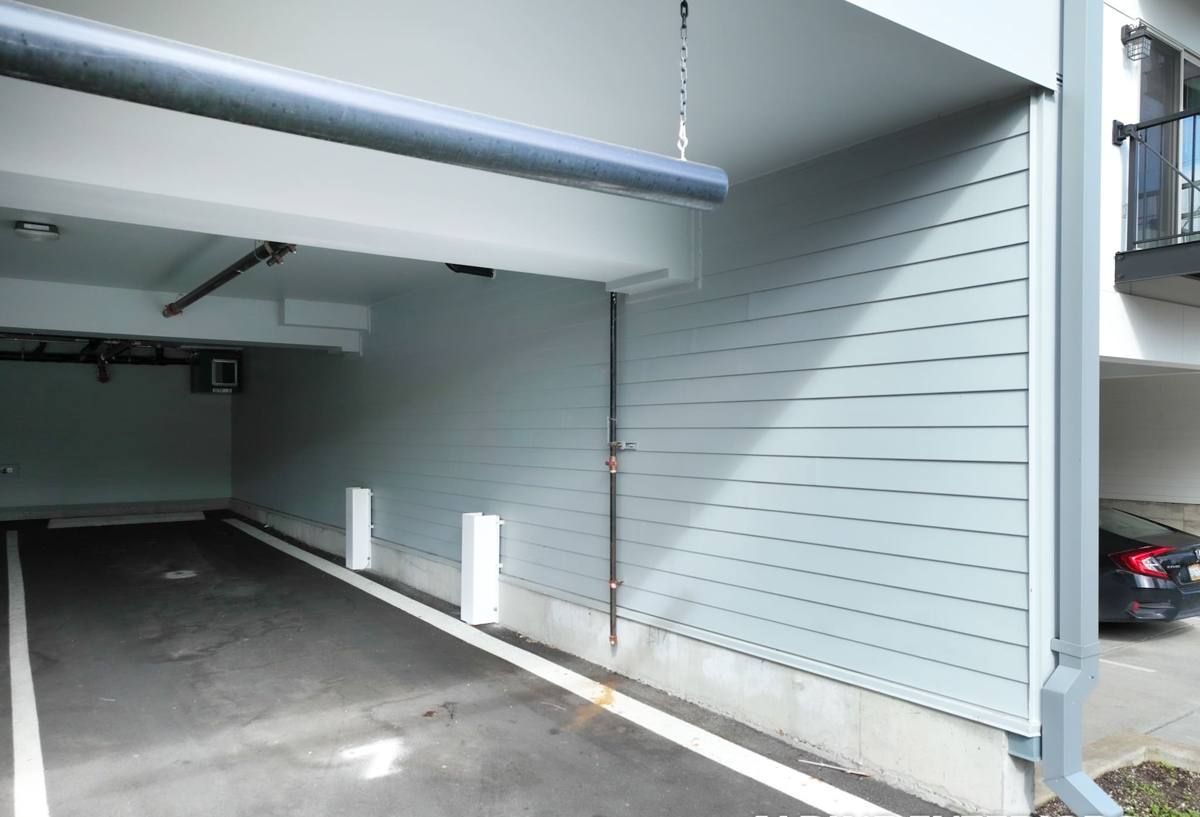
Signs a Geneva Home Needs Siding Repair, Not Just a Paint Job
Siding damage in this climate often starts small and stays hidden behind trim or under the bottom edge of a course, which is exactly why it tends to get worse before anyone notices. Homeowners usually call us after they've spotted one of the following:
- Soft or spongy spots when you press on the siding, especially near the bottom few courses or below windows
- Moss or dark green streaking building up along horizontal laps or in shaded corners, even after washing
- Paint that's bubbling, peeling in sheets, or failing faster in one section than the rest of the house
- Visible swelling, delamination, or a puffy edge along a panel or trim board
- Gaps or cracked caulk at butt joints, corners, and window/door trim where water can track behind the siding
- Nail pops, warped boards, or panels that have visibly separated from the wall
- Staining on the foundation or a musty smell inside near an exterior wall — often a sign moisture has already gotten past the siding
Any one of these on its own might be minor. Several together, or damage concentrated on the north or west-facing walls that stay wet longest, usually means the water management behind the siding has been compromised for a while.
What a Correct Siding Repair Actually Involves
Diagnosing the Cause, Not Just the Symptom
Replacing a damaged board without figuring out why it failed is the most common shortcut in this trade, and it's how the same repair ends up needed again two or three years later. Before we touch a panel, we're checking flashing above windows and trim, looking at how water sheds off the roofline onto that section of wall, and probing the sheathing behind the damaged area for moisture. In a climate with this much sustained rain, a repair that doesn't address the water source is a temporary one.
Matching Existing Siding
Fiber cement siding is manufactured in specific profiles, reveals, and factory colors, and those details change over product generations. A repair that uses the wrong reveal or a close-but-not-quite color stands out immediately, especially on ColorPlus-finished siding where the factory coating is engineered to weather evenly. Matching correctly sometimes means sourcing an older profile, and sometimes it means a frank conversation about repainting a section for a seamless result — we'll tell you which situation you're in before we start.
Rebuilding the Water Management Behind the Panel
Correct repair work replaces or restores the water-resistive barrier and flashing details behind the removed siding, not just the visible board. That includes proper lapping of house wrap, correctly flashed and sealed penetrations, and rain-screen gapping where the original installation calls for it. Skipping this step is invisible on the day the job wraps up and expensive the next time the wall gets wet for a week straight.
Repair or Replace? How We Make That Call in Geneva
Not every damaged wall needs full replacement, and not every repair is worth doing instead of replacing. Here's roughly how we think through it on a typical Geneva or Sudden Valley home:
| What We Find | Usual Recommendation | Why |
|---|---|---|
| A few isolated boards damaged from a roof leak or missed flashing, rest of the siding sound | Targeted repair | The cause is fixable and the surrounding siding still has useful life left |
| Moss and paint failure concentrated on one shaded wall, siding structurally intact | Repair plus moisture-source fixes (gutters, trimming back growth, flashing) | Cosmetic and early-stage damage without underlying rot doesn't require a full tear-off |
| Widespread soft spots, delamination, or rot across multiple walls | Full or wall-by-wall replacement | Piecemeal repair on failing siding rarely holds up and often costs more over time than doing it right once |
| Damage tied to old caulk-dependent or discontinued siding that can't be matched | Case-by-case — sometimes a visible-but-honest patch, sometimes replacement of that elevation | We'd rather tell you the repair will look mismatched than let you find out after paying for it |
We'll walk the whole exterior, not just the section you called about, because damage in this climate rarely stays confined to one spot — checking the rest of the house takes us a few extra minutes and can save a second service call.
Why We Only Repair and Install James Hardie Fiber Cement
We standardized on James Hardie fiber cement, and that shows up in how we approach repair work too. Hardie's ColorPlus factory finish is baked on and warranted against fading, which matters when you're trying to match a repaired section to siding that's been up for years in this much rain and UV exposure — it ages more predictably than field-painted siding. The material itself is non-combustible and engineered in HZ product lines built for wet, humid climates like Whatcom County's, so it resists the swelling, softening, and moisture absorption that drives most of the repair calls we get on other siding materials.
That's also why we don't install or repair vinyl, LP SmartSide, primed spruce, or cedar siding, even though each has legitimate uses elsewhere. Vinyl can crack and fade in ways that are hard to color-match years later. Wood-based and engineered-wood products are more sensitive to sustained moisture exposure and need more consistent maintenance to hold up in a climate that stays wet for months at a stretch. None of that means those products are bad — it means we've chosen to put our name behind one material system we can install, repair, and warranty consistently, and Hardie is what we've found holds up best against what Geneva's weather does to a wall over the years.
Our Siding Repair Process, Start to Finish
- On-site inspection: We look at the damaged area and the rest of the exterior, checking for moisture intrusion, flashing issues, and how far the problem actually extends.
- Diagnosis and plan: We explain what caused the damage, what needs to happen to stop it from recurring, and whether repair or partial replacement makes more sense.
- Sourcing matched materials: We confirm profile, reveal, and ColorPlus color match before ordering, or flag upfront if an exact match isn't available.
- Removal and structural check: Damaged siding comes off carefully so we can inspect the sheathing and water-resistive barrier underneath.
- Rebuild the water management layer: Repair or replace house wrap, flashing, and rain-screen detailing as needed before any new siding goes back on.
- Install and seal: New Hardie siding is installed to manufacturer specification, with correct fastening, gapping, and sealant at trim and penetrations.
- Site cleanup and walkthrough: We clear debris and walk the repair with you so you know exactly what was done and why.
Why It Matters That Our Crew Already Works Geneva and Sudden Valley
A repair crew that's already worked this area understands things a general contractor coming from out of town has to learn on the fly: how tree cover and lake proximity affect drying time on different elevations, which wall orientations tend to hold moss longest, and how driving rain off the water behaves differently than rain in a more open, exposed neighborhood. That local pattern recognition shortens the diagnosis phase and helps us catch problems — like a flashing detail that's failing slowly rather than all at once — before they turn into a bigger repair.
It also means logistics are simpler. We're not learning the neighborhood's road access or permitting quirks for the first time on your job, which keeps scheduling and material delivery predictable.
What Affects the Cost of a Siding Repair
Every repair is priced around what we actually find once the damaged siding comes off, but a few factors consistently move the price up or down:
- Extent of damage: A few boards versus a full wall section changes both material and labor significantly
- Underlying moisture damage: If sheathing or framing needs repair once we open the wall up, that's additional work beyond the visible siding
- Color and profile matching: Older or discontinued Hardie profiles can take longer to source than current product lines
- Access: Second-story walls, tight side yards, or landscaping close to the house add time
- Trim and flashing work: Repairs that require rebuilding flashing at windows or rooflines take longer than a straightforward panel swap
We'll give you a clear number before work starts, and we'll tell you if something we find mid-repair changes the scope — no surprise invoices.
Maintaining Repaired Siding Through the Next Wet Season
A correct repair should hold up for years, but a little seasonal attention keeps it that way in a climate that stays damp as long as this one does. Rinse moss and algae off shaded walls before it has a chance to hold moisture against the siding. Keep gutters clear so water isn't sheeting down the wall instead of into the downspout. And keep an eye on caulk joints at trim and corners — that's usually the first place a small gap turns into a bigger moisture problem.
If you're seeing soft spots, moss buildup, or paint failure on your Geneva or Sudden Valley home, we're glad to take a look and give you a straightforward, no-pressure estimate — use the form below to get started.