 Sudden Valley Window
 The Climate Happy Valley Windows Actually Have to Survive
Homes in Happy Valley don't fail windows the way homes in drier parts of the country do. Out here, the damage is slow and cumulative: salt-laden air moving in off the water, months of driving rain that finds every gap in old caulk, and a moss season that seems to stretch longer every year. None of that shows up overnight. It shows up as a soft spot under a sill, a frame that won't latch square anymore, or glass that fogs between the panes on a cold morning. By the time a homeowner notices, the damage has usually been building for a few seasons already.
Whatcom County's mix of coastal moisture and heavy annual rainfall puts real stress on window assemblies — the frame, the seals, the flashing behind the trim, and the glazing itself. A window that's rated fine for a dry inland climate can still underperform here if it isn't installed with this specific weather pattern in mind. That's the gap we try to close: not just selling a window, but building an assembly that's matched to what Happy Valley actually throws at it.
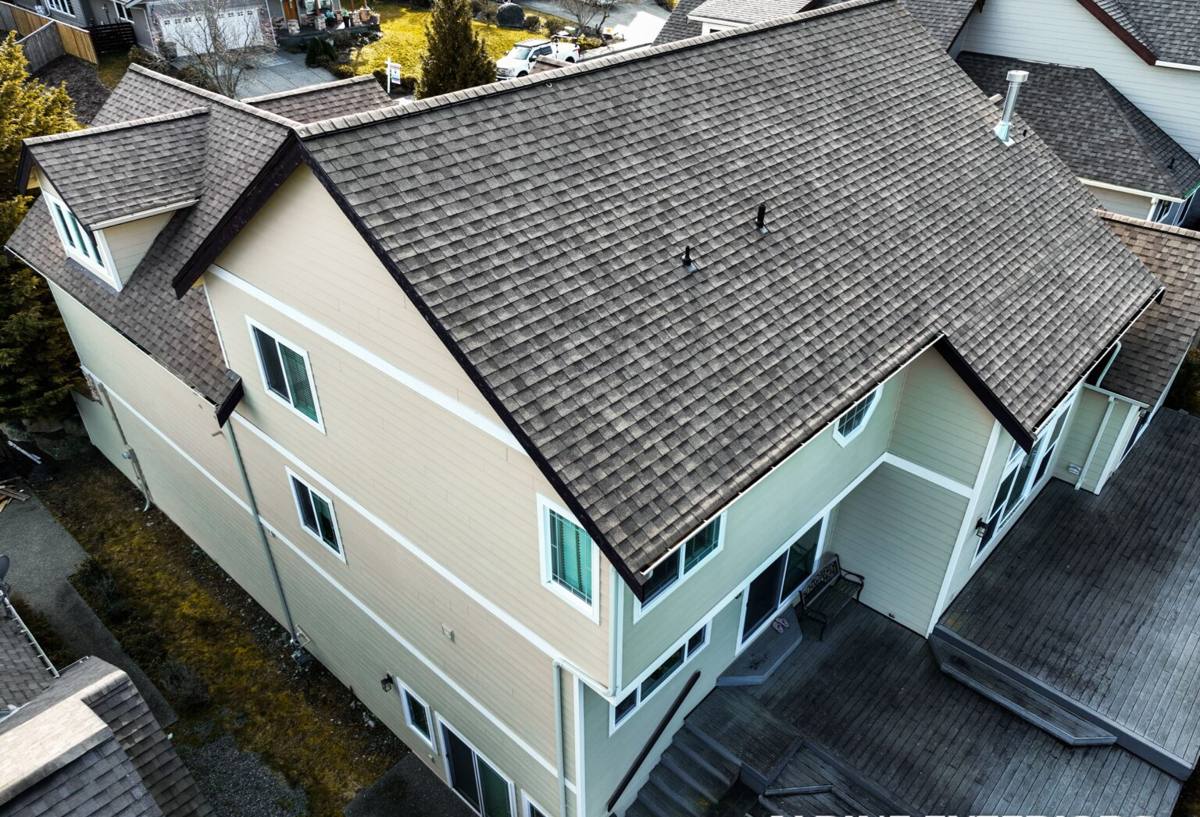
What "Custom" Actually Means for a Happy Valley Window Job
"Custom" gets used loosely in this trade, so it's worth being specific. On most jobs in this area, custom means the window is built to the exact opening in your wall rather than forcing your wall to fit a stock size. Many homes in and around Sudden Valley were built years apart by different builders, and it's common to find openings that are slightly out of square, settled unevenly, or sized to a spec that isn't sold anymore. A custom window is measured and manufactured to that specific opening, which matters more than people expect — a window that's even a little undersized gets packed with extra shims and caulk to fill the gap, and that gap is exactly where water and moss-feeding moisture get in over time.
Custom also covers matching the look of the house — grid patterns, sightlines, and trim profiles that fit the era the home was built in — so a replacement doesn't look like an obvious patch job from the street or from inside the room.
Full-Frame vs. Insert Replacement
There are two basic approaches, and the right one depends on the condition of what's already there:
- Insert (pocket) replacement: the new window fits inside the existing frame. Faster and less disruptive, but only appropriate if the existing frame is still solid and square.
- Full-frame replacement: the old frame comes out entirely, down to the studs, so we can inspect and repair the wall assembly, flashing, and sheathing underneath. More work, but it's the only honest option when there's hidden rot or water staining.
We won't recommend an insert replacement over a frame that's already compromised just because it's the cheaper, quicker job — that just seals moisture problems behind a new window instead of fixing them.
Signs Your Windows Are Losing the Battle with the Weather
Most homeowners call us after noticing one or two of these. If you're seeing more than one, it's worth an inspection sooner rather than later:
- Fogging or a milky haze between panes (a failed seal on double- or triple-pane glass)
- Soft, discolored, or spongy wood at the sill or the base of the frame
- Visible moss or dark streaking on the exterior trim around the window
- Drafts you can feel with a hand near the frame on a windy day
- Windows that stick, won't latch fully, or have started sagging in the frame
- Rising heating bills without any other obvious cause
- Condensation forming on the inside of the glass regularly through fall and winter
Frame Material: What Holds Up in This Climate and What Doesn't
Material choice matters more here than in a milder, drier region. We look at moisture behavior first, appearance second.
| Material | Moisture Resistance | Maintenance | Typical Lifespan |
|---|---|---|---|
| Vinyl | Very good — won't rot, doesn't absorb water | Low; occasional cleaning | 20-30+ years |
| Fiberglass | Excellent — dimensionally stable, resists moisture and swelling | Low | 30-40+ years |
| Wood-clad | Good on the exterior face, but vulnerable wherever cladding is breached or caulk fails | Higher; needs inspection and occasional resealing | Varies widely with upkeep |
| Aluminum | Fair; conducts cold and is prone to condensation in this climate | Low | 20-30 years |
We're candid with clients about wood-clad windows: they can look excellent and plenty of homeowners want that look, but they carry a real maintenance obligation in a climate this wet. If the cladding is ever nicked or the seal at a joint opens up, water gets behind it and the wood core underneath has no way to dry out quickly. That's not a knock on the product — it's just a maintenance-and-installation-sensitivity trade-off worth knowing before you choose it for a rain-exposed wall.
Glass and Glazing: The Part Nobody Sees but Everyone Feels
The frame gets the attention, but the glazing package is what actually manages heat loss and condensation. In Whatcom County's climate, we typically steer homeowners toward:
- Double- or triple-pane glass with an argon or krypton gas fill for insulation
- Low-E coatings tuned for a marine climate — cutting heat loss in winter without over-darkening rooms in our already limited winter daylight
- Warm-edge spacers, which resist condensation at the glass edge better than older metal spacers
Triple-pane costs more up front, and for most Happy Valley homes a quality double-pane unit with a good Low-E coating is the more practical choice. Triple-pane earns its keep on north-facing walls, rooms with a persistent condensation history, or homes right along the water where the temperature differential is more extreme.
Our Process, Start to Finish
- On-site assessment: we inspect existing frames, sills, and the wall assembly where it's accessible — not just the glass — to find out whether this is an insert or full-frame job.
- Measuring and ordering: exact opening measurements are taken for a true custom fit, and we go over material, glazing, and grid/trim options against your budget.
- Prep and removal: old units come out carefully, and any rot, staining, or damaged sheathing found underneath gets flagged before we go further — no surprises added after the fact without a conversation first.
- Flashing and moisture barrier: this step is invisible once the job is done, and it's the single most important part of keeping driving rain out for the next twenty years.
- Installation and sealing: the window is set, shimmed level and square, insulated around the frame, and sealed with exterior-grade sealant rated for this climate.
- Final inspection and walkthrough: we check operation, look for square and plumb, and walk the homeowner through basic care before we consider the job done.
Installation Details That Matter More Than the Brand Name
A premium window installed poorly will leak and fail early. A mid-range window installed correctly will outperform it for decades. The details that actually determine how a window holds up here are:
- Proper flashing sequence so water sheds outward and downward, never behind the siding
- Correct shimming so the sash doesn't bind or sag as the house settles further
- Continuous sealant bead on the exterior with no gaps, especially at the corners
- Insulation packed evenly around the frame — not stuffed too tight, not left with voids
- Interior and exterior trim reinstalled so it sheds water away from the frame, not into it
This is where a crew's experience with this specific climate shows. Installers who mostly work drier regions sometimes treat sealant as the whole moisture defense; here, the flashing and the physical slope of the sill matter just as much, because the sealant is a backup, not the only line of defense.
Cost Factors to Expect
We don't publish fixed prices because every opening, material choice, and access situation is different — but these are the variables that actually move the number:
| Factor | Why It Affects Cost |
|---|---|
| Insert vs. full-frame replacement | Full-frame involves more labor and often uncovers repair work |
| Frame material | Vinyl is typically the most budget-friendly; fiberglass and wood-clad cost more |
| Glazing package | Triple-pane and specialty Low-E coatings add cost over standard double-pane |
| Number and size of openings | Larger or custom-shaped windows require more material and labor per unit |
| Existing damage | Rot or water damage found during removal adds repair scope before the new window goes in |
| Access and site conditions | Second-story windows or difficult access can add labor time |
Broadly, homeowners should expect a wide range depending on how many of these factors stack up — a single straightforward insert replacement costs a fraction of a multi-window, full-frame project with repair work involved. We'll give you real numbers for your specific home after a walkthrough, not a generic quote pulled from a price sheet.
Living With Windows in a Wet, Mossy Climate
Good installation buys you years, but a little seasonal attention buys you more. A few habits worth keeping:
- Rinse pollen, moss spores, and grit off exterior frames and tracks a couple times a year
- Check exterior caulk lines each fall before the heavy rains set in, and touch up anything that's cracked or pulled away
- Keep gutters and downspouts clear so runoff isn't sheeting directly down the wall above a window
- Wipe down interior sills if condensation collects, especially in bathrooms and bedrooms with less airflow
- Trim back vegetation that's shading a window and keeping the surrounding trim damp longer than it should be
Why Local Experience in Happy Valley and Sudden Valley Matters
Anyone can install a window on a calm, dry day. What separates a good job from one that fails in five years is understanding how a specific neighborhood's weather, home ages, and construction patterns interact. Crews who regularly work in and around Sudden Valley know which wall orientations here take the worst of the rain, which older homes tend to have settled openings, and how long moss season really runs in a given year — not from a general climate chart, but from having stood on the ladders and seen it firsthand. That local pattern-recognition is what prevents callbacks, and it's part of why we treat every Happy Valley estimate as its own project rather than a copy-paste job.
If your windows are drafty, fogged, or just overdue, we're happy to come take a look. A free, no-pressure estimate gets you a straight assessment of what's actually going on and what it would take to fix it right — just fill out the form below to get started.