 Sudden Valley Window
 Board & Batten in a Lake Whatcom Setting
Board and batten has a natural fit around Lake Whatcom. The vertical lines read as more cabin-modern or craftsman than a standard horizontal lap, which suits the mix of newer builds and older lake cottages you see through Sudden Valley. It's also a style choice that a lot of homeowners here use to break up a facade — batten accents on a garage face, a gable end, or a full elevation facing the water — without redoing the whole house in one material.
But board and batten is not just a look. It's a different way of shedding water than lap siding, and in a lake basin with heavy tree cover, damp shoulder seasons, and long stretches without direct sun on north-facing walls, how that water-shedding is detailed matters more than which brand's name is on the board. We install board and batten across Whatcom County, and the homes right around the lake get their own set of considerations before we ever cut a piece.
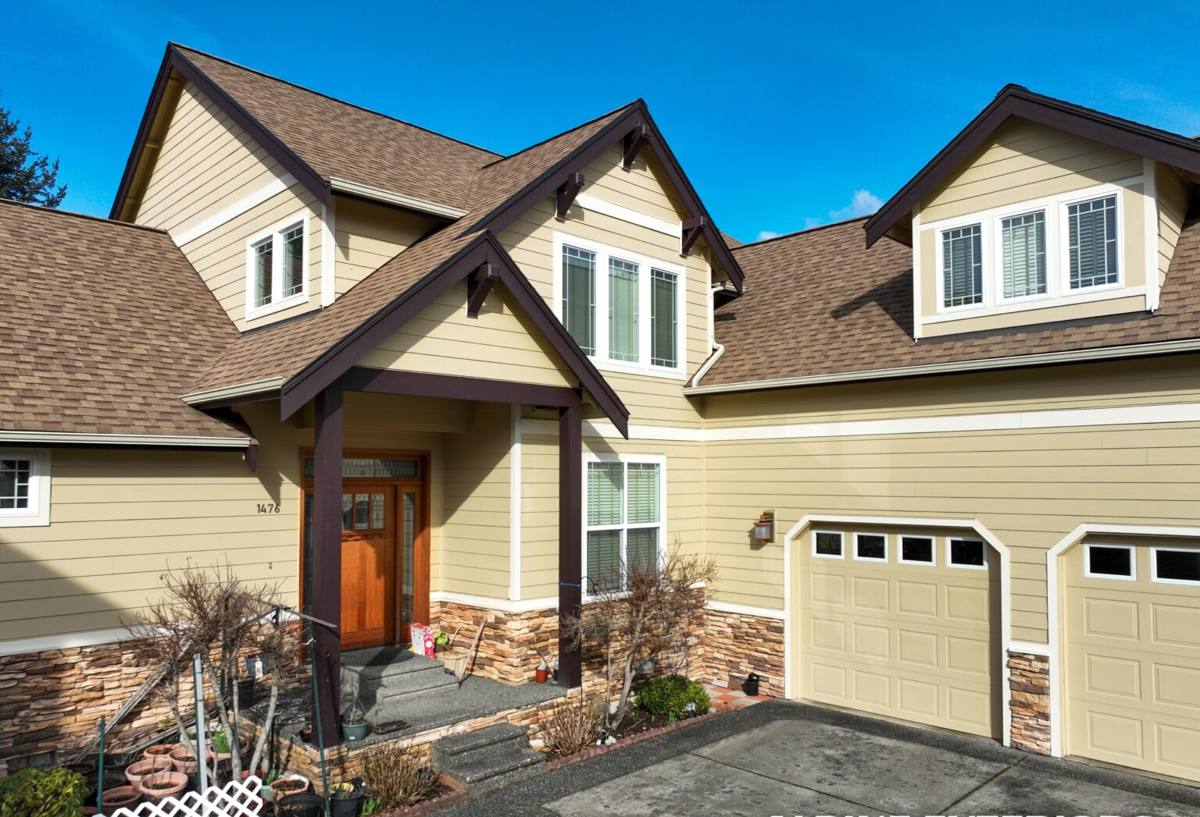
What the Local Climate Does to Vertical Siding
Three things wear on siding around Sudden Valley faster than they would somewhere drier and more open:
Moisture that lingers
Lake Whatcom sits in a bowl of second-growth timber. That canopy is part of why people live here, but it also means a lot of walls stay shaded and damp long after a storm has passed elsewhere in the county. Wood-based sidings — cedar, primed spruce, LP SmartSide's OSB-based substrate — depend on paint film and edge sealing to keep that moisture out. Once a seam opens or a cut edge goes unsealed, the substrate underneath starts absorbing water on a schedule that never really lets up.
A long moss season
Moss and algae need shade and standing moisture to take hold, and Lake Whatcom's tree-lined lots give them both for most of the year. Vertical board and batten sheds bulk water well when it's detailed correctly, but moss doesn't care about water shedding — it grows on any surface that stays damp long enough, and it holds moisture against the siding face once it's there. That's a durability problem as much as a cosmetic one on a wood-based product.
Marine, salt-tinged air off the Sound
Whatcom County's marine air pushes inland off Bellingham Bay and settles over the lake basin, especially in the cooler months. It's mild compared to true oceanfront exposure, but it's enough to accelerate corrosion on fasteners and hardware and to keep humidity levels elevated against north- and west-facing walls for days after a front moves through.
None of this means board and batten is a bad choice for the area — it means the material and the install both have to be chosen for these conditions, not just for the look.
Why We Only Install James Hardie for This
We get asked why we don't offer board and batten in vinyl, LP SmartSide, cedar, or primed spruce, since all of them are sold in that profile. Here's the honest answer for each:
- Cedar is a beautiful, genuinely traditional choice for board and batten, and we're not going to pretend otherwise. But real wood in this climate means a repainting and re-caulking schedule that doesn't skip years, and any homeowner who wants that look has to want the upkeep that comes with it.
- Primed spruce board and batten leans on factory or field-applied paint as its only real defense. In a shaded, damp lake environment, any gap in that paint film is where moisture gets in, and the board doesn't dry out fast once it's wet.
- LP SmartSide is engineered wood — treated OSB, essentially — and it's a fair, mid-tier product. It performs reasonably when the caulking and paint are maintained on schedule, but the wood-strand substrate is the part we're not willing to put our name behind in an area with this much shade and standing moisture.
- Vinyl board and batten is the least expensive route and it never rots, but it's also the most visibly "vinyl" of the options — it can ripple in temperature swings, the color fades with UV over time, and it's brittle in cold snaps, which matters here.
James Hardie fiber cement is what we've standardized on because it doesn't share the core weakness these other products have: it isn't wood, and it isn't a UV-sensitive plastic. It's cement, sand, and cellulose fiber, factory-cured, non-combustible, and finished with Hardie's ColorPlus baked-on coating — which handles moss growth, moisture cycling, and UV exposure without depending on a homeowner's maintenance calendar to hold up.
What a Correct Installation Actually Involves
Board and batten looks simple from the ground — vertical panels, battens over the seams — but the parts nobody sees are what determine whether it lasts fifteen years or fifty.
- Rainscreen gap: a drainage plane behind the panel lets any moisture that gets past the surface drain and dry instead of sitting against the sheathing — non-negotiable in a shaded, wet climate like this one.
- Flashing at every horizontal transition: window heads, belly bands, and the base of the wall all need proper flashing, not just caulk, or water finds its way behind the panel within a few seasons.
- Correct fastener pattern and spacing: Hardie specifies fastener placement and panel gaps precisely, and following that spec is what keeps the material from buckling or cracking as it expands and contracts.
- Batten placement over seams, not just for looks: battens have to actually cover and protect the vertical joints, not just be decorative strips nailed on for the pattern.
- Factory-primed and painted cut edges: any field cut needs to be sealed before it goes up, since a raw edge is the one place fiber cement can take on water.
Skip any one of these and the board and batten will still look right for a year or two — the failures in this style of siding are almost always slow, hidden, and expensive to catch late.
Our Process for Lake Whatcom Properties
Lots around Sudden Valley and the lake tend to have their own quirks: steep or sloped access, mature trees close to the house, and in some cases HOA or community guidelines specific to the neighborhood. We build our process around that:
- On-site walk-through — we look at the existing wall assembly, current siding condition, moss and moisture staining patterns, and access constraints before we quote anything.
- Moisture and substrate check — where we're removing old siding, we check the sheathing underneath for hidden rot before closing the wall back up.
- Detailed, written scope — rainscreen approach, flashing plan, panel and batten layout, and color/finish selection, so there's no ambiguity before work starts.
- Install to manufacturer spec — fastener pattern, gapping, and flashing done to Hardie's published instructions, which is also what keeps the manufacturer's warranty valid.
- Final walk-through — we go over the finished work with the homeowner before we consider the job done.
Board & Batten Material Comparison
| Material | Moisture Behavior in Shade | Moss/Algae Resistance | Maintenance Load | Typical Lifespan |
|---|---|---|---|---|
| James Hardie fiber cement | Dimensionally stable, doesn't swell or rot | ColorPlus finish resists staining and moss adhesion | Occasional wash | 30+ years to warranty term |
| Cedar | Absorbs moisture, needs sealed finish | Prone to moss/mildew without upkeep | Repaint/reseal every few years | Varies widely with maintenance |
| LP SmartSide | OSB substrate vulnerable if coating fails | Moderate, coating-dependent | Caulk and touch-up on schedule | Solid mid-tier if maintained |
| Vinyl | Doesn't rot, but can trap moisture behind it | Resistant but shows staining | Low, but limited repair options | Variable, fades with UV |
What Drives the Cost
| Factor | Why It Matters Here |
|---|---|
| Wall prep and substrate repair | Shaded, damp walls around the lake more often have hidden moisture damage under old siding |
| Rainscreen/drainage plane | Adds labor and material but is essential in a climate this wet and shaded |
| Access and lot slope | Steeper lake-adjacent lots can require more scaffolding or staging time |
| Panel vs. true board-and-batten layout | Custom batten spacing and trim detail take more time than a standard lap job |
| Color and finish selection | ColorPlus factory finishes vary slightly in cost by line and color depth |
Maintenance Once It's Installed
Fiber cement board and batten is genuinely low-maintenance compared to the wood alternatives, but "low" doesn't mean "none." A short seasonal checklist keeps it performing the way it's supposed to:
- Rinse the siding once or twice a year, more often on shaded, moss-prone walls
- Check caulk lines at trim and window edges each fall before the rains set in
- Keep tree branches and shrubs trimmed back from the wall to reduce trapped moisture and moss growth
- Look at the base of the wall after major storms for any signs of splashback or standing water
- Address any impact chips promptly — touch-up paint is available and keeps a small chip from becoming a moisture entry point
Why Local Experience Matters for This Job
Board and batten forgives less than a standard lap job — the seams, the batten spacing, and the flashing details are all more exposed to scrutiny and to water. A crew that's already worked around Lake Whatcom knows which walls on a property are going to sit damp longest, where moss tends to establish first, and how to plan a rainscreen and flashing detail for a lot with a slope down toward the water or a canopy that never lets a wall fully dry. That's the kind of judgment that only comes from having done the work in this specific area, not from a general spec sheet.
If you're considering board and batten for a home in Sudden Valley or elsewhere around Lake Whatcom, we're happy to come take a look and walk you through what your specific walls need. The estimate is free, there's no pressure attached to it, and you can use the form below to get started.