 Sudden Valley Window
 Building New in Acme: What the Climate Actually Demands
Putting windows into a new-construction wall in the Acme area is a different job than swapping out old units in a finished home, and it's a different job here than it would be somewhere dry. Whatcom County sees long stretches of driving, wind-pushed rain, heavy seasonal moisture, and enough shade and dampness in the wooded lots around Sudden Valley to grow moss on almost anything that sits still. New windows go into a wall assembly that has to shed that water for decades without anyone opening it back up to check. If the flashing, sealant, and water-resistive barrier detailing aren't right the first time, the problems don't show up as a leak next week — they show up as rot, mold, or a soft spot in the framing two or three winters later, buried behind drywall and trim.
That's the core difference between a "good enough" new-construction window job and a correct one: on a replacement, a bad seal usually announces itself with a visible leak fairly fast. On new construction, a bad seal can hide inside a wall for years in a climate this wet before it becomes obvious. We treat every new-construction opening in the Acme area with that in mind.
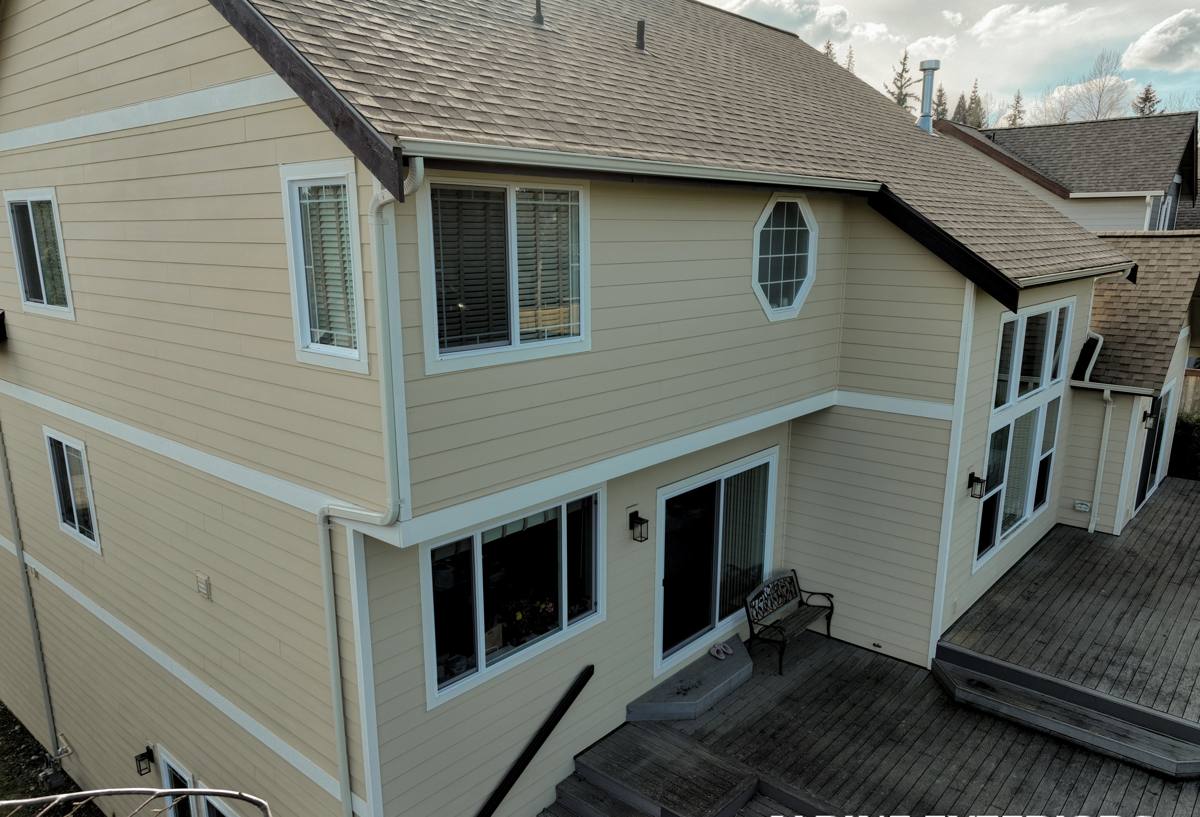
New-Construction vs. Replacement: Why This Isn't the Same Job
New-construction windows have a nailing fin (or flange) that gets integrated directly into the house's water-resistive barrier — the housewrap, flashing tape, and sill pan — before siding ever goes on. That's an advantage over pocket or insert replacement windows, which fit inside an existing frame and rely more heavily on sealant alone. Done right, a flanged new-construction window is the more weathertight option long-term, because the water management is built into the wall system itself rather than caulked on afterward.
The tradeoff is that new-construction installation only gets one shot at being right. Once the siding is up, the flashing details are covered. There's no going back to add a missing sill pan or fix a shortcut in the corner flashing without tearing into finished exterior. That's why sequencing and inspection at each stage matter more here than almost anywhere else in the build.
What Correct Sequencing Looks Like
- Rough opening framed square, plumb, and sized correctly with proper shim space — not "close enough."
- Sill pan flashing installed with a back dam and sloped to drain outward, before the window ever goes in.
- Housewrap or building paper lapped correctly at the sides and head so water sheds down and over, never into the opening.
- Window set, leveled, and fastened per the manufacturer's schedule — not just a few nails wherever it's convenient.
- Flashing tape or flexible flashing applied at jambs and head in the correct shingle-lap order, sealing to both the window flange and the wall's water-resistive barrier.
- Interior air seal (low-expansion foam or backer rod and sealant, not just spray foam packed in tight) to control condensation and drafts separately from the exterior water seal.
Skip or reorder any one of those steps and the window can look perfect from the curb while still setting up a slow leak path behind the trim.
Where the Whatcom County Climate Changes the Details
A window package that's fine in a dry inland climate isn't automatically fine around Sudden Valley. A few things we build in as standard practice for the local conditions:
Extended Rain Exposure
Driving rain off repeated Pacific storm systems means wall assemblies here take on more wind-driven moisture than the window and flashing specs were originally written for in milder climates. We don't treat manufacturer flashing instructions as the ceiling — they're the floor. Extra attention to head flashing overlap and corner patching is standard, not an upsell.
Shaded, Damp Lots and Moss
Many building lots in and around Acme sit under tree cover with limited direct sun, which means siding, trim, and sills stay damp longer after a storm and grow moss and algae more readily than a wide-open lot would. That's mostly a maintenance issue for siding, but it matters for windows too: sills and drip caps need to actually shed water away from the wall, not just look finished, or you get standing moisture right where moss and rot get started.
Temperature Swings and Condensation
Whatcom County's mix of cold, damp winters and warmer, drier interiors (especially in a new, tightly built home) creates real potential for interior condensation on window glass and frames if the air seal and insulation around the rough opening aren't handled correctly. Getting the interior air seal right — separate from the exterior water seal — is part of preventing that.
Choosing Frame Materials for a New Build Here
We install several frame types and don't push one product on every job — the right choice depends on budget, the home's design, and how much upkeep the owner wants to take on. Here's how the common options actually compare for a new-construction project in this climate:
| Frame Type | Moisture Behavior | Maintenance | Typical Fit |
|---|---|---|---|
| Vinyl | Won't rot; performs well if installed with correct drainage details | Low — occasional cleaning | Most cost-conscious new builds; good all-around performer |
| Fiberglass | Very stable in wet/temperature-swing climates; low expansion/contraction | Low | Higher-end builds wanting durability and a slimmer sightline |
| Wood-clad | Good if cladding and sealant details are maintained; interior wood needs protection from condensation | Higher — periodic sealant and finish checks | Homeowners prioritizing a traditional wood interior look |
| Aluminum | Prone to condensation and thermal transfer unless thermally broken | Moderate | Specific architectural styles; we recommend thermally broken units only in this climate |
We're generally cautious about recommending non-thermally-broken aluminum or budget clad-wood products for full Whatcom County exposure, not because a given brand is bad, but because the installation tolerance for error goes down and the maintenance burden goes up in a climate this consistently wet. That's a judgment call we'll walk through with you based on your actual site conditions, not a blanket rule.
Our Process on New-Construction Jobs
- Plan review. We look at the window schedule, rough opening sizes, and wall assembly details before framing is locked in, so there are no surprises when windows show up.
- Rough opening check. We verify openings are square, plumb, and correctly sized before we touch a window — bad framing is cheaper to fix before the window goes in than after.
- Sill pan and flashing installation. Done in the correct order, with attention to the details that matter most for this climate's rain exposure.
- Window setting and fastening. Leveled, squared, and fastened to manufacturer spec so the window operates correctly for its lifespan, not just on install day.
- Exterior flashing integration. Tied into the housewrap so the whole wall sheds water as one system.
- Interior air sealing. Separate from the water seal, to control drafts and condensation risk.
- Final walkthrough. We check operation, seals, and finish on every unit before we call the job done — not just a visual pass from across the room.
Common Mistakes We See on New Builds in This Area
Most of the window problems we get called out to fix on newer homes near Sudden Valley trace back to a handful of repeated shortcuts:
- Missing or improperly sloped sill pans, letting water sit against the bottom of the frame instead of draining out.
- Housewrap lapped in the wrong order at corners, so water gets funneled into the wall instead of over it.
- Flashing tape applied over dirty, wet, or cold surfaces where it never actually bonded.
- Windows fastened only at the corners instead of the full nailing schedule, leading to warping or air leaks over time.
- Interior gaps foamed shut without any real exterior water seal behind the siding.
None of these show up on move-in day. They show up as a stain on a windowsill, a soft spot in trim, or a musty smell in a closet a couple of winters later — which is exactly why getting it right the first time matters more here than in a drier climate where mistakes are more forgiving.
Why a Crew That Already Works This Area Matters
A lot of new-construction window problems aren't about the window brand at all — they're about whether the installer understood how much water this climate actually throws at a wall and built in margin for it. A crew that regularly works in and around Sudden Valley and the rest of Whatcom County has already seen how these homes perform through a wet winter, which details hold up and which ones don't, and how local lot conditions — tree cover, exposure, drainage — affect a specific build. That's not something a crew unfamiliar with the area picks up from a spec sheet.
We also work directly with builders and framers on new construction, which means catching rough-opening problems before they're locked behind siding, not after.
What to Ask Before Hiring Anyone for New-Construction Windows
- Will you show me the sill pan and flashing details before the siding goes on, or only after?
- What's your fastening schedule, and does it match the window manufacturer's requirements?
- How do you handle the interior air seal separately from the exterior water seal?
- Do you warranty the installation itself, separate from the manufacturer's product warranty?
- Have you installed windows on other new builds in this specific area, and can you speak to how they've held up?
Any contractor who can't answer these clearly and specifically is asking you to trust a wall assembly you won't be able to inspect again once it's closed up.
Cost Factors on a New-Construction Window Package
Pricing on new-construction window installation depends on more than just the number of openings. The main variables we walk through with homeowners and builders are:
- Frame material and size — vinyl, fiberglass, wood-clad, or aluminum, and standard vs. larger or custom-sized units.
- Glass package — standard double-pane low-E versus upgraded coatings or triple-pane for higher-exposure walls.
- Window count and complexity — number of openings, plus any specialty shapes, large fixed units, or multi-unit combinations.
- Site access and timing — how the window install lines up with framing and siding schedules on an active build site.
We'll always give you a real number based on your actual plans, not a rough guess pulled from a national average — new-construction pricing varies too much project to project to be useful any other way.
If you're framing a new home or addition in the Acme area and want the window package planned right from the start, we're happy to take a look at your plans and walk the site. Reach out for a free, no-pressure estimate — the form below gets you started.