 Sudden Valley Window
 Why Lake Whatcom Siding Takes More Damage Than You'd Expect
Homes around Lake Whatcom sit in a pocket of Whatcom County that's wetter and shadier than it looks on a map. Mature fir and cedar cover much of Sudden Valley and the surrounding hillsides, which means siding on the north and lake-facing walls of a house often stays damp for days after a storm has moved through. Add in Western Washington's driving rain — the kind that comes in sideways off the water during a fall or winter system — and you get siding that's constantly cycling between wet and dry, which is exactly the condition that wears out seams, caulk joints, and paint film fastest.
Then there's moss. Lake Whatcom's long, mild, damp season gives moss and algae months to establish themselves on any siding that doesn't get direct sun, and once moss takes hold it holds moisture against the wall behind it. On wood-based sidings — cedar, primed spruce, or engineered wood products like LP SmartSide — that trapped moisture is where rot starts. On vinyl, moss doesn't rot the material, but it traps grime and moisture at panel laps and can accelerate warping in siding that's already marginal. Homes closer to Bellingham Bay also deal with the marine air that moves through the broader county, and while Lake Whatcom itself is inland, that same humid, chloride-tinged air mass still reaches the lake basin on windy days and adds to the corrosion load on fasteners and metal trim.
None of this means Lake Whatcom siding is doomed — it means the repair has to actually address moisture, not just patch the visible damage.
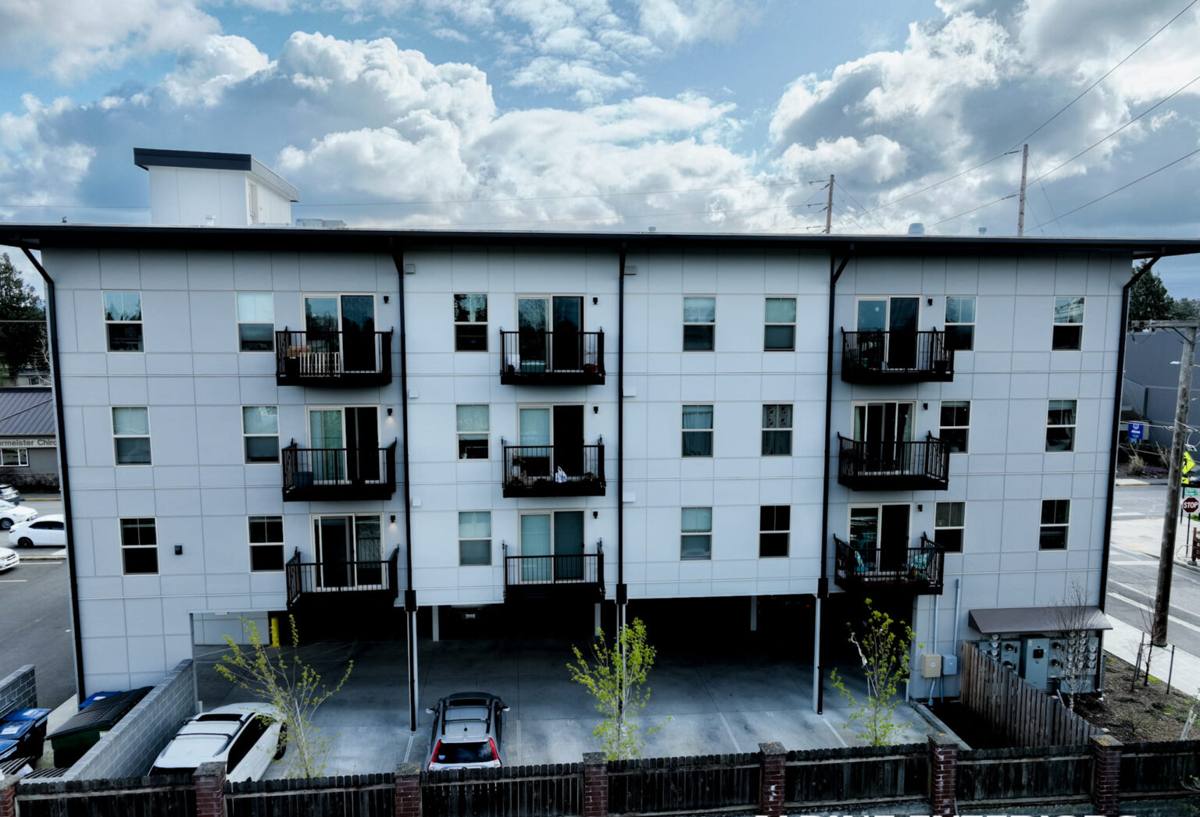
Signs a Lake Whatcom Home Needs Siding Repair
Because so much of the damage starts on the wall's blind side, by the time a problem is visible from the yard it's usually been developing for a while. Walk your exterior and look for:
- Soft or spongy spots when you press on siding near the bottom courses or below windows
- Dark streaking, staining, or a persistent green-black film on shaded or lake-facing walls
- Cracked, curling, or missing caulk at butt joints, window trim, and corner boards
- Visible gaps or buckling where panels meet, especially after a cold snap
- Peeling or bubbling paint that keeps coming back in the same spot year after year
- Moss or algae growth thick enough that you can see it from the street
- Water stains on interior walls or ceilings near an exterior wall corner
Any one of these can be a small fix. Several together — especially soft spots plus interior staining — usually mean water has been getting behind the siding for a season or more, and the repair needs to go deeper than the surface.
Why "Just Caulk It" Doesn't Hold Up Here
A lot of siding damage in this area gets patched with caulk and paint and looks fine for a summer. Then the fall rains come back, the caulk that was applied over damp or dirty siding fails at the edges, and water finds the same path back in. In a climate with Lake Whatcom's rain volume and shade pattern, a repair that doesn't address what's happening behind the siding — house wrap condition, flashing, drainage — is a repair you'll be doing again in a year or two.
What a Correct Siding Repair Actually Involves
A repair done right starts before anyone touches the siding itself:
1. Find the Water, Not Just the Damage
We pull back siding around the damaged area to see what's actually happening underneath — whether the house wrap or building paper is intact, whether flashing above windows and at trim is doing its job, and how far the moisture has traveled. Fixing the panel you can see without checking this is how homeowners end up paying for the same repair twice.
2. Address the Water Path
That might mean re-flashing a window head, correcting a kick-out flashing at a roof-to-wall intersection, repairing or replacing damaged house wrap, or improving how a section drains. On a lot of older Sudden Valley homes, this step matters more than the siding replacement itself.
3. Replace Damaged Material — Not Just Cover It
Any rotted or delaminated material comes out. We don't skim-patch over compromised substrate; it just moves the problem down the wall.
4. Match and Blend
Weathered siding rarely matches new material straight off the shelf. With factory-finished fiber cement, we work with color and batch to get as close a match as the product line allows, and place seams where they're least noticeable rather than wherever is easiest.
5. Seal It Correctly
Fresh caulk on clean, dry material, in the joints designed to be sealed — not smeared across joints that should be left to drain, which is a common shortcut that traps water instead of shedding it.
Repair vs. Replace: How We Help You Decide
Not every damaged section needs a full re-side, and not every home is a good candidate for spot repair. Here's how we weigh it:
| Factor | Favors Repair | Favors Full Replacement |
|---|---|---|
| Extent of damage | Isolated to one or two wall sections | Recurring rot/moss across multiple elevations |
| Underlying siding age | Under 12-15 years, otherwise sound | Original siding is 20+ years old or a known problem product |
| Siding material | Fiber cement in good general condition | Untreated wood, older LP-style product, or heavily weathered vinyl |
| Moisture source | Found and fixable (flashing, caulk failure) | Widespread wrap failure or structural moisture damage |
| Color match feasibility | Recent product line, matchable | Discontinued color or product, poor match likely |
We'll give you a straight answer on which side of that table your home falls on — we don't upsell a full re-side when a targeted repair will genuinely hold up, and we won't recommend patching a wall that's going to need the same work again in two years.
Why We Repair and Replace With James Hardie Only
We install and repair with James Hardie fiber cement exclusively. We don't work with vinyl, LP SmartSide, Cemplank, Allura, primed spruce, or cedar, and given what Lake Whatcom's climate does to siding, that standard matters as much for repairs as it does for full installs.
Wood-based products — cedar and primed spruce — look good going up, but in a shaded, high-moisture setting like Lake Whatcom they need consistent repainting and caulk maintenance to keep water out of the fiber, and once moisture gets past that maintenance, rot follows. LP SmartSide is an engineered wood product with its own strengths, but it's still wood-based at its core and depends on cut edges and joints staying sealed to resist the same moisture cycling we see here. Vinyl sheds water fine on its face but relies entirely on lap-and-drain design rather than a sealed surface, and in freeze-thaw swings it can distort at fastener points and pull away from trim over time.
James Hardie fiber cement is cement, sand, and cellulose fiber — it doesn't rot, and it isn't a food source for the moss and mildew that thrive in this climate. It's factory-finished with ColorPlus coating, so a repaired section holds color and resists fading in a way field-painted wood can't match. Hardie's HZ5 product line is engineered for wet, freeze-prone climates like ours, and the material carries a strong transferable warranty when installed to spec — which is exactly why we hold our own repair work to the same installation standard as new construction.
Our Repair Process for Lake Whatcom Homes
- On-site assessment — we inspect the full elevation, not just the spot you called about, since moisture problems in this climate rarely stay contained to one panel.
- Moisture and flashing check — we look behind the siding wherever there's visible damage before quoting the fix.
- Written scope — what's being replaced, what's being resealed, and why, in plain language.
- Weather-window scheduling — fiber cement repairs need dry material and dry substrate to seal correctly, so we work around Whatcom County's rain patterns rather than rushing a repair into a wet stretch.
- Repair and cleanup — damaged material out, new Hardie in, joints sealed, moss and debris cleared from the work area.
- Walkthrough — we show you what we found and what we fixed before we call it done.
Why a Crew That Already Works Lake Whatcom Matters
Sudden Valley and the neighborhoods around Lake Whatcom have their own quirks — private roads, gated access points, steep driveways, and homes tucked under heavy tree cover that changes how a wall dries out compared to an open lot in town. A crew that's already worked this area knows which elevations tend to hold moisture longest, how far damage typically travels before it shows on the surface, and how to schedule around road access and weather without it turning into a scheduling headache for you. That local familiarity is the difference between a repair that gets diagnosed correctly the first visit and one that turns into a return trip after the next storm finds the same spot.
Keeping Repaired Siding From Failing Again
A good repair buys you a lot of time, but Lake Whatcom's climate doesn't stop working on your walls once we leave. A short, practical maintenance list:
- Trim back branches and brush that keep a wall shaded and damp longer than the rest of the house
- Rinse moss and algae off siding before it thickens — a soft wash, not a pressure washer aimed at joints
- Keep gutters clear so overflow isn't running down the siding face during heavy rain
- Re-caulk trim joints on the schedule your material calls for, and don't wait for a gap to become visible
- Walk the exterior once a year, ideally before the fall rains start, and press-test any area that looked suspect the year before
If you're seeing soft spots, persistent moss, or staining on your siding, it's worth having someone look at it before another wet season adds to the damage. We'll come out, tell you honestly whether it's a repair or a replacement situation, and put together a straightforward, no-pressure estimate — just fill out the form below to get started.