 Sudden Valley Window
 Living With Lake Whatcom's Climate in Silver Beach
Homes along Silver Beach sit close to the water, and that proximity shapes everything about how siding ages here. Even though Sudden Valley is inland from the coast, Whatcom County as a whole sits inside a marine-influenced climate — salt-tinged air moves in off the Sound, driving rain arrives sideways more often than straight down, and the lake itself adds its own layer of humidity that lingers in the trees and along the shoreline. Add in a moss and algae season that can run eight months of the year in this part of Washington, and you've got a set of conditions that wears out the wrong siding material a lot faster than a manufacturer's brochure ever admits.
This page is about one thing specifically: replacing siding on a Silver Beach home, done right, with a crew that already knows what this neighborhood's weather does to a house over time.
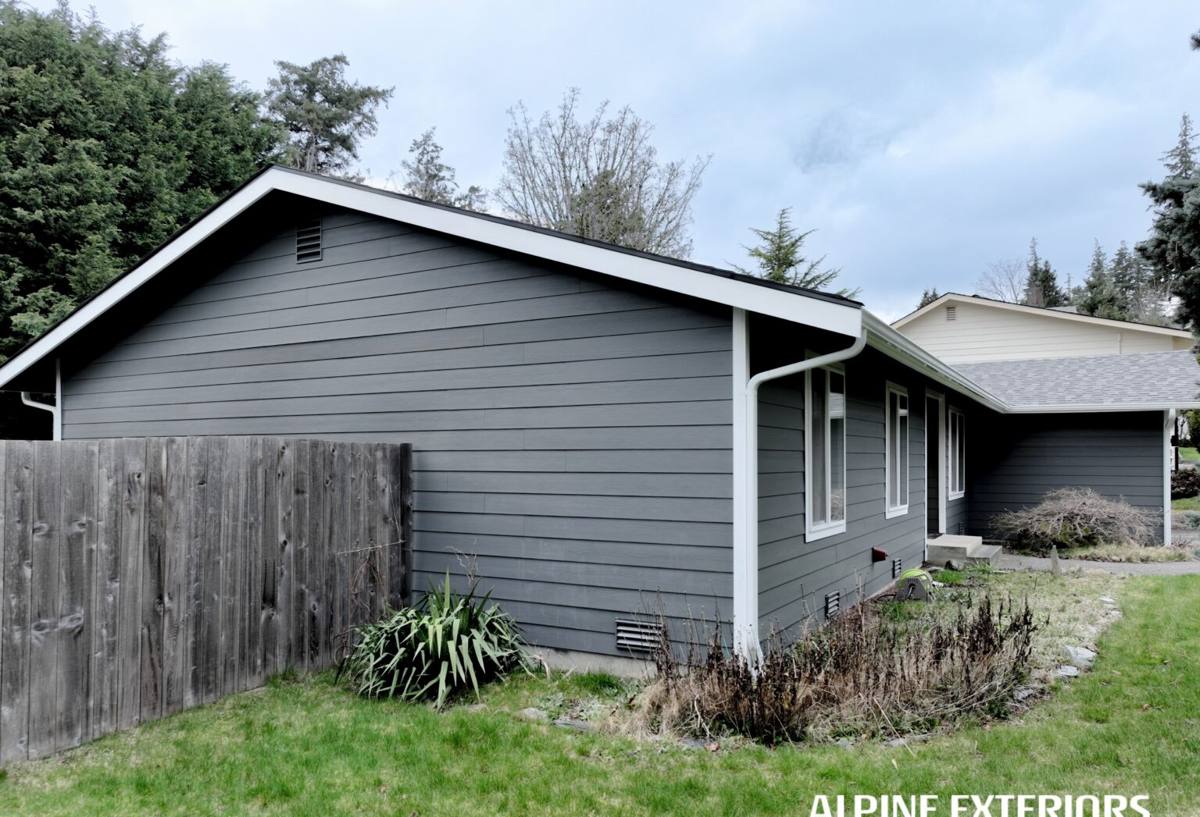
What Moisture, Salt Air, and Moss Do to Old Siding
Trapped Moisture and Hidden Rot
Most siding failures in this area don't start with something visible. They start behind the siding, where a small gap in flashing or a failed caulk joint lets water in and nothing lets it back out. Wood-based products — cedar, primed spruce, engineered wood — are especially vulnerable because once moisture gets past the surface, the material itself starts to break down from the inside. By the time paint is peeling or boards are visibly soft, the sheathing underneath has often been wet for years.
Moss, Algae, and the Long Green Season
Shaded lots near the lake and tree cover common in Silver Beach keep siding damp longer after every rain, which is exactly what moss and algae need to take hold. Beyond the cosmetic issue, sustained moss growth holds moisture against the surface of the siding around the clock, which accelerates whatever decay process is already underway underneath.
Sun, Freeze-Thaw, and Coating Breakdown
Western Washington doesn't get brutal winters, but Whatcom County does get enough freeze-thaw cycling, combined with UV exposure in the drier summer months, to slowly break down paint films and factory coatings. Siding that isn't engineered for this back-and-forth chalks, fades, and opens up seams faster than the same product would in a milder or drier climate.
Signs a Silver Beach Home Needs Siding Replacement
Not every issue means a full tear-off — but these are the signs that usually do, especially on a home in this climate:
- Soft or spongy spots when you press on the siding, particularly near the bottom courses and around windows
- Paint that keeps failing within a year or two of repainting, no matter how well the prep work was done
- Visible gaps, warping, or buckling boards, especially on the sides of the house that face the lake or prevailing wind
- Persistent moss or algae staining that comes back within a season of cleaning
- Rising interior humidity, musty odors, or peeling interior paint near exterior walls
- Visible rot at butt joints, corner boards, or anywhere two pieces of siding meet
- Siding that's original to a home built more than 20–25 years ago, particularly if it's cedar or an older wood composite
What a Correct Siding Replacement Actually Involves
Tear-Off and What's Underneath
A replacement done correctly starts with removing the old siding entirely and inspecting the sheathing underneath — not just the boards everyone can see. This is the point where hidden rot, soft spots, and past water damage get found and dealt with, rather than covered back up. Skipping this step is the single most common shortcut that leads to problems reappearing within a few years.
Water-Resistive Barrier and Flashing Details
In a climate that gets this much driving rain, the water-resistive barrier and flashing details matter as much as the siding itself. Proper house wrap, correctly lapped and taped, along with flashing at every window, door, and roof intersection, is what actually keeps water out of the wall assembly. Siding is the visible layer, but it's the layer behind it that does most of the real work.
Installing the New Siding Correctly
Fiber cement siding has specific installation requirements — proper fastener spacing and type, correct clearances from grade and roof lines, and manufacturer-specified gaps at butt joints for expansion. These details are spelled out by the manufacturer for a reason, and they're also usually what's required to keep the product's warranty valid. A siding job can look fine on installation day and still be set up to fail early if these details were rushed.
Why We Install Only James Hardie Fiber Cement
We made a decision as a company to install James Hardie fiber cement siding exclusively, and it's worth explaining why rather than just stating it. Fiber cement doesn't absorb and swell with moisture the way wood-based products do, and it doesn't rely on a factory coating alone to keep water out the way vinyl does at its seams and edges. Hardie's HZ5 product line is specifically engineered for climates like ours — the freeze-thaw cycling, sustained damp periods, and marine-influenced air common across Western Washington.
Hardie's ColorPlus factory finish is baked on and backed by its own finish warranty, which matters in a climate where paint failure on job-site-finished siding is one of the most common callback issues we see on older homes. Fiber cement is also non-combustible, which is an increasingly relevant consideration given wildfire smoke seasons that now reach even the wetter parts of the state. None of this means other products are worthless — it means that for the climate we install in, and the standard we want to stand behind, fiber cement is the material that holds up the way we tell homeowners it will.
Comparing Siding Options for a Silver Beach Home
| Material | Moisture Tolerance | Maintenance | Typical Lifespan | Relevance to This Climate |
|---|---|---|---|---|
| James Hardie fiber cement (HZ5) | Does not swell or rot; engineered for damp climates | Low — factory finish, occasional wash | 30+ years with correct install | Built specifically for freeze-thaw and marine-influenced regions |
| Vinyl siding | Sheds water on the face, but seams and J-channels can trap it | Low, but color fades and can't be repainted easily | 20–25 years typical | Can warp or crack in temperature swings; seams are a weak point in driving rain |
| LP SmartSide (engineered wood) | Treated, but still wood-based and moisture-sensitive at cut edges | Moderate — edge sealing and caulking upkeep | 20–30 years with diligent maintenance | Cut edges and joints need consistent maintenance to prevent swelling |
| Cedar (natural wood) | Attractive but absorbs moisture without diligent finishing | High — refinishing every few years | Variable, often 15–25 years | Moss and algae take hold quickly in shaded, damp lakeside settings |
Our Process for a Silver Beach Project
- On-site inspection of existing siding, trim, and visible problem areas
- Assessment of sheathing condition once tear-off begins, with any rot or damage addressed before new material goes up
- Material and color selection from James Hardie's ColorPlus lineup
- Removal of old siding and installation of a properly lapped water-resistive barrier
- Flashing installed at every window, door, and penetration point
- Hardie siding installed to manufacturer fastening and clearance specifications
- Final walkthrough, cleanup, and warranty paperwork provided directly to the homeowner
Why a Crew That Already Works This Neighborhood Matters
Siding replacement isn't just a product decision — it's a scheduling and site-condition decision too. A crew that already works around Sudden Valley knows the practical realities of this area: the narrower weather windows for tear-off work between rain systems, the shaded and damp lots that need extra drying time before new material goes on, and the fact that some neighborhoods here operate under community or HOA guidelines for exterior colors and materials that are worth checking before you order anything. None of that replaces a proper inspection of your specific home, but it does mean fewer surprises and fewer delays once work starts.
It also matters for accountability. A contractor who plans to keep working in this community has every reason to install correctly the first time and stand behind the warranty afterward, rather than treating the job as a one-off.
Get a Free, No-Pressure Estimate
If your Silver Beach home is showing any of the signs above, or you're just trying to figure out how much longer your current siding has left, we're glad to take a look. There's no pressure and no obligation — just a straight assessment of where things stand and what a correct replacement would involve. Use the form below to request a free estimate.