 Sudden Valley Window
 What Silver Beach's Climate Asks of a Siding System
Silver Beach sits along the shoreline of Lake Whatcom in Whatcom County, close to Sudden Valley, and homes here deal with a specific combination of conditions that a lot of siding products simply weren't engineered around: salt-tinged marine air drifting in off Bellingham Bay and the Strait of Georgia, rain that gets pushed sideways across open water before it ever reaches a wall, and a moss season that runs most of the year under the tree cover common on lake lots. This page is about one job specifically: installing James Hardie fiber cement siding correctly on a Silver Beach home, not a general survey of exterior work. If you're weighing whether Hardie is the right call here and what a correct installation actually involves rather than just which brand to pick, this is the detail that matters.
Salt-Tinged Marine Air
Whatcom County's air carries a mild salt content that moves inland off the water, and Silver Beach's lakeside position layers that on top of the lake's own evaporative humidity. On a siding job, that combination shows up as accelerated corrosion at fasteners and trim hardware, and as premature fading or chalking on a finish that wasn't built to resist it. It's a slow process that most homeowners never notice happening, which is exactly why the finish matters as much as the board underneath it.
Driving Rain Off the Lake
Wind picks up real speed moving across open water, and a lake-facing wall in Silver Beach can take rain at an angle and force that a sheltered inland wall never sees. That matters less for the siding material itself than for how it gets installed: lap spacing, fastener placement, and flashing at every joint and penetration all have to assume water will be driven into them, not just fall past them on the way down.
A Moss Season That Runs Most of the Year
Between lake humidity, regular Pacific Northwest rainfall, and tree cover on many Silver Beach lots, north-facing and shaded wall sections rarely get a long, uninterrupted dry stretch. Moss and mildew take hold fastest on surfaces that hold moisture at the surface rather than shedding it, which is one of the practical reasons a factory-cured finish behaves so differently here than a field-applied one over time.
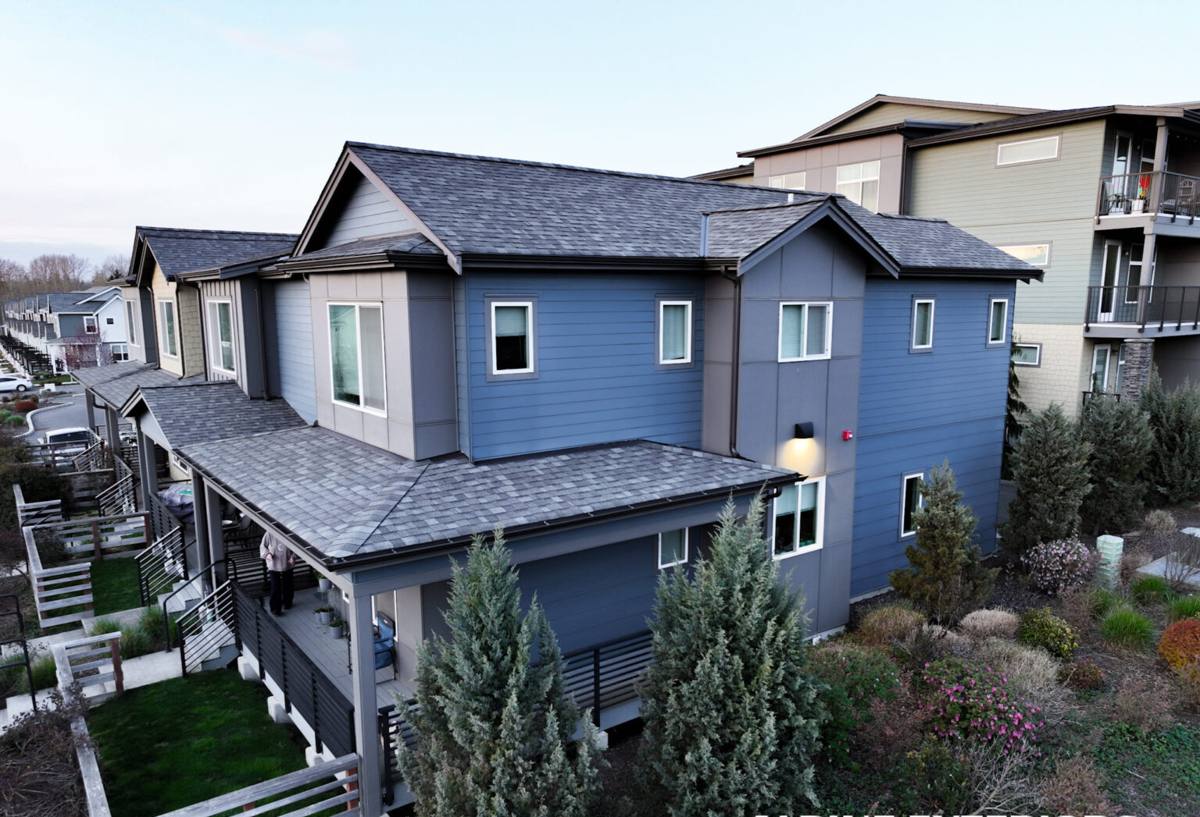
Why We Install Only James Hardie in This Neighborhood
We don't carry a lineup of siding brands and let a homeowner's budget sort out the decision. On every siding job we take on, in Silver Beach or anywhere else in Whatcom County, we install James Hardie fiber cement and nothing else, not LP SmartSide, not vinyl, not Cemplank, not Allura, not primed spruce, not cedar. Each of those has a legitimate place in the broader market, and other contractors install them competently. Our decision came from a narrower place: after years of tear-offs and repair calls on lakeside and marine-exposed properties, fiber cement was consistently the material still performing correctly a decade or two later, and the others were the ones we kept getting called back to fix. Standing behind one system completely, with one set of installation standards we know inside and out, serves a Silver Beach homeowner better than offering a cheaper option we'd have to explain away later.
The Hardie Product System: Lines, Textures, and the ColorPlus Finish
James Hardie isn't a single product, it's a system of siding profiles, trim, and factory finishes designed to work together, and choosing the right combination for a lake-exposed home is part of doing this job correctly, not an afterthought once the material is ordered.
| Product | Look | Typical Use |
|---|---|---|
| HardiePlank | Horizontal lap siding | The most common choice for a traditional Silver Beach home; wide range of exposure widths and textures |
| HardiePanel | Vertical sheet siding | Usually paired with battens for a board-and-batten look on gables or full walls |
| HardieShingle | Staggered or straight-edge shingle pattern | Cottage or shingle-style homes near the lake |
| HardieTrim | Fascia, corner boards, window and door trim | Completes the water-management detail at every edge and penetration |
Every one of those products is available with Hardie's ColorPlus finish, a coating baked on in a controlled factory process rather than brushed on after installation. In a climate that keeps walls damp as often as Silver Beach's does, that's not a cosmetic detail. A factory-cured finish resists the fading, chalking, and moisture intrusion that field-applied paint struggles with far longer, and it carries its own finish warranty separate from the substrate warranty on the board itself.
Hardie also engineers its base fiber cement formulation differently by climate zone. The HZ5 formulation is built for regions with sustained moisture exposure and freeze-thaw cycling, which is a closer match for a lakeside Whatcom County property than the formulations built for hotter, drier parts of the country. Specifying the correct HZ line is easy to overlook and hard to notice until the siding is already underperforming, sometimes years into ownership.
What a Correct Installation Involves
The material only performs the way it's engineered to when the installation underneath it is done right, and on a lake-exposed property that starts before the first new board ever goes up.
Starting With What's Under the Old Siding
Before any new siding goes up, we pull the old material and look at what's underneath: sheathing, framing, and the existing water-resistive barrier. On lake-facing walls that have been taking wind-driven rain for years, it's common to find moisture damage that never showed on the surface. Installing new siding over a compromised wall assembly just buries the problem for the next owner to find.
Fastening, Clearance, and Joint Treatment
Hardie's installation specifications call for a particular fastener type, spacing, and depth, along with minimum clearance from grade, roofline, decks, and roof-to-wall transitions. Joints between boards need to be treated correctly, whether that means a caulked butt joint, a shadow gap, or a trim-covered seam, depending on the product line and the wall detail. None of this is optional for a fiber cement product to perform the way it's engineered to, and it matters more on a lake-facing elevation taking direct wind-driven rain than it would on a sheltered wall.
Flashing and the Water-Management System
Siding is only one layer of a wall's water-management system. Window and door flashing, kick-out flashing at roof-to-wall intersections, and correct integration with the house wrap all have to work together, or water finds the one detail that got skipped. We treat flashing integration as part of the siding job itself, not a separate trade's problem to sort out later.
Repair, Patch, or Full Replacement?
Not every Hardie siding issue on an existing Silver Beach home calls for a full tear-off. Isolated impact damage, a section pulled loose in a windstorm, or trim that's failed around one window can often be repaired without touching the rest of the house. One detail worth knowing: Hardie's ColorPlus palette changes over time, and a color used on a home ten or fifteen years ago may no longer be in production, which can mean a repaired section needs field paint to match rather than an identical factory-finished board. When damage is isolated, that's still usually the more economical path. When moisture has been tracking behind the wall for a while, or the siding has simply reached the end of its service life, patching it tends to just delay a bigger job. We'll give you a straight answer about which situation you're actually looking at before you spend money either way.
Our Process for a Silver Beach Hardie Project
- An on-site walk of the exterior, wall by wall, since a lake-facing side and a shaded uphill side of the same house can need different detailing.
- A written scope specifying product line, HZ formulation, color, fastening, and flashing detail, not just "new siding installed."
- Tear-off and substrate inspection, with any hidden damage reviewed with you before new siding goes up.
- Installation to Hardie's published specifications, including the flashing and joint treatment specific to that wall's exposure.
- A final walkthrough and warranty registration, so the transferable warranty is on record if the home changes hands later.
Cost Factors for a James Hardie Job in Silver Beach
| Factor | What It Affects | Why It Matters Here |
|---|---|---|
| Tear-off vs. overlay | Labor scope and substrate access | Lake-facing walls often hide moisture damage under decades-old siding |
| Wall exposure and orientation | Flashing and fastening detail | A direct lake-facing wall needs more attention than a shaded, uphill wall on the same house |
| Product line and profile | Material cost | HardiePlank lap siding typically costs less than HardiePanel-with-batten or HardieShingle detailing |
| Trim and color selection | Material cost and finish life | ColorPlus factory finish costs more upfront than field paint but outlasts it in this climate |
| Site access and slope | Labor time and equipment | Sloped lakeside lots common in Silver Beach can add staging and setup time |
Real numbers depend on the specific house, which is why we walk the property in person before quoting rather than pricing off square footage alone.
What to Check Before Hiring for This Job
- Confirm they install James Hardie specifically, and ask which HZ formulation and product line they'd specify for your home
- Confirm current Washington state contractor licensing and active liability insurance
- Ask how they handle substrate damage found during tear-off, and get that answer in writing
- Ask for a written scope naming fastener type, clearance, and flashing details, not just "siding replacement"
- Ask about their warranty process, including whether they register the transferable manufacturer warranty on your behalf
Why a Crew That Already Works Silver Beach Matters
Two homes a few doors apart in Silver Beach can have genuinely different exposure: one with a full lake-facing wall taking direct wind and rain, another set back and shaded by trees on the slope above. A crew that already works this shoreline knows that before they ever climb a ladder, and it changes real decisions on install day, like where to add extra flashing attention, which walls need tighter joint treatment, and which HZ formulation and finish actually make sense for that specific exposure. That's the difference between a Hardie installation that looks right the day it goes up and one that's still performing the way it's engineered to twenty years from now.
If you're considering James Hardie siding for a home in Silver Beach, we're glad to walk the exterior with you and give you a straight read on what your specific walls need. Reach out using the form below for a free, no-pressure estimate.