 Sudden Valley Window
 Custom Windows Built for South Hill's Hillside Homes
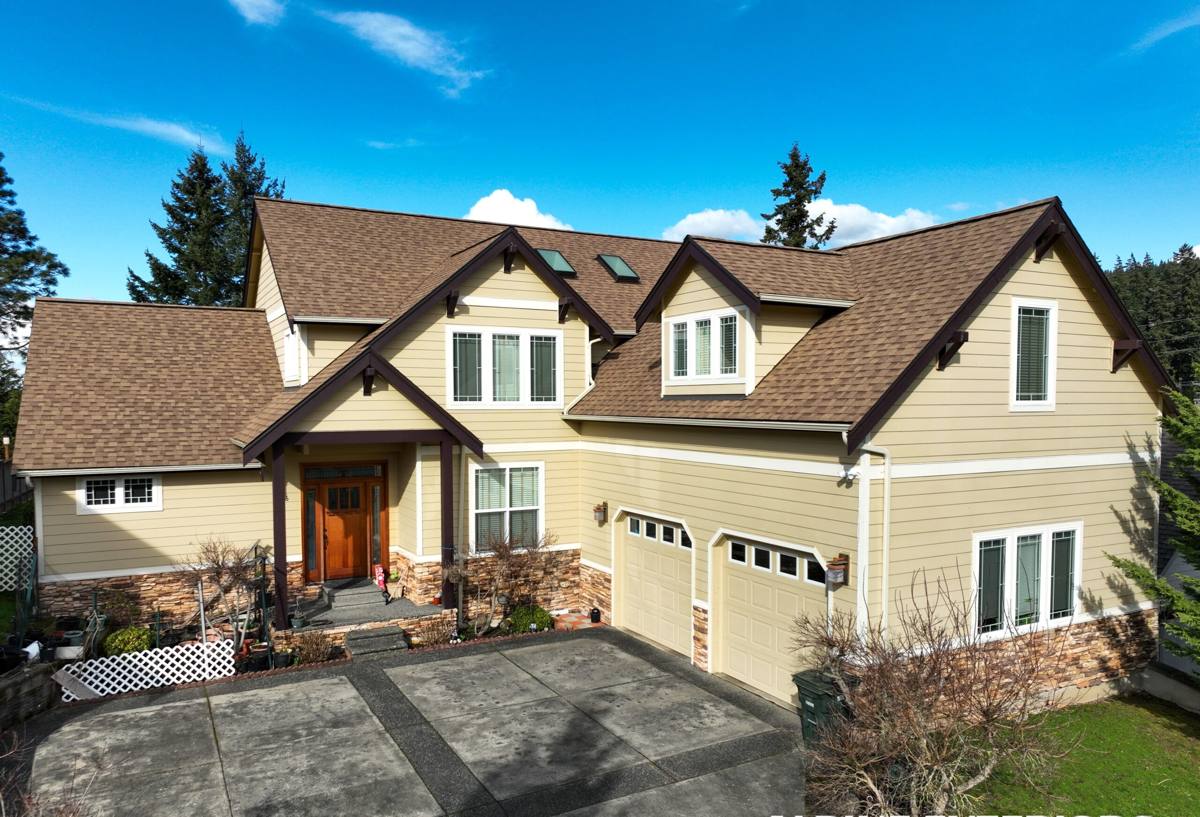
South Hill sits above Lake Whatcom inside the Sudden Valley community, and it's a different animal from a flat suburban lot. Homes here are built into slopes, tucked under fir and cedar canopy, and oriented for lake or valley views. That combination — steep grades, heavy tree cover, and window openings that were often cut for a specific view rather than a standard size — means a lot of South Hill houses don't have "off the shelf" window openings. Stock replacement sizes don't always line up, and that's exactly the kind of job custom windows are for: built to the actual rough opening, not the other way around.
We've worked enough properties in this pocket of Whatcom County to know the pattern. Original wood or early-generation vinyl windows from the first couple decades of Sudden Valley's development are aging out, and a lot of them are failing in the same predictable spots: bottom corners, sills facing north or west, and any window sitting under a roofline that funnels runoff right past it.
What Makes a Window "Custom" Here
Custom doesn't mean fancy — it means matched to the opening and the house. On South Hill that usually shows up as:
- Non-standard widths or heights in older post-and-beam or A-frame style homes
- Angled or clerestory windows built to catch light or lake views over tree lines
- Odd-shaped openings (arched tops, trapezoids) from 1970s–1990s architectural styles common in the area
- Larger picture or slider units where the opening was framed for a view, not a catalog size
What This Climate Does to Windows
Whatcom County's marine-influenced weather is the whole reason this is a specialized job and not a generic one. South Hill gets the same driving, wind-pushed rain that comes off the Sound and up through the county for much of the fall and winter, plus salt-laden air that works its way inland and accelerates corrosion on hardware, screws, and cheaper cladding. Add in the shade from mature trees on most lots, and you get long stretches where wood trim, sills, and even north-facing vinyl frames simply don't dry out. That's what feeds the moss and algae growth we see on so many homes here — it's not just a roof problem, it collects in window tracks, weep holes, and exterior trim just as readily.
None of that is solved by a nicer-looking window. It's solved by correct flashing, the right frame material for a shaded, damp lot, and installation details that assume the window will get wet often and needs to shed water and dry out on its own.
Where We See Failure First
On repeat calls to this neighborhood, the same three things show up over and over:
- Sill rot or delamination on original wood-frame windows that never had adequate flashing behind the trim
- Fogged or failed seals on older dual-pane units — once the seal goes, that moisture and moss-friendly grime gets trapped between the panes for good
- Corroded hardware — cranks, latches, and balance mechanisms that seize up from years of damp air, especially on shaded, north- or west-facing walls
Getting the Install Right, Not Just the Window
A correct custom window job on a South Hill property has to account for the house being wrapped in moisture most of the year. That changes a few things about how we approach it compared to a drier, more open lot.
Flashing and Drainage
Every opening gets flashed so water is directed out and down, never trapped behind the frame or siding. On homes with heavy tree cover, we pay extra attention to head flashing and kick-out details, since these lots rarely get the wind exposure that helps a wall dry between rain events elsewhere in the county.
Frame Material Fit
We match the frame material to the exposure of that specific wall, not a single product for the whole house. A window on a sun-starved, moss-prone north wall doesn't need the same spec as a south-facing living room window that gets afternoon sun and dries out fine on its own.
Sealants and Sill Pans
Sill pans under every custom unit, paired with sealants rated for sustained damp exposure rather than intermittent weather — that's the difference between a window that's dry in year one and one that's still dry in year ten.
Frame Material Comparison for South Hill Conditions
| Material | How It Handles This Climate | Maintenance | Best Use on South Hill |
|---|---|---|---|
| Vinyl | Won't rot; handles damp shade well; can discolor faster near salt-influenced air over many years | Low — occasional track/weep hole clearing | Shaded, north-facing walls; budget-conscious full-house replacement |
| Fiberglass | Very stable in temperature swings and moisture; resists warping better than vinyl over time | Low | Larger custom openings, view windows, high-exposure walls |
| Wood-clad | Good insulating look and value but the wood core is vulnerable if exterior seal ever fails in a wet, shaded spot | Higher — periodic inspection of cladding seams | South- or west-facing walls with better sun exposure and drying time |
| Aluminum | Prone to condensation and corrosion in damp, salt-influenced air without thermal breaks | Moderate to high | Generally not our first recommendation for shaded Whatcom County lots |
None of these is a wrong answer across the board — the point is matching material to exposure, wall by wall, rather than defaulting to one product because it's what's on the truck.
Our Process for a South Hill Job
- On-site assessment — we look at every existing opening, note sun/shade exposure per wall, check for rot, seal failure, and drainage issues before quoting anything
- Precise measurement — since so many South Hill openings are non-standard, we measure each one individually rather than assuming uniformity across the house
- Material and glass selection — matched to exposure, view priority, and your budget, wall by wall where it matters
- Removal and inspection of the opening — this is where hidden rot or old flashing failures actually get found and fixed, not covered over
- Installation with proper flashing and sealing — built for a wall that stays damp longer than most, not a best-case-weather install
- Final check and cleanup — operation, seal, and site cleanup before we call it done
Access and Working Inside Sudden Valley
Sudden Valley is a private community, and South Hill in particular has narrow, sloped access roads and driveways that aren't all suited to a full-size delivery truck or a crew unfamiliar with the layout. A crew that already works in this community knows the gate procedures, the tighter turnarounds, and which properties need materials staged differently because of grade or driveway width. That's not a small thing on a custom job — a delayed or mishandled delivery on a single-access hillside lot can turn a one-day install into a multi-day headache.
If your property falls under community design guidelines for exterior changes, it's worth checking with your association before finalizing window style or color — we're happy to work from whatever guidelines apply, but that's a conversation to have early, not after the windows are ordered.
Before You Sign Off: A Practical Checklist
- Has every opening been measured individually, or is the quote based on a single "standard" assumption?
- Does the quote specify flashing and sill pan details, or just the window unit itself?
- Is the frame material chosen per wall exposure, or is it one product for the whole house regardless of shade?
- Does the installer have a plan for site access given South Hill's grades and driveways?
- Is there a clear warranty on both the window unit and the installation labor, not just the manufacturer's glass warranty?
After Installation: Keeping Moss and Moisture From Coming Back
New windows don't stop being maintenance items just because they're new. In a shaded, damp spot like South Hill, a quick seasonal check goes a long way: clear debris and moss buildup from tracks and weep holes before the fall rains set in, wipe down sills so organic buildup doesn't get a foothold, and glance at exterior caulking lines once a year for cracking or gaps. Catching a small sealant gap early is a five-minute fix; ignoring it through a wet Whatcom County winter can turn into a sill repair.
Get a Straight Answer for Your Property
Every South Hill home carries its own mix of sun, shade, and slope, so a real quote means walking your specific openings rather than pricing off a phone description. If you're weighing repair versus replacement, or just want an honest look at what your current windows are doing in this climate, we're glad to come take a look. Use the form below to request a free, no-pressure estimate.