 Sudden Valley Window
 Deck Building Built for South Hill's Weather, Not Against It
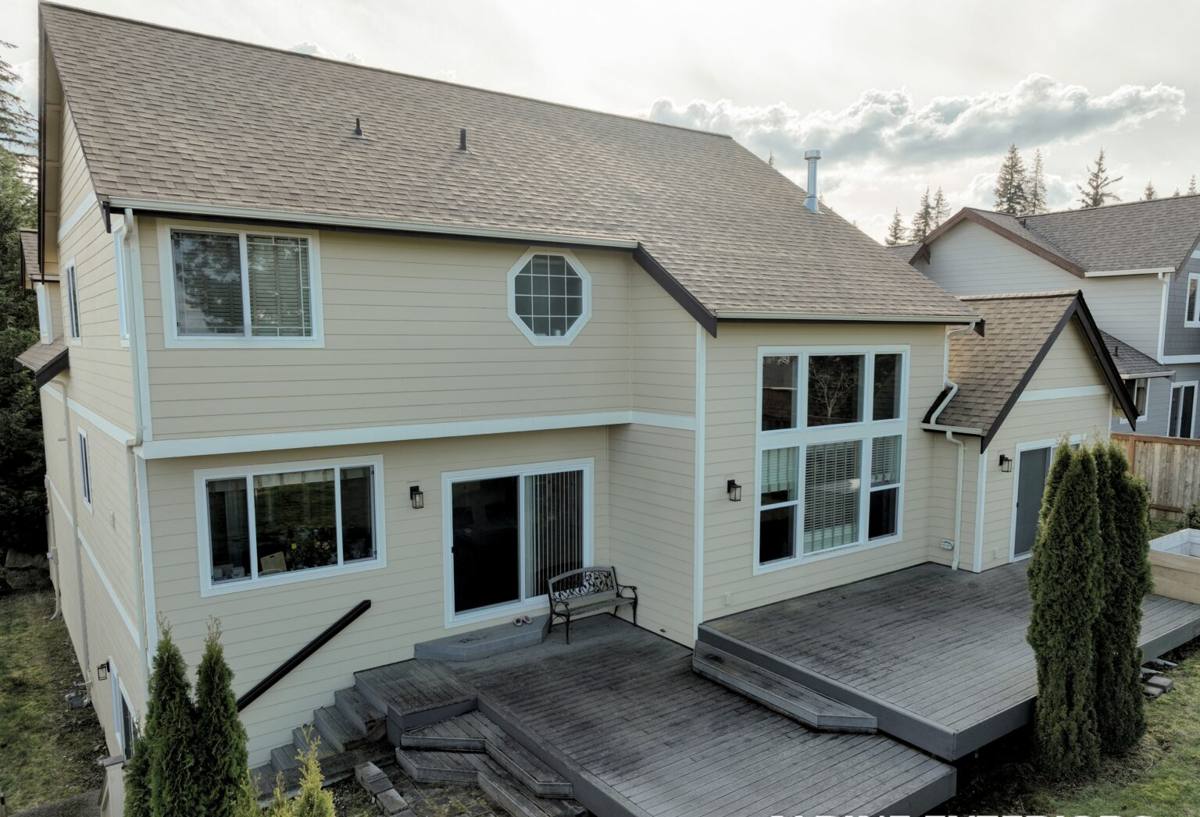
A deck in South Hill has to earn its keep through a Whatcom County winter, not just look good on a dry August afternoon. Between salt-laden air rolling in off the water, months of driving rain, and a moss season that can run from early fall well into spring, this is a tough climate on outdoor wood structures. A deck built the way it would be built in a dry inland climate — standard fasteners, minimal flashing, tight-to-the-ground framing — tends to show its age here fast: soft spots at the ledger, rust bleeding from screw heads, moss creeping across boards that never fully dry out between storms. Building correctly for this specific stretch of Whatcom County isn't an upsell. It's the difference between a deck that needs real work in seven or eight years and one that's still solid at twenty-five.
What South Hill's Climate Actually Does to a Deck
It helps to understand the specific ways this environment attacks a deck, because it changes almost every decision in the build — not just the decking boards on top.
Moisture Wherever Wood Meets Wood
Rot doesn't start on open, exposed surfaces that dry out between rains. It starts in the joints — where a ledger board meets the house, where joists sit in hangers, where a post meets a footing. With the amount of rain this region sees, any connection that traps water instead of shedding it becomes a slow-motion problem. Flashing, gapping, and drainage planes at these joints matter more here than in almost any other part of the country.
Salt Air and Fasteners
Air carrying salt off the water accelerates corrosion on anything that isn't rated for it. Standard interior-grade screws and generic galvanized hardware can start rusting within a few seasons in this environment, and a rusting fastener doesn't just look bad — it loses holding strength and can stain the wood around it. Coastal-rated stainless or heavy-duty coated fasteners cost more upfront and are non-negotiable for structural connections out here.
Moss and Standing Moisture
Moss doesn't just grow on roofs. On a deck, it takes hold anywhere boards stay damp too long — low spots with poor drainage, shaded corners, gaps that have gone tight and stopped draining between boards. Once moss is established it holds moisture against the wood constantly, which speeds up rot underneath it. Spacing, slope, and airflow under the deck all affect how much of a moss problem a homeowner ends up fighting every fall.
Decking Material Options, Compared Honestly
There's no single "best" decking material for South Hill — there's a best material for a given budget, maintenance appetite, and how the deck will actually be used. Here's how the common options stack up in this specific climate.
| Material | Upfront Cost | Maintenance | How It Handles Rain & Moss | Realistic Lifespan |
|---|---|---|---|---|
| Pressure-treated wood | Lowest | Annual cleaning, re-staining every 2-3 years | Prone to moss and graying without upkeep; rot risk if maintenance lapses | 10-15 years with upkeep |
| Cedar | Moderate | Regular sealing to hold color and resist moisture | Naturally rot-resistant but still needs sealing in this rainfall | 15-20 years with upkeep |
| Composite (capped) | Higher | Occasional washing, no staining or sealing | Doesn't rot or absorb water like wood; moss can still grow on the surface if it stays damp and shaded | 25-30 years |
| PVC decking | Highest | Lowest — occasional washing | Fully moisture-resistant board itself; same surface-moss risk in shaded, low-airflow spots | 30+ years |
Composite and PVC boards get marketed as maintenance-free, and structurally that's close to true — the board itself won't rot. But no decking material is moss-proof on its own; moss grows on the surface of anything that stays wet and shaded, composite included. The real maintenance-free promise depends as much on how the deck is built — slope, spacing, sun exposure, airflow underneath — as on the board itself. We'll walk through the real trade-offs for your yard rather than defaulting to whatever has the best margin.
What a Correctly Built Deck Involves Here
Footings and Framing
Footings need to be sized and set to local frost depth and soil conditions, not just poured to the minimum that will pass a quick look. Undersized or shallow footings are one of the most common causes of a deck that starts to feel spongy or uneven within a few years. Framing lumber should be rated for ground contact where it's close to grade, and joist spacing should account for the decking material chosen — composite and PVC boards often need tighter joist spacing than solid wood to avoid flexing.
Ledger Attachment and Flashing
The ledger board — where the deck attaches to the house — is the single most failure-prone connection on most decks, and it's almost always a water problem, not a structural one. Proper flashing (metal, not just building paper or caulk) needs to direct water away from the house rather than let it pool where the deck meets the siding. This is the detail most likely to be shortcut on a cheap build, and the one most expensive to fix later since it often means opening up siding to correct.
Guardrails, Stairs, and Code
Guardrail height, baluster spacing, stair rise and run, and footing depth are all governed by Washington's adopted building code, and Whatcom County permitting applies to most new decks above a certain height or size. A correctly built deck meets these specs as a baseline, not as something to work around — both for safety and because an unpermitted or non-compliant deck can complicate things at resale.
Our Deck Building Process
- Site walk and design conversation. We look at the actual yard — slope, drainage, sun and shade patterns, how the deck will be used — before talking materials.
- Material and layout selection. We go over the honest trade-offs between wood, composite, and PVC for your budget and maintenance preference, and finalize size, shape, and railing style.
- Permitting. We handle the permit application and inspections that apply to the project, so it's built to code from the footings up.
- Footings and framing. Footings are set to proper depth, and the frame is built with fasteners and connectors rated for this climate — not generic hardware.
- Ledger flashing and waterproofing. This step gets done properly every time, since it's the connection most likely to cause problems down the line if it's rushed.
- Decking, railings, and stairs. Boards are laid with the spacing and slope needed to shed water and resist moss buildup, not just for a tight, uniform look on day one.
- Final walkthrough. We go over the finished deck together, including what maintenance it actually needs going forward.
Common Problems We Find on Older South Hill Decks
When we're called out to repair or replace an existing deck in the area, the same handful of issues come up repeatedly:
- Soft or spongy boards near the house, usually tracing back to a ledger board without proper flashing
- Rusted or corroded fasteners that have stained the wood around them
- Heavy moss buildup in shaded, low-airflow areas where boards were laid too tight or too flat
- Footings that were undersized or set too shallow, leading to a deck that shifts or feels unstable
- Railings that don't meet current spacing requirements, often from older or DIY builds
None of these are unusual for the climate — they're what happens when a deck is built to a generic spec instead of one that accounts for South Hill's rain, salt air, and moss season specifically.
Keeping a New Deck Ahead of Moss Season
Whatever material you choose, a little seasonal attention goes a long way in this climate. A basic yearly routine:
- Sweep debris out of board gaps regularly, especially under trees, so water and moss don't get trapped
- Check and clear any drainage points or gaps at the base of railings and stairs before the fall rains set in
- Rinse composite and PVC decking a couple of times a year to keep pollen and organic buildup from feeding moss growth
- Re-seal or re-stain wood decking on the schedule the material calls for — don't wait until it's visibly gray or worn
- Inspect the ledger connection and any visible flashing once a year for early signs of water intrusion
- Tighten or replace any fasteners showing early rust before they lose holding strength
Why a Local Crew Matters for a South Hill Deck
Deck-building advice that works in a dry inland climate can be actively wrong here. A crew that regularly works in South Hill and the wider Sudden Valley area already knows which fastener grades hold up, which flashing details actually keep a ledger dry through a wet winter, and how much slope and airflow a deck really needs to keep moss from taking over by year two. That's not something you get from a generic install — it comes from building in this specific climate, on this specific terrain, repeatedly. It also means someone who understands the permitting process for the county and won't treat code requirements as optional extras.
If you're weighing a new deck or trying to figure out whether an existing one is worth repairing versus rebuilding, we're happy to take a look and talk through it honestly. Reach out for a free, no-pressure estimate using the form below.