 Sudden Valley Window
 Why Sunnyland Windows Wear Out Differently Than Windows Inland
Sunnyland sits close enough to open water and the Lake Whatcom basin that homes here take a different kind of beating than a house twenty miles inland. It's not one dramatic storm that ruins a window — it's the slow accumulation of hundreds of wet, gray days a year. Salt-tinged air off the Sound and the bay corrodes hardware and fasteners faster than dry-climate manufacturers' warranties assume. Driving rain, often pushed sideways by wind off the water, finds every gap in old flashing and works its way behind trim over years, not weeks. And the long moss season that runs from fall through spring keeps siding, sills, and window perimeters damp for months at a stretch, which is exactly the condition wood rot and seal failure need to take hold.
None of this means Sunnyland is a bad place to own windows — it means the standard for what counts as a "correct" installation has to be higher than what gets away with it in a drier part of the country. We size our replacement work around this climate specifically, not around a national average.
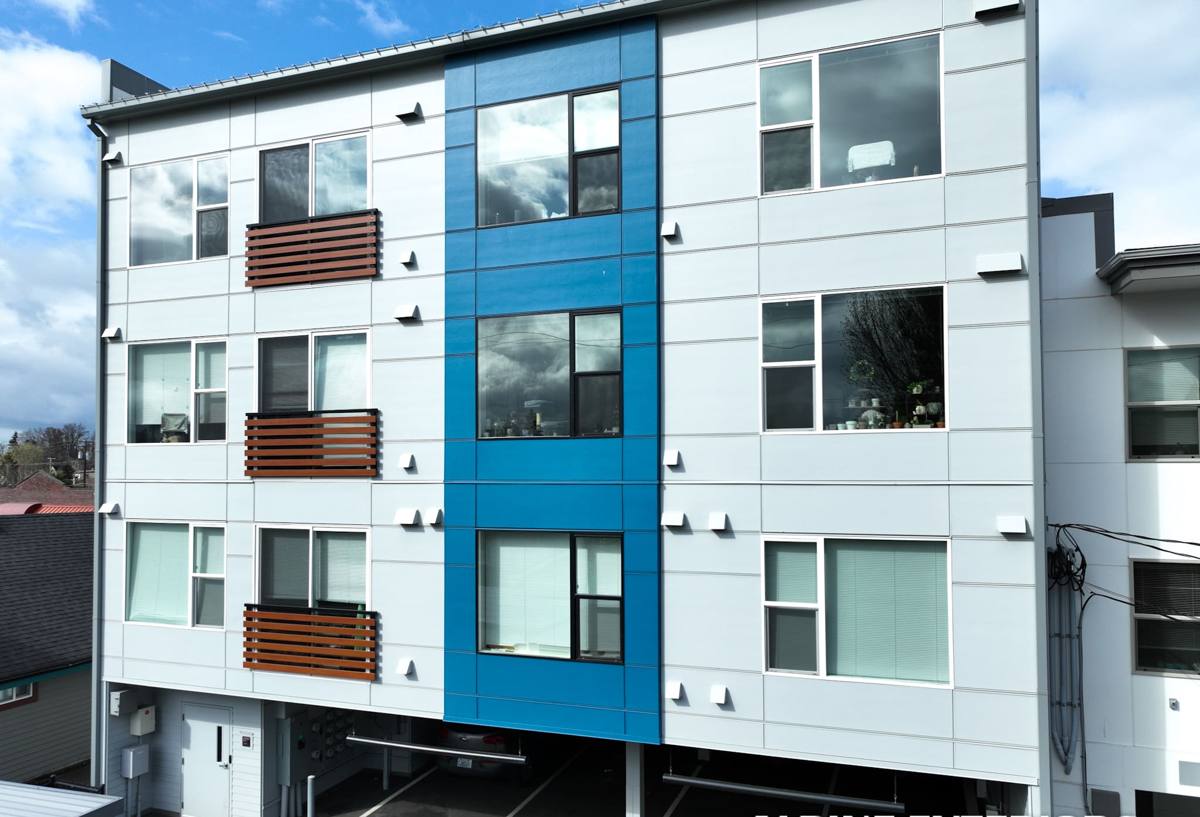
Signs a Sunnyland Home Actually Needs Replacement, Not Just Repair
Not every draft or foggy pane means a full replacement. But there are patterns we see often enough in this neighborhood that they're worth knowing before you call anyone:
- Fogging or a milky haze between double-pane glass — the seal has failed and moisture is trapped inside; this cannot be cleaned out, only replaced.
- Soft or spongy wood at the sill or bottom corners of the frame, often hidden under paint that still looks fine from a few feet away.
- Visible daylight or a felt draft around the sash even when the window is latched shut.
- Difficulty opening, closing, or locking — swollen wood or a warped frame from repeated wet/dry cycling.
- Rising heating bills without a clear cause, especially in a home with its original single-pane or early double-pane windows.
- Persistent moss or algae staining on the exterior trim right around the window opening, which usually means water is sitting there longer than it should.
If you're only seeing one or two of these and the frame itself is sound, a targeted repair or reseal may be enough. When several show up on the same window, or the frame material itself is compromised, replacement is usually the more honest recommendation — patch jobs on rotted wood don't hold up through another wet season.
What a Correct Window Replacement Actually Involves
The glass and frame you pick get most of the attention, but in this climate the installation details matter at least as much as the product. A premium window installed poorly will leak here faster than a mid-range window installed right. A correct job includes:
Removing and inspecting, not just swapping
Every opening gets checked down to the framing once the old window is out. Wet or rotted framing lumber doesn't get covered up with a new window on top of it — it gets addressed first, because a new window over damaged framing just hides the problem for a few more years.
Flashing and water management
This is the part that determines whether your home stays dry through a Whatcom County winter. Proper flashing tape and a correctly lapped weather-resistive barrier direct water down and out and never let it track back behind the siding. This step is invisible once trim goes back on, which is exactly why it's the step corners get cut on by crews who don't work this climate regularly.
Sealing and insulating the gap
The space between the new window frame and the rough opening gets insulated and sealed with materials rated for exterior moisture exposure — not just any foam or caulk. Done wrong, this gap becomes a hidden channel for air and water infiltration that shows up as a mystery draft a year later.
Interior and exterior finish work
Trim, caulking lines, and paint or stain get finished to match the surrounding wall, and hardware gets tested under actual operation, not just eyeballed.
Choosing a Frame Material for This Climate
There's no single "best" window material — there's a best fit for a given home's exposure, budget, and maintenance appetite. Here's how the common options actually perform for a Sunnyland property, based on what the materials do in sustained damp conditions:
| Frame Material | Moisture Behavior | Maintenance | Typical Lifespan Here |
|---|---|---|---|
| Vinyl | Won't rot; UV can make older formulations brittle over decades | Low — occasional cleaning | 20–30 years |
| Fiberglass | Excellent — stable through wet/dry cycling, minimal expansion | Low | 30+ years |
| Wood (unclad) | Attractive but vulnerable to prolonged moss-season dampness without diligent upkeep | High — regular repainting/sealing | Varies widely with maintenance |
| Wood-clad (exterior aluminum or vinyl over wood) | Good — cladding shields the wood, but any breach in the cladding traps moisture against it | Moderate | 25–35 years with intact cladding |
| Aluminum | Doesn't rot but conducts cold and can condense; coastal salt air accelerates corrosion on lower-grade finishes | Moderate | 20–25 years |
Our default recommendation for exposed sides of a Sunnyland home is vinyl or fiberglass specifically because they don't give moss and moisture anything to work with over time. We'll still install wood or wood-clad where a homeowner wants that look — we just walk through the maintenance commitment honestly up front, rather than after the first winter.
Our Process for a Sunnyland Job
The steps are the same fundamentals as any window replacement, but the sequencing and pacing account for our weather window:
- On-site assessment. We look at every window being considered, check framing condition where accessible, and note drainage and exposure — a window under an overhang wears differently than one facing open weather.
- Written scope and quote. You get a clear breakdown of materials, labor, and any framing repair contingency before work starts, not a surprise change order mid-job.
- Scheduling around the weather. Openings are only exposed for as long as it takes to swap the unit — we don't leave a house with open framing overnight in a rain window if we can help it.
- Removal, inspection, and repair. Old units come out, framing gets checked, and any rot or damage gets repaired before the new window goes in.
- Installation with full flashing and sealing. This is the step described above — the part that determines how the window performs in year five, not just on install day.
- Finish work and walkthrough. Trim, paint touch-up, and a functional check of every operable window before we call it done.
What Window Replacement Costs and Why
We won't quote a number without seeing the job, but the honest range of factors that move the price are worth knowing before you get quotes:
| Factor | Why It Matters |
|---|---|
| Frame material | Fiberglass and premium vinyl cost more upfront than basic vinyl or aluminum but generally cost less over the window's life in a wet climate |
| Number and size of openings | Larger and custom-sized windows require more material and labor per unit |
| Framing condition | Rot repair discovered during removal adds labor that can't always be estimated until the old window is out |
| Access and story height | Second-story or hard-to-reach windows take longer and may need additional equipment |
| Glass package | Double vs. triple pane, low-E coatings, and gas fills affect both price and energy performance |
| Trim and finish complexity | Matching existing trim profiles or repainting takes more time than a simple like-for-like swap |
Be cautious of any quote that's dramatically lower than others for the same scope — in this climate, that gap is almost always coming out of the flashing and sealing detail, which is the part you can't see once the job's finished and the part most likely to cause a problem down the road.
Why a Crew That Already Works in Sunnyland Matters
Window installation isn't regionally exotic work, but the margin for error is smaller here than in a dry climate. A crew that's done this job repeatedly around Sudden Valley and the surrounding Whatcom County communities already knows how the local moss season behaves against different siding types, how much clearance a given exposure needs, and which flashing details actually hold up through a full wet season rather than just looking right on install day. That's not a marketing point — it's the difference between a window that's still tight in year eight and one that's showing a soft sill by year four.
It also means faster, more accurate quotes. We're not learning your area's weather patterns on your job; we already know what a driving-rain exposure on this side of the water requires.
After Installation: Keeping New Windows Performing
A correctly installed window in this climate is largely low-maintenance, but a little seasonal attention extends its life meaningfully:
- Clear moss and debris from sills and tracks each fall before the wet season sets in.
- Check exterior caulk lines annually for cracking or separation, especially after a hard winter.
- Operate every window a few times a year, even ones you rarely open, so hardware and weatherstripping don't seize up.
- Keep gutters and downspouts clear above window openings — overflow is a common hidden source of window-area water damage.
- Watch for condensation between panes, which signals seal failure and warrants a look before it worsens.
If you're weighing whether it's time to replace windows on a Sunnyland home, we're glad to come take a look, walk you through what we're seeing, and put together a straightforward, no-pressure estimate — just fill out the form below to get started.