 Sudden Valley Window
 Windows Built for Alger's Weather, Not Just the Showroom
Alger sits close enough to the water and the tree line that its houses take a different kind of beating than homes twenty miles inland. Between the salt-laden air coming off the Sound, the driving rain that rolls through Whatcom County most of the year, and a moss season that can stretch from October into May, window assemblies here are under near-constant moisture pressure. A window that's fine in a dry climate can fail in five years out here if it wasn't installed with this specific environment in mind. That's the difference between a window installation and a window installation done right for Alger.
We work in and around Sudden Valley regularly, which means we're not guessing at what this climate does to a house — we're seeing it on every job.
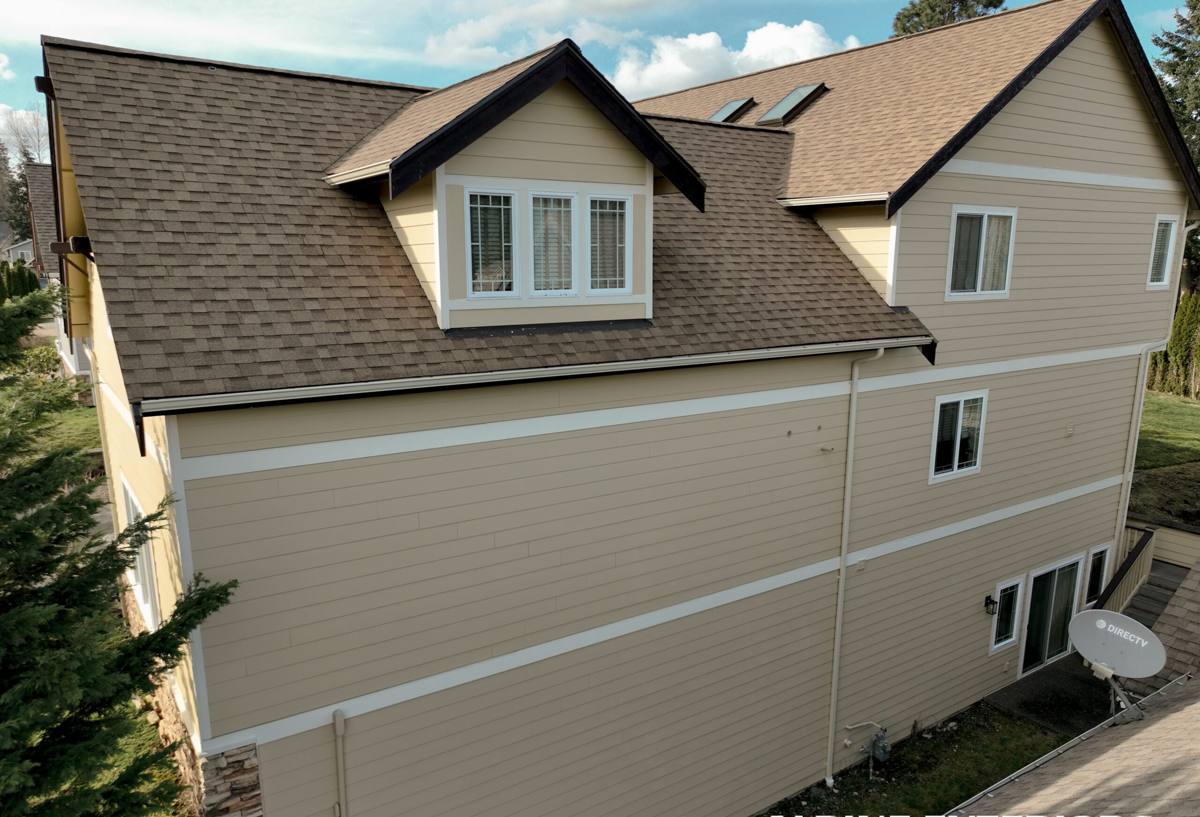
What Alger's Climate Actually Does to Windows
Salt Air and Metal Components
Homes closer to the water deal with airborne salt that accelerates corrosion on hardware, fasteners, and unprotected metal flashing. Cheap or mismatched hardware can start pitting and seizing well before the glass or frame shows any wear. This is a hardware and flashing-material decision as much as a window brand decision.
Driving Rain and Wind-Driven Water
Whatcom County storms don't just drop rain straight down — wind pushes it sideways into wall assemblies, which means the water management around a window (not just the window itself) has to handle horizontal pressure, not gravity alone. A properly lapped flashing sequence and correctly installed sill pan matter more here than in calmer climates.
Moss Season and Prolonged Dampness
Long stretches of damp, low-sun weather keep exterior surfaces wet for days at a time. Moss and algae growth around window trim and sills isn't just cosmetic — sustained moisture against wood trim or poorly sealed joints is exactly what leads to rot, and rot around a window opening is one of the most expensive repairs a homeowner can face if it's caught late.
Signs an Alger Home Needs New Windows
- Visible fog or moisture trapped between panes (failed seal)
- Soft or discolored trim/sill wood, or paint that keeps bubbling in the same spot
- Drafts you can feel near the frame even when the window is latched
- Windows that are difficult to open, close, or lock — often a sign of frame warping
- Condensation on the inside of the glass during cool, damp mornings
- Visible mold or mildew staining at the corners of the frame or nearby drywall
- Noticeably higher heating bills without another explanation
Any one of these can be minor. Two or three together, especially on a home that's been through several wet seasons without an inspection, usually means it's time to look closer.
What a Correct Installation Involves
Swapping glass into an old opening is not the same job as a correct window installation. In a climate like Alger's, the sequence matters as much as the product:
- Opening inspection — checking the existing framing, sheathing, and sill for hidden rot or water damage before anything new goes in.
- Sill pan flashing — creating a sloped, sealed drainage path so any water that gets past the window sheds outward instead of pooling in the wall.
- Proper flashing sequence — integrating window flashing with the existing weather-resistive barrier in the correct shingle-lap order (bottom to top) so water is always directed out and down.
- Air sealing and insulation — sealing the gap between the frame and rough opening with appropriate sealant and low-expansion foam, not just caulk around the outside trim.
- Correct fastening and shimming — the window has to be plumb, level, and square, with shims placed so the frame doesn't bow when fasteners are driven.
- Exterior trim and sealant detailing — using sealants and materials rated for sustained wet exposure, not general-purpose caulk that breaks down under UV and moisture cycling.
Skip or rush any one of these steps and the window itself becomes almost irrelevant — water will find the installation gap long before it finds a way through quality glass.
Our Process for Alger Jobs
1. On-Site Assessment
We look at each opening individually — sun exposure, wind exposure, proximity to the water, and existing damage all factor into the plan. Two windows on the same house can have very different needs depending on which direction they face.
2. Straightforward Recommendations
We'll tell you plainly which windows need full replacement, which could get by with repair, and which are fine for now. We're not going to sell you seven windows when three need it.
3. Weather-Timed Scheduling
Openings are exposed to the weather during installation. We plan around forecasts and work efficiently so an opening isn't left vulnerable overnight during a wet stretch.
4. Full Flashing and Sealing Detail
Every installation gets the full sill-pan-and-flashing sequence described above — this isn't an upsell, it's the baseline for doing the job right in this climate.
5. Final Walkthrough
We check operation, seals, and trim with you before we consider the job finished, and we're straightforward about what maintenance (if any) the specific product you chose will need going forward.
Choosing Materials for This Climate
There's no single "best" window material — there's a best fit for a given house, budget, and exposure. Here's how the common options hold up specifically against Alger's salt air, rain, and moss conditions:
| Frame Material | Moisture Behavior | Maintenance Burden | Notes for This Climate |
|---|---|---|---|
| Vinyl | Doesn't rot; won't corrode from salt air | Low — occasional cleaning | Good value option; quality varies a lot between manufacturers, so hardware and weatherstripping quality matter more than the label |
| Fiberglass | Excellent — very stable in wet/dry cycling | Low | Handles wind-driven rain and temperature swings well; typically a higher upfront cost |
| Wood (clad exterior) | Good if the exterior cladding is intact; vulnerable if it's breached | Higher — exterior clad needs monitoring, interior wood needs occasional attention | Attractive interior finish, but any cladding failure exposes wood to Alger's damp season directly |
| Aluminum | Prone to corrosion in salt air unless properly coated; thermally weak | Moderate to high | We generally steer clients away from bare aluminum this close to the water — the maintenance and corrosion risk outweighs the low upfront cost |
Cost Factors Homeowners Should Understand
Every quote should reflect your actual house, not a flat per-window number pulled from a national average. The main variables we weigh:
| Factor | Why It Moves the Price |
|---|---|
| Frame material and glass package | Vinyl, fiberglass, and clad-wood have different material costs; double vs. triple pane and low-E coatings add cost but also performance |
| Condition of the existing opening | Hidden rot or water damage found during removal adds repair work before the new window can go in |
| Window size and configuration | Larger units, custom shapes, or operable styles (casement, awning) cost more than standard sliders or double-hungs |
| Number of openings and access | Second-story or hard-to-access windows take more time and sometimes equipment |
| Exterior trim and siding tie-in | Matching existing trim or siding around the new opening can add labor and material |
Broadly, homeowners in this region should expect a wide range depending on these factors — we'll give you real numbers for your specific windows during the estimate rather than a guess over the phone.
Why It Matters That We Already Work in Sudden Valley and Alger
A crew that mostly works dry inland climates can still install a window competently on paper and have it fail here within a few years, because the failure points in this climate aren't obvious until you've seen them repeatedly. Knowing how far wind-driven rain travels up a wall in a Whatcom County storm, how quickly moss establishes on north-facing trim, or which flashing sequence actually holds up through a wet Puget Sound winter comes from doing this work in this specific area, not from a general contracting background. We're already in the neighborhood — that local pattern recognition is part of what you're paying for.
Maintaining New Windows in Alger's Climate
- Clear moss and debris from window sills and tracks a few times a year, especially after fall leaf-drop
- Rinse salt residue off exterior frames periodically if you're close to the water
- Check exterior sealant/caulk lines annually for cracking or separation and address it before the wet season
- Keep gutters and downspouts clear so roof runoff isn't sheeting down over window openings
- Operate windows through their full range a few times a year so hardware doesn't seize from disuse
None of this is difficult, but skipping it in a climate like this one shortens the life of even a well-installed window.
If you've got aging, drafty, or damaged windows in Alger or elsewhere around Sudden Valley, we're happy to take a look and give you a straightforward assessment — no pressure, no obligation. Use the form below to request a free estimate.