 Sudden Valley Window
 Why Windows Wear Out Faster on Yew Street
Homes on Yew Street sit inside Sudden Valley, the wooded lake community tucked into Whatcom County's hills east of Bellingham. That setting is part of why people live here — mature trees, lake proximity, and a quieter pace than town. It's also why windows in this part of the county take more abuse than the spec sheet ever accounts for. Whatcom County's marine-influenced climate means long stretches of damp, driving rain, air that never fully dries out, and a moss season that can run from fall clear through spring. Add in tree cover that keeps siding and trim shaded and slow to dry, and you have conditions that push window seals, frames, and flashing harder than they'd work in a drier inland climate.
Most windows don't fail all at once. They fail slowly, at the seams — a sash that starts sticking, a sill that stays damp two days after the rain stops, a seal that finally gives up after years of expanding and contracting through wet winters and warm, sun-exposed summers. On a shaded, moisture-heavy street like Yew Street, that slow failure often shows up five to ten years earlier than it would on a drier, more exposed lot.
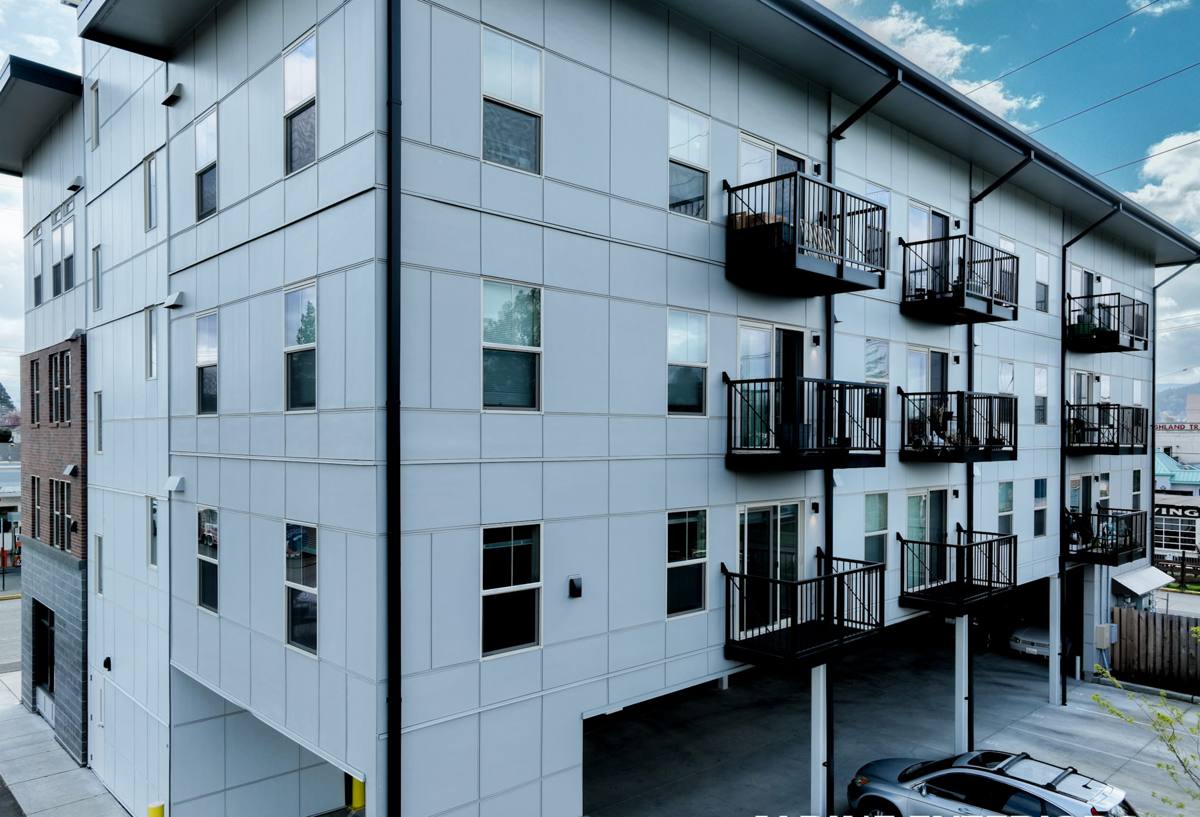
Signs a Yew Street Home Needs Window Replacement
Some of these are obvious. Others get ignored for years because they don't look urgent — until the wall behind the window does.
- Visible fog or moisture trapped between glass panes (a failed seal on double-pane units)
- Soft, discolored, or spongy wood at the sill or bottom corners of the frame
- Windows that are hard to open, close, or lock, especially older wood or aluminum-frame units
- Moss or dark streaking on the trim or siding directly around the window opening
- Noticeable draft or cold spot near the window in winter
- Condensation forming on the inside of the glass regularly, even with normal ventilation
- Paint or caulk that keeps cracking and peeling around the frame no matter how often it's redone
Any one of these on its own might just mean a repair. Two or three together, especially on a house that's had the original windows for 20+ years, usually means the frames and seals have reached the end of their useful life for this climate.
What a Correct Installation Looks Like Here
Window replacement is straightforward in dry climates and unforgiving in wet ones. In a place like Sudden Valley, most of what separates a window that lasts 20-plus years from one that fails in five isn't the window itself — it's what happens around it during install.
Flashing and Water Management
Every opening needs to be treated as a place water will eventually try to get behind, not a place it might. That means properly lapped flashing tape at the sill, jambs, and head — installed in the right order so water sheds outward and down, never trapped behind the siding. Skipping or rushing this step is the single most common cause of hidden rot behind "new" windows a few years later, and it's invisible from the outside until the damage is already done.
Insulation and Air Sealing
The gap between the window frame and the rough opening needs to be filled with a material that stays flexible through temperature swings — not packed too tight, not left with gaps. Overfilling with the wrong foam can actually bow the frame and cause the window to bind or fail to seal properly, which is a common mistake on DIY or rushed jobs.
Frame Material Choices
There's no single "best" window material — there's a right fit for the exposure, budget, and look of the specific house. Here's how the common options hold up under Whatcom County's wet, shaded conditions:
| Material | Moisture Behavior | Maintenance | Typical Fit |
|---|---|---|---|
| Vinyl | Won't rot; performs well in damp climates | Low — occasional cleaning | Most budgets, most homes |
| Fiberglass | Very stable, resists warping and moisture damage | Low | Higher-exposure walls, long-term owners |
| Wood / Wood-Clad | Attractive but vulnerable if seals or paint fail | High — regular repainting/sealing | Homes prioritizing a traditional look, owners willing to maintain it |
| Aluminum | Durable frame but conducts cold and can condense | Moderate | Less common as a full replacement choice here |
For a shaded, damp lot, we typically steer homeowners toward vinyl or fiberglass for the bulk of a home's windows — not because wood looks bad, but because a wood frame in a slow-drying, moss-prone location asks for a maintenance commitment a lot of owners don't want to keep up for 20 years. That's a trade-off we'll walk through honestly, not a rule we apply blindly.
Our Process for Yew Street Window Replacement
Free On-Site Estimate
We walk the exterior and interior of each window being considered, check the sill and framing condition (not just the glass), and talk through what's actually driving the need — cosmetic, performance, or structural. No pressure, no scripted upsell.
Measuring, Ordering, and Scheduling
Replacement windows are measured to the actual opening, not a catalog size, since older Whatcom County homes rarely have perfectly standard openings. We schedule the install around the weather window when possible — wet-season jobs are absolutely doable, but a dry stretch makes for a cleaner tie-in with siding and trim.
Install Day
Old units come out, any rot or soft framing found underneath gets addressed before anything new goes in — this is non-negotiable, since installing a new window over a rotten sill just hides the problem for another few years. New flashing, proper sealing, and the window itself go in per manufacturer spec, then trim and caulk are finished to match the house.
Cleanup and Walkthrough
We haul away the old windows and debris, and walk each opening with the homeowner before we call the job done — operation, locks, and seal.
Cost Factors for Window Replacement in Sudden Valley
Every house is different, so we don't quote sight-unseen numbers — but these are the variables that actually move the price on a job like this:
| Factor | Why It Matters |
|---|---|
| Number and size of windows | Larger openings and full-house jobs have different per-unit economics than one or two windows |
| Frame material | Vinyl, fiberglass, and wood carry different material and labor costs |
| Condition behind the old window | Rot repair at the sill or framing adds labor beyond a straightforward swap |
| Access and site conditions | Tree cover, slope, or tight lake-lot access can affect setup and labor time |
| Window type | Standard double-hung differs in cost from sliders, casements, or custom shapes |
We'll give you an honest range at the estimate, broken down by what's driving it — not a flat number pulled from a national average that has nothing to do with your house.
Local Considerations Specific to Sudden Valley
Working in Sudden Valley regularly means knowing the things that only come up here. If the property is subject to the community's architectural review guidelines, exterior changes — including window style, trim color, or grid pattern changes — may need approval before work starts, and we account for that in scheduling rather than finding out the hard way mid-job. Tree canopy over many Yew Street-area lots means we plan for moss and debris cleanup as part of the job, not an afterthought, and we watch drainage paths around the foundation so a new window installation doesn't accidentally redirect runoff somewhere it wasn't going before. And because much of this area sees limited direct sun for long stretches of the year, we factor in extra dry time for caulk and sealants rather than rushing a finish that needs to cure properly.
Why Hire a Crew That Already Works This Neighborhood
None of this is exotic knowledge, but it's the kind of thing you only pick up by actually doing window jobs in Sudden Valley and similar Whatcom County lake communities year after year — not by installing windows in a dry inland subdivision and assuming the same approach transfers. A crew that's worked this area knows which framing details to double-check on older homes, how to sequence a job around the wet season, and what the local approval process looks like before it becomes a delay. That's less risk for you, fewer surprises mid-project, and a better shot at a window installation that's still performing well in twenty years instead of five.
If your windows on Yew Street are showing any of the signs above — or you just want an honest read on whether repair or replacement makes more sense — we're happy to come take a look. The estimate is free, there's no pressure to book anything on the spot, and you'll get a straight answer either way. Use the form below to get started.