 Sudden Valley Window
 Acme's Weather Is Harder on a Roof Than It Looks
A roof in Acme doesn't fail because of one big storm. It fails a little at a time — a lifted shingle tab here, a soft spot of moss-covered decking there — until years of Whatcom County weather finally catch up with it. The combination that does the damage is specific to this part of Washington: salt-tinged marine air moving in off the Salish Sea, driving rain that comes in sideways during fall and winter fronts, and a moss season that can run eight months out of the year on shaded, north-facing slopes.
None of those things destroy a roof by themselves. Salt air accelerates corrosion on exposed metal fasteners and flashing. Wind-driven rain finds any gap in a valley, a step-flashing lap, or a nail pattern that was installed a little too casually. And moss holds moisture against shingles and decking long after the rain has stopped, which is what actually rots wood and shortens shingle life — the moss itself is more of a symptom than the root cause. A roof built for a drier climate, or installed without accounting for these three factors together, tends to show its age early here.
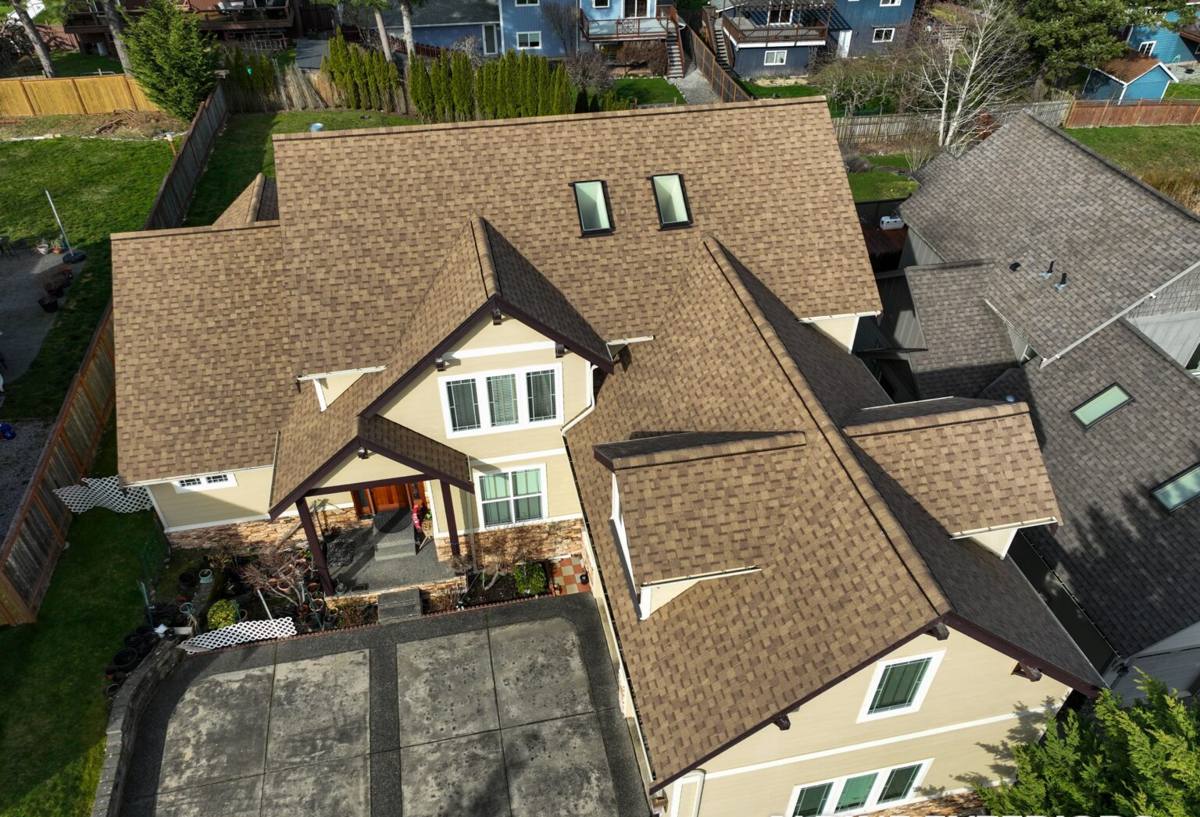
What "Correct" Actually Means on a New Roof Install
A lot of roofing problems in this region don't trace back to bad materials — they trace back to a step that got skipped or rushed during installation. A correct new roof install is really a sequence of details done in the right order, not just a covering nailed onto a house.
Tear-Off and Deck Inspection
Every layer of the old roof needs to come off so the decking underneath can actually be seen and tested, not just eyeballed from a ladder. In a wet climate, plywood or plank decking that's been sitting under a failing roof for even a season or two can be soft, delaminated, or rotted at the edges — especially around old vent boots, chimneys, and valleys where water tends to collect. Any compromised decking gets replaced before anything else goes down. Skipping this step is the single most common shortcut that leads to an early roof failure.
Underlayment and Water-Shedding Details
Underlayment is the roof's backup plan for the water that gets past the shingles or panels — and in a climate with this much driving rain, that backup plan matters as much as the primary roofing material. Valleys, eaves, and any low-slope transitions get extra protection because that's where water concentrates and lingers longest.
Flashing
Flashing around chimneys, skylights, walls, and roof-to-wall transitions is where the majority of leaks actually start on an older home. New flashing, properly lapped and integrated with the underlayment (not just caulked over old metal), is non-negotiable on a correct install.
Field Installation
The final shingle or panel layer is installed to the manufacturer's nailing pattern and exposure spec — not "close enough." In high-wind exposure areas, that often means an upgraded fastening pattern, which most manufacturers require anyway to keep the warranty valid.
Choosing a Roofing System That Holds Up in Acme's Climate
There's no single "best" roofing material for every home — the right choice depends on the roof's pitch, how much shade it gets, and what the homeowner wants to maintain over time. Here's how the common options compare for a wet, moss-prone, marine climate like this one:
| Material | Typical Lifespan Here | Moss/Algae Resistance | Best Fit |
|---|---|---|---|
| Architectural asphalt shingle | 25–30 years | Good with algae-resistant granules; still needs periodic moss removal on shaded slopes | Most homes — best balance of cost and performance |
| Standing seam metal | 40–50+ years | Excellent — moss has little to grip onto a smooth panel | Homes with heavy tree cover or owners who want to stop dealing with moss |
| Synthetic/composite shake | 30–40 years | Good, engineered for moisture resistance | Homeowners who want a shake look without the maintenance of real wood |
| Cedar shake | 20–30 years with diligent upkeep | Poor without regular treatment — retains moisture and feeds moss and rot | Owners committed to annual maintenance; higher long-term upkeep in this climate |
We'll walk through the trade-offs for your specific roof in person — pitch, sun exposure, and how much maintenance you actually want to do each year all factor into which system makes sense.
Ventilation Matters More Here Than in Drier Climates
A roof that isn't ventilated correctly traps moisture in the attic, and that moisture works its way back into the decking from underneath — separately from anything coming from outside. In a climate as wet as Whatcom County's, balanced intake and exhaust ventilation (soffit vents feeding air in, ridge or roof vents letting it out) is one of the most overlooked factors in how long a new roof actually lasts. Too little intake, or exhaust vents fighting each other instead of working together, and you can end up with a roof that's rotting from the inside even though the shingles look fine. We check attic ventilation as part of every new roof install, not as an upsell — it's part of doing the job correctly.
How Our Installation Process Works
- On-site inspection and estimate — we look at the existing roof, decking condition where visible, ventilation, and anything specific to your home's exposure.
- Material selection — we go over the realistic options for your roof's pitch, shade, and budget, without steering you toward whatever's easiest for us to install.
- Permitting — new roof installs typically require a permit; we handle the paperwork with the county.
- Tear-off and deck assessment — old roofing comes off, decking is inspected and any damaged sections are replaced.
- Underlayment, flashing, and ventilation installation — the parts of the job that don't show but determine whether the roof actually keeps water out.
- Final roofing material installation — installed to manufacturer spec, including fastening patterns rated for wind exposure.
- Cleanup and walk-through — magnetic sweep for nails, debris haul-off, and a walk-through so you know what was done and what to expect going forward.
What Drives the Cost of a New Roof in Acme
Every roof is different, but the same handful of factors move the price up or down on most jobs. We give firm numbers only after seeing the roof in person, but this is generally what's in play:
| Factor | Why It Matters |
|---|---|
| Roof size and number of facets | More squares and more valleys/hips mean more material and labor time |
| Deck condition | Rotted or delaminated decking found during tear-off adds repair cost that can't be quoted sight-unseen |
| Pitch and access | Steep roofs and limited equipment access take longer and require more safety setup |
| Material choice | Asphalt, metal, and composite systems carry different material and labor costs per square |
| Layers to remove | Tearing off multiple existing layers costs more than a single-layer tear-off |
| Ventilation and flashing upgrades | Bringing older ventilation or flashing up to current standards adds material and labor but pays off in roof lifespan |
As a very rough starting point, most straightforward asphalt shingle replacements land somewhere in the low-to-mid five figures for an average-size home, with metal running higher up front but lasting considerably longer. Your actual number depends entirely on the specifics above.
Why It Matters That We Already Work in Acme
Roofing crews that mostly work in drier or more urban parts of Washington sometimes underestimate what a shaded, rain-heavy Whatcom County property needs — they'll spec a standard ventilation package or skip the extra valley protection that's routine for us because we see the moss and rot patterns on this side of the county regularly. Working in this area consistently also means we're familiar with the permitting process through the county, we know what kind of access and equipment staging works on the wooded, sometimes tight lots common out here, and we plan installs around the weather windows that actually exist in a place that gets this much rain — because a roof installed mid-storm in a rush is never installed as well as one done during a dry stretch.
Keeping a New Roof Performing After It's Installed
A correctly installed roof still needs some basic upkeep in this climate to hit its full lifespan. A short seasonal routine goes a long way:
- Clear gutters and downspouts at least twice a year, more often under heavy tree cover
- Have moss treated or gently removed before it builds up thick enough to hold moisture against the shingles
- Trim back branches that overhang the roof to reduce shade, debris, and physical wear on the surface
- Check attic ventilation isn't blocked by insulation or debris
- After major windstorms, do a visual check (or have us check) for lifted or missing shingles and damaged flashing
- Address small leaks or stains immediately rather than waiting for them to spread
None of this is complicated, but skipping it is how a well-installed roof loses years off its expected lifespan in a climate like this one.
Get a Straight Answer on Your Roof
If you're not sure whether your roof needs a full replacement, a repair, or just some overdue maintenance, we're happy to take a look and tell you honestly which one it is. Reach out for a free, no-pressure estimate using the form below — we'll walk the roof, explain what we see, and give you real options for your home in Acme.