 Sudden Valley Window
 Decks Built for Alger's Wet, Salt-Touched Climate
A deck in the Alger area near Sudden Valley lives a harder life than a deck built somewhere inland and dry. Between salt-laden air moving in off the water, long stretches of driving rain, and a moss season that can run for months, this part of Whatcom County is genuinely tough on outdoor structures. We build and repair decks here, and almost every problem we get called out for traces back to one of those three things — moisture that had nowhere to go, fasteners that weren't rated for the exposure, or a surface that was never designed to shed water and stay walkable when it's wet.
This page is about what a deck actually needs to hold up here, not a generic rundown of decking options. If you're planning a new deck, replacing boards on an old frame, or just trying to figure out why your current deck feels spongy in spots, the details below are the ones that matter most for this specific climate.
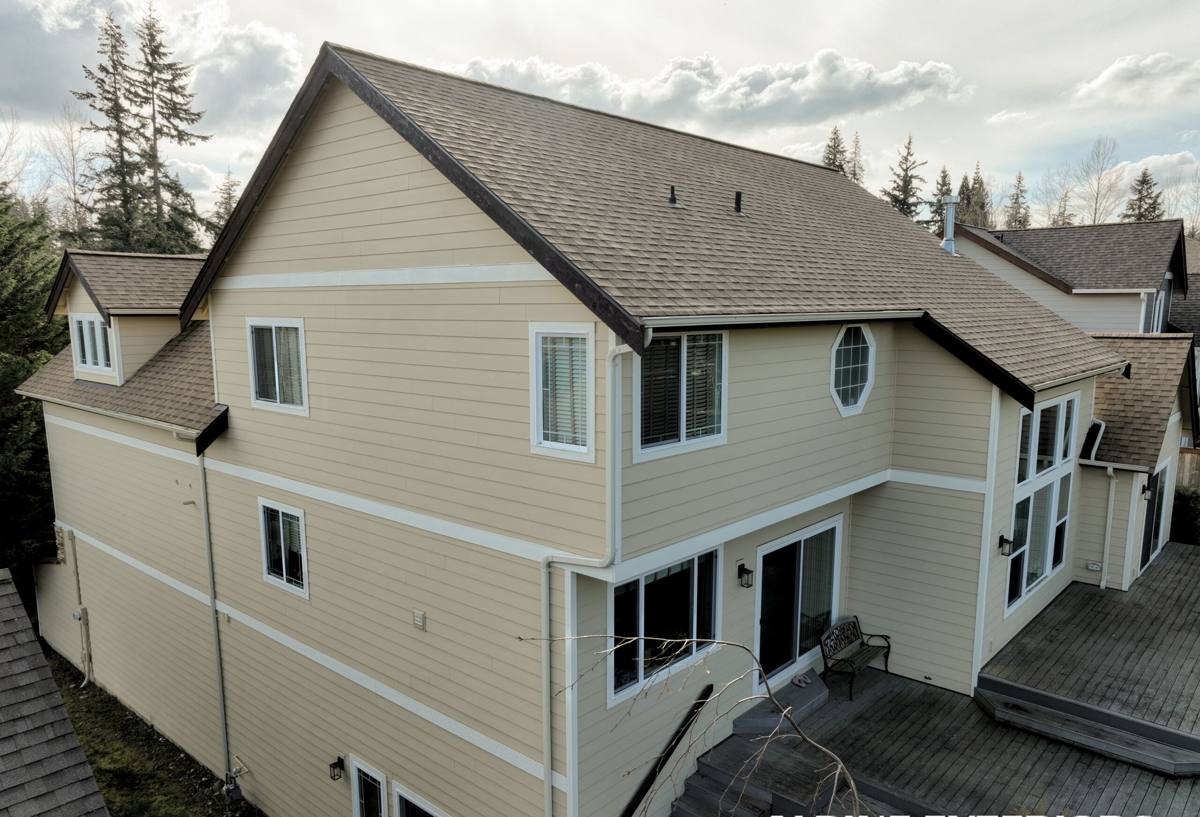
What This Climate Does to a Deck That Wasn't Built for It
Most deck failures we see aren't dramatic — they're slow. Water gets behind a ledger board because the flashing was skipped or done wrong, and a few seasons later the rim joist is soft. Fasteners that weren't corrosion-rated start bleeding rust streaks into the decking and eventually lose their grip. Moss and algae build up on boards that don't drain or dry quickly, and the surface turns slick long before the wood itself is actually failing.
None of that is unusual for the region — it's just what driving rain and salt air do to wood, metal, and fasteners over time. The fix isn't exotic materials or overbuilding everything; it's using the right details in the right places, which is a matter of experience more than expense.
What a Correctly Built Deck Involves Here
Ledger Attachment and Flashing
Where a deck attaches to the house is the single most common point of failure we find on older decks. The ledger board needs proper flashing that directs water out and away from the house sheathing, not just a bead of caulk and a hope. We flash every ledger connection to shed water past the framing, and we check what's happening behind the siding before we lag anything to the house — sealing over a problem that's already started is worse than not touching it.
Framing, Joist Protection, and Fasteners
Untreated cut ends, exposed joist tops, and standard fasteners are where rot and corrosion start. We protect joist tops and cut ends, and we use fasteners and structural hardware rated for the moisture and, where relevant, the salt exposure this area sees — that's a small line-item cost difference that pays for itself many times over in a coastal-influenced climate.
Footings and Drainage
Footings need to sit below frost depth and on undisturbed or properly compacted soil, and the ground under and around the deck needs somewhere for water to go. A deck built low to the ground with poor drainage underneath will trap moisture against the framing no matter how good the decking on top is. We grade and, where needed, add drainage so the structure isn't sitting in standing water after every storm.
Choosing the Right Decking Material for This Climate
There's no single "best" decking material — there's a best material for your budget, your maintenance appetite, and how exposed the deck is to weather. Here's how the common options actually perform in a climate like Alger's:
| Material | Moisture behavior here | Maintenance | Typical lifespan |
|---|---|---|---|
| Pressure-treated pine | Handles rain well when sealed regularly; end grain is the weak point | Needs re-sealing every 1-2 years to perform | 15-20 years with upkeep |
| Western red cedar | Naturally rot-resistant, ages gracefully, but still needs some care | Occasional cleaning and oiling to hold color and resist moss | 20-25 years |
| Capped composite | Doesn't absorb water or rot; won't warp or splinter | Periodic washing to keep moss/algae from gripping the surface | 25-30+ years, manufacturer-backed |
| Tropical hardwood (e.g. ipe) | Extremely dense and rot-resistant | Low, but installation is unforgiving and repairs are harder | 30+ years |
Composite has become the most common choice we install here specifically because it doesn't care about driving rain or salt air the way wood does — but it's not maintenance-free; moss and algae will still colonize a composite surface that never gets cleaned. Cedar is still a solid, honest choice for homeowners who want a natural look and are willing to stay on top of it. We'll walk through the real trade-offs for your project rather than push whatever has the best margin.
Railings, Stairs, and Code Basics
Guard height, baluster spacing, and stair stringer requirements are governed by the building code, not personal preference, and inspectors here check them. Most decks attached to a house or built above a certain height require a permit through the local jurisdiction — we handle that paperwork as part of the job so it doesn't land on you. If your property is inside an HOA with architectural guidelines, that's worth checking before design work starts, since some communities have their own review process on top of the building permit.
- Guardrails required above a certain deck height, built to code-minimum spacing so nothing can pass through
- Stair stringers sized and supported correctly — a bouncy or uneven stair is almost always an undersized stringer
- Handrails graspable and continuous where code requires them on stairs
- Ledger and beam connections engineered to carry the actual load, not guessed at
Moss, Algae, and Keeping a Deck Usable Through the Wet Months
Moss doesn't mean your deck is failing — it means the surface is staying damp longer than it should. In this area, the wetter months of the year are when we get the most calls about slick decking, and it's almost always a maintenance issue rather than a structural one. Boards that are properly gapped and installed with airflow underneath dry out faster and hold far less moss than a deck built tight to the ground with no ventilation. Material choice matters here too — composite and dense hardwoods resist moss better than untreated softwoods, but nothing is immune if it never gets cleaned.
Our Process, Start to Finish
We keep the process straightforward:
- Site walk and design. We look at how the deck ties into the house, the slope of the yard, sun and rain exposure, and what you actually want to use the space for.
- Material and layout decisions. We go over the real trade-offs between decking materials for your budget and maintenance preference, not just the upsell.
- Permitting and engineering. We pull the permit and handle engineering where the design calls for it, so the structure passes inspection the first time.
- Build. Footings, framing, ledger flashing, decking, and railings — built in that order, with the parts that get covered up done right the first time since they're the hardest to fix later.
- Final walkthrough. We go over the finished deck with you, including what maintenance it actually needs and on what schedule.
Why Hiring a Crew That Already Works in Alger Matters
A deck built with details suited to a drier inland climate will underperform here. Crews that don't regularly work this part of Whatcom County sometimes skip the flashing detail, use standard fasteners instead of corrosion-rated ones, or build tight to grade without thinking about drainage — not out of carelessness, but because it's not the habit where they usually work. Working in and around Sudden Valley and Alger consistently means we've already seen how a given detail holds up two, five, ten years later in this exact climate, and we build accordingly from the start rather than learning it from a callback.
Deck Maintenance Checklist for This Climate
- Sweep off leaves and debris regularly — trapped organic matter holds moisture and feeds moss
- Wash the deck surface at least once a year, more often in shaded or north-facing areas
- Check and re-seal wood decking on the manufacturer's recommended schedule, not just when it looks dry
- Inspect fasteners and hardware for rust streaks or loosening, especially near the ledger
- Keep gutters and downspouts clear so roof runoff isn't dumping onto or under the deck
- Confirm gaps between boards haven't closed up or clogged, which traps water instead of shedding it
If you're planning a new deck in Alger or Sudden Valley, or you're not sure whether an existing one is aging well, we're happy to take a look and give you a straightforward, no-pressure estimate. Use the form below to get started.