 Sudden Valley Window
 Board & Batten Suits Geneva's Homes
Board and batten has a long history in the Pacific Northwest, and it's easy to see why it keeps showing up on homes in and around Geneva. The vertical lines read as clean and a little more custom than standard lap siding, it pairs naturally with the cabins, farmhouses, and craftsman-influenced homes common in this part of Whatcom County, and it holds up visually on both small cottages and larger builds without looking busy. It's also a popular choice for accent walls, gables, and dormers on homes that otherwise use horizontal siding, which gives owners a way to add texture without redoing the whole exterior.
None of that matters much, though, if the siding underneath the good looks isn't built for what this area actually throws at a house. Geneva sits close enough to Lake Whatcom and the broader Sudden Valley area that homes deal with a specific combination of moisture, wind-driven rain, and shade that not every siding product — or every installation crew — handles well.
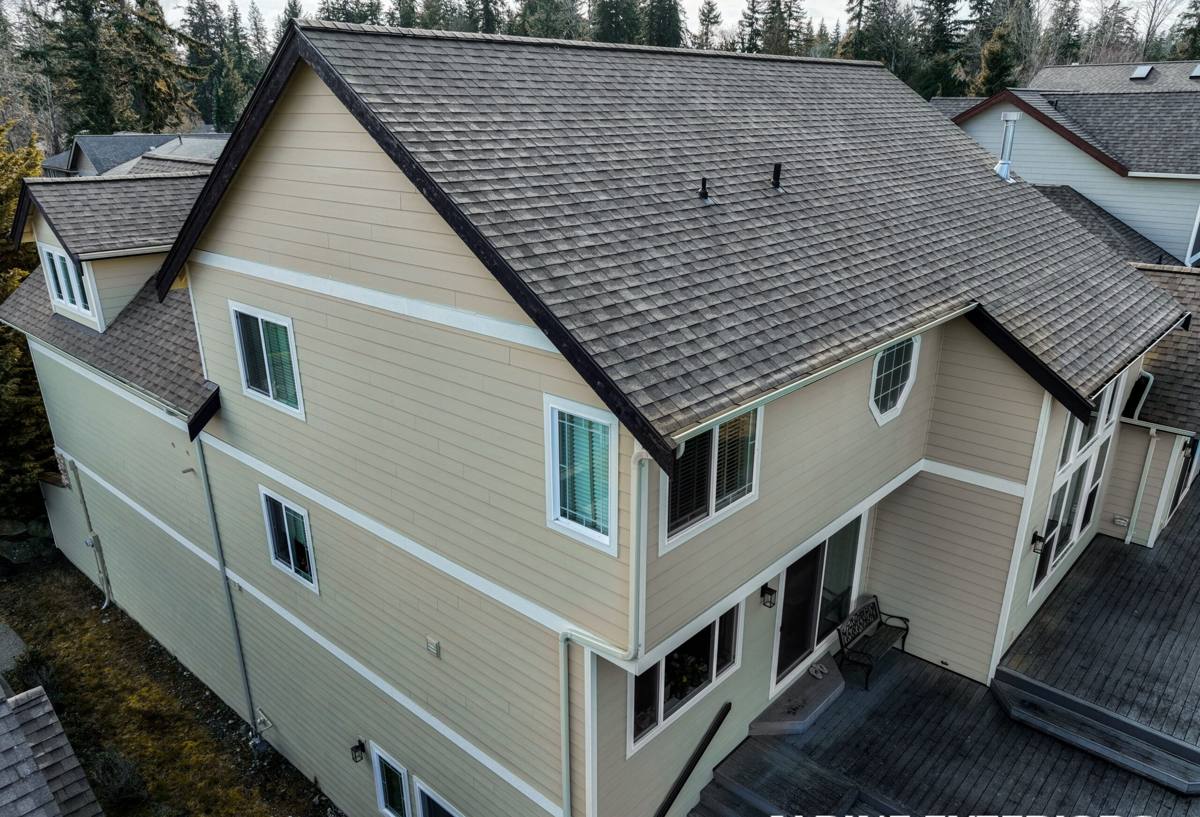
What Sudden Valley's Climate Does to Vertical Siding
Whatcom County isn't harsh in the way a hurricane zone is harsh, but it's relentless in a different way. Salt-tinged air moving in off the Sound, long stretches of driving rain rather than quick storms, and heavy tree cover around the lake add up to siding conditions that punish anything not built for sustained moisture exposure.
- Salt air: accelerates corrosion on exposed metal fasteners, flashing, and trim — a real issue for products that rely on a lot of surface-mounted hardware.
- Driving rain: pushes water sideways into seams and laps rather than letting it run straight down, which is exactly where board and batten is most vulnerable if the drainage detail behind it is wrong.
- Long moss season: shaded, damp siding around Geneva's tree-lined lots stays wet longer between dry spells, giving moss, algae, and mildew more time to establish than they'd get on a more open, sun-exposed lot.
Vertical siding profiles like board and batten have more seams per square foot than wide lap siding, and every one of those seams is a potential entry point for water if it isn't detailed correctly. That's the piece that separates a board and batten job that looks good for two years from one that looks good for twenty.
Board & Batten 101: What the System Actually Is
Board and batten is a two-layer siding pattern: wide flat boards (or panels) installed first, with narrower strips — the battens — fastened over the vertical seams between them. Done right, it's not decorative trim glued over a flat wall; it's a layered assembly where the batten's job is to shed water away from the seam it's covering, not just to look like it's doing that.
There's also "reverse board and batten," where the narrow strips sit flush and the wide boards are recessed, giving a slightly different shadow line. Both versions live or die on the same thing: what's happening behind the surface, not just what you see from the street.
| Material | How it typically performs in this climate |
|---|---|
| Engineered wood panel (LP-style) | Vulnerable at cut edges and fastener points if moisture gets behind the panel face; needs consistent maintenance to keep sealed |
| Vinyl board and batten | Won't rot, but can warp or fade under UV and doesn't hold paint if a color change is ever wanted; seams rely on lap-and-lock fit rather than a sealed assembly |
| Primed cedar or spruce boards | Handsome, but raw wood in a damp, shaded climate needs ongoing sealing and repainting to keep water and moss from taking hold |
| James Hardie fiber cement | Non-combustible, dimensionally stable in wet-dry cycling, factory-cured ColorPlus finish, engineered for Pacific Northwest moisture exposure |
Why We Only Install Board & Batten in James Hardie Fiber Cement
We don't offer board and batten in vinyl, engineered wood, or raw cedar — not because those products can't be made to work somewhere, but because we've made a professional call that they're not the right long-term bet for homes in this climate, and we'd rather stand behind one system we trust completely than juggle several we have reservations about.
Fiber cement doesn't expand and contract with moisture the way wood-based panels do, which matters a lot on a vertical profile where the seams are doing the heavy lifting. It's also non-combustible, which is worth something in a wildfire-conscious region even outside the coastal moisture concerns. James Hardie specifically engineers its siding by climate zone — homes here fall into the wetter, cooler HZ5 category — so the boards we install are formulated for exactly the freeze-thaw and rain exposure Whatcom County sees, not a one-size-fits-all national spec.
ColorPlus and the Finish Question
Board and batten shows every imperfection in a finish because the vertical lines draw the eye straight down the wall. Hardie's ColorPlus finish is baked on and cured at the factory rather than field-sprayed, which gives a more even, fade-resistant color across every board and comes with a long, transferable finish warranty that follows the house if it's sold. That's a meaningfully different proposition than a job-site paint job that starts weathering unevenly within a few seasons.
What a Correct Board & Batten Installation Involves
Drainage Plane and Rainscreen Gap
This is the single biggest factor in whether board and batten survives a Whatcom County winter. A proper installation includes a weather-resistant barrier and a drainage gap behind the siding so any moisture that does get past the surface has somewhere to go — down and out, not trapped against the sheathing. On a house exposed to driving rain off the lake or open ground, skipping or shortcutting this step is the most common reason board and batten fails early, regardless of what material was used.
Batten Spacing and Fastening
Battens need consistent spacing over the seam, correct fastener length to reach solid framing, and fasteners placed where they won't work loose as the boards settle. Fastener choice matters more here than in a lot of climates — with salt-tinged air in the mix, corrosion-resistant fasteners aren't optional.
Flashing, Trim, and Caulk
Every transition — corners, window and door openings, the bottom termination near grade — needs proper flashing before the siding goes on, not caulk applied afterward to cover a gap. Caulk has its place, but it's a finishing detail, not a substitute for correct flashing. A board and batten wall that leans on caulk to do a flashing detail's job is one that will need re-caulking indefinitely and will eventually leak anyway.
Our Process for a Geneva Board & Batten Project
Assessment and Measurement
We start by looking at the existing wall assembly, not just the siding on top of it — what's underneath matters as much as what's going back on, especially on older Sudden Valley-area homes where the original wrap or sheathing may need attention before new siding goes up.
Tear-off and Prep
Old siding comes off, sheathing gets inspected and repaired where needed, and a new weather-resistant barrier and drainage gap go in before a single Hardie board is hung.
Installation and Finish
Boards and battens go up to Hardie's published fastening and clearance specs, with flashing integrated at every opening and transition as the wall is built up, not patched in after the fact.
Final Walkthrough
We walk the finished exterior with the homeowner, checking seams, trim lines, and clearances at grade before calling the job done.
Cost Factors for Board & Batten Siding in Geneva
| Factor | Why it moves the number |
|---|---|
| Wall condition underneath | Rotten sheathing or a failed old barrier found during tear-off adds repair scope before new siding can go on |
| House shape and trim detail | More corners, dormers, and window openings mean more flashing and cut work per square foot |
| Batten spacing chosen | Tighter batten spacing uses more material and labor than wider spacing |
| Accent vs. full-house application | A gable or accent wall is a much smaller project than re-siding an entire home |
| Access and site conditions | Tree cover, slope, and lake-adjacent lots common around Geneva can affect staging and scaffolding needs |
We don't publish a flat rate because these variables genuinely change the number from house to house — that's exactly what a free on-site estimate is for.
Maintenance and Longevity in a Coastal-Adjacent Climate
Fiber cement board and batten isn't maintenance-free, but the maintenance it needs is manageable: periodic gentle washing to keep moss and algae from establishing on shaded elevations, an eye on caulked joints over the years, and attention to any spot where a fastener or trim piece shows early wear from the salt air. What it doesn't need is repainting on a short cycle or annual resealing, which is where wood-based and primed products fall behind over time in this climate. Combined with a transferable warranty, that's a big part of why we settled on one system instead of offering several.
Why Hire a Crew That Already Works This Neighborhood
Board and batten installed to spec in a dry, mild climate can get away with details that don't hold up here. A crew that already works homes around Sudden Valley and Geneva knows what driving rain off the lake does to a poorly flashed corner, how long moss season actually runs in the shaded lots common to this area, and where salt air tends to attack fasteners first. That's the difference between a crew reading a spec sheet and one that's watched this exact climate test board and batten installations for years.
- Ask what drainage plane or rainscreen gap they use behind board and batten — not whether they use a weather barrier, but specifically how water gets out if it gets in
- Ask which fastener type they use and whether it's rated for coastal-adjacent, salt-air exposure
- Ask to see how they detail flashing at corners and window openings before caulk goes on
- Ask what siding material they install and why — and whether they offer more than one, and if so, why they'd steer you toward the cheaper option
- Ask about the warranty structure — is it transferable, and does it cover the finish as well as the material
If you're weighing board and batten for a home in Geneva or elsewhere around Sudden Valley, we're happy to take a look and walk through what a correct installation looks like for your specific house — no pressure, no obligation. Reach out below for a free estimate.