 Sudden Valley Window
 Windows Built for Columbia's Corner of Sudden Valley
Columbia sits close enough to Lake Whatcom's shoreline and tree cover that its homes take on a microclimate all their own. Even compared to other parts of Sudden Valley, Columbia properties tend to sit in more shade, catch more wind funneling off the water, and hold moisture longer after a storm passes through. If you've owned a home here for more than a winter or two, you already know what that does to window frames, seals, and sills that weren't built for it.
We install and replace custom windows for homeowners throughout this neighborhood, and we've learned that a "standard" window job here isn't standard at all. The right approach depends on how exposed the wall is, what direction it faces, and how much moss and organic buildup collects on that side of the house every year.
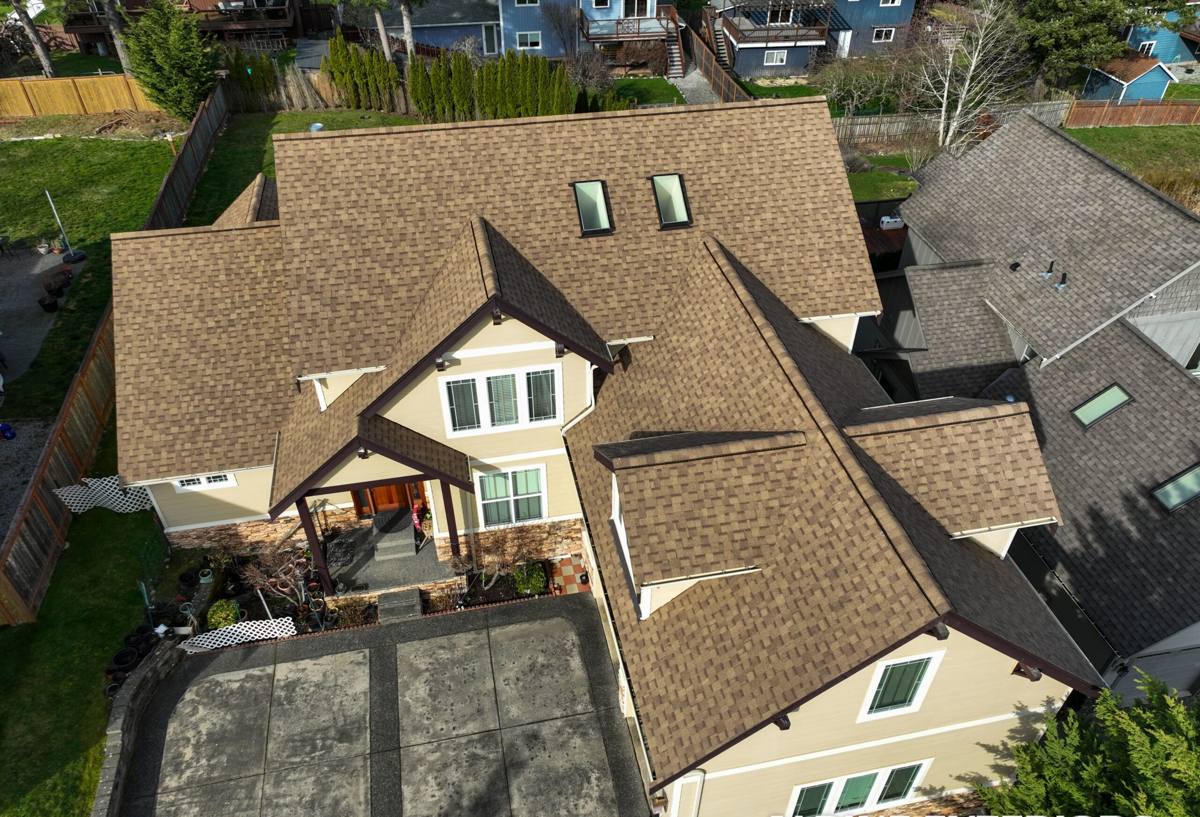
What Whatcom County's Climate Does to Windows
Whatcom County's marine climate is mild, but mild doesn't mean easy on building materials. The combination that matters most for windows is:
- Driving rain — wind-driven rain off the lake pushes water sideways into gaps that a calm-weather install would never expose
- Long wet seasons — many Columbia homes stay damp from October through April, giving mold, wood rot, and seal failure months to work uninterrupted
- Moss and organic growth — shaded, tree-lined lots grow moss on sills, trim, and cladding faster than open, sunny lots, and moss holds moisture against wood far longer than bare surfaces
- Salt-tinged air — proximity to the lake and the broader Puget Sound region means hardware, screens, and metal components corrode faster than they would inland
None of that is exotic — it's just Pacific Northwest weather doing what it does. But it means a window installed without local knowledge of this pattern often shows problems in year two or three: soft trim, foggy double-pane glass, sticking sashes, or a slow drip inside the wall that nobody notices until the drywall stains.
Why Columbia's Shade and Slope Matter
A lot of Columbia lots have mature tree cover and grade changes that keep certain walls wet longer after rain. North- and west-facing windows in shaded spots are the ones we see fail first — not because the window itself is bad, but because installers didn't flash and seal for a wall that dries slowly. When we quote a job here, we look at orientation and shade before we talk product, because that's what actually drives the install spec.
What a Correct Custom Window Job Actually Involves
"Custom" windows means the unit is built to fit your specific rough opening rather than forcing your opening to fit a stock size — common in older Sudden Valley homes where openings have settled or were framed to non-standard dimensions. But the product is only half the job. The install is what determines whether it holds up through a Whatcom County winter.
The parts that matter most
- Accurate measurement — custom units are built to the opening, so measurements need to account for any settling, out-of-square framing, or old shims left from a prior install
- Removal without wall damage — pulling the old unit cleanly so we can actually see the condition of the framing and sheathing underneath, not just cover over hidden rot
- Flashing and moisture barrier work — this is the single biggest difference between a window that lasts 20+ years here and one that fails in 3; the flashing has to shed water down and out, not let it wick sideways into the wall
- Proper shimming and leveling — a window that's out of square binds, doesn't seal fully, and stresses the glass unit over time
- Low-expansion foam and backer rod — sealing the gap between frame and rough opening without over-filling, which can bow the frame
- Exterior sealant matched to the siding material — different for lap siding, board and batten, or stucco-style finishes
- Interior trim and finish work — restoring the room to a finished look, not just a functional one
Skip or rush any one of these and the window itself doesn't matter much — a premium unit installed with sloppy flashing will leak just as fast as a cheap one.
Choosing Window Materials for a Lake-Adjacent Home
There's no single "best" window material — there's a best material for your specific wall, exposure, and budget. Here's how the common options actually perform in Columbia's conditions:
| Material | Moisture & Moss Resistance | Maintenance | Typical Fit |
|---|---|---|---|
| Vinyl | Good — won't rot, but frame corners can be a weak point if welds aren't sound | Low | Most budget-conscious replacements; solid all-around choice |
| Fiberglass | Very good — dimensionally stable in wet/dry cycling, resists warping | Low | Shaded or high-exposure walls where movement causes seal failure |
| Wood (clad exterior) | Depends entirely on the cladding and upkeep — bare wood exteriors are a poor fit for this climate | Higher — needs monitoring at joints | Homeowners wanting a wood interior look with a protected exterior |
| Aluminum | Fair — conducts cold and can condense; coastal-adjacent salt air accelerates corrosion on unfinished hardware | Moderate | Less common for full replacements here; sometimes used for specific architectural styles |
We steer most Columbia customers toward vinyl or fiberglass for standard walls, and we're more selective about wood-exterior units on shaded, tree-covered lots — not because wood is a bad product, but because a damp, low-sun wall is exactly the environment that stresses any wood exterior surface over time, and we'd rather set honest expectations up front than have a callback in three years.
Glass Packages Worth Discussing
Double-pane, low-E glass is the practical baseline for this climate — it manages heat loss without adding much cost. Triple-pane adds value mainly on north-facing or highly exposed walls where the extra insulation and sound dampening are noticeable; on a sheltered, south-facing wall the upgrade is harder to justify on cost alone. We'll walk through this room-by-room rather than quoting one glass package for the whole house.
Our Process for a Columbia Window Job
- On-site walkthrough — we look at every window being considered, note orientation, shade, existing damage, and siding type
- Honest assessment — if we find soft framing or existing moisture damage, we tell you before ordering anything, not after demo
- Measuring and ordering — custom units are measured precisely to the actual opening, not a catalog size
- Install day prep — protecting flooring and interior finishes, staging materials so openings aren't left exposed longer than necessary
- Removal and inspection — pulling the old unit and checking the framing underneath before anything new goes in
- Flashing, install, and seal — the core work described above, done to hold up through wet-season wind-driven rain
- Interior and exterior finish — trim, caulking, and a final look that matches the rest of the house
- Walkthrough with you — operating every window, checking seals, answering questions before we call it done
Signs Your Columbia Home's Windows Need Attention
Homeowners often wait until a window is obviously failing, but there are earlier signs worth acting on:
- Fogging or moisture between panes (the seal has failed on a double- or triple-pane unit)
- Soft or discolored trim and sills, especially on shaded or north-facing walls
- Visible moss or dark staining creeping onto the frame from the sill or corners
- Windows that stick, won't latch fully, or have gaps you can feel a draft through
- A musty smell near a window that shows up mainly during the wet months
- Condensation forming on the inside of the glass regularly in cold weather
Any one of these on its own isn't an emergency, but they tend to compound. A failed seal lets more moisture in, which speeds up the frame and sill damage, which eventually reaches the wall framing behind it.
Cost Factors for Custom Window Replacement
Every home is different, so we don't quote sight-unseen, but the factors that actually move the price are consistent:
| Factor | Why It Matters |
|---|---|
| Opening size and shape | Larger or non-standard openings cost more to custom-build and install |
| Material choice | Vinyl is typically the most economical; fiberglass and clad-wood cost more upfront |
| Glass package | Triple-pane and specialty coatings add cost per unit |
| Existing damage | Rotted framing or sheathing found during removal adds repair work beyond the window itself |
| Access and site conditions | Second-story or hard-to-reach windows take more labor time |
| Number of windows | Whole-house jobs typically bring a better per-unit cost than single replacements |
We'd rather give you a real number after seeing the openings than a rough figure that changes once we're on site. Most Columbia customers are budgeting for a mix of these factors rather than a flat per-window price.
Why a Crew That Already Works in Columbia Matters
Every neighborhood in Sudden Valley has its own quirks, but Columbia's shade, wind exposure, and lot grading make the flashing and sealing details less forgiving than average. A crew that's worked here before knows which walls tend to hold moisture, which siding types need extra attention at the window perimeter, and how the moss and organic buildup in this area affects long-term maintenance. That's not something you can fully spec from a measurement sheet — it comes from having done the work on similar homes nearby.
We're not going to tell you a window job here is dramatically different from anywhere else in Whatcom County — good technique is good technique. But the margin for error is smaller when a wall stays wet for six months of the year, and that's worth hiring for.
If your Columbia home has windows showing any of the signs above, or you're just ready to plan a replacement before the wet season sets in, we're happy to take a look. Fill out the form below for a free, no-pressure estimate — we'll walk the property, answer your questions honestly, and give you a real number based on what we see.