 Sudden Valley Window
 Window Installation Built for Happy Valley's Weather
Homes around Happy Valley and Sudden Valley sit in one of the wetter corners of Whatcom County, and the windows on those homes take a beating most homeowners never see until something fails. It's not one dramatic storm that does the damage — it's the accumulation. Months of driving rain angled sideways by wind off the lake and the Sound, a marine layer that keeps humidity high even on dry days, and a moss season that can stretch from fall clean into spring. Window installation here isn't just about picking a style and setting it in the opening. It's about managing water and moisture at every step, because a window that's installed correctly in a dry climate can still fail fast if it's installed the same way here.
This page is about one job, done right, in one area: replacing or installing windows for Happy Valley homes, with the flashing, sealing, and product choices that actually hold up to this specific climate.
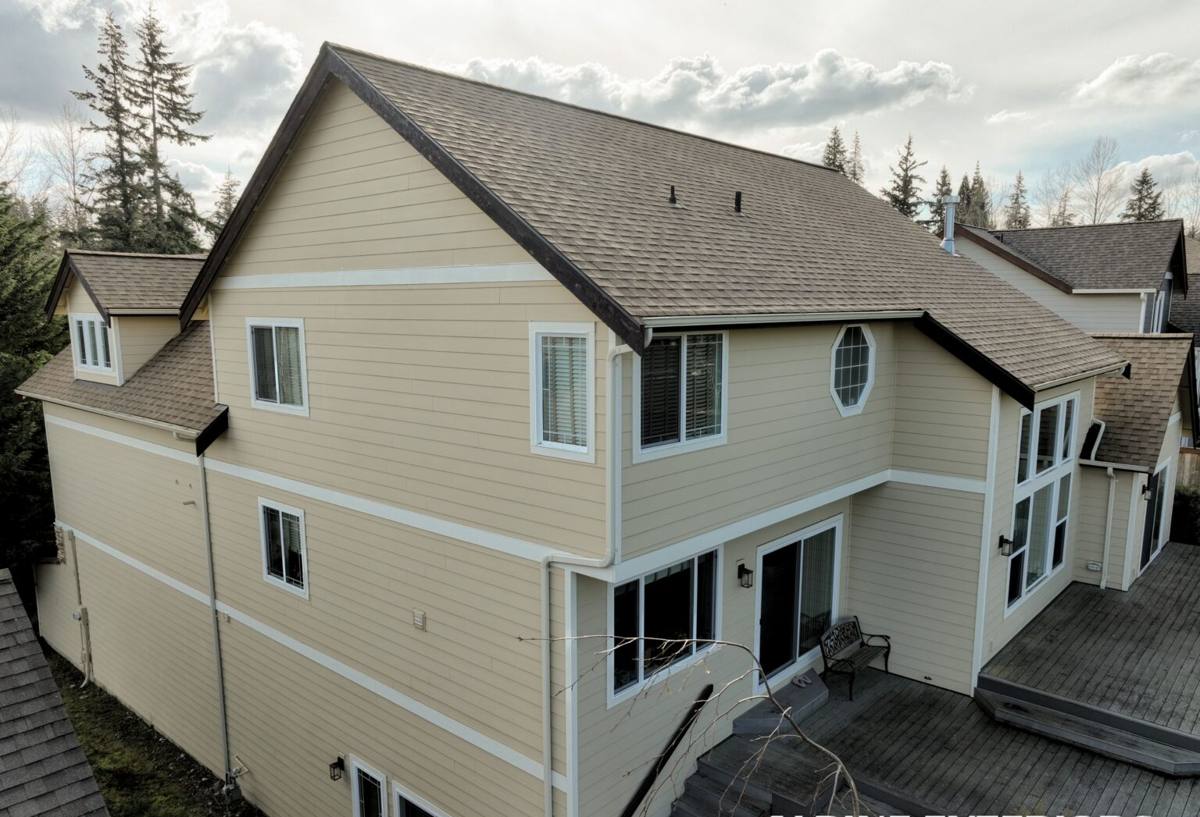
What Local Homes Are Up Against
Salt Air and Corrosion
Homes closer to the water deal with airborne salt that accelerates corrosion on hardware, screens, and unprotected metal components. Over years, cheap fasteners and low-grade cladding show it first — pitting, discoloration, and hardware that stops moving smoothly. It's not usually dramatic, just a slow wearing-down that ends in a window that's harder to open, harder to lock, and more likely to leak.
Driving Rain
Whatcom County rain doesn't always fall straight down. Wind-driven rain gets pushed sideways and upward under trim, behind siding, and into any gap in the window's flashing. A window can look properly sealed from the outside and still leak, because the water isn't hitting it head-on — it's coming in at an angle the original installer didn't account for.
Moss and Sustained Moisture
The long wet season here means wood trim, sills, and any organic-based sealant stay damp for extended stretches. Moss doesn't just grow on roofs — it takes hold in shaded window trim, retains moisture against the wood, and speeds up rot in exactly the spots where a window depends on solid wood to hold its shape and seal.
What a Correct Installation Actually Involves
A window installation is really a water-management project with a window in the middle of it. The window itself is often the easy part — the flashing, sealing, and integration with the existing wall assembly is where jobs succeed or fail long-term.
Removal and Opening Inspection
Before a new window goes in, the opening gets inspected for hidden rot, soft framing, or prior water intrusion. This is the one point in the whole job where problems are fully visible and fixable. Skipping this step to save time is the single most common reason a "new" window fails within a few years — it was installed into a compromised opening.
Flashing, Not Just Caulk
Caulk is a backup, not a strategy. A correctly flashed opening uses sill pan flashing to catch and direct any water that gets past the exterior cladding, plus properly lapped house wrap and flashing tape at the head and jambs so water sheds outward and downward at every layer — the way shingles overlap. In a climate with this much driving rain, the flashing detail matters more here than in most parts of the country.
Air Sealing and Insulation
The gap between the window frame and the rough opening needs to be sealed against air infiltration without trapping moisture. Low-expansion foam or backer rod and sealant, applied correctly, keeps conditioned air in and drafts out — a real factor in heating costs through a long Whatcom County winter.
Interior and Exterior Finish
Once the window is set, plumb, level, and square, trim and sealant finish the job on both sides. This is also where a rushed installer cuts corners — a window that's slightly out of square will bind, leak, or both, even if it looked fine going in.
Our Process for Happy Valley Jobs
- On-site assessment. We look at the actual openings, siding type, and exposure — a window on the weather side of the house gets treated differently than one under a covered porch.
- Product recommendation based on exposure and budget. Not every window needs to be the top-tier option, but every window needs the right flashing and sealing regardless of price point.
- Removal and opening inspection. We check for hidden rot or moisture damage before anything new goes in, and we flag it honestly if we find it rather than sealing over a problem.
- Correct flashing and sealing sequence. Sill pan, house wrap integration, and properly lapped flashing tape — no shortcuts specific to this climate.
- Final fit, finish, and function check. Every window gets operated, checked for square, and inspected before we call the job done.
Choosing Materials for This Climate
Frame material matters more here than in drier regions, because the frame is exposed to sustained moisture for months at a time, not just occasional storms.
| Frame Material | How It Handles Local Conditions | Maintenance Reality |
|---|---|---|
| Vinyl | Doesn't rot or corrode; handles salt air and moisture well | Low — occasional cleaning, no repainting |
| Fiberglass | Very stable in wet, temperature-swinging conditions; strong moisture resistance | Low — durable finish, minimal upkeep |
| Wood (clad exterior) | Good insulator, but exterior cladding is what protects it from this climate's moisture | Moderate — cladding needs to stay intact; exposed wood needs attention |
| Aluminum | Prone to corrosion in salt air unless properly finished; conducts cold | Higher — watch for pitting and condensation issues over time |
We don't push a single "best" material on every homeowner — we match the frame to the exposure. A sheltered window under an eave has different needs than one that takes direct wind-driven rain off the lake.
Glass Package Considerations
Double-pane, low-E glass is the practical standard for this region — it manages both the heat loss from long wet winters and the glare and heat gain in summer. Triple-pane is worth discussing for west- or water-facing exposures where wind load and temperature swings are more extreme, but it's not automatically the right call for every opening. We'll walk through the actual trade-off in cost versus benefit for your specific windows rather than defaulting to the most expensive option.
Signs Your Current Windows Are Already Failing
- Fogging or condensation between panes (seal failure — the insulated glass unit has lost its seal)
- Soft or discolored trim or sill wood, especially on north- or water-facing walls
- Difficulty opening, closing, or locking — often corrosion or a frame that's shifted out of square
- Visible moss or dark staining building up on exterior trim around the window
- Drafts near the frame even with the window fully closed and locked
- Peeling paint or bubbling finish on interior sills, a sign moisture is getting past the seal
Any one of these on its own isn't necessarily an emergency, but a combination usually means the window and its flashing need a real look, not just a re-caulk.
Why a Crew That Already Works Happy Valley Matters
Window installation isn't a one-size-fits-all trade skill. A crew that works Whatcom County homes regularly already knows how the driving rain patterns hit different sides of a house, how long moss season actually runs here, and which flashing details fail first in this specific climate versus a drier region's textbook install. That's not something you get from a national franchise crew rotating through on a schedule — it comes from doing this specific work, in this specific area, over and over.
It also matters for accountability. A local crew is still around next year if a question comes up about how a window is performing. That's a simple thing, but it's the difference between a contractor and a one-time transaction.
What Affects the Cost
Every job is different, but the main cost drivers on a Happy Valley window installation are consistent: the number of openings, whether the existing opening is in good condition or needs repair, the frame material and glass package you choose, and the complexity of the flashing detail for that specific wall. A straightforward vinyl replacement in a sound opening costs less than a full-frame replacement on a wall with hidden moisture damage that needs to be corrected first. We'll give you a clear, itemized number after we've actually looked at your windows — not a phone-quote guess.
Get an Honest Look at Your Windows
If you're dealing with drafty, foggy, or hard-to-operate windows in Happy Valley or anywhere around Sudden Valley, we're happy to come take a look and tell you straight what we see — no pressure, no upsell script. Use the form below to request a free estimate.