 Sudden Valley Window
 Why Decking Choices Matter More in South Hill
South Hill sits in the same wet, shaded, moisture-heavy pocket of Whatcom County as the rest of the Sudden Valley area, and that combination is hard on outdoor structures. Salt air off the coast, long stretches of driving rain, and a moss season that can run from fall through spring don't just make a deck look tired — they attack the parts of a deck you can't see until something fails. A deck that would hold up fine in a dry inland climate can rot, delaminate, or grow slick moss within a few seasons here if it wasn't built with this specific environment in mind.
Composite decking exists precisely to deal with this kind of exposure, but "composite" isn't one product — it's a category with real differences in how boards handle standing water, UV, and organic growth. The material matters, but so does the framing underneath it, the fastening method, and how the whole system is designed to shed water and breathe. Get any one of those wrong and even a premium composite board will underperform.
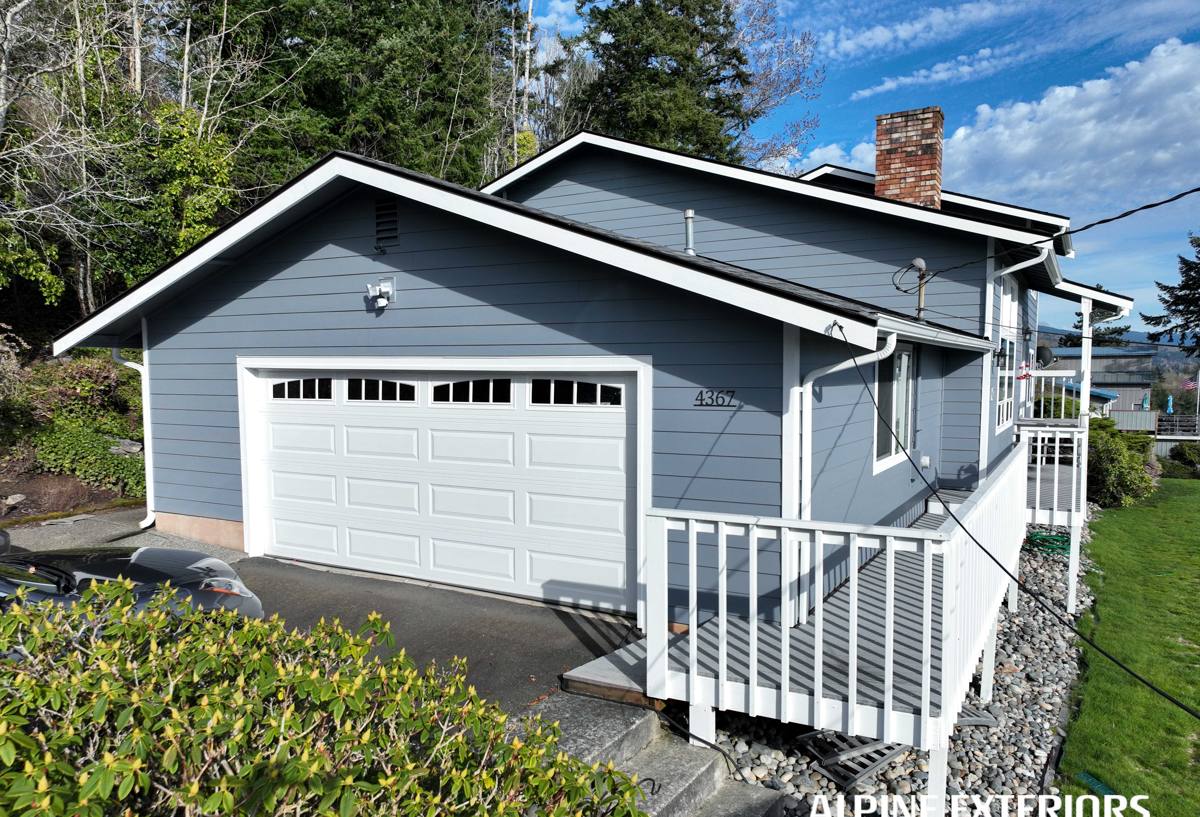
What South Hill Homes Actually Need From a Deck
Moisture Management First
Whatcom County's rainfall isn't just frequent, it's often wind-driven, which means water gets pushed sideways under railings, into board gaps, and against house walls at the ledger connection. A deck built for this climate needs positive drainage away from the house, proper flashing at every point where the deck meets the structure, and enough airflow underneath to let the substructure dry out between storms.
Resistance to Moss and Algae
Shade, moisture, and mild temperatures are exactly what moss and algae need to establish. On a deck, that growth isn't just cosmetic — it holds moisture against the board surface and can make walking surfaces dangerously slick, especially on stairs. Not all composite boards resist this equally, and board texture, cap type, and even board orientation relative to drainage all affect how fast growth takes hold.
Corrosion-Resistant Hardware
Salt-laden air accelerates corrosion on fasteners, joist hangers, and structural screws faster than most homeowners expect. A deck can have great decking boards on top of hardware that's rusting away underneath, and by the time that shows up, it's a structural repair instead of a maintenance item.
What a Correct Composite Deck Build Involves
A composite deck is only as good as what's underneath it. Here's what we consider non-negotiable on a South Hill installation:
- Ledger board properly flashed and sealed where it attaches to the house, with a drainage gap or membrane to keep water from tracking behind the siding
- Joist spacing matched to the specific composite product's span rating — composite boards typically need tighter joist spacing than wood, and this is a common corner cut on older or budget installs
- Coated or stainless structural screws and joist hangers rated for exterior, high-moisture exposure
- Joist tape or a comparable protective barrier on top of framing lumber to keep composite board off bare wood and slow rot at the connection points
- Hidden fastener systems or properly countersunk face screws, installed per the manufacturer's gap and expansion tolerances
- Adequate under-deck ventilation and ground clearance so airflow can actually dry the space out between rain events
- Proper slope and drainage detailing so water sheds away from the foundation instead of pooling under the deck
None of this is exotic. It's standard best practice — but it's also exactly what gets skipped when a deck is built fast or by a crew that doesn't regularly deal with this climate.
Composite vs. Other Decking Materials in This Climate
Homeowners in this area usually compare composite against cedar, pressure-treated wood, and sometimes PVC. Each has real trade-offs here — none is a bad product, but each behaves differently under sustained wet exposure.
| Material | Moisture Behavior | Moss/Algae Resistance | Maintenance |
|---|---|---|---|
| Cedar | Naturally rot-resistant but still absorbs water; needs sealing to hold up | Prone to growth without regular cleaning and treatment | Annual cleaning, periodic staining/sealing |
| Pressure-Treated Wood | Resists rot chemically, but can cup, crack, and hold surface moisture | Moderate — porous surface encourages growth over time | Regular cleaning, sealing every 1–2 years |
| Capped Composite | Water sheds off the cap layer; core doesn't absorb moisture | Good, especially with textured or streaked cap finishes | Periodic washing, no staining or sealing |
| PVC/Vinyl Decking | Fully water-resistant, no core to swell or rot | Good, smooth surfaces are easy to clean | Occasional washing; higher upfront cost |
We install capped composite on most South Hill decks because it strikes a workable balance: it handles standing water and humidity without the ongoing sealing schedule wood requires, and it's generally more budget-friendly than full PVC systems while still resisting the moss and staining issues that plague wood in this climate. We're happy to walk through PVC as an option too — it's a legitimate upgrade for homeowners who want the lowest possible maintenance and are comfortable with the added cost.
Our Installation Process
Site Assessment
We start by looking at drainage patterns around the existing deck footprint or planned location — where water naturally flows, how much sun and shade the area gets through the year, and whether the ledger attachment point on the house needs repair before anything new goes up. On a rebuild, we also inspect the existing framing rather than assuming it's sound.
Framing and Waterproofing
This is where most of the long-term performance is decided. We flash the ledger connection properly, use corrosion-resistant hardware throughout, and set joist spacing to the composite manufacturer's spec rather than a generic wood standard. We also build in the drainage and ventilation details that keep the substructure dry between storms.
Decking Installation
Boards go down with attention to manufacturer-specified gapping for expansion and contraction, since composite moves with temperature more than people expect. Fascia, stair stringers, and railing posts get tied into the structure correctly rather than face-mounted as an afterthought.
Finish Details
Railings, stair treads, and picture-frame board edges are where a deck either looks finished or looks like a kit that got assembled. We take the extra time on these transitions because they're also common water entry points if rushed.
Deck Problems We Commonly See in This Area
On older decks and some newer ones that were built quickly, the same handful of issues show up again and again around Sudden Valley and South Hill:
- Moss and green staining concentrated on the shaded side of the deck or under overhangs, sometimes bad enough to be a slip hazard
- Rusted or failing fasteners and joist hangers well before the decking boards themselves show wear
- Ledger boards with hidden rot from inadequate flashing at the house connection
- Boards installed without proper gapping, causing buckling or cupping as they expand and contract
- Poor under-deck ventilation leading to persistent dampness and premature framing decay
Most of these trace back to the substructure and detailing, not the decking material itself — which is why we treat the framing and waterproofing as more important than the board selection.
Maintenance That Actually Fits This Climate
Composite decking cuts maintenance significantly compared to wood, but "low maintenance" isn't "no maintenance" in a climate with this much moisture and shade. A realistic seasonal routine:
- Sweep debris and organic buildup off the deck surface regularly, especially in fall when leaves and needles accumulate
- Wash the deck at least once or twice a year with a soft-bristle brush and a composite-safe cleaner to prevent moss and algae from establishing
- Check railings, stair connections, and ledger flashing annually for movement, gaps, or signs of water intrusion
- Keep gutters and downspouts clear so overflow isn't dumping extra water directly onto or under the deck
- Trim back vegetation that's shading the deck excessively or trapping moisture against the structure
What Composite Decking Costs For a South Hill Project
Every deck is different, but the main cost drivers are consistent. This gives a general sense of what moves the price up or down — we'll walk through your specific project during a free estimate rather than quoting off a general range.
| Cost Factor | Why It Matters |
|---|---|
| Deck size and shape | Square footage and the number of angles, cutouts, or level changes directly affect labor and material |
| Existing framing condition | A full rebuild costs more than a resurface, but reusing failing framing isn't a real option |
| Composite board tier | Basic capped composite vs. premium multi-tone or PVC boards carry different material costs |
| Railing system | Composite or aluminum railings, glass panels, and cable systems all price differently than standard balusters |
| Stairs and height | Elevated decks with multiple stair runs need more structural work and code compliance |
| Permitting | Whatcom County permit requirements vary by structure size and height, and add time and fees to the project |
Why a Crew That Already Works South Hill Makes a Difference
A deck built for a dry climate and a deck built for the Pacific Northwest are not the same project, even if they use the same brand of boards. A crew that regularly works Sudden Valley and the surrounding South Hill area already knows how much ventilation this framing needs, how aggressive the flashing detail has to be at the ledger, and which fastener and hardware specs actually hold up against years of salt air and driving rain rather than looking fine for the first season. That local experience shows up in the parts of the job that aren't visible once the boards are down — which is exactly where decks in this climate tend to fail.
If you're weighing a new composite deck or a rebuild for a South Hill property, we're glad to take a look and give you a straight, no-pressure assessment. Fill out the form below and we'll set up a free estimate.