 Sudden Valley Window
 Windows Built for the Cordata Stretch of Whatcom County
Homes in and around Cordata deal with a specific combination of weather that most window products were never designed for. You're close enough to the water to pick up salt-laden air, exposed enough to catch driving, wind-pushed rain off the Sound, and shaded and damp enough for large parts of the year to grow a persistent moss and mildew problem on anything that stays wet. None of these are dramatic events — they're slow, steady conditions that work on a window year after year. That's exactly why a generic, big-box window install often looks fine for a season or two and then starts failing at the seams, the sills, or the hardware. A custom window job for this area has to be built around those three conditions from the start, not treated as an afterthought.
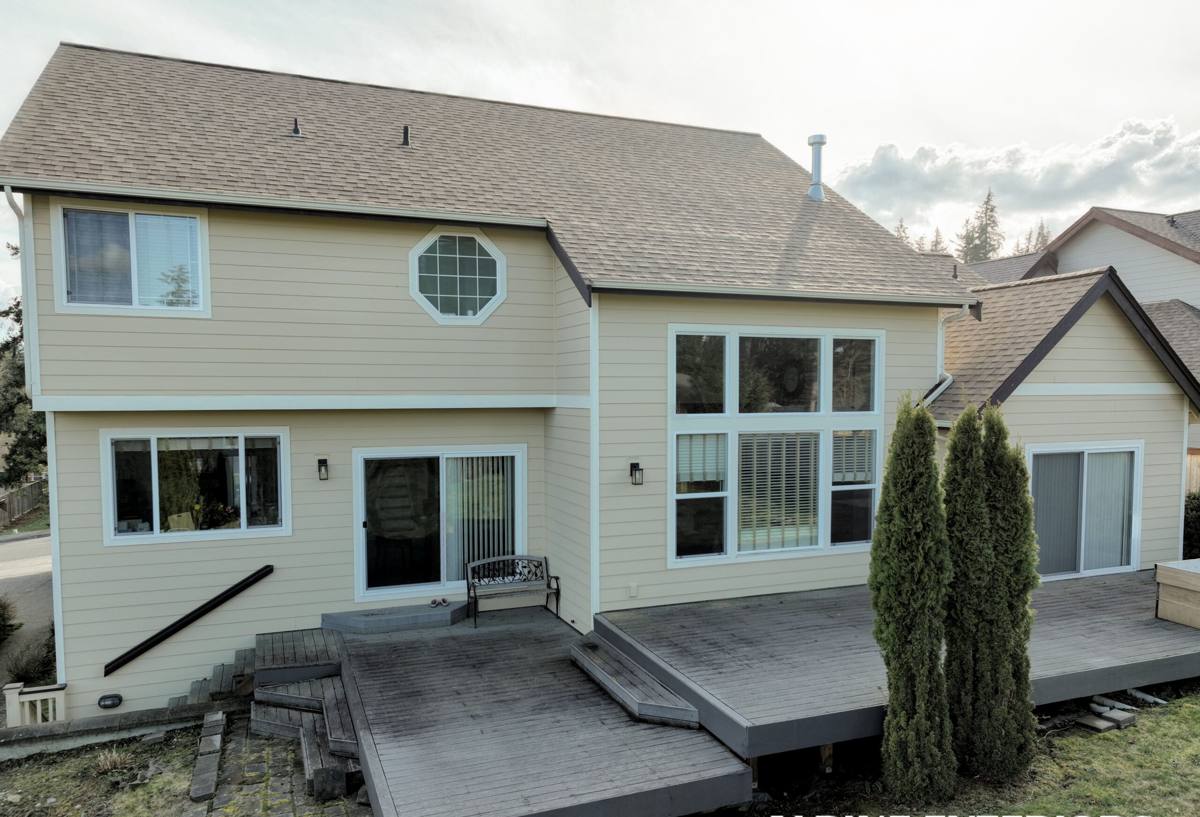
What Local Weather Actually Does to a Window
Salt air and hardware corrosion
Salt in the air doesn't just affect homes right on the waterfront — it travels, and in Whatcom County it settles on everything from vinyl cladding to window hardware. Over time it accelerates corrosion on lower-grade fasteners, hinges, and locking mechanisms, and it can dull or pit finishes on aluminum and lower-quality metal components. It also tends to find its way into any gap in a poor seal, where it sits against wood or composite material longer than plain rainwater would.
Driving rain and wind-driven moisture
A lot of window failures around here aren't from rain hitting the glass — they're from wind pushing rain sideways and up under trim, sills, and poorly lapped flashing. A window that would perform fine in a calm, straight-down rain can leak badly in a wind-driven storm if the flashing details weren't done correctly. This is one of the biggest differences between a correct installation and a fast one: the flashing work is largely invisible once the trim goes back on, but it's the single biggest factor in whether that window stays dry for the next twenty years.
A long moss and mildew season
Cordata's tree cover and the region's damp stretches mean moss and mildew have a long window to establish themselves on anything that holds moisture — window sills, wood trim, and the lower corners of frames especially. Once moss or mildew gets a foothold in a seam or joint, it holds water against the material, which is exactly the condition that causes rot in wood components and staining or degradation in lower-grade composites. Good drainage design and the right finish material matter more here than in a drier climate.
What a Correct Custom Window Installation Actually Involves
Measuring and product selection
Custom windows start with an accurate measure of the actual rough opening, not an assumption based on standard sizes. Older Whatcom County homes especially can have openings that have shifted slightly with settling, so a measurement that ignores square and plumb leads to gaps that get papered over with excess caulk instead of a proper fit. Product selection should account for sun exposure, wind exposure on that specific wall, and whether the opening sits somewhere that catches more wind-driven rain than the rest of the house.
Removing the old window without damaging the opening
Careful removal protects the surrounding wall assembly — sheathing, framing, and any existing weather-resistive barrier. Rushed removal can crack sheathing or tear building paper that then has to be patched under time pressure, which is where shortcuts creep in.
Flashing and weatherproofing — the part that decides whether it leaks
This is the step that matters most in a climate like this. Proper flashing means the sill pan, side flashing, and head flashing are integrated with the existing water-resistive barrier in the correct shingle-lap order, so water is always directed out and down, never trapped behind the window. Skipping a sill pan, relying on caulk alone to do a flashing's job, or lapping materials backward are the most common causes of the "leak that shows up two years later" that we get called out to fix on other people's installs.
Setting, shimming, and sealing the window
The window has to be set plumb, level, and square, shimmed correctly so it doesn't bind or rack, and fastened per the manufacturer's schedule — not just wherever is convenient. Insulation around the frame should be a low-expansion foam or backer rod rated for window use, not a can of standard spray foam that can bow the frame and cause the sash to bind.
Trim, finish, and final check
Exterior trim and caulking are the last line of defense against wind-driven rain, so joints get sealed with a proper exterior-grade sealant rather than painter's caulk. A finished job should get a final operation check — opening, closing, locking — and a visual check of every exterior seam before anyone calls it done.
Choosing a Frame Material for This Climate
There's no single "best" frame material — it depends on budget, maintenance tolerance, and how exposed the wall is. Here's how the common options hold up against salt air, driving rain, and moss/mildew conditions specifically.
| Frame Material | Moisture & Salt Air Behavior | Maintenance | Typical Lifespan |
|---|---|---|---|
| Vinyl | Won't rust or corrode; performs well against salt air; seams are the weak point if welds are poor | Low — occasional cleaning | 20–30+ years |
| Fiberglass | Very stable dimensionally, resists moisture well, holds paint/finish longer than vinyl | Low | 30–40+ years |
| Wood-clad | Good insulator, but any breach in the cladding exposes wood to rot risk in a wet climate | Higher — cladding seams and any exposed wood need monitoring | 20–30 years with upkeep |
| Aluminum | Prone to corrosion and pitting in salt air unless properly coated; poor thermal performance | Moderate | 15–25 years |
For most Cordata and Sudden Valley homes, we lean toward vinyl or fiberglass for the reasons in that table — they simply hold up better against salt exposure and a long wet season with less ongoing maintenance. Wood-clad has a place where the look matters more than low maintenance, but we're honest with homeowners up front about the extra vigilance it requires here.
Our Process, Start to Finish
- On-site assessment: We look at each opening individually — exposure, current condition, drainage path, and any existing moisture or rot issues before recommending a product.
- Product recommendation and quote: We walk through frame material, glazing options, and a straightforward written estimate, no pressure to decide on the spot.
- Scheduling around weather: Installs are timed to avoid working an open wall during heavy rain whenever possible, since an opening left exposed even briefly in this climate is a real risk.
- Removal and inspection: Old windows come out carefully, and we check the sheathing and framing underneath before anything new goes in.
- Flashing and installation: Sill pans, flashing, and the window itself go in per the sequence that keeps water moving out, not in.
- Trim, seal, and cleanup: Exterior trim, sealant, and interior finish work are completed, and the site is cleaned up before we leave.
- Final walkthrough: We test operation and locking hardware on every window with the homeowner before calling the job finished.
Signs a Cordata Home May Need Window Work
- Visible fogging or moisture between panes of a double-pane window — a sign the seal has failed
- Soft or discolored trim or sill wood, especially on the shadier or more exposed sides of the house
- Moss or persistent dark staining building up in window corners or on sills
- Drafts you can feel around the frame even with the window fully latched
- Windows that are difficult to open, close, or lock — a sign the frame may have shifted or swollen
- Peeling paint or bubbling finish near the window, which often points to moisture getting in behind it
- A noticeable jump in heating costs without another explanation
What Drives Cost
We don't quote sight-unseen pricing because it varies by opening size, frame material, glazing package, and how much flashing and trim work an opening actually needs — but a few factors consistently move the number:
| Factor | Why It Affects Cost |
|---|---|
| Frame material | Vinyl is generally the most affordable; fiberglass and wood-clad cost more up front |
| Glazing package | Double vs. triple pane, and Low-E coatings, affect both price and long-term energy performance |
| Opening condition | Rot repair or reframing needed before the new window goes in adds labor and material |
| Access and exposure | Upper-story or hard-to-access openings take longer and require more setup |
| Number of openings | Doing multiple windows in one project typically lowers the per-window cost |
We'd rather walk your specific windows and give you real numbers than guess at a range that doesn't match your house.
Why Local Experience in Cordata Matters
A crew that already works Whatcom County homes knows which walls in this area tend to take the worst of the wind-driven rain, how much moss buildup is normal versus a warning sign, and which flashing details actually hold up against salt air over the long run — not just what a manufacturer's install sheet says in general. That local pattern recognition is what keeps a job from becoming a callback two winters later. It also means we're not learning the regional weather on your house; we've already seen how these conditions play out on homes like yours nearby.
Keeping New Windows Performing for Years
A correct install is most of the battle, but a little upkeep goes a long way in this climate:
- Rinse salt residue and grime off exterior frames and glass a couple times a year
- Keep gutters and downspouts clear so runoff isn't sheeting directly across window openings
- Clear moss or debris from sills and trim before it has a chance to hold moisture
- Check and re-caulk exterior seams if you notice any cracking or gaps forming
- Operate locking hardware periodically so it doesn't seize from disuse
If you're weighing new windows, a repair, or just want an honest read on what shape yours are in, we're happy to take a look. Reach out for a free, no-pressure estimate using the form below.