 Sudden Valley Window
 Deck Building in Cordata: A Neighborhood That Still Sits Under Bellingham's Wet Side
Cordata is one of the newer, more built-out residential areas on the north side of Bellingham, and a lot of the homes there were framed and finished over the last two or three decades — plenty of them with a deck added on later rather than built with the house. That matters, because a deck is one of the few structures on a property that sits fully exposed to the weather on every surface: top, bottom, sides, and every fastener in between. In Whatcom County, that exposure means driving rain off Bellingham Bay, marine air that keeps everything a little damp even on dry days, and a moss season that runs longer here than it does in drier parts of the state. We build and repair decks for homes throughout Cordata, and the standards we hold to come from what we've actually seen fail on this kind of lot — not from a generic build spec.
A deck built to a bare-minimum spec can look fine for a year or two before the climate starts working on it. The problems we get called out for almost never show up where they're easy to see. They show up at the ledger board, inside the joist bays, under the decking boards, and around fasteners that were never rated for this much sustained moisture. Getting those details right the first time is the difference between a deck that needs re-decking in eight years and one that's still solid in thirty.
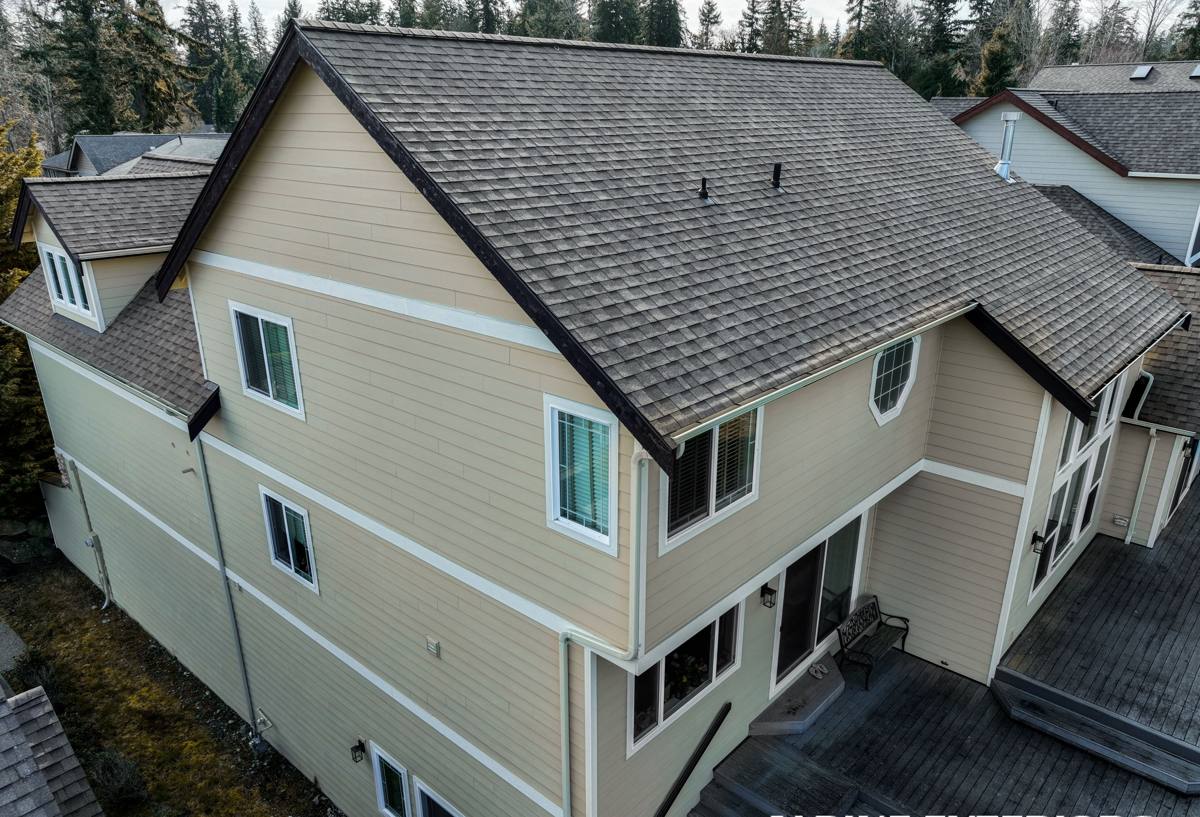
What Cordata's Climate Actually Does to a Deck
Driving Rain and Marine Air
Whatcom County sits close enough to Bellingham Bay and the Salish Sea that the air carries a persistent, low-grade dampness even between storms, and wind-driven rain during a real system can push water sideways into places a deck designer might assume stay dry — behind rim joists, into the gap where a ledger meets the house, under railing posts. A deck that's only detailed to shed water straight down will still take on moisture from the side during the kind of weather this region sees several months a year.
A Long Moss and Mildew Season
Shade from mature trees, cooler temperatures, and consistent moisture add up to a moss season in Whatcom County that starts earlier and lasts longer than most homeowners moving here from drier climates expect. Horizontal surfaces are the first to show it — deck boards, stair treads, the tops of railing caps — and once moss and algae get a foothold, they hold moisture against the wood or composite surface even longer, which speeds up whatever decay or wear process was already underway. Decks on the shadier side of a Cordata lot, or tucked under overhanging trees, generally need more frequent cleaning than a deck out in the open.
Freeze-Thaw and Wet-Dry Cycling
Whatcom County doesn't get extreme cold most winters, but it does get enough freeze-thaw cycling, combined with a wet-dry swing through the rest of the year, to stress any structural connection that isn't fully sealed. Wood that repeatedly absorbs water and then dries — never quite fully, given how often it rains here — expands and contracts in ways that loosen fasteners, open up small gaps at joints, and eventually let water into places it wasn't designed to reach.
Where Decks in This Area Actually Fail
Almost every deck failure we get called out to inspect traces back to one of a handful of causes, and none of them are exotic:
- A ledger board attached without proper flashing, letting water track behind it into the house's rim joist
- Deck boards installed tight together with no drainage gap, so water and debris sit on the surface and never fully dry
- Standard galvanized fasteners or hangers used with modern treated lumber, which corrodes faster than people expect in a damp climate
- Footings that weren't dug deep enough or weren't sized for the soil, leading to a deck that shifts or settles unevenly over time
- No airflow underneath a low-clearance deck, trapping moisture against the framing from below
Every one of these is preventable with correct detailing at the time of construction. None of them are things you can fix cheaply after the fact — by the time a homeowner notices soft decking or a spongy stair stringer, the damage is usually already into the framing.
Footings, Framing, and Flashing: The Structural Work That Actually Matters
Footings Sized for the Soil and the Frost Line
A deck is only as stable as what it's sitting on. We size and dig footings based on the actual soil conditions on the lot and local frost-depth requirements rather than defaulting to whatever's fastest to pour, and we set posts on bases that keep the wood itself off of standing water or wet soil contact. Skimping here doesn't show up right away — it shows up two or three winters later as a deck that's started to rack or a set of stairs that no longer sits level.
Ledger Board Attachment and Flashing
The ledger board — the piece that ties the deck to the house — is the single most common point of failure we see on decks built by crews unfamiliar with how much water this region actually throws at a wall. Correct ledger flashing directs water down and away from the house's sheathing and framing instead of letting it wick in behind the ledger, and it has to be integrated with the house's existing weather-resistive barrier, not just caulked over the top of it. We treat this detail as non-negotiable on every deck we attach to a structure, because a leak here doesn't just damage the deck — it damages the house.
Joist Hangers and Fasteners Rated for This Climate
Most treated lumber sold today uses a chemical formulation that corrodes standard galvanized steel faster than older treated wood did, especially in a consistently damp environment like Whatcom County. We use hardware rated for direct contact with modern treated lumber — hot-dip galvanized at minimum, stainless steel where it makes sense — because a corroded joist hanger or a rusted-through screw doesn't announce itself until the connection has already failed.
Choosing a Decking Material for a Cordata Property
There's no single right answer here — it depends on how much sun the deck gets, how much upkeep the homeowner wants to do, and the budget. What matters is picking with the actual climate in mind rather than going purely on upfront cost.
| Material | Moisture Behavior | Maintenance in This Climate | Typical Longevity |
|---|---|---|---|
| Pressure-treated lumber | Absorbs and releases moisture readily; prone to checking and splintering over time | Needs periodic sealing/staining, more often in shaded spots | 15–20 years with regular upkeep |
| Cedar | Naturally moisture- and rot-resistant but still absorbs water without finish | Higher; needs refinishing to hold color and resist mildew | Variable; shorter without consistent maintenance |
| Capped composite decking | Doesn't absorb water into the board core; surface sheds moisture well | Low; occasional cleaning to remove surface moss or mildew film | 25–30+ years, manufacturer-dependent |
| PVC decking | Fully synthetic; essentially unaffected by moisture absorption | Lowest; periodic washing is usually enough | Comparable to or longer than capped composite |
Composite and PVC products have gotten a lot better at resisting the surface mildew and algae growth that used to be a common complaint with older composite lines, but even the better products can still develop a film in a shaded, low-airflow spot if they're never cleaned. Wood, in any species, needs an honest conversation about the maintenance commitment before installation — not after the homeowner is three years in and surprised by how often it needs attention.
Railings, Stairs, and the Details That Get Skipped
Railings and stairs take direct weather exposure and repeated hand contact, which makes fastener corrosion and wood movement show up here faster than almost anywhere else on the structure. Post-to-frame connections need to be structurally solid, not just fastened for looks, since a railing that flexes is both a maintenance problem and a safety issue. Stair stringers need the same drainage consideration as the main deck frame — end grain on a stringer that sits in standing water will rot faster than almost any other part of the structure.
Permits and Local Requirements
Deck construction in and around Bellingham and unincorporated Whatcom County generally requires a building permit once the structure is above a certain height or attached to the house, and inspections typically check footing depth, ledger attachment, and structural connections before decking goes down. We handle the permit process as a standard part of the job rather than treating it as optional paperwork, because an unpermitted deck can become a real problem later — at resale, at insurance time, or if something needs to be repaired down the line and there's no record of how it was originally built.
Our Process for a Cordata Deck Project
We start with an on-site look at the property — the slope of the lot, how much sun and shade the deck area actually gets through the day, where water naturally drains, and what condition any existing structure is in if we're replacing rather than building new. From there we put together a clear, written scope covering materials, footing and framing approach, and timeline before any work starts. During construction, ledger flashing, footing depth, and fastener selection get treated as standard practice for this climate, not upgrades a homeowner has to ask for separately. We handle permitting and inspections as part of the job so there are no gaps in the record when the work is done.
Why a Crew That Already Works Cordata Makes a Difference
A contractor who regularly builds in Cordata and the surrounding Bellingham area already has a working sense of how the local soil behaves for footings, which lots run shadier and need more moss-resistant material choices, and what the local permitting process actually expects at inspection. That familiarity shows up in fewer surprises mid-project and in a deck that's detailed for the conditions it will actually sit in, not a generic spec pulled from a warmer, drier climate.
A Simple Checklist Before Hiring a Deck Builder in This Area
- Ask how they flash and attach the ledger board to the house, and whether they integrate it with the existing weather barrier
- Confirm current Washington contractor licensing and active liability insurance
- Ask what fastener and hardware grade they use with modern treated lumber
- Get a clear answer on who pulls the permit and handles inspections
- Get a written scope of materials, footing depth, and timeline before signing anything
Keeping a Deck Sound Through a Whatcom County Wet Season
Even a correctly built deck benefits from some seasonal attention in this climate. Clearing leaves and debris out of gaps between boards keeps water moving through instead of pooling, and a periodic wash removes the moss and algae film that otherwise holds moisture against the surface year-round. Wood decks need their finish checked and reapplied on a real schedule, not whenever it becomes visibly obvious it's failed. Composite and PVC decks need far less, but "low-maintenance" doesn't mean "no maintenance" — a quick seasonal check of railings, stairs, and any visible fasteners catches small issues before they become structural ones.
If you're planning a new deck or trying to figure out whether an existing one in Cordata is still sound, we're glad to take a look and give you an honest read on it. Reach out below for a free, no-pressure estimate.