 Sudden Valley Window
 Why Deck Replacement Looks Different in Silver Beach
Decks in the Silver Beach area of Sudden Valley don't fail the way decks fail in drier parts of the country. The combination of salt-laden air, driving rain that comes in sideways off open water, and a moss season that can stretch from late fall well into spring puts a different kind of stress on framing, fasteners, and decking surfaces. A deck that would hold up fine for twenty years in an arid climate can show real structural problems here in half that time if it wasn't built with this environment in mind.
We work throughout Sudden Valley and Whatcom County, and the pattern we see over and over on Silver Beach properties is the same: the decking surface still looks presentable from a distance, but the framing underneath, the ledger connection to the house, and the fastener heads have been quietly deteriorating for years. Replacement, done correctly, is about fixing what's hidden as much as what's visible.
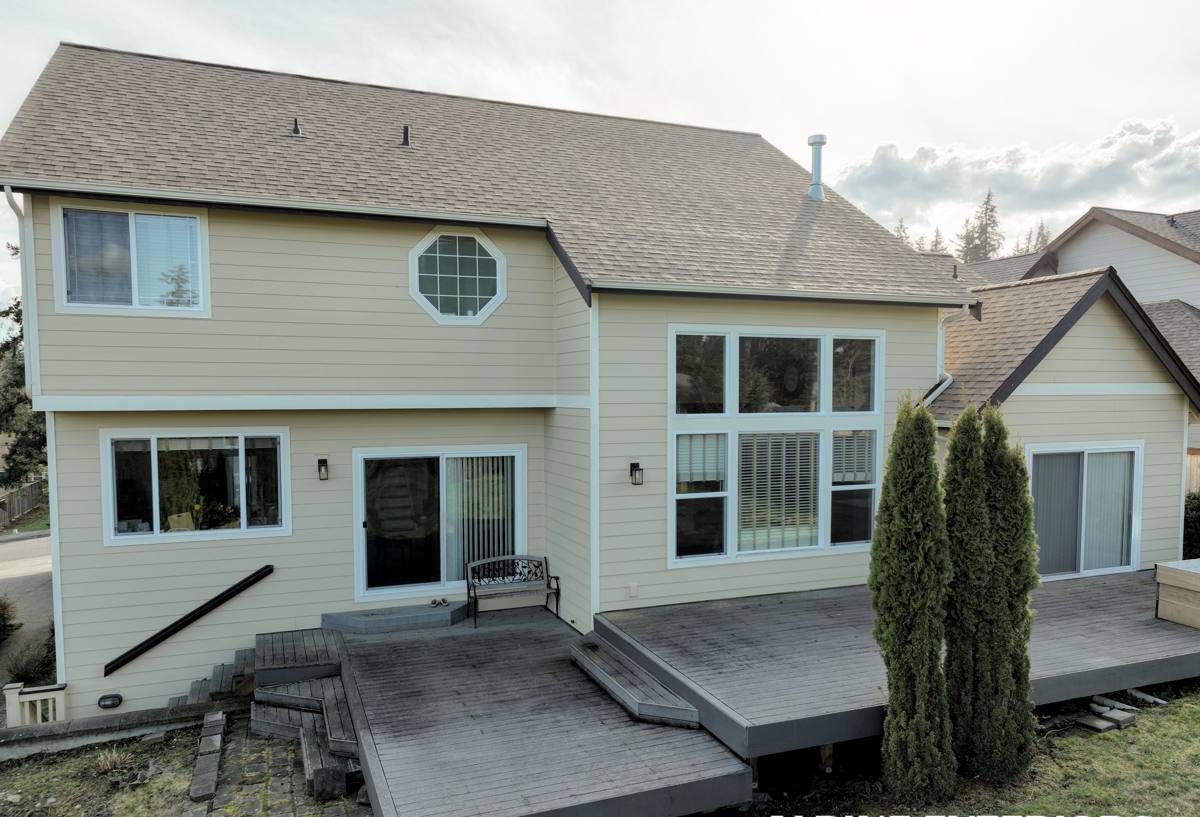
Signs a Deck Needs Replacement, Not Just Repair
Not every tired-looking deck needs to come out. But there are specific signs that tell us repair is just delaying the inevitable, and that a full replacement is the honest recommendation.
- Soft or spongy spots in the decking, especially near the house or at board ends
- Visible gaps or staining where the deck ledger meets the siding — a common sign of water getting behind the flashing
- Rust streaks or loosening at fastener heads, particularly on older screw or nail patterns
- Persistent moss or algae growth that returns within weeks of cleaning, even on the top surface
- Joists or beams that flex noticeably underfoot, or show soft wood when probed with a screwdriver
- Railings that wiggle at the post base — often a sign the post connection has been compromised by trapped moisture
If you're only seeing surface graying or minor moss on the boards themselves, that's often a cleaning and refinishing job, not a replacement. We'll tell you honestly which situation you're in — we don't have any reason to sell a full rebuild when a repair will do the job.
Why Moss Season Matters More Than People Think
A long moss season doesn't just make a deck look neglected. Moss and algae hold moisture directly against the wood surface for months at a time, well past the point where the wood would otherwise have dried out between rain events. On horizontal surfaces like deck boards, that sustained dampness accelerates rot at board edges and around fastener penetrations — the exact spots where water already wants to collect. A deck built without that in mind, using standard spacing and drainage assumptions from a drier region, will show its age faster here than the same deck would somewhere with a shorter wet season.
What a Correct Replacement Involves
Ledger and Flashing First
The ledger board — where the deck attaches to the house — is the single most important connection on the whole structure, and it's the one most often done wrong on older decks. Correct flashing here means a proper drip cap, membrane or metal flashing integrated with the house's water resistive barrier, and a ledger that's actually through-bolted rather than just nailed. On a rebuild, this is where we spend real time, because a poorly flashed ledger is the leading cause of hidden rot damage to both the deck framing and the house wall behind it.
Framing and Fasteners
We frame with pressure-treated lumber rated for ground contact where it's appropriate, and we use fasteners and structural hardware rated for the corrosive conditions that come with salt-influenced air — standard electroplated fasteners corrode faster here than in inland climates, and once a fastener starts rusting, the wood around it starts failing too. Joist hangers, post bases, and structural screws all get sized to actual code-required loads, not just "what was there before."
Decking Material Choices
The decking surface itself is where homeowners have the most say, and the right choice depends on budget, maintenance appetite, and how the deck will be used.
| Material | How it handles this climate | Maintenance | Typical lifespan |
|---|---|---|---|
| Pressure-treated wood | Good if properly sealed and re-coated; moss and algae need regular cleaning | Annual cleaning, re-sealing every 1-2 years | 15-20 years |
| Cedar | Naturally rot-resistant but softer, wears faster under driving rain exposure | Regular sealing, more frequent than PT | 15-20 years |
| Composite decking | Handles constant moisture well; some early-generation boards trapped moisture at edges | Periodic washing, no sealing | 25-30 years |
| PVC/capped composite | Best moisture and moss resistance of the group; fully sealed board surface | Occasional washing | 25-30+ years |
We don't push one material on every job. Wood is a legitimate choice for homeowners who want that look and are willing to maintain it. Composite and capped-composite products cost more up front but make the most sense for owners who are tired of the annual moss-and-mildew cleaning cycle. What we do insist on, regardless of surface material, is that the structure underneath — framing, flashing, fasteners — is built to the same standard either way, because that's the part you can't see and can't easily fix later.
Our Process, Start to Finish
- On-site assessment — we inspect the existing deck, ledger connection, and framing to determine what's salvageable and what isn't, and give you an honest read before any demo starts
- Written estimate — material options, structural scope, and a clear price, no vague allowances
- Permitting — we handle the permit application and inspections required for your jurisdiction so nothing gets built that has to be torn out later
- Demolition and disposal — old decking, framing, and debris removed and hauled off
- Structural rebuild — ledger flashing, framing, and hardware installed to current code, sized for actual loads
- Decking and railing installation — surface material installed per manufacturer spec, railings set and checked for rigidity
- Final walkthrough — we go over the finished deck with you, including what maintenance it needs going forward
Permits and Local Code Considerations
Deck replacement in Whatcom County generally requires a permit once you're rebuilding structural elements like framing, footings, or railings — not just swapping surface boards on an otherwise sound structure. Requirements can vary depending on deck height, footprint, and whether it's attached to the house, so we pull the specifics for your property rather than assuming. Skipping the permit process might save a little time up front, but it becomes a real problem at resale, when an unpermitted structure can hold up a sale or trigger a required retrofit. We handle this as a standard part of the job.
Keeping a New Deck Looking Good Through Moss Season
A correctly built deck still needs some ongoing care in this climate — no material is completely maintenance-free here. A short annual routine keeps a new deck performing the way it should for its full expected life.
- Rinse or sweep debris off the surface regularly through fall, before it has a chance to compost against the boards
- Clean moss and algae growth with an appropriate deck cleaner before it gets a foothold, rather than after
- Check that gaps between boards stay clear so water can drain instead of pooling
- Inspect the ledger flashing and any visible fasteners once a year for early signs of rust or gaps
- Reseal wood decking on the manufacturer's recommended schedule — don't wait until it's visibly gray and dry
- Keep gutters and downspouts near the deck clear so roof runoff isn't dumping extra water onto the structure
Why Hiring Local Experience Matters for This Job
Deck replacement isn't a job where generic, one-size-fits-all building assumptions hold up well in Whatcom County. A crew that hasn't worked this specific climate before might frame and flash a deck exactly to code on paper and still end up with a structure that's fighting moisture from day one, because the assumptions baked into standard practice elsewhere don't account for a moss season this long or rain that drives in at an angle instead of falling straight down. Working regularly in Sudden Valley and the Silver Beach area means we've seen which details actually matter here — the ledger flashing details, the fastener choices, the decking gap spacing — and we build to that standard as a matter of course, not as an upsell.
If your deck is showing its age, or you're just not sure whether you're looking at a repair or a full replacement, we're happy to take a look and give you a straight answer. Reach out for a free, no-pressure estimate using the form below.