 Sudden Valley Window
 New-Construction Windows in Deming: A Different Job Than a Retrofit
When a house in Deming is framed and ready for windows, the crew setting glass has one advantage a retrofit crew never gets: open walls. There's no old frame to work around, no interior trim to protect, no guessing what's hiding behind the siding. That access is an opportunity, and it's also where a lot of new builds get their windows wrong — because the window itself is only half the job. The other half is how it ties into the house wrap, the flashing, and the framing rough opening, and that part gets permanently buried the moment siding goes on.
We install new-construction windows on homes in and around Deming and the wider Sudden Valley area regularly enough to know what this local building environment asks of a window package, and where corners tend to get cut when a crew is moving fast to keep a build schedule.
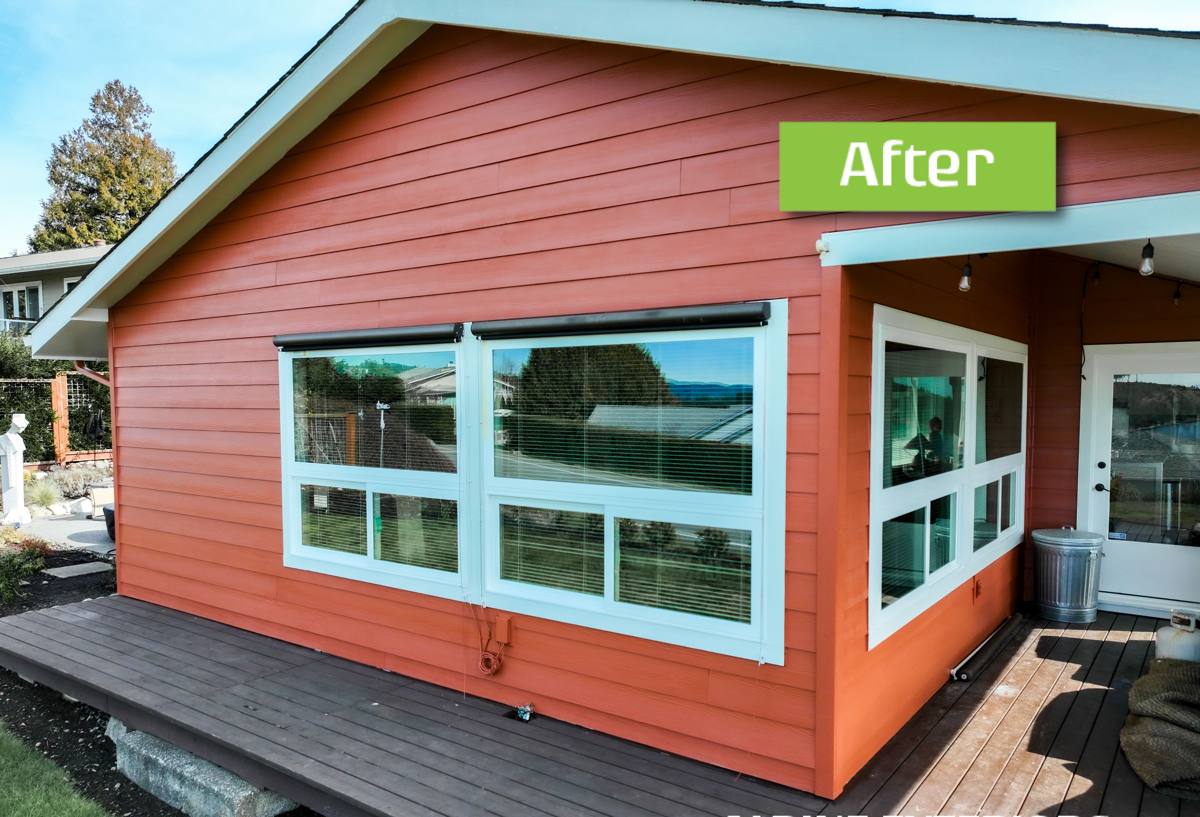
Why Whatcom County Weather Shapes These Decisions
New construction gives you one shot to get the water-management details right before they're sealed behind exterior finishes. In this part of Whatcom County, that matters more than in a lot of places, because the house will spend most of the year absorbing three things at once: salt-tinged marine air moving in off the water, long stretches of driving, wind-blown rain, and a moss season that can run half the calendar. None of those three destroy a window on their own. Together, over years, they find every weak point in flashing, caulk, and frame material that wasn't detailed correctly the first time.
What that means in practice
- Driving rain doesn't just fall on glass — it hits window units at an angle, which is why flashing laps and sill pans matter more here than in drier climates.
- Salt-bearing air accelerates corrosion on unprotected fasteners and lower-grade hardware, which is a frame-material and hardware-spec issue, not just a glass issue.
- A long damp/moss season keeps exterior surfaces wet longer between dry-outs, so any gap that lets moisture behind the cladding has more time to do damage before anyone notices.
New-Construction vs. Replacement Windows: What's Actually Different
Homeowners planning a build in Deming sometimes assume "new-construction window" just means a window that happens to go into a new house. It's actually a different product and a different installation method than a replacement window, and the two aren't interchangeable.
| Factor | New-Construction Window | Replacement Window |
|---|---|---|
| Frame style | Nail-fin (flange) frame, fastened to the sheathing before siding goes on | Pocket or block-frame, installed into an existing finished opening |
| Flashing access | Full access to house wrap, sheathing, and rough opening | Limited — works around existing trim, siding, and interior finish |
| Best used when | Building, adding on, or doing a full siding tear-off | Swapping windows in a home that's staying otherwise intact |
| Water-management responsibility | Shared between the window crew and whoever manages house wrap/siding sequencing | Largely self-contained within the existing wall assembly |
The nail-fin format is what makes new-construction windows correct for a Deming build — but only if the fin is integrated into the weather-resistive barrier in the right order. Get the sequence backward and you've built a shortcut for water straight into the wall cavity, and it won't show up as a leak for years.
Choosing Frame Material and Glass for This Climate
On a new build we're not fighting an existing opening, so material choice comes down to how the window will hold up over decades of this area's weather rather than what will physically fit.
Frame materials
Vinyl new-construction windows are the most common choice on production and semi-custom builds in this region — reasonable cost, no repainting, and modern vinyl units handle damp climates well when the welds and drainage are done correctly. Fiberglass costs more but moves less with temperature swings and holds paint or factory finish longer, which some owners prefer for larger openings or higher-exposure walls. Wood and wood-clad windows still show up on higher-end builds for interior appearance, but they carry a real maintenance obligation in a climate with this much sustained moisture — exposed wood exterior surfaces need consistent upkeep here, and that's a genuine trade-off, not a knock on the product.
Glass packages
Double-pane, low-E glass with argon fill is the practical baseline for new construction in this area — it manages both heat loss and solar gain reasonably well for our mild-but-wet climate. Homes with more western or water-facing exposure sometimes benefit from a upgraded low-E coating tuned for glare and heat rather than just insulation. We'll talk through what your specific elevations and orientation actually call for rather than defaulting everyone to the same spec.
Flashing and Sequencing: Where New-Construction Jobs Are Won or Lost
This is the part of the job that doesn't show up in a finished photo but decides whether the window performs for thirty years or leaks in five. On a proper install, the order matters:
- Rough opening is checked for square, level, and correct dimensions before the window ever shows up.
- Sill pan flashing goes in first, sloped to drain outward — this is the single most important step for a wall that will see driving rain.
- The window is set, shimmed, and fastened through the nail fin per the manufacturer's schedule — not just at the corners.
- Flashing tape laps over the fin at the sides and top in a shingle-style order (sides first, then head) so water is always directed outward and down, never trapped behind a lap.
- The house wrap or building paper is integrated over the head flashing last, maintaining the same drainage-plane logic all the way up the wall.
Every one of those steps gets covered by siding within days. If it's done out of order or skipped to save time, nobody finds out until there's staining, rot, or a moss-covered trouble spot years later — and by then it's a siding-off repair, not a caulk-tube fix.
Our Process on Deming New-Construction Projects
We work directly with the framing and siding schedule rather than dropping in and hoping the timing lines up. That typically looks like:
- A walkthrough of the plans or the framed shell to confirm rough opening sizes and any window units that need special order lead time.
- A written product recommendation by elevation — not every wall of a house needs the same glass or frame spec, especially on lots with mixed sun and wind exposure.
- Coordinating install timing with your builder or GC so windows go in once sheathing and house wrap are ready, and siding doesn't get scheduled before flashing is complete and inspected.
- Photo documentation of flashing and sill pan work before it's covered, so there's a record of what's actually behind the wall.
- A final check of operation, seals, and hardware once the building envelope around each window is closed up.
What Drives Cost on a New-Construction Window Package
Pricing on a whole-house window package varies a lot based on count, size, and spec, so we don't quote broad numbers without seeing plans — but these are the factors that actually move the price:
| Cost Factor | Why It Matters |
|---|---|
| Frame material (vinyl vs. fiberglass vs. wood-clad) | Material cost per unit is the single biggest swing factor across a whole house |
| Window count and total glass area | Larger openings and picture windows cost more per square foot than standard operable units |
| Glass package upgrades | Enhanced low-E coatings or tempered/safety glass for code-required locations add cost per unit |
| Special shapes or sizes | Custom or non-standard openings mean special-order lead time and pricing |
| Site access and lot conditions | Slope, staging space, and how far units have to be carried affects labor time |
A Practical Pre-Install Checklist
- Confirm final rough opening sizes against the ordered window sizes before units are manufactured.
- Verify sill pan flashing material is compatible with both the window manufacturer's requirements and your house wrap system.
- Check that egress-required bedroom windows meet code minimums for opening size before ordering.
- Confirm which elevations get upgraded glass, if any, so orders match the plan.
- Align window delivery date with the builder's siding schedule so units aren't sitting exposed on site for weeks.
Why It Matters That We Already Work in Deming and Sudden Valley
A crew that's installed windows across this stretch of Whatcom County has already seen how a given lot's exposure — tree cover, wind direction, proximity to water — plays out over a few wet seasons. That's useful when we're recommending glass packages or flashing details for your specific site, instead of applying a one-size answer to every build. We also know the practical side: which local building departments want what documented, and how to sequence work so we're not the reason a siding crew is standing around waiting.
If you're planning new construction or an addition in Deming or elsewhere around Sudden Valley, we're glad to walk the plans or the framed shell with you and put together a straightforward, no-pressure estimate — just fill out the form below to get started.