 Sudden Valley Window
 Deck Replacement in Edgemoor: Built for What This Climate Actually Does
A deck in Edgemoor doesn't fail the way a deck fails in a dry climate. It fails from the bottom up and the inside out. Whatcom County's combination of near-constant moisture, salt-laden air off the water, and long stretches of gray, low-sun months creates a slow, steady attack on wood, fasteners, and framing that a lot of homeowners don't notice until a board gives underfoot or a railing post wiggles. We've built our whole approach to deck replacement around that reality rather than around a generic national playbook.
Three things do most of the damage here. Driving rain gets pushed sideways by wind and finds its way into every joint, seam, and fastener hole that isn't properly flashed or sealed. Salt air accelerates corrosion on hardware and fasteners that would otherwise last decades inland. And a moss season that can run from fall through spring keeps deck surfaces damp for months at a stretch, which is exactly the environment wood rot and fungal decay need to take hold. None of this means a deck in this area is doomed — it means it has to be built differently than a deck in Arizona or even inland Washington, with more attention to drainage, fastener choice, and the materials that actually shed water instead of holding it.
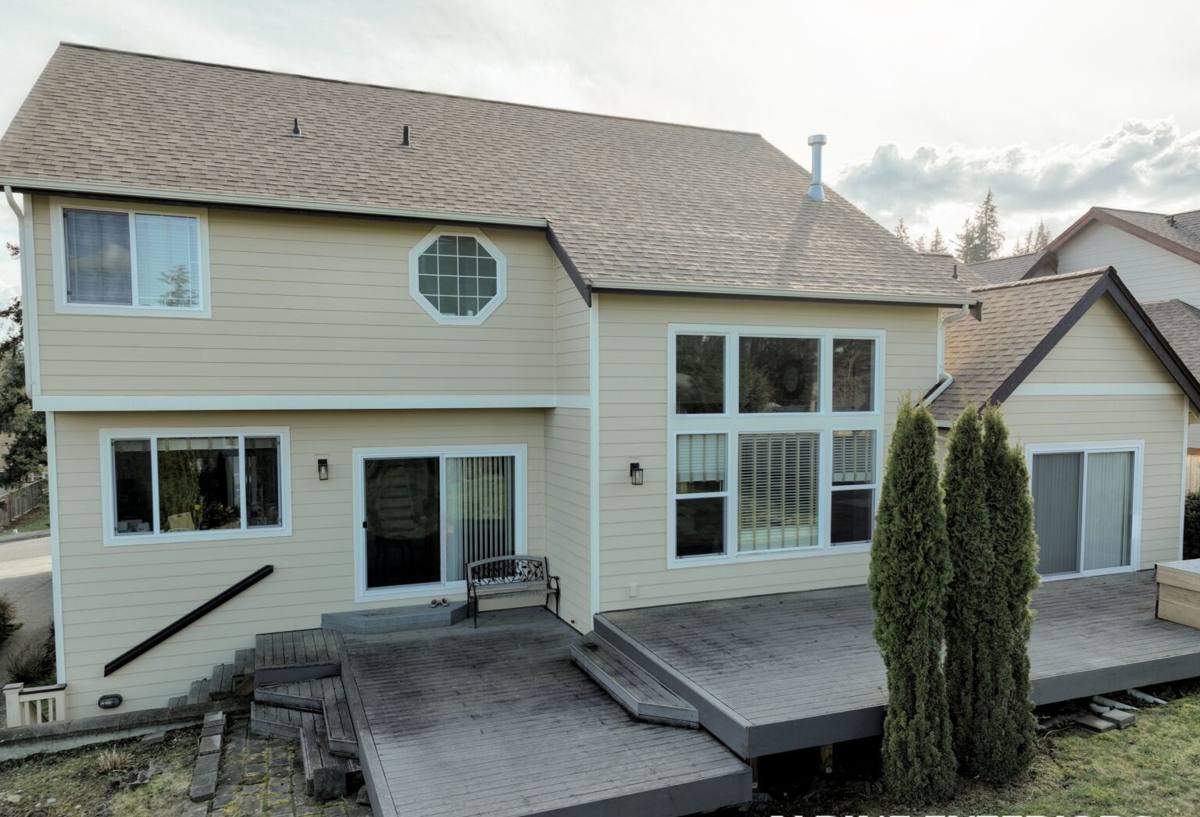
Signs an Edgemoor Deck Needs Replacement, Not Just Repair
Not every tired-looking deck needs to come out. But there are a handful of signs that mean repair is just delaying an inevitable full rebuild, and spending money on cosmetic fixes at that point is money that doesn't carry forward into the replacement.
- Soft, spongy decking that flexes underfoot, especially near the house or in shaded corners where moss holds moisture longest
- Rust streaking below fasteners or visible corrosion on joist hangers and structural hardware
- A ledger board (where the deck attaches to the house) that shows staining, soft wood, or gaps — this is the single most common point of hidden rot and the most safety-critical to get right
- Railing posts that move at the base, which usually means the post itself or the blocking around it has rotted
- Persistent green or black staining that keeps returning within weeks of cleaning, indicating the moisture is coming from underneath, not just sitting on the surface
- A deck more than 20-25 years old built to older code, especially around railing height and guard spacing
If what you're seeing is limited to a few boards or a section of railing, repair can genuinely make sense. If it's structural — the ledger, the framing, multiple footings — replacement is almost always the more honest recommendation, because patching structural rot doesn't actually stop it.
What a Correct Deck Replacement Actually Involves
"Deck replacement" gets used loosely in this trade, and it's worth being specific about what should happen, because skipping steps here is exactly how a deck ends up rotting again in eight years instead of lasting twenty-five or more.
Structure First
Footings get inspected or replaced to current frost and load requirements. The ledger connection to the house — arguably the most important joint on the whole structure — gets proper flashing that directs water away from the house sheathing, not just a bead of caulk. Joists and beams are sized for the actual span and load, not just matched to whatever was there before, and hardware is corrosion-rated for the coastal-influenced air common in this part of Whatcom County.
Water Management
This is where a lot of lower-end deck work cuts corners, and it's the part that matters most given the local rain pattern. Flashing at the ledger, proper slope away from the house for drainage, gapping between boards sized correctly for the decking material, and fasteners that won't wick water into the wood grain around them all add up to a deck that dries out between rain events instead of staying wet for weeks.
Decking, Railings, and Finish
Decking material gets chosen based on how the deck sits — full sun, deep shade, close to grade, or elevated — because moss and algae behave very differently across those conditions. Railings are built to current guard height and baluster spacing code, which matters both for safety and for resale, since an out-of-code railing is a common flag in home inspections.
Comparing Decking Materials for Salt Air and Moss Conditions
There's no single "best" decking material for every situation — it depends on budget, how much maintenance you actually want to do, and how exposed the deck is. Here's how the common options actually perform in this climate, honestly, including the trade-offs.
| Material | Moisture & Moss Behavior | Maintenance | Typical Lifespan Here |
|---|---|---|---|
| Pressure-treated wood | Absorbs water readily; needs sealing to resist moss staining and grain-raising | Annual cleaning, resealing every 1-2 years | 10-15 years to structural concern |
| Cedar | Naturally rot-resistant but still absorbs moisture; moss takes hold if not cleaned | Cleaning and oiling every 1-2 years | 15-20 years with upkeep |
| Capped composite | Water-resistant cap sheds moisture well; some moss growth possible on shaded/dirty surfaces | Occasional washing, no sealing needed | 25-30 years, manufacturer-warrantied |
| PVC decking | Fully synthetic, doesn't absorb water at all; easiest surface to keep moss-free | Occasional washing | 25-30+ years, manufacturer-warrantied |
We don't push composite or PVC on every job — a well-built and properly maintained wood deck is a legitimate, more affordable choice, and plenty of homeowners prefer the look and don't mind the maintenance. Where we do steer people away from certain products is anything with a track record of trapping moisture against the structural framing underneath, since that undermines the water management work we just did on the structure. Our standard is simple: whatever surface material you choose, the framing and flashing underneath it have to be built to shed water regardless.
Our Process, Start to Finish
- On-site assessment. We inspect the existing deck's framing, ledger, footings, and hardware condition before quoting anything, so the estimate reflects what's actually there, not a guess.
- Scope and material selection. We walk through decking, railing, and hardware options with honest trade-offs on cost, maintenance, and how the deck's sun/shade exposure will affect material performance.
- Permitting. Most deck replacements of any real size require a building permit; we handle that process rather than leaving it to the homeowner.
- Demo and structural rebuild. Old decking, railings, and any compromised framing come out. Footings, ledger flashing, joists, and beams are brought up to current standards.
- Decking and railing installation. Fastening patterns, board gapping, and railing assembly follow the manufacturer's specs for whatever material was chosen, plus our own water-management details.
- Final walkthrough. We check railing rigidity, board spacing, drainage slope, and finish details with the homeowner before calling the job done.
Permits and Code in Whatcom County
Deck replacement almost always triggers a permit requirement once you're rebuilding structure rather than swapping boards on an otherwise sound frame — the specifics depend on whether the property sits within Bellingham city limits or unincorporated Whatcom County, and on deck size and height. Guardrail height, baluster spacing, and stair rise/run are the details inspectors check most closely, and they're also the details that get skipped most often on lower-end rebuilds. We pull and manage the permit as part of the job rather than treating it as the homeowner's problem, because an unpermitted deck replacement can complicate things down the road at resale or insurance time.
What to Ask Before Hiring for a Deck Replacement
- Will you pull a permit, and is that included in the quote?
- What hardware and fastener grade are you using, and is it rated for coastal-influenced air?
- How is the ledger board going to be flashed against the house?
- What's your plan for footings — reuse, inspect, or replace?
- Do you carry liability insurance and are your crew members covered, not just subcontracted with no oversight?
- Can you walk me through why you're recommending this decking material for my deck's sun and shade exposure?
Living With Moss Season After Replacement
Even a well-built deck needs some seasonal attention in this climate. Moss and algae are a fact of life on any exterior surface in Whatcom County for a good chunk of the year, and the goal after replacement isn't zero growth — it's keeping the deck's structure protected while the surface deals with normal PNW weather. A yearly wash-down before the wet season sets in, keeping gutters and downspouts clear so they're not dumping extra water onto the deck, and trimming back vegetation that shades the deck and keeps it damp longer than it needs to be all go a long way. For wood decks, this also means staying on top of sealing schedules rather than letting a missed year turn into two or three.
Why a Crew That Already Works Edgemoor Matters
A deck rebuilt to a generic national spec sheet is not the same as a deck rebuilt for what actually happens to wood and hardware near the water in Whatcom County. A crew that already works in and around Edgemoor knows which corners of a property tend to stay shaded and damp longest, which fastener grades hold up against the salt air, and which framing details actually need upgrading versus which ones were fine as originally built. That local pattern recognition shows up in fewer callbacks and a deck that's still solid well past the point a corner-cut rebuild would start showing problems again. It also means faster, more accurate quotes, because we're not learning the area's quirks on your project — we already know them.
Cost Factors to Expect
Deck replacement pricing varies widely based on size, material, and how much structural work is needed underneath — anyone quoting a firm number before inspecting your deck's framing and footings is guessing. That said, the main cost drivers are consistent from project to project.
| Factor | Why It Moves the Price |
|---|---|
| Decking material | Pressure-treated wood is the least expensive upfront; composite and PVC cost more but need less ongoing maintenance |
| Footing and structural condition | Rotted footings, joists, or a compromised ledger add cost but aren't optional to fix |
| Deck size and height | Larger and elevated decks need more material, more structural bracing, and code-compliant stairs and railing |
| Railing style | Basic baluster railing costs less than cable, glass, or custom rail systems |
| Permit and inspection requirements | Larger or higher decks typically require more inspection steps, which affects timeline more than price |
If a contractor's price feels far below others without explaining what's different about their footing, ledger, or hardware plan, that's usually where the difference is hiding.
If your deck in Edgemoor is showing soft spots, railing movement, or persistent moss you can't clean off, we're happy to take a look and walk you through what's actually going on underneath it. Use the form below to request a free, no-pressure estimate.