 Sudden Valley Window
 Why Columbia Homes Need a Different Approach to Energy-Efficient Windows
Columbia sits inside the broader Sudden Valley community in Whatcom County, close enough to the water that homes here deal with a combination most inland Washington neighborhoods don't: salt-laden air off the lake and sound corridors, wind-driven rain that hits window assemblies sideways rather than straight down, and a long, damp moss season that keeps wood trim and sills wet for weeks at a time. Windows that would be perfectly adequate in a drier part of the county can underperform here — not because the glass is bad, but because the installation wasn't built for these conditions.
Energy efficiency in this climate isn't just about the U-factor sticker on the glass. It's about whether the frame material can shrug off salt exposure, whether the flashing detail actually sheds wind-driven rain instead of letting it migrate behind the trim, and whether the sealants used will still be flexible in five years instead of cracked and chalky. A window that's efficient on paper but poorly sealed against this specific weather pattern will lose that efficiency within a couple of seasons as moisture finds its way into the assembly.
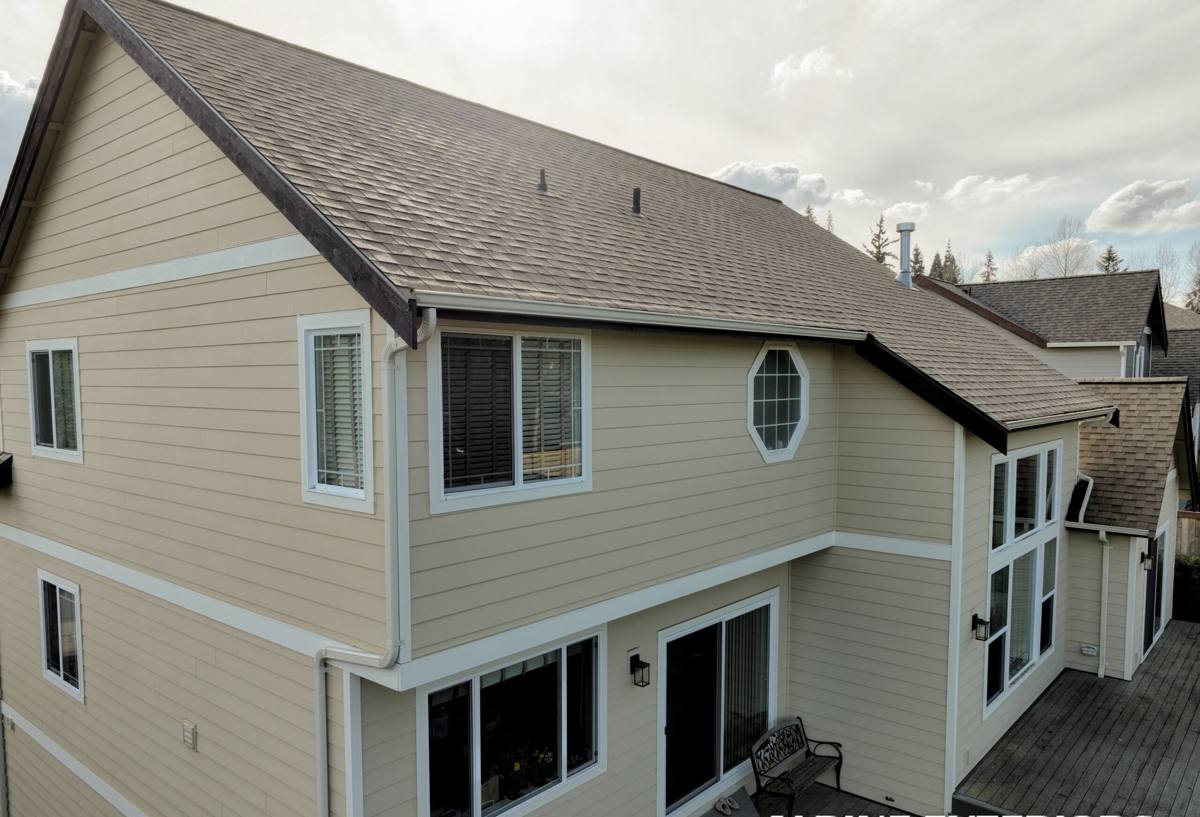
What "Correct" Actually Means for a Columbia Installation
Frame Material Choice
We steer most Columbia homeowners toward vinyl or fiberglass frames over bare wood or wood-clad units for one practical reason: this area's humidity and moss-friendly dampness are hard on exposed wood exteriors. Wood-clad windows can absolutely work here, but they come with a real maintenance obligation — repainting, caulk inspection, and prompt attention to any finish failure — that not every homeowner wants to sign up for. We'll install what you choose, but we tell people upfront what the ongoing care looks like so there are no surprises three years in.
Flashing and Weatherproofing Detail
This is where most window failures actually start, and it's rarely the glass. Wind-driven rain off the water doesn't just hit a window head-on — it gets pushed up and under trim edges. A correct install uses a proper drainage plane, self-adhered flashing tape at the sill and jambs, and a head flashing that sheds water out and away from the wall assembly rather than relying on caulk alone to keep water out. Caulk is a backup layer, not the primary defense — if a crew is depending on a bead of sealant to do the whole job, that's a callback waiting to happen.
Glass Package for This Climate
Double-pane, low-E, argon-filled units are the practical baseline for most Columbia homes — they balance upfront cost against real energy savings on heating bills through the wet, gray months. Triple-pane is worth discussing for north- and west-facing rooms that take the brunt of the wind, or for homeowners prioritizing sound reduction near busier roads, but it's not a blanket recommendation — we'll walk through where it actually pays off on your specific house rather than upselling it everywhere.
How Salt Air and Moss Season Affect Window Longevity
Salt exposure accelerates corrosion on hardware — hinges, locks, and balance mechanisms — faster than it does inland. We spec corrosion-resistant hardware where it's available and avoid components known to be sensitive to salt exposure over time. Moss and constant dampness, meanwhile, are hardest on anything organic: wood sills, untreated trim, and any gap where debris can collect and hold moisture against the frame. Part of a correct install is making sure sills are sloped to drain and that there's no ledge or reveal where moss and organic debris can accumulate and sit wet against the window for weeks.
Signs Your Current Windows Are Losing the Battle
- Fogging or moisture between panes (failed seal — the argon fill is gone and efficiency has dropped)
- Soft or spongy trim/sill wood when pressed
- Visible gaps or cracked caulk lines around the frame perimeter
- Drafts you can feel near the frame edge, not just the sash
- Moss or dark staining building up on sills or lower trim
- Difficulty opening/closing, or hardware that's stiff or corroded
- Noticeably higher heating costs compared to similar-sized rooms elsewhere in the house
Our Process for Columbia Jobs
1. On-Site Assessment
We look at each window individually — not just the glass, but the surrounding wall assembly, existing flashing (or lack of it), sill condition, and any signs of past water intrusion. Columbia homes vary in age and construction, so a one-size answer doesn't hold up; what a 1980s home needs at the rough opening is often different from what a newer build needs.
2. Honest Scope and Options
You get a clear breakdown of what's replacement-only versus what needs additional flashing or trim repair to do the job right. We don't pad scope, but we also won't quote a "window swap" if the sill underneath is already compromised — that's the kind of shortcut that shows up as a leak two winters later.
3. Removal Without Collateral Damage
Careful removal of the old unit, checking the rough opening for hidden rot or moisture damage before anything new goes in. This step gets skipped by crews in a hurry — it shouldn't be.
4. Proper Flashing and Air Sealing
Self-adhered flashing membrane, correctly lapped (bottom-up, so water always sheds outward), low-expansion foam or backer rod and sealant at the interior air seal, and exterior sealant as the final, not only, line of defense.
5. Final Check and Walkthrough
Operation check, weep hole confirmation on the exterior, and a walkthrough so you know what to look for over the following season — because how a new window performs in its first wet Whatcom County winter tells you a lot about the install quality.
Cost Factors for Columbia Homeowners
Broad ranges only — every home is different, and the real number depends on frame material, glass package, window count, and how much flashing/trim work the existing opening needs. As a general local guide:
| Factor | Lower Cost Range | Higher Cost Range |
|---|---|---|
| Frame material | Vinyl, standard sizes | Fiberglass or wood-clad, custom sizes |
| Glass package | Double-pane, low-E, argon | Triple-pane or specialty coatings |
| Opening condition | Sound rough opening, straightforward swap | Rot or prior water damage requiring repair |
| Access/complexity | Ground-floor, standard trim | Upper-story, custom trim or masonry surround |
We give a firm written quote after the on-site look, not a phone estimate — this climate has too many variables that show up only when you're standing at the actual opening.
Why a Crew That Already Works Columbia Matters
A contractor who works this specific pocket of Whatcom County has already seen how these homes age in this weather — which sill designs hold up, which flashing shortcuts come back as leaks, and which frame choices regret themselves after a few wet winters. That's not something you get from a crew that mostly works drier inland projects and treats a coastal Sudden Valley job the same as any other. Local familiarity also means we're not guessing at permitting expectations or driving distance for warranty follow-up — if something needs a second look after the first hard wind-driven rain of the season, we're not far away.
What a Homeowner Should Ask Before Hiring Anyone
- Will you show me the specific flashing detail you use, not just the window brand?
- Is the estimate based on an actual on-site look at my openings, or a phone quote?
- What happens if you find rot or water damage once the old window is out?
- Are you licensed and insured for exterior work in Washington, and can I see proof?
- What's the warranty on labor versus the manufacturer's warranty on the window itself?
Maintenance After Install
Even a correctly installed window benefits from a little seasonal attention here. Rinse accumulated salt residue off frames and glass periodically, especially after storms. Keep weep holes clear of debris and moss so water can drain as designed. Check exterior caulk lines once a year, ideally before the wet season ramps up, and address any cracking early rather than waiting for it to become a leak. None of this is heavy maintenance — it's a few minutes a season — but skipping it is how a good install starts to underperform ahead of schedule.
If your Columbia home has windows that are drafty, fogged, or just older than they should be for how the last few winters have felt, we'll come take an honest look and put together a written quote — no pressure, no upsell script. Use the form below to get a free estimate.